Choosing food for a small dog can feel harder than it should. Almost every bag promises better ingredients, healthy digestion, more energy, and a shinier coat, but those claims do not tell you whether the food actually fits your dog.
If you are comparing specific brands available across Europe, start with our guide to the best dog food brands in Europe. For this guide, we focus on something different: how to choose the right type of food for your small dog.
A healthy Toy Poodle, an overweight Chihuahua, a picky Pomeranian, and an older Maltese with dental problems may all need different feeding choices.
That is why the “best” food is not simply the most expensive brand, the highest protein percentage, or the formula with the longest ingredient list.
A better way to choose is to start with the basics: look for a complete food that matches your dog’s life stage, check the calories and daily portion, and make sure the texture is comfortable to eat.
Then use your dog as the final test. Body weight, body condition, appetite, stool quality, and eating comfort can tell you whether the feeding plan is working over time.
In this guide, we will show you how to make those decisions for small breed puppies, adults, seniors, picky eaters, and dogs with sensitive digestion.
Quick Answer: What Is the Best Dog Food for Small Breeds?
For most healthy small dogs, the best choice is a complete food for the correct life stage, fed in an amount that supports a healthy body condition and offered in a texture the dog can eat comfortably.
The words “small breed” on the package can be useful, but they are not enough to judge the food.
Focus on four things:
- Life stage: Choose a complete food suitable for a puppy, adult, or older dog as appropriate.
- Calories and portions: Check how calorie-dense the food is and measure the daily amount.
- Eating comfort: Kibble size and texture should be comfortable for your dog.
- Your dog’s response: Monitor body weight, body condition, appetite, stool quality, and comfort after meals.
Dry, wet, and mixed feeding can all work. What matters is whether the overall diet is complete, manageable to portion, and a good fit for your dog.
If your dog has repeated vomiting, diarrhea, unexplained weight loss, chewing pain, or a diagnosed medical condition, ask your veterinarian before making major diet changes.
Table of Contents
- Quick Answer: What Is the Best Dog Food for Small Breeds?
- Choose the Right Food for Your Small Dog
- What Small Dogs Actually Need From Their Food
- Dry, Wet or Mixed Feeding for Small Dogs?
- Portions, Treats and Activity
- Food for Puppies, Seniors, Picky and Sensitive Dogs
- How to Switch Your Small Dog to a New Food
- Frequently Asked Questions
Best Dog Food for Small Breeds in 2026: Choose by Your Dog’s Needs
If you are comparing a few foods for your small dog, start by matching the options to your dog’s actual needs.
A 3 kg Chihuahua that spends most of the day indoors does not need the same feeding approach as a growing Toy Poodle or an active Yorkshire Terrier. An older Maltese with painful teeth may need a different texture again.
Use this table to narrow down the type of food worth comparing.
| Your Dog | A Good Starting Point | Check Before Buying |
|---|---|---|
| Healthy adult small dog | Complete adult food that is easy to portion and comfortable to eat | Calories, feeding amount, body-condition needs, kibble size or texture |
| Small breed puppy | Complete food formulated for growth | Puppy suitability, feeding frequency, energy density, easy-to-eat kibble or texture |
| Senior small dog | Complete food that fits current weight, activity and chewing ability | Calories, texture, appetite, muscle condition and any diagnosed health problems |
| Overweight or less active dog | A complete diet that allows accurate calorie control | Daily calories, portion size, treat intake and current body condition |
| Very active small dog | Complete food that provides enough energy for activity | Weight trend, activity level, calorie density and portion size |
| Picky eater | A complete food the dog will eat consistently | Texture, smell, meal routine, treat intake and whether extras are replacing meals |
| Sensitive digestion | A complete diet the dog tolerates consistently | Stool quality, vomiting, appetite, fat level and ingredients previously tolerated |
| Chewing or dental discomfort | A complete food with an easier texture | Kibble size, softness, signs of pain and whether a dental examination is needed |
The table is only a starting point. Now check the actual food.
Before You Buy: Do This 2-Minute Food Check
Once you know what type of food may suit your dog, check the actual product.
You do not need to understand every ingredient or nutrition term on the package. Start with these five things.
1. Confirm It Can Be the Main Diet
For foods sold in Europe, look for whether the product is described as complete or complementary.
A complete food is intended to provide the nutrients needed as the main daily diet when fed as directed. Complementary foods are designed to be used alongside other foods.
Then check the life stage. A puppy needs food suitable for growth, while an adult dog needs food appropriate for adult maintenance.
The FEDIAF Nutritional Guidelines provide the European nutritional framework for complete and complementary pet foods.
2. Check the Calories and Daily Portion
Find the feeding guide and calorie information if it is available.
Look at the suggested daily amount for your dog’s weight, then remember that this is a starting point rather than a fixed rule.
Treats, chews, toppers, and wet food added during the day also contribute calories.
If you need more help with portions, see our guide on how much to feed your dog.
3. Make Sure the Food Is Comfortable to Eat
Small kibble can be useful for some small dogs, but kibble size does not determine nutritional quality.
Choose a size and texture your dog can pick up and chew comfortably.
If your dog suddenly drops food, chews only on one side, or appears painful while eating, consider dental or oral discomfort rather than simply buying smaller kibble.
4. Look Beyond the Front of the Bag
Claims such as “premium,” “natural,” “grain-free,” “high protein,” or “real meat first” do not tell you whether the whole diet is suitable for your dog.
The ingredient list is useful, but it should not be the only reason you choose one food over another.
If you want to understand labels in more detail, read our pet food label guide.
5. Check Who Makes the Food
When two foods both look suitable, look at the company behind them.
Useful information includes:
- who formulates the food,
- the nutritional expertise behind the formula,
- how quality control is handled,
- whether detailed nutrition information is available,
- and whether the company can answer product questions.
The WSAVA nutrition guidance recommends considering nutritional expertise, quality control, and the information a manufacturer can provide about its foods.
Once a food passes these checks, the next test is your dog.
A suitable feeding plan should be practical to measure, comfortable to eat, well tolerated, and help your dog maintain a healthy body condition over time.
What Small Dogs Actually Need From Their Food
Small dogs do not need a special ingredient that larger dogs do not need.
What matters is getting the right nutrition in the right amount.
Because a small dog eats relatively small meals, portion size, calorie density, life stage, and how well the food suits the individual dog become especially important.
Here is the simplest way to think about it:
| What Matters | Why It Matters | What You Should Do |
|---|---|---|
| Complete nutrition | A small portion still needs to provide all essential nutrients | Choose a complete food suitable for your dog’s life stage |
| Calories | Small amounts of extra food can add up quickly | Measure meals and include treats, chews, and toppers |
| Protein and fat | They support muscle, energy, skin, and normal body functions | Do not chase the highest percentage; choose a complete diet that fits your dog |
| Kibble size or texture | Some small dogs find large or hard food uncomfortable | Choose a size and texture your dog can eat comfortably |
| Digestion | A food only works if your dog tolerates it well | Watch stool quality, appetite, vomiting, and comfort after meals |
| Body condition | The feeding amount may need adjusting over time | Monitor weight and body shape instead of relying only on the feeding guide |
Complete Nutrition Comes First
Before comparing protein percentages or individual ingredients, make sure the food can provide complete nutrition for your dog’s life stage.
A puppy needs food suitable for growth. An adult dog needs appropriate maintenance nutrition. Older dogs may need adjustments depending on weight, activity, muscle condition, dental comfort, and health.
That matters more than simply finding the words “small breed” on the front of the bag.
Protein, Fat and Carbohydrates: Look at the Whole Diet
Protein supports muscle and normal body functions, while fat provides energy and essential fatty acids.
But more is not automatically better.
The food with the highest protein or fat percentage is not necessarily the best choice for your dog. An active dog and an overweight, less active dog may need very different calorie levels.
Carbohydrates should not automatically be treated as a problem either. Ingredients such as rice, oats, potatoes, or peas can all be used in dog food.
Likewise, “grain-free” does not automatically mean healthier.
For most healthy small dogs, the better approach is to choose a complete diet that fits the life stage and calorie needs rather than trying to rank every ingredient as “good” or “bad.”
Texture and Digestion Still Matter
Nutrition on paper is only useful if your dog can comfortably eat and tolerate the food.
Small kibble or softer food may help some dogs, but neither automatically makes the food nutritionally better.
Watch for practical signs such as:
- difficulty picking up or chewing food,
- repeated vomiting,
- persistent loose stool,
- poor appetite,
- or unexplained weight changes.
Occasional digestive changes do not automatically prove that one ingredient is the problem. Look for patterns rather than changing foods after every minor change.
Do Not Add Supplements Without a Reason
If your dog eats a complete diet, extra vitamins, minerals, oils, or other supplements are not automatically beneficial.
Adding nutrients without a clear need can change the balance of the overall diet.
For a healthy dog on a complete food, use supplements when there is a clear nutritional or veterinary reason rather than because a product promises better joints, coat, digestion, or immunity.
For most healthy small dogs, the goal is straightforward: complete nutrition, an appropriate calorie intake, comfortable eating, and a healthy body condition over time.
Dry, Wet or Mixed Feeding for Small Dogs?
Dry, wet, and mixed feeding can all work for small dogs. The better option depends on what your dog eats comfortably, how easy the food is to portion, and whether the complete daily diet fits their calorie and nutritional needs.
| Feeding Style | Can Work Well When | Main Thing to Watch |
|---|---|---|
| Dry food | Your dog eats kibble comfortably and you want an easy-to-measure option | Kibble size, calorie density, water intake, portion size |
| Wet food | Your dog prefers a softer texture or benefits from extra moisture in the diet | Whether it is complete, daily calories, storage after opening |
| Mixed feeding | You want to combine the convenience of dry food with the texture and moisture of wet food | Total calories from both foods |
Dry Food
Dry food is practical, easy to store, and simple to measure.
For a small dog, choose a kibble size and texture they can eat comfortably and check the calories per serving before deciding how much to feed.
Do not assume that ordinary dry kibble automatically cleans your dog’s teeth. Dental health still depends on regular oral care, and dogs with chewing pain should be assessed rather than simply moved to smaller kibble.
Dry food can work perfectly well when it is complete for the correct life stage, fed in an appropriate amount, and well tolerated by the dog.
Wet Food
Wet food contains more moisture and usually has a softer texture than dry food.
That can make it useful for dogs that prefer softer food, have difficulty chewing, or simply eat wet food more consistently.
Before using it as the main diet, check that the product is labelled as complete for your dog rather than complementary.
Wet food is not automatically healthier than dry food. The same rules still apply: choose the correct life stage, measure the daily amount, and monitor body condition.
Mixed Feeding
Mixed feeding combines dry and wet food.
It can be a useful option when your dog enjoys both textures or when adding some wet food makes meals easier to eat.
The common mistake is adding wet food on top of a full dry-food portion.
Instead, reduce the amount of each food so the combined daily calories still fit your dog’s needs.
For example, if part of the daily meal comes from wet food, the dry-food portion should usually be reduced rather than left unchanged.
Which Option Should You Choose?
For most healthy small dogs, there is no need to choose one format because it sounds more “premium.”
Use the format that makes it easiest to provide a complete diet, control portions, and feed your dog consistently.
If your dog maintains a healthy body condition, eats comfortably, and tolerates the food well, the feeding format is doing its job.
For a more detailed comparison of moisture, convenience, cost, palatability, and feeding considerations, read our guide to wet vs dry dog food.
Portions, Treats and Activity: Getting the Amount Right
Choosing a suitable food is only half of the job. The amount you feed matters just as much.
This is especially important for small dogs because a little extra food, a few treats, or an added dental chew can make a noticeable difference to the day’s total calories.
The goal is simple: start with a measured portion, count the extras, and adjust based on your dog’s body condition and activity.
Start With the Feeding Guide, Then Adjust
Use the feeding guide on the package as a starting point, not a fixed rule.
Find the recommended daily amount for your dog’s weight and measure it rather than guessing.
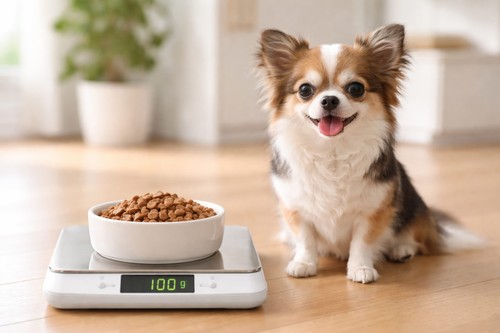
For small dogs, weighing food in grams with a kitchen scale can be more accurate than filling a cup or scoop by eye.
Then watch what happens over time.
If your dog maintains a healthy weight and body condition, the amount is probably close to what they need.
If weight is gradually increasing, reduce unnecessary extras first and review the main portion.
If weight is falling unexpectedly, do not simply add more food without considering why.
For a more detailed portion guide, see how much to feed your dog.
Count Everything Your Dog Eats
One of the easiest ways to accidentally overfeed a small dog is to count only the food in the bowl.
The daily total can also include:
- training treats,
- dental chews,
- table food,
- toppers,
- wet food added to kibble,
- food used to hide medication,
- and snacks given by other people in the household.
Treats should generally provide no more than about 10% of the dog’s daily calories. The rest should come mainly from a complete diet.
The WSAVA guide to dog treats provides a practical explanation of this 10% guideline.
If you use treats frequently for training, one simple option is to take some kibble from the dog’s measured daily portion and use that during training instead of continually adding extra calories.
If you combine wet and dry food, treat them as parts of the same daily allowance rather than giving a full daily portion of both.
Indoor and Active Dogs May Need Different Amounts
Two small dogs of the same breed and weight can have very different energy needs.
A dog that spends much of the day resting indoors may need less food than a dog that walks, trains, plays, or exercises frequently.
That does not mean every indoor dog needs a “light” formula or every active dog needs a high-energy food.
Start with the dog in front of you.
For a less active dog:
- keep portions measured,
- count treats carefully,
- and monitor gradual weight gain.
For a very active dog:
- make sure weight is not falling,
- monitor body condition,
- and adjust the amount if activity consistently increases.
Change the portion because your dog needs it, not simply because the package describes the dog as “indoor,” “active,” or “small breed.”
Use Body Condition, Not Begging, as Your Guide
Begging does not always mean a dog needs more food.
Some dogs will happily ask for food even when they are receiving enough calories.
A more useful check is body condition.
You should normally be able to feel your dog’s ribs without pressing through a thick layer of fat, and there should be some waist visible when looking from above.
The WSAVA Body Condition Score can help you understand what a healthy body condition looks like.
Look at the trend rather than one meal or one day.
If the waist slowly disappears and weight keeps rising, review the total daily intake.
If ribs and spine become unusually prominent or weight keeps falling, the issue deserves attention.
Five Common Portion Mistakes to Avoid
Most feeding problems do not require a complicated solution.
Start by avoiding these common mistakes:
- Guessing the portion instead of measuring it.
- Giving a full wet-food portion on top of a full dry-food portion.
- Forgetting to count treats, chews, toppers, and table food.
- Changing the amount because of begging rather than body condition.
- Keeping the same portion when activity or body weight has clearly changed.
Measured meals also make changes easier to notice. If your dog suddenly starts leaving food behind or eating much less than usual, you are more likely to spot the difference.
When a Portion Change Is Not Enough
Not every weight or appetite change is caused by feeding too much or too little.
Speak with your veterinarian if your dog has:
- unexplained or continuing weight loss,
- a sudden change in appetite,
- repeated vomiting or diarrhea,
- difficulty chewing,
- unusual thirst,
- or a major change in energy or behaviour.
In those situations, repeatedly changing the food or portion can hide the real problem rather than solve it.
For everyday feeding, keep the routine simple:
Measure the main food → count treats and extras → watch body condition → adjust when needed.
The goal is not perfect calculation. It is a routine that makes gradual changes in weight, appetite, and food intake easier to notice.
Choosing Food for Puppies, Seniors, Picky and Sensitive Small Dogs
Some small dogs need a little more thought than simply choosing an adult small-breed food.
Growth, ageing, appetite, chewing comfort, and digestive problems can all change what matters most.
Use this table as a quick guide:
| Your Dog | What Matters Most | Practical Approach |
|---|---|---|
| Small breed puppy | Growth, enough energy, correct nutrient balance | Choose a complete food formulated for growth and follow the feeding guidance for puppies |
| Senior small dog | Body condition, muscle, appetite, chewing comfort, health changes | Choose based on the individual dog rather than age alone |
| Picky eater | Consistent intake, meal routine, treats, texture | Reduce unnecessary extras and find a complete food the dog eats reliably |
| Sensitive digestion | Stable stool, appetite, vomiting, tolerance | Keep the diet consistent and investigate repeated symptoms instead of changing foods repeatedly |
Small Breed Puppies: Choose Food for Growth
A small breed puppy should eat a complete food suitable for growth, not simply an adult food with smaller kibble.
Growing puppies need nutrition designed for development, and their small size can make regular feeding especially important.
Keep it simple:
- choose food labelled as complete and suitable for puppies or growth,
- use the feeding guide as your starting point,
- divide the daily amount into appropriate meals,
- monitor growth and body condition,
- and avoid adding supplements unless there is a clear reason.
If you are comparing puppy foods in Europe, see our Best Puppy Food in Europe guide for practical product options by breed size, growth needs, and feeding style.
Do not add extra calcium, vitamins, or minerals to a complete puppy diet just because more sounds better. A complete food is already formulated to provide the required nutritional balance.
If your puppy is not growing normally, regularly refuses food, has repeated vomiting or diarrhea, or seems unusually weak, contact your veterinarian rather than solving the problem only by changing brands.
Senior Small Dogs: Feed the Dog, Not the Age on the Calendar
There is no single moment when every small dog suddenly needs “senior food.”
Some older small dogs remain active and maintain a healthy weight. Others become less active, lose muscle, develop dental problems, or experience medical conditions that change their nutritional needs.
For an older dog, pay attention to:
- weight and body condition,
- muscle condition,
- appetite,
- activity,
- chewing comfort,
- and any diagnosed health problems.
If your older dog is gaining weight, the calorie intake may need reviewing.
If the dog is losing weight or muscle, simply switching to a lower-calorie senior food could make the situation worse.
And if hard food becomes difficult to eat, check for dental discomfort rather than assuming ageing alone is the cause.
The best senior feeding plan is based on what is changing in the individual dog.
Picky Small Dogs: Fix the Routine Before Changing Food Again
A dog that occasionally leaves part of a meal is different from a dog that suddenly stops eating.
For an otherwise healthy dog that has always been selective, start by looking at the feeding routine.
Too many treats, table food, toppers, and frequent food changes can make regular meals less appealing.
Try a simpler routine:
- Choose a complete food your dog can eat comfortably.
- Keep meal times reasonably consistent.
- Limit snacks and extras between meals.
- Avoid changing foods every time your dog hesitates at the bowl.
- Watch whether appetite becomes more consistent over several days.
Texture can matter too. Some dogs prefer wet food or a mixture of wet and dry food, but changing the format should not mean adding unlimited extra calories.
A sudden loss of appetite is different.
If a dog that normally eats well suddenly refuses food, especially with vomiting, diarrhea, pain, low energy, or weight loss, treat it as a health change rather than simple picky behaviour.
For more help separating food preference from a possible health problem, read Dog Not Eating: What to Do and When to Worry.
Sensitive Digestion: Look for Patterns, Not One “Bad” Ingredient
Soft stool or an upset stomach does not automatically mean your dog has a food allergy or that one ingredient is the problem.
Digestive symptoms can have many causes.
If your dog seems to tolerate one complete food well, consistency is often more useful than repeatedly switching between formulas.
Keep track of:
- stool quality,
- vomiting,
- appetite,
- body weight,
- recent food changes,
- treats and table food,
- and how long the problem continues.
A single episode of soft stool after a food change does not prove that the new food is unsuitable.
Likewise, labels such as “sensitive,” “limited ingredient,” or “hypoallergenic” should not be treated as a diagnosis.
If symptoms keep returning, avoid randomly removing ingredients one by one. A veterinarian may need to rule out other causes or recommend a structured diet trial.
If you are concerned about a possible food reaction, our guide to food allergies in dogs and cats explains how food allergies are properly investigated.
Repeated vomiting, ongoing diarrhea, unexplained weight loss, blood in the stool, persistent refusal to eat, or clear chewing pain should not be treated as a simple food-choice problem. These signs need veterinary assessment rather than another random food switch.
How to Switch Your Small Dog to a New Food
When you change your dog’s food, do it gradually rather than replacing the whole bowl at once.
One simple way to make a gradual change is to spread the transition across about a week:
| Days | Old Food | New Food |
|---|---|---|
| 1–2 | 75% | 25% |
| 3–4 | 50% | 50% |
| 5–6 | 25% | 75% |
| 7 | 0% | 100% |
This is an example rather than a fixed rule. Some dogs may need a slower change, especially if they have previously had digestive problems or are following veterinary dietary advice.
You do not need to follow the schedule perfectly.
If your dog is comfortable, eating normally, and producing normal stool, continue to the next step.
If stool becomes softer or your dog seems mildly uncomfortable, stay at the current ratio for another day or two before increasing the new food.
Keep the Rest of the Diet Simple
During the transition, avoid changing several things at the same time.
Try not to introduce new:
- treats,
- toppers,
- supplements,
- chews,
- or table food.
If something changes in your dog’s appetite or digestion, a simple routine makes it much easier to understand what happened.
Keep measuring the total daily amount as well. Mixing two foods should not mean feeding two full portions.
When to Stop and Get Advice
A small change in stool during a food switch can happen, but repeated or more serious symptoms should not simply be blamed on the new food.
Speak with your veterinarian if your dog develops:
- repeated vomiting,
- ongoing diarrhea,
- blood in the stool,
- marked loss of appetite,
- unusual tiredness,
- or worsening symptoms.
Dogs with a diagnosed medical condition or a prescribed therapeutic diet may also need a different transition plan, so follow the instructions given by your veterinarian.
The goal is not to switch food as quickly as possible.
It is to make the change easy to monitor and comfortable for your dog.
Frequently Asked Questions About Small Breed Dog Food
What is the best dog food for small breeds?
For most healthy small dogs, the best choice is a complete food that matches their life stage, calorie needs, body condition, and eating comfort.
The word “small breed” on the package can be useful, but it should not be the main reason you choose the food.
Do small dogs need special small-breed dog food?
Not always.
Some small-breed formulas have smaller kibble or a calorie density that works well for small dogs, but a healthy small dog does not automatically need food labelled “small breed.”
What matters more is whether the food is complete, suitable for the dog’s life stage, easy to eat, and fed in the right amount.
Is wet or dry food better for small dogs?
Both can work.
Dry food is convenient and easy to measure. Wet food provides more moisture and may be easier for some dogs to eat.
Mixed feeding can also work, as long as the total daily calories from both foods are adjusted correctly.
How much food should a small dog eat?
Start with the feeding guide on the food label, then adjust based on your dog’s weight, body condition, activity level, and treats.
Measure the food rather than guessing, especially for very small dogs.
Treats, chews, toppers, and wet food should also be counted as part of the daily intake.
How often should a small dog be fed?
Feeding frequency depends on age, health, daily routine, and the total amount of food.
Many healthy adult dogs are commonly fed in two measured meals, while puppies often need their daily food divided into more frequent meals.
Whatever schedule you use, keep the total daily amount appropriate for your dog’s calorie needs and body condition.
What should I do if my small dog is a picky eater?
First check the feeding routine before changing food again.
Limit unnecessary treats and toppers, keep meal times consistent, and use a complete food your dog can eat comfortably.
If a dog that normally eats well suddenly refuses food, or picky eating comes with weight loss, vomiting, diarrhea, pain, or low energy, speak with your veterinarian.
What should I do if my small dog has a sensitive stomach?
Do not assume one ingredient is automatically the problem.
Keep the diet consistent, monitor stool, appetite, vomiting, weight, treats, and recent food changes.
If digestive problems keep returning or become severe, veterinary assessment is more useful than repeatedly switching foods.
Turn This Guide Into a Feeding Plan for Your Dog
Choosing the right food gets easier when you look at your own dog, not just the label on the bag.
FAMMO helps you bring together details such as your dog’s age, breed, weight, activity level, and feeding habits to explore more personalized nutrition guidance.
Instead of relying only on general feeding advice, you can use your dog’s information to make better day-to-day decisions about food, portions, and feeding routines.
Already have an account? Log in here.