
Your dog keeps scratching, licking their paws or developing recurring ear problems. Your cat is overgrooming, losing patches of fur or experiencing repeated digestive upset. Could food be contributing to these symptoms?
It could be, but these signs do not confirm a food allergy. Fleas, environmental allergies, parasites, skin or ear infections, food intolerance and other health conditions can cause similar problems. Repeatedly switching foods without a controlled plan may also make the pattern harder to understand.
The most useful first step is to record exactly what your pet eats, including their main food, treats, chews, table scraps, supplements and flavoured medications, together with when the symptoms occur. If you need help identifying and recording this information, our guide to reading a pet food label in Europe explains where to find the composition, feeding details, product name and batch information.
This guide will help you recognise possible food-allergy signs in dogs and cats, understand what else may cause them, prepare for a veterinary assessment and follow an elimination diet trial correctly if your veterinarian recommends one.
Important: This article provides general educational information and cannot diagnose a food allergy. Persistent itching, recurring ear or skin problems, repeated vomiting, diarrhoea or unexplained weight loss should be assessed by a veterinarian.
Quick Answer: Could Your Dog or Cat Have a Food Allergy?
Possibly, but symptoms alone cannot tell you for certain.
A food allergy may be considered when a dog or cat has persistent or recurring problems such as:
- itching that continues throughout the year
- repeated paw licking or chewing
- recurring ear or skin inflammation
- excessive grooming or hair loss
- repeated vomiting, diarrhoea or loose stool
However, these signs are not specific to food allergies. Fleas, environmental allergies, parasites, infections, food intolerance and other medical conditions may cause similar symptoms.
The most reliable way to investigate a suspected food allergy is usually a veterinarian-guided elimination diet followed by a controlled dietary challenge. Randomly changing foods, choosing a grain-free product or using a commercial blood, saliva or hair test does not reliably confirm which ingredient is responsible.
Table of Contents
- Food Allergy vs Food Intolerance: What’s the Difference?
- Signs of Food Allergies in Dogs and Cats
- Which Food Ingredients May Trigger Allergies in Dogs and Cats?
- When Is a Food Allergy Worth Investigating?
- When Should You See a Vet About a Possible Food Allergy?
- What to Track Before Seeing a Vet
- How Do Vets Diagnose Food Allergies?
- How to Run an Elimination Diet Trial Correctly
- What to Do After a Food Allergy Is Confirmed
- Frequently Asked Questions
- Sources and Editorial Notes
Food Allergy vs Food Intolerance: What’s the Difference?
Food allergy and food intolerance can cause similar symptoms, but they are not the same condition. A food allergy involves an immune response to a dietary ingredient, while food intolerance describes an adverse reaction that does not require the immune system.
The distinction is not always obvious from symptoms alone. Itching, ear problems, vomiting or diarrhoea may also be caused by fleas, environmental allergies, parasites, infections or other medical conditions.
| Possible cause | What it involves | Signs that may occur | How it is assessed |
|---|---|---|---|
| Food allergy | An immune reaction to one or more dietary ingredients, commonly proteins | Persistent itching, paw licking, recurring ear or skin problems, overgrooming, vomiting or diarrhoea | Other causes are investigated first, followed by a strict elimination diet and controlled dietary challenge when appropriate |
| Food intolerance | An adverse reaction to food that does not involve an allergic immune response | Vomiting, loose stool, diarrhoea, gas or digestive discomfort | Diet history, veterinary assessment and response to a carefully controlled dietary change |
| Environmental allergy | A reaction to environmental triggers such as pollen, dust mites or mould | Itching, paw licking, skin inflammation and recurring ear problems; signs may be seasonal or continue throughout the year | Symptom pattern, parasite control, physical examination and veterinary allergy assessment |
| Flea, parasite or skin infection | Irritation or inflammation unrelated to a food ingredient | Scratching, redness, hair loss, sores, odour or recurring skin and ear inflammation | Skin examination and appropriate veterinary testing or treatment |
Because these conditions can look alike, symptoms alone cannot confirm that food is responsible. According to the MSD Veterinary Manual’s overview of food allergy in animals, a strict dietary elimination trial followed by a controlled rechallenge is considered the most reliable way to confirm a food allergy.
This is why randomly removing ingredients or switching between several commercial foods may not provide a clear answer. The process must be controlled carefully enough to show whether symptoms improve when suspected ingredients are removed and return when they are reintroduced.
Signs of Food Allergies in Dogs and Cats
Food allergies can affect the skin, ears or digestive system, but the pattern is not identical in every animal. Some pets mainly develop persistent itching, while others experience recurring ear problems, overgrooming or gastrointestinal signs.
No single symptom confirms a food allergy. Similar signs may result from fleas, environmental allergies, parasites, bacterial or yeast infections, food intolerance and other health conditions. The AAHA guidelines on allergic skin diseases in dogs and cats therefore recommend a structured diagnostic approach rather than identifying the cause from appearance alone.
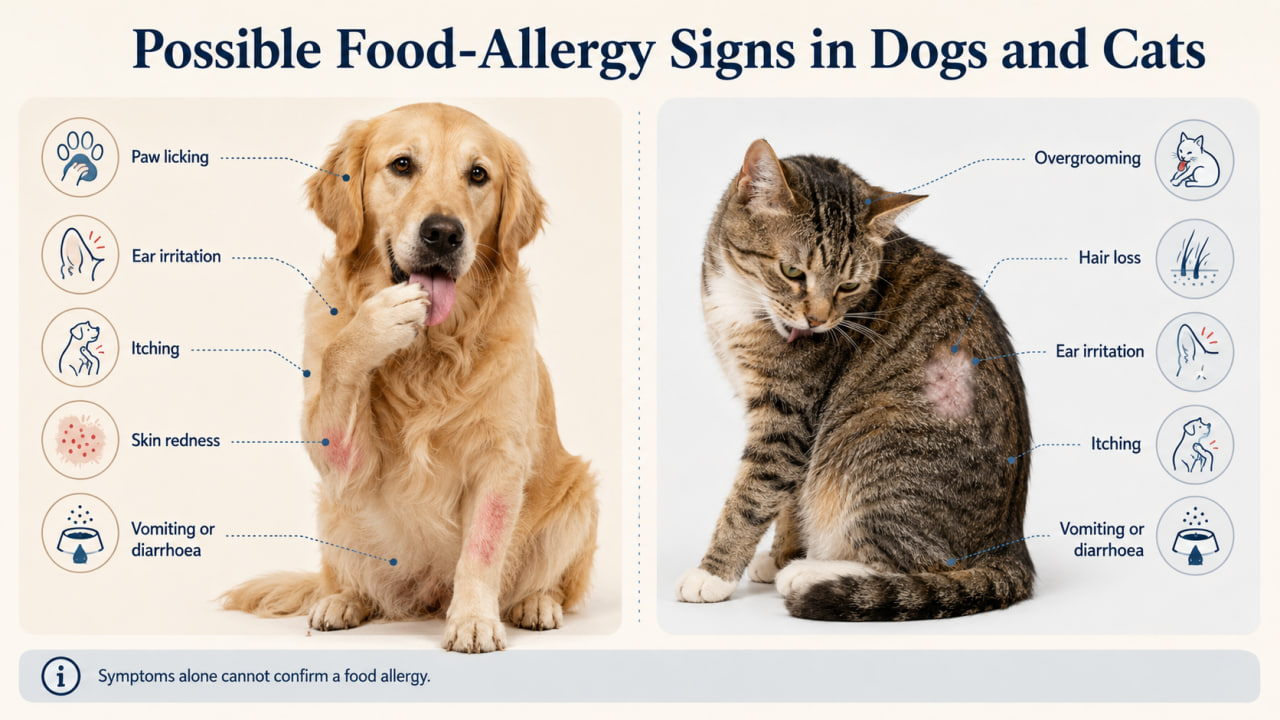
Possible Food-Allergy Signs in Dogs
Dogs with a suspected food allergy may show one or more of the following:
- persistent or recurring itching
- frequent licking or chewing of the paws
- rubbing or scratching the face
- recurring redness or inflammation of the ears
- repeated ear infections
- red, irritated or inflamed skin
- hair loss caused by scratching or licking
- recurring bacterial or yeast skin infections
- vomiting, diarrhoea or frequent loose stool
The ears, paws, face and skin around the rear may be affected, but the location and severity vary between dogs. Itching that continues throughout the year may raise suspicion of a food-related reaction, although environmental allergies and other conditions can also be present year-round.
Possible Food-Allergy Signs in Cats
Cats may express itching differently from dogs. Rather than scratching constantly in front of their owner, they may groom or chew their coat excessively.
Possible signs include:
- frequent scratching around the head, neck or ears
- excessive licking, chewing or overgrooming
- broken hair or symmetrical areas of hair loss
- red skin, crusts or small sores caused by self-trauma
- recurring ear irritation
- vomiting, diarrhoea or loose stool
- changes in appetite or weight when gastrointestinal signs persist
Head and neck itching and self-induced hair loss can occur in cats with adverse food reactions, but these patterns are not specific to food allergy. Fleas, environmental allergies, parasites, infections and other skin conditions must also be considered.
Digestive Signs in Dogs and Cats
Food-related reactions may involve the digestive system as well as the skin. Possible gastrointestinal signs include:
- repeated vomiting
- diarrhoea or persistently loose stool
- increased stool frequency
- gas or abdominal discomfort
- reduced appetite
- unexplained weight loss in persistent cases
Digestive signs alone do not distinguish food allergy from food intolerance or another gastrointestinal condition. For example, a cat that vomits after eating may be eating too quickly, regurgitating rather than vomiting or experiencing an unrelated health problem. Our guide to vomiting after eating in cats explains these differences in more detail.
Food allergy becomes more relevant to investigate when signs are persistent or recurring, when skin and digestive problems occur together, or when other likely causes have already been assessed. Dogs and cats with food allergies may develop pruritic skin disease, gastrointestinal signs or both.
Key point: These signs can justify a veterinary assessment, but they cannot identify the responsible ingredient or confirm a food allergy by themselves.
Which Food Ingredients May Trigger Allergies in Dogs and Cats?
Food allergies are usually reactions to a protein in the diet. That protein may come from meat, fish, dairy, eggs or, less commonly, a plant ingredient.
However, an ingredient that causes a reaction in one pet may be completely safe for another. Chicken, beef or fish are not automatically “bad” ingredients, and their presence on a food label does not prove that they are causing your pet’s symptoms.
Ingredients More Often Reported in Food-Allergy Cases
| Pet | Ingredients more often reported | What owners should know |
|---|---|---|
| Dogs | Beef, dairy, chicken, wheat and lamb | These ingredients are also common in dog foods, so they appear frequently in feeding histories. |
| Cats | Beef, fish and chicken | Many cats eat these proteins regularly, but most can tolerate them without a problem. |
| Dogs and cats | Other animal or plant proteins | A pet may react to a less common ingredient, so the full diet history matters. |
A review of reported food allergens in dogs and cats found these ingredients more often in published cases. This does not mean they will cause an allergy in every pet.
Why Are Chicken and Beef Mentioned So Often?
Chicken and beef are widely used in pet foods, treats and chews. Because many pets eat them regularly, they also appear more often in reported allergy cases.
This does not mean common proteins are low quality or should be avoided by every pet. The important question is not:
“Is chicken a common allergen?”
It is:
“Has my pet reacted to chicken during a properly controlled food trial?”
Can a Pet Become Allergic to a Familiar Food?
Yes, it is possible for a pet to react to an ingredient they have eaten before. A familiar food should not automatically be ruled out.
When reviewing your pet’s diet, include more than the main meal:
- wet and dry food
- treats and training rewards
- dental chews
- table scraps
- supplements and nutrient pastes
- flavoured medications
- food taken from another pet’s bowl
The same protein may appear in several products. For example, a food labelled as “lamb” may also contain chicken or another animal ingredient, depending on the formulation.
Does Grain-Free Mean Hypoallergenic?
No. Grain-free and hypoallergenic do not mean the same thing.
A grain-free food may still contain chicken, beef, fish, egg or several other proteins. If one of those proteins is the problem, removing wheat, maize or rice may not help.
Switching to grain-free food also cannot confirm that grains caused the original symptoms. The new food may differ from the old one in several ways.
Dog owners who are considering this type of food can read our grain-free vs regular dog food guide to understand what the label means and what should be assessed before changing diets.
Cat owners comparing grain-free formulas can also use our guide to grain-free cat food in Europe. This guide is intended for comparing products and labels—not for diagnosing or treating a suspected food allergy.
Is a Novel Protein Always Safe?
Not necessarily.
A novel protein is simply a protein your individual pet has not eaten before. It is different for every animal.
For example:
- Duck may be new for one dog.
- The same duck protein may already be present in another dog’s treats.
- Lamb may sound unusual but may have been part of the pet’s previous diet.
For this reason, choosing a novel protein should be based on the pet’s full feeding history, not only the name on the front of the package.
What Should You Do If You Suspect an Ingredient?
Avoid changing several foods at the same time. If you remove chicken, switch brands, stop treats and add supplements together, you will not know which change affected the symptoms.
Instead:
- List everything your pet eats, including food, treats, chews, supplements and flavoured medicines.
- Photograph the packaging and ingredient lists so you have an accurate record.
- Track symptoms and dates, including itching, ear problems, vomiting, stool changes and appetite.
- Do not blame an ingredient from one reaction alone.
- Share the record with your veterinarian, who can decide whether a controlled elimination diet is appropriate.
Practical takeaway: Do not choose a new food only because it says “grain-free,” “limited ingredient” or “novel protein.” The right choice depends on what your pet has already eaten and how the diet trial will be controlled.
When Is a Food Allergy Worth Investigating?
You cannot confirm a food allergy from symptoms alone. Itching, recurring ear problems, vomiting or diarrhoea may raise suspicion, but several other conditions can cause the same signs.
For example, an itchy dog may have fleas, an environmental allergy or a skin infection. A cat that vomits may be eating too quickly, reacting poorly to a food or experiencing a separate digestive problem.
The Same Symptom Can Have Different Causes
| Symptom | Other possible causes |
|---|---|
| Itchy skin or paw licking | Fleas, pollen, dust mites, parasites or a skin infection |
| Recurring ear problems | Yeast or bacterial infections, ear mites or environmental allergies |
| Vomiting or diarrhoea | Food intolerance, a sudden diet change, parasites or another digestive problem |
| Hair loss or overgrooming | Fleas, itching, pain, stress or another skin condition |
| Red or inflamed skin | Scratching, infection, parasites or contact with an irritating substance |
A pet may also have more than one problem at the same time. For example, an allergy may cause itching, while repeated scratching can lead to a secondary skin or ear infection.
This is why treating only the visible symptom may not solve the full problem.
Patterns That May Justify Further Investigation
A food allergy may be worth investigating when the symptoms:
- keep returning
- continue throughout the year
- affect both the skin and digestive system
- do not fully improve after fleas, parasites or infections have been addressed
- appear to follow a repeated pattern connected with the diet
Even then, this pattern is only a reason to investigate further. It does not prove that food, or one specific ingredient, is responsible.
The AAHA guidelines for allergic skin diseases in dogs and cats support a step-by-step approach that considers parasites, infections, food reactions and environmental allergies instead of identifying the cause from symptoms alone.
Key takeaway: Symptoms can show that something is wrong, but they cannot tell you whether food is responsible or which ingredient may be involved. A structured veterinary assessment is needed to reach a reliable conclusion.
When Should You See a Vet About a Possible Food Allergy?
You do not need to wait until every possible symptom appears. If itching, ear problems or digestive signs keep returning, a veterinary assessment can help identify the cause before the problem becomes more uncomfortable or leads to complications.
Arrange a Veterinary Appointment If Your Pet Has:
- itching or paw licking that keeps returning
- frequent scratching around the face, head or ears
- repeated ear redness, discharge or unpleasant odour
- overgrooming, broken hair or patches of hair loss
- recurring red, sore or inflamed skin
- repeated vomiting, diarrhoea or loose stool
- changes in appetite or unexplained weight loss
- symptoms that improve and then return
- both skin and digestive problems at the same time
These signs do not prove that your pet has a food allergy. Fleas, parasites, infections, environmental allergies and other health conditions can cause similar problems.
The AAHA guidelines for allergic skin diseases in dogs and cats recommend a step-by-step assessment rather than identifying the cause from symptoms alone.
Contact the Veterinary Clinic Promptly If:
- vomiting or diarrhoea becomes frequent or severe
- there is blood in vomit or stool
- your pet refuses food
- your pet becomes weak, unusually quiet or less responsive
- skin sores spread, bleed or produce discharge
- an ear becomes very painful, swollen or produces heavy discharge
- your pet appears to be losing weight
- symptoms become worse during a diet trial
Do not make several food changes while waiting for the appointment. Keeping the diet and routine stable can make the history easier to understand, unless the veterinarian advises otherwise.
Seek Emergency Veterinary Care If Your Pet Has:
- difficulty breathing
- sudden swelling around the face, mouth or throat
- collapse or inability to stand
- severe weakness or loss of responsiveness
- repeated vomiting together with sudden swelling or breathing problems
These signs are not typical of the slow, recurring pattern often seen with food allergies. They may indicate a serious allergic reaction or another emergency condition.
The MSD Veterinary Manual describes anaphylaxis as an extreme emergency in both dogs and cats.
Do not wait to see whether these signs improve on their own.
Avoid Treating the Allergy With Human Medication
Do not give human antihistamines, pain medicines, creams or other treatments unless a veterinarian has confirmed that the product and dose are safe for your pet.
Human medicines may contain ingredients that are unsafe for dogs or cats, and reducing the symptoms temporarily does not identify their cause.
Practical takeaway: Recurring skin, ear or digestive problems deserve a veterinary assessment. Sudden facial swelling, breathing difficulty, collapse or severe weakness require emergency veterinary care.
What to Track Before Seeing a Vet About Food Allergies in Dogs and Cats
You cannot confirm a food allergy at home, but you can collect useful information before the veterinary appointment.
A clear record can help your veterinarian understand when the symptoms started, what your pet has been eating and whether another cause may need to be checked first.
Write Down Everything Your Pet Eats
Start with your pet’s main food, but include every other item they may consume:
- dry and wet food
- treats and training rewards
- dental chews
- table scraps
- supplements and nutrient pastes
- flavoured medicines
- food used to hide tablets
- food taken from another pet’s bowl
Record the exact product name and variety when possible. For example, write down “Brand X Chicken Adult Dry Food” rather than only “dry food.”
The same protein may appear in several different products, so small extras can be important.
Keep a Simple Symptom Diary
You do not need a complicated system. A note on your phone, a notebook or a simple table is enough.
| Date and time | Food or possible exposure | Symptom | What you noticed |
|---|---|---|---|
| Monday morning | Regular breakfast | Paw licking | More frequent than usual |
| Monday evening | New dental chew | Ear scratching | Left ear appeared red |
| Tuesday afternoon | Regular food only | Vomiting | One episode after eating |
Try to record:
- itching or scratching
- paw licking
- ear redness, odour or discharge
- overgrooming or hair loss
- red or sore skin
- vomiting
- stool changes
- appetite changes
- any accidental food or new product
Do not worry about making the notes perfect. The goal is to show the pattern as clearly as possible.
Note When the Symptoms Happen
Useful details include:
- when the problem first started
- whether it happens every day or only sometimes
- whether it continues throughout the year
- whether it appears after a particular food or treat
- whether skin and digestive problems occur together
- whether previous medicines or food changes helped
A symptom appearing after a meal does not automatically prove that the food caused it. However, the timing can still help the veterinarian decide what to investigate.
Take Photos and Keep the Packaging
Take clear photos of:
- red or irritated skin
- areas of hair loss
- affected paws
- visible ear changes
- vomit or unusual stool when appropriate
- the food package and ingredient list
Try to photograph skin or ear changes in similar lighting. This can make gradual improvement or worsening easier to compare.
Keep the food packaging until the appointment when possible. The product name, composition and batch information may be useful.
Avoid Making Several Changes at Once
Unless your veterinarian advises otherwise, avoid changing the food, treats, supplements and grooming products all at the same time.
Making several changes together can make it difficult to understand what affected the symptoms.
Before the appointment:
- do not start a homemade elimination diet
- do not remove several proteins without a plan
- do not switch repeatedly between commercial foods
- do not stop prescribed medicines
- do not give human allergy medicines or creams
If a food appears to cause a rapid or serious reaction, contact a veterinarian instead of deliberately feeding it again.
Prepare a Short List for the Appointment
Bring or show your veterinarian:
- your pet’s current food and previous foods
- photos of labels and ingredient lists
- a list of treats, chews, supplements and medicines
- your symptom diary
- photographs of visible changes
- information about flea and parasite prevention
- details of previous treatments
- any food changes made before the symptoms started
You do not need to identify the responsible ingredient yourself. The purpose of the record is to help the veterinarian assess the possible causes and decide whether a controlled elimination diet trial is appropriate.
Important: Tracking is useful for recurring, non-emergency symptoms. Do not delay veterinary care if your pet has breathing difficulty, sudden facial swelling, collapse, severe weakness, repeated vomiting or another rapidly worsening problem.
Practical takeaway: Record what your pet eats, when the symptoms happen and what changes over time. Good notes cannot diagnose a food allergy, but they can make the veterinary assessment clearer and more useful.
How Do Vets Diagnose Food Allergies in Dogs and Cats?
There is no single symptom or quick test that can confirm a food allergy. Veterinarians usually follow a step-by-step process to rule out other causes and then check whether the pet improves during a carefully controlled diet trial.
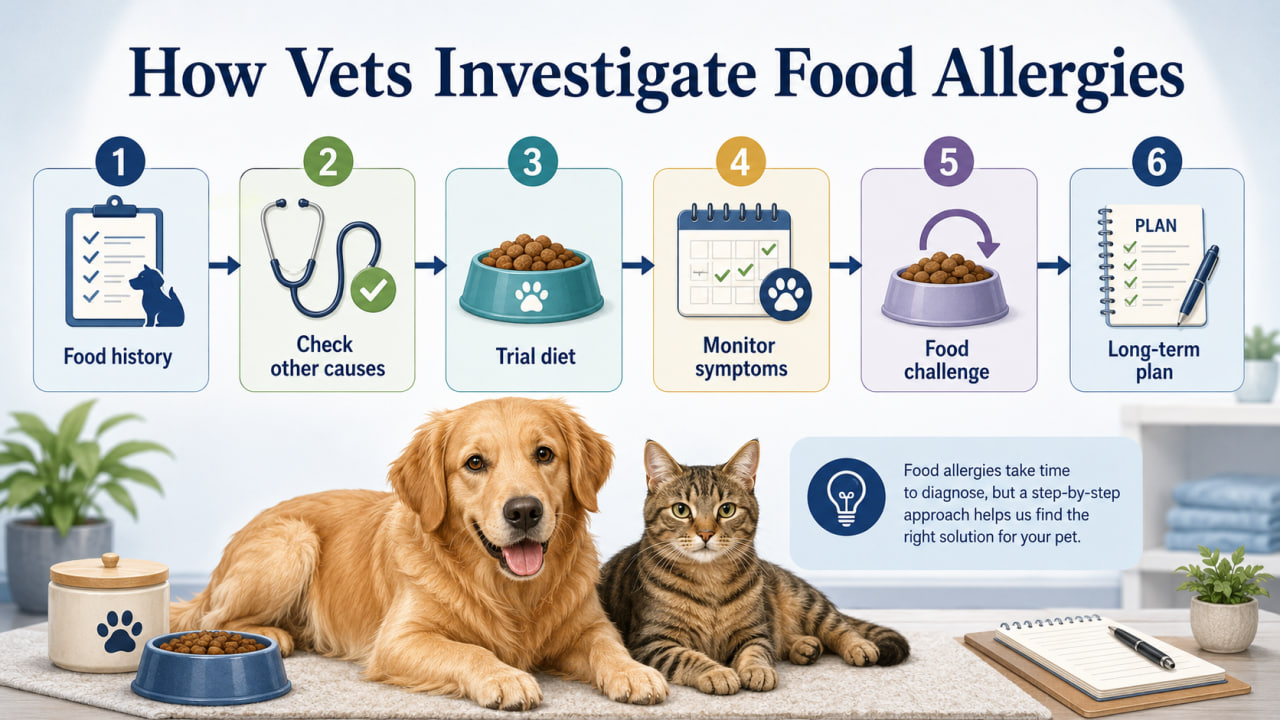
1. Reviewing Your Pet’s History
The veterinarian will usually ask:
- when the symptoms started
- whether they are seasonal or present all year
- which parts of the body are affected
- whether vomiting or diarrhoea also occurs
- which foods, treats and chews your pet has eaten
- which flea treatments, medicines or supplements are used
- whether previous treatments improved the symptoms
A complete food history is especially important because the same protein may appear in several foods, treats or flavoured medicines.
2. Checking for Other Causes
Before blaming food, the veterinarian may examine your pet for other common causes of itching or digestive problems, such as:
- fleas or other parasites
- bacterial or yeast infections
- ear infections
- environmental allergies
- other skin or digestive conditions
These problems may look very similar to a food allergy. A pet may also have more than one condition at the same time.
3. Selecting a Trial Diet
If food allergy is still suspected, the veterinarian may recommend an elimination diet.
The diet is selected from your pet’s full feeding history. It may use:
- a protein your pet has not eaten before, or
- a hydrolysed protein that has been broken into smaller pieces
The chosen food should also be complete and appropriate for your pet’s species, age, life stage and health needs.
4. Monitoring the Response
During the trial, your pet should eat only the approved diet and anything specifically allowed by the veterinarian.
The trial length depends on the symptoms and the veterinary plan. Skin and ear problems may take longer to assess than digestive signs.
Your veterinarian may ask you to record:
- itching and licking
- ear or skin changes
- vomiting
- stool quality
- appetite
- accidental foods or treats
The next section explains how to follow an elimination diet trial correctly at home.
5. Confirming the Result With a Food Challenge
If the symptoms improve during the elimination diet, a food-related reaction becomes more likely, but improvement alone does not confirm an allergy.
When it is considered safe, the veterinarian may reintroduce the previous food in a controlled way. If the symptoms return, this provides stronger evidence that the original diet contained a trigger.
The MSD Veterinary Manual describes a strict elimination diet followed by a controlled dietary challenge as the reference standard for confirming food allergies in dogs and cats.
Do not reintroduce the previous food without veterinary instructions, especially if your pet has had a rapid or serious reaction.
Can a Blood, Saliva or Hair Test Diagnose a Food Allergy?
No. Blood, saliva and hair tests are not reliable methods for diagnosing food allergies in dogs or cats.
Skin or blood allergy testing may be used in selected cases to investigate environmental allergens, such as pollen or dust mites. However, these tests do not identify food allergens reliably and cannot replace a controlled elimination diet followed by a dietary challenge.
The MSD Veterinary Manual explains that skin, blood and saliva testing are unreliable methods for diagnosing food allergies in dogs and cats.
Practical takeaway: Be cautious about home testing kits that claim to identify food allergens from hair, saliva or blood samples. Their results should not be used alone to remove ingredients from your pet’s diet or select a long-term feeding plan.
How to Run an Elimination Diet Trial Correctly in Dogs and Cats
An elimination diet trial only gives useful information when it is followed carefully. During the trial, your pet should eat only the diet approved by your veterinarian.
This is more than changing the brand of food. Treats, chews, table scraps and flavoured medicines may contain proteins that are not part of the trial and can make the result difficult to understand.
Before the Trial Begins
Ask your veterinarian to write down:
- the exact food your pet should eat
- the daily feeding amount
- how long the trial should continue
- which treats, medicines or supplements are allowed
- what symptoms you should track
- when the next check-up should take place
Do not choose a food only because the package says “hypoallergenic,” “grain-free,” “sensitive” or “limited ingredient.” The trial diet should be selected from your pet’s complete feeding history and individual needs.
What Can Your Pet Eat During the Trial?
In most cases, your pet should receive only:
- the approved trial diet
- fresh water
- medicines or supplements approved by the veterinarian
Some veterinarians may allow part of the approved food to be used as a treat. Ask before adding anything else.
Do not give homemade snacks or substitute another food without checking first. Even a small amount of a different protein may make the trial harder to assess.
What Should Be Avoided?
Unless your veterinarian specifically approves them, avoid:
- regular treats and training rewards
- dental chews and rawhide products
- table scraps
- milk, cheese or other human foods
- supplements and nutrient pastes
- flavoured toothpaste
- flavoured medicines
- food used to hide tablets
- food from another pet’s bowl
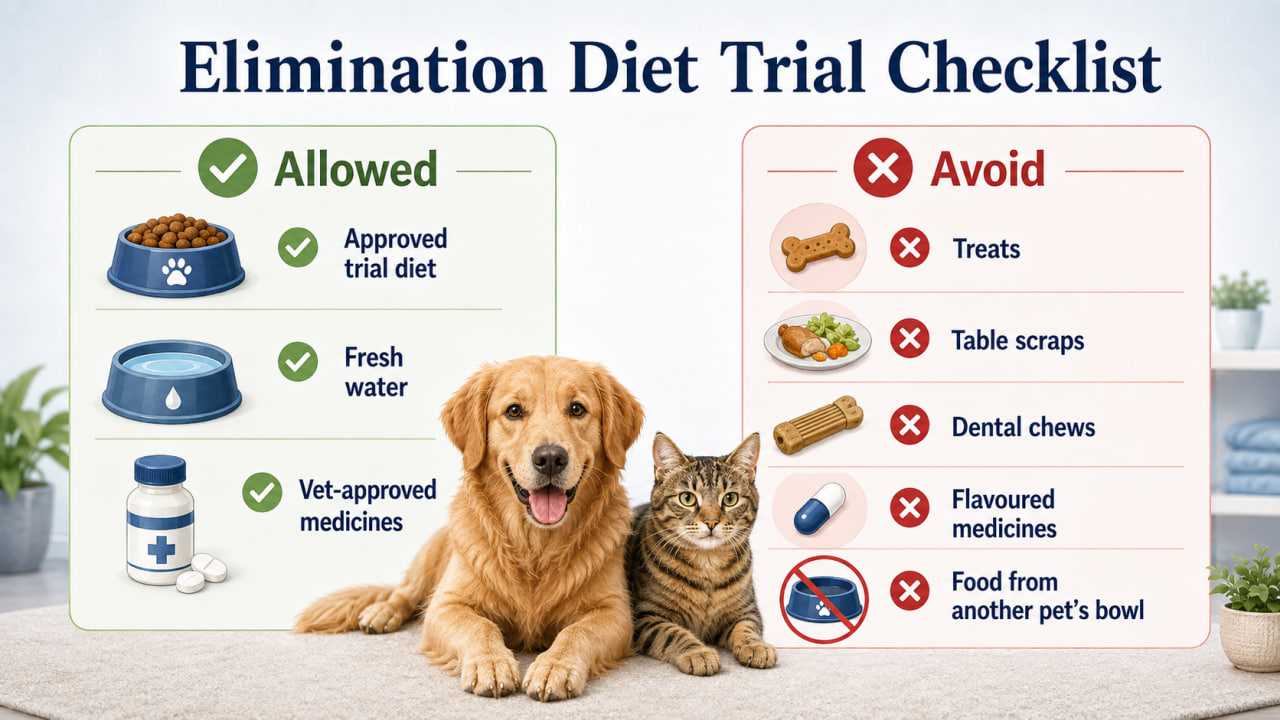
Check that everyone in the household understands the plan. Children, visitors, dog walkers and pet sitters should also know that no extra food is allowed.
Simple household rule: If an item is not on the veterinarian’s approved list, do not give it during the trial.
How Long Does the Trial Take?
The exact length depends on your pet’s symptoms and the plan set by the veterinarian.
Digestive signs may change sooner than skin or ear problems. Itching and damaged skin can take longer to improve, especially when a secondary infection is also present.
The MSD Veterinary Manual explains that recommendations for the length of an elimination diet vary and that some pets with skin signs may need a longer trial.
Do not stop the diet early because:
- the symptoms have not improved after only a few days
- the symptoms improved quickly
- your pet appears bored with the food
- another food looks more suitable
Continue until the planned review date unless your veterinarian tells you to change or stop the diet.
Keep a Simple Symptom Diary
You do not need a complicated tracking system. Make a short note each day or several times per week.
| What to track | A simple way to record it |
|---|---|
| Itching and licking | Better, unchanged or worse |
| Ear problems | Redness, odour, discharge or head shaking |
| Skin condition | Redness, sores, hair loss or healing |
| Vomiting | Date, time and number of episodes |
| Stool quality | Normal, soft, loose or watery |
| Appetite | Normal, reduced or increased |
| Extra foods | Record any treat, chew or accidental food |
| Medication | Name, dose and date given |
Take clear photos of visible skin or ear changes at the start of the trial and again during the trial. Photos taken in similar lighting can make gradual changes easier to notice.
What If Your Pet Eats Something Else?
Do not hide an accident or assume that the whole trial has failed.
Write down:
- what your pet ate
- approximately how much was eaten
- when it happened
- whether any symptoms changed afterwards
Then contact the veterinary clinic and ask whether the trial should continue as planned or whether the timeline needs to be adjusted.
One accidental bite does not always mean starting again, but the veterinarian needs to know about it when interpreting the result.
Do Not Change Medicines on Your Own
Some medicines, parasite preventives and supplements may contain flavourings. Ask the veterinarian whether they can be continued during the trial.
Do not stop a prescribed medicine without veterinary advice. The veterinarian may approve the current product, choose another form or explain how it should be given without using an unapproved food.
What Happens at the End of the Trial?
At the review appointment, the veterinarian will compare the symptoms before and during the diet.
If there has been no meaningful improvement, food may be less likely to be the main cause, or the trial may need to be reviewed for hidden foods, other health problems or problems with the chosen diet.
If the symptoms improve, this still does not confirm a food allergy by itself. When it is considered safe, the veterinarian may recommend a controlled dietary challenge by reintroducing the previous food and monitoring whether the symptoms return.
Do not perform this challenge without instructions, especially if your pet previously had a serious or rapid reaction.
When Should You Contact the Veterinarian Earlier?
Contact the veterinary clinic before the planned review if your pet:
- refuses the trial food
- eats very little for an unusual period
- repeatedly vomits
- develops severe or worsening diarrhoea
- loses weight
- becomes weak or unusually quiet
- develops rapidly worsening skin or ear problems
- has a possible reaction after eating something else
Practical takeaway: A successful elimination diet trial depends on three things: the right diet, strict control of everything your pet eats and clear symptom records. Do not make several food changes at once or judge the result after only a few days.
What to Do After a Food Allergy Is Confirmed in Dogs and Cats
Once a food allergy has been confirmed, the main goal is simple: avoid the ingredient that causes the reaction while giving your pet a complete and balanced diet.
This does not mean removing chicken, beef, fish, grains and dairy all at once. Your pet only needs to avoid the confirmed trigger and any other ingredients your veterinarian has advised you to exclude.
Choose a Safe Long-Term Food
Your veterinarian may recommend:
- continuing the food used during the successful elimination diet
- changing to another complete food that does not contain the trigger
- using a hydrolysed diet
- using a home-prepared diet designed by a veterinary nutrition professional
The food should still meet your pet’s needs based on their species, age, life stage and health.
Do not continue a very limited homemade diet without professional guidance. Removing several ingredients can make the diet incomplete if important nutrients are not replaced.
Check More Than the Main Food
The problem ingredient may also appear in products other than your pet’s regular food.
Check:
- treats
- dental chews
- supplements
- nutrient pastes
- flavoured medicines
- food used to hide tablets
- table scraps
- food belonging to another pet
Ask your veterinarian which ingredient names you should look for. The same protein may be listed in different ways on food and treat labels.
Read the Label Before Buying
Do not choose a product only from the flavour written on the front of the package.
For example, a food sold as “lamb” may also contain chicken, fish or another animal protein. Product recipes can also change, so check the ingredient list when buying a new package.
Our guide to reading a pet food label in Europe explains how to check the composition, product details and feeding information.
Keeping a photo of the package and ingredient list can also help if symptoms return later.
Does Your Pet Need to Avoid Every Meat or Protein?
No. A reaction to one protein does not mean your pet is allergic to every type of meat, fish or animal ingredient.
For example, a dog with a confirmed reaction to chicken may still tolerate another protein. This should be decided with your veterinarian rather than by removing several foods without a clear reason.
Avoiding too many ingredients can make it harder to find a suitable complete diet.
What Should You Do If the Symptoms Return?
First, think about anything that may have changed:
- Was a new treat or chew given?
- Did someone offer table food?
- Did your pet eat from another animal’s bowl?
- Was a new medicine or supplement started?
- Did the food recipe or packaging change?
Write down what happened and check the labels of any new products.
Do not automatically assume that the food allergy is getting worse. Fleas, infections, environmental allergies and digestive problems can still affect a pet with a confirmed food allergy.
Contact your veterinarian if the symptoms continue, become worse or return without an obvious reason.
Should You Test the Ingredient Again at Home?
Do not deliberately feed the suspected ingredient again unless your veterinarian has given you a clear plan.
Reintroducing the ingredient may cause the symptoms to return. It may also be unsafe if your pet previously had a fast or serious reaction.
Keep a Simple Record
You do not need to record every meal forever. Keep a basic note of:
- the current food and product name
- ingredients that must be avoided
- approved treats and chews
- medicines and supplements
- any return of skin, ear or digestive problems
- changes to the food or its ingredient list
This record can help prevent accidental exposure and make future veterinary visits easier.
Practical takeaway: Avoid the confirmed trigger, check all foods and treats, and choose a complete long-term diet with veterinary guidance. Do not remove several unrelated ingredients without a clear reason.
Frequently Asked Questions About Food Allergies in Dogs and Cats
What foods most commonly trigger allergies in dogs and cats?
In reported veterinary cases, beef, dairy products, chicken, wheat and lamb appear more often in dogs. Beef, fish and chicken appear more often in cats.
However, these ingredients are not harmful to every pet. A dog or cat may tolerate them normally, and another ingredient may be responsible in an individual case.
Can a dog or cat become allergic to a food they have eaten for years?
Yes. A familiar food cannot be ruled out only because your pet has eaten it previously without an obvious problem.
However, symptoms appearing while a pet eats a familiar food do not prove that the food is responsible. A controlled veterinary diet trial is still needed.
Does improvement after changing food confirm a food allergy?
No. Improvement after changing food is useful information, but it does not confirm a food allergy by itself.
The new diet may differ in several ingredients, another condition may have improved or exposure to a different trigger may have decreased. Confirmation usually requires improvement during a strict elimination diet followed by the return of symptoms during a controlled dietary challenge.
Is grain-free or limited-ingredient food suitable for a food allergy?
Not automatically.
A grain-free food may still contain chicken, beef, fish, egg or another protein that causes a reaction. A limited-ingredient product may also contain ingredients your pet has eaten before.
The trial diet should be selected from the pet’s full feeding history, not only from marketing claims on the package.
Can a pet be allergic to chicken but tolerate other meats?
Yes. A reaction to chicken does not automatically mean the pet will react to beef, lamb, fish or every other animal protein.
Do not test several proteins at home without veterinary guidance. A controlled dietary challenge may be needed to determine which ingredients are tolerated.
Can food allergies cause digestive problems without itching?
Yes. Some dogs and cats may mainly show digestive signs such as vomiting, diarrhoea, loose stool, gas or increased stool frequency.
These signs can also result from food intolerance, parasites, sudden diet changes or other digestive conditions. Digestive symptoms alone do not confirm a food allergy.
Can a pet have both food and environmental allergies?
Yes. A dog or cat may have more than one allergic condition at the same time.
For example, a pet may react to a dietary ingredient while also being affected by pollen, dust mites or flea exposure. This is one reason symptoms may improve during a food trial without disappearing completely.
Key takeaway: A food allergy cannot be identified from one symptom, one ingredient list or a home testing kit. A reliable diagnosis usually requires a complete feeding history, a strict elimination diet and a controlled dietary challenge guided by a veterinarian.
Keep Your Pet’s Food and Symptom Records Organised
Keeping clear notes about your pet’s food, treats, symptoms and health changes can make veterinary conversations more useful.
FAMMO helps you organise this information in one place, so it is easier to track changes and prepare for veterinary visits. FAMMO does not diagnose food allergies or replace professional veterinary care.
Sources and Editorial Notes
This article was developed using guidance from recognised veterinary and companion-animal nutrition organisations, together with a peer-reviewed review of reported food allergens in dogs and cats.
The sources below informed the sections on possible symptoms, other conditions with similar signs, commonly reported food triggers, veterinary diagnosis, elimination diet trials, dietary challenges and long-term feeding.
Main Veterinary Sources
-
MSD Veterinary Manual — Cutaneous Food Allergy in Animals
Used for the definition and possible signs of food allergy, the role of a strict elimination diet, controlled dietary rechallenge and long-term avoidance of a confirmed trigger. -
MSD Veterinary Manual — Nutrition in Disease Management in Small Animals
Used for the general duration of food trials for gastrointestinal and dermatological signs, and for explaining why symptoms alone cannot reliably distinguish food allergy from food intolerance. -
2023 AAHA Management of Allergic Skin Diseases in Dogs and Cats Guidelines
Used for the step-by-step investigation of allergic skin disease, checking for parasites and infections, planning diet trials and explaining why symptoms alone cannot confirm a food allergy. -
AAHA Allergic Skin Diseases Toolkit
Used for practical guidance on elimination diet trials, owner compliance and assessing the results of a controlled food trial.
Evidence on Reported Food Triggers
- Mueller RS, Olivry T and Prélaud P — Common Food Allergen Sources in Dogs and Cats
Used for the ingredients more frequently reported in published food-allergy cases, including beef, dairy products, chicken and wheat in dogs, and beef, fish and chicken in cats.
This review does not show that these ingredients are harmful to every pet or provide the true risk for an individual animal. Frequently reported ingredients may also be widely used in pet foods, and an individual dog or cat may react to a different dietary protein.
Nutrition and Long-Term Feeding Sources
-
WSAVA Global Nutrition Guidelines
Used for the importance of individual nutritional assessment and choosing a feeding plan that considers the animal’s species, life stage, health and dietary history. -
WSAVA Guidelines on Selecting Pet Foods
Used for guidance on selecting an appropriate food and checking whether it is intended to provide complete nutrition.
Editorial and Medical Notes
- Food allergy is not diagnosed from symptoms, an ingredient list or a home testing kit alone.
- The reported food triggers in this article describe patterns found in previous veterinary cases. They cannot predict which ingredient, if any, is affecting an individual pet.
- A strict elimination diet followed by a controlled dietary challenge is considered the reference standard for confirming a food allergy.
- The trial diet, trial length, permitted treats and dietary challenge should be planned with a veterinarian.
- Dogs and cats should not be placed on a highly restricted or homemade long-term diet without appropriate nutritional guidance.
- Products described as “grain-free,” “limited ingredient,” “sensitive” or “hypoallergenic” are not automatically suitable for every pet with suspected food allergy.
- FAMMO can help owners organise food, symptom and health information, but it does not diagnose food allergies or replace veterinary care.
Important: This article is for general education only. Contact a veterinarian if your dog or cat has persistent itching, recurring ear or skin problems, repeated vomiting, diarrhoea, appetite changes or unexplained weight loss. Breathing difficulty, sudden facial swelling, collapse or severe weakness require urgent veterinary care.
Last editorial review: 2026-08-06