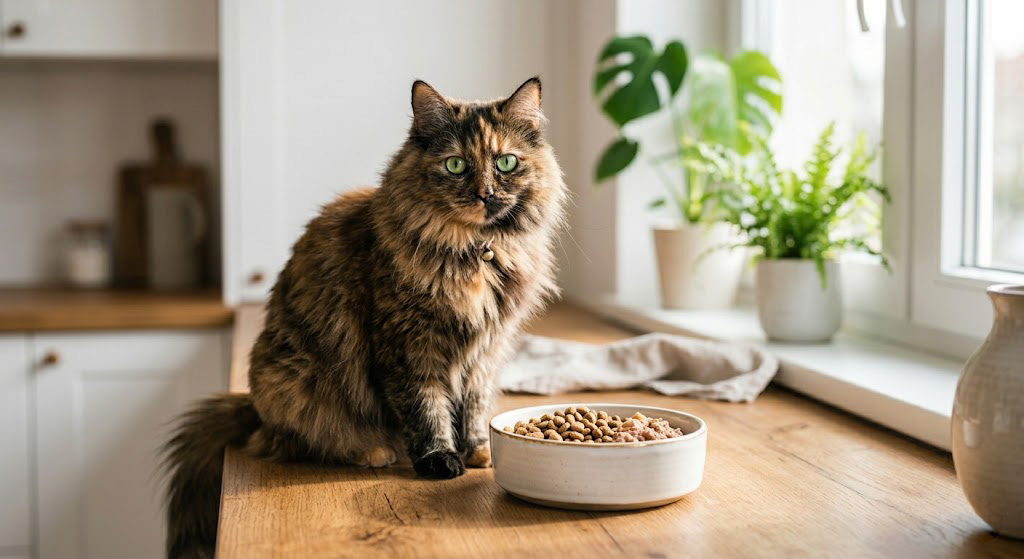
Finding the best grain-free cat food in Europe in 2026 means navigating a crowded market filled with misleading labels. Just because a bag says ‘grain-free’ doesn’t necessarily mean it provides the optimal, preventive nutrition your cat needs.
Quick Answer: What Is the Best Grain-Free Cat Food in Europe?
Finding the best grain-free cat food in Europe in 2026 means
looking past the label and focusing on what the formula actually
delivers: named animal protein, adequate taurine, and nutritional
completeness verified against European FEDIAF standards.
The strongest options available across Europe are Farmina N&D,
Animonda Carny, Bozita, Almo Nature HFC, Edgard & Cooper, and
Yarrah, a Dutch organic brand that stands out for its certified
organic ingredients and grain-free wet food range, making it a
particularly relevant choice for cat owners in the Netherlands
and across the Benelux region.
The right choice, however, depends on your cat’s age, digestion,
and health profile. If you are comparing grain-free options
alongside conventional formulas, our complete cat food brand guide for Europe covers both side by side.
In 2026, the European grain-free market has expanded significantly, and so has the confusion around it. This guide gives you a clear, evidence-based answer built around European brands, European standards, and your cat’s real nutritional needs.
Best Grain-Free Cat Food in Europe: Quick Comparison
The table below compares the top grain-free cat food brands
available across Europe in 2026, evaluated by format, protein
source, key differentiator, and approximate price positioning.
Brand | Country | Format | Key Proteins | USP | Price Tier |
|---|---|---|---|---|---|
Farmina N&D | 🇮🇹 Italy | Dry & Wet | Chicken, Lamb, Venison, Boar | Low glycaemic index, exact protein % declared | Premium |
Animonda Carny | 🇩🇪 Germany | Dry & Wet | Beef, Chicken, Turkey, Cod, Rabbit | 100% transparent meat percentages on every label | Mid-Range |
Bozita | 🇸🇪 Sweden | Wet | Arctic Salmon, Reindeer, Chicken | High moisture, Nordic eco-sourcing | Mid-Range |
Almo Nature HFC | 🇮🇹 Italy | Wet & Dry | Chicken, Tuna, Salmon | Minimalist ingredients, human-food-chain sourcing | Premium |
Edgard & Cooper | 🇧🇪 Belgium | Dry & Wet | Fresh Chicken, Turkey, MSC Whitefish | High fresh meat content, sustainability-certified | Premium |
Yarrah | 🇳🇱 Netherlands | Wet grain-free / Dry wheat-free | Organic Chicken, MSC Herring | Full European Organic Certification | Premium |
Lily’s Kitchen | 🇬🇧 UK | Dry & Wet | Freshly prepared Chicken, White Fish, Venison | Entire product line is grain-free as standard | Premium |
Price tier is indicative and may vary by location and retailer across Europe.
Top Grain-Free Cat Food Brands in Europe (2026)
The following brands are among the most recognised and accessible grain-free options for cat owners across Europe. Each is evaluated on protein quality, ingredient transparency, nutritional completeness, and real-world suitability for European households.
1. Farmina N&D Grain-Free (Italy)
Farmina N&D is one of Europe’s most respected premium cat food lines, with a dedicated grain-free range built around high animal protein inclusion and low-glycaemic formulas.
Key Strengths:
Recipes built on named animal proteins, chicken, lamb, venison, cod, or duck, listed as the primary ingredient
Brand publishes detailed nutritional analyses including exact protein percentages and caloric density
Available in both dry and wet formats for kittens, adults, and senior cats
Uses eggs as a secondary protein source in many recipes, improving amino acid completeness
Best For: Cats that do well on dry food and owners seeking a premium grain-free formula with clear nutritional positioning and a strong European track record.
2. Animonda Carny (Germany)
Animonda Carny is a German wet food line built around transparent, meat-first feeding. Most formulas are naturally grain-free and list the exact percentage of each animal ingredient directly on the label.
Key Strengths:
Labels clearly state the percentage of each animal component, for example, 63% poultry heart, 15% poultry liver, 12% poultry lung
Strictly grain-free with no added sugars or soy
Wide variety of single and mixed protein recipes, useful for rotation feeding or identifying sensitivities
Strong availability across European pet retailers and online stores
Best For: Cats that prefer wet food and owners who want maximum ingredient transparency with genuine meat-first formulas at a reasonable price point.
3. Bozita Grain-Free (Sweden)
Bozita is a Swedish brand known for high meat content, Nordic sourcing standards, and practical packaging. Their grain-free wet food range uses proteins such as reindeer, arctic salmon, and chicken, sourced under Swedish animal welfare regulations.
Key Strengths:
High moisture content supports daily hydration, especially important for cats with low thirst drive
Unique Nordic proteins provide variety for rotation feeding
Eco-friendly Tetra Recart® packaging reduces environmental impact
Clearly labeled as grain-free with named protein sources
Best For: Cats needing high-moisture diets, owners who rotate proteins to reduce sensitivity risk, and environmentally conscious households.
4. Almo Nature HFC (Italy)
Almo Nature’s HFC (Human Food Chain) line is built on a minimalist philosophy, short ingredient lists, no unnecessary additives, and proteins sourced from ingredients originally considered fit for human consumption.
Key Strengths:
Extremely simple ingredient lists, often just one protein source in natural broth
No artificial preservatives, colours, or flavours
Naturally grain-free due to minimal ingredient approach
Highly palatable for picky eaters due to natural aromas and textures
Best For: Cats with sensitive digestion or suspected food intolerances who benefit from minimal-ingredient feeding, and selective eaters who reject heavily processed foods.
5. Edgard & Cooper Grain-Free (Belgium)
Edgard & Cooper is a Belgian brand that combines fresh-meat positioning with strong sustainability values. Their grain-free recipes use fresh or dried meat as the primary protein source and avoid artificial additives.
Key Strengths:
Fresh meat listed as the first ingredient in most recipes
Clear communication around sourcing and sustainability
Available in both dry and wet formats with several protein options
Strong presence across European pet retailers
Best For: Owners looking for a modern European grain-free brand with both nutritional integrity and a genuine commitment to environmental responsibility.
6. Yarrah Organic Grain-Free (Netherlands)
Yarrah is a Dutch organic pet food brand founded in 1992 and one of the few European labels to carry full organic certification across its entire product range. Headquartered in Harderwijk, Netherlands, Yarrah is particularly well-distributed across the Benelux region and increasingly available through Zooplus and specialty retailers across Europe.
Key Strengths:
Certified organic ingredients across the full range, one of the only European brands to hold this standard consistently
Grain-free wet food line uses certified organic chicken and MSC-certified sustainable herring
No artificial preservatives, colourings, GMOs, or added pesticides
Holds the three-star Beter Leven (Better Life) certification from the Dutch Society for the Prevention of Cruelty to Animals
One important distinction: Yarrah’s dry food range is wheat-free rather than fully grain-free, some dry formulas contain rice protein or other grain derivatives. If a strict grain-free dry formula is your priority, their wet food pâté line is the right choice, as it is fully grain-free and built on named organic chicken and turkey as primary ingredients.
Best For: Cat owners in the Netherlands and Benelux who prioritise certified organic sourcing and sustainable fishery standards, and owners across Europe who want a grain-free wet food option with full organic certification.
7. Lily’s Kitchen Grain-Free (United Kingdom)
Lily’s Kitchen is a UK-founded brand with a strong following across Britain and a growing presence in continental Europe via Zooplus and specialty pet retailers. Their entire cat food range, dry and wet, is grain-free, which is relatively rare among brands that operate across both formats.
Key Strengths:
Entire cat food range is grain-free as standard, not as a premium sub-line
Recipes use freshly prepared meat, offal, and fish as primary ingredients with no artificial additives or added sugars
Organic wet food options available, certified and clearly labeled
Winner of Feefo’s Platinum Trusted Service award with over 29,000 five-star reviews
Available across UK supermarkets and via Zooplus for European buyers
One thing to note: Lily’s Kitchen dry food is produced in a facility that also handles grains, so traces may be present, relevant for cats with confirmed severe grain sensitivity.
Best For: Owners in the UK and northern Europe looking for an accessible, widely available grain-free brand across both wet and dry formats, particularly those who prefer recipes built on freshly prepared meat rather than dried or meal-based protein sources.
What Does Grain-Free Actually Mean?
Grain-free cat food is any formula that excludes common cereal grains such as wheat, corn, rice, barley, oats, and rye. These ingredients appear in conventional pet food for three reasons: as a carbohydrate energy source, as a binding agent that holds kibble structure together, or as a cost-effective way to add bulk and calories.
What Replaces the Grains?
When grains are removed, something else takes their place. The most common substitutes in European grain-free formulas are:
Peas and lentils, high in plant protein, widely used in dry food for structure and calorie density
Potatoes and sweet potatoes, moderate to high glycaemic impact, commonly used in wet and dry formats
Tapioca, highly digestible, lower glycaemic impact, neutral in flavour
Chickpeas, high starch content, less ideal for carbohydrate-sensitive cats
None of these replacements are inherently more “natural” for a cat than grains. They are plant-based carbohydrate sources that serve a structural or caloric function in the formula.
The Carbohydrate Myth
One of the most persistent misunderstandings about grain-free cat food is that removing grains automatically reduces carbohydrates. Research from the Cummings School of Veterinary Medicine at Tufts University found that while grain-free diets contained on average fewer carbohydrates than grain-inclusive formulas, some grain-free products contained equal or even higher carbohydrate levels, depending entirely on what was used to replace the grains. A peer-reviewed study published in the Journal of Feline Medicine and Surgery confirmed this finding across 77 commercially available dry cat diets.
For the full research, see: Tufts University Cummings Veterinary Medical Center — Grain-Free Cat Diet Research
The Right Question to Ask
The important question is not whether a food contains grains. The important question is:
What is replacing the grains, and does the overall formula deliver the animal protein, taurine, and complete nutrition your cat actually needs?
A grain-free dry food built primarily on peas and potato starch can be nutritionally inferior to a well-formulated grain-inclusive wet food with named animal protein as its first ingredient. The label tells you what was removed. The ingredient list tells you what was put in its place. Always read both.
Do Cats Need Grain-Free Food?
Cats are obligate carnivores. Their digestive systems are optimised for animal protein and fat, not carbohydrates. Unlike dogs or humans, cats have a limited enzymatic capacity to process plant-based starches, meaning carbohydrates contribute less efficiently to their energy and nutritional needs.
That said, most healthy cats can tolerate moderate amounts of digestible carbohydrates in a complete and balanced diet without significant health consequences. True grain allergies in cats are relatively uncommon, when digestive problems or skin reactions do appear, they are more often linked to a specific animal protein source (such as chicken or beef) than to grains themselves.
This does not mean grain-free is without value. For certain cats, a well-formulated grain-free diet can make a meaningful difference, particularly when the formula uses that grain-free space to deliver more animal protein rather than simply swapping one carbohydrate source for another.
When Grain-Free May Genuinely Help
Cats with confirmed grain sensitivity or intolerance diagnosed by a veterinarian
Cats showing chronic digestive upset (such as loose stools, bloating, or vomiting) that persists after switching grain-inclusive formulas
Cats whose owners prefer a more meat-focused diet aligned with feline biology
Cats that thrive better on higher-protein, lower-carbohydrate formulas, particularly sterilised cats prone to weight gain
⚠️ A Note on Veterinary Guidance
If your cat has specific health conditions such as kidney disease, diabetes, urinary issues, or food allergies, please consult your veterinarian before switching to a grain-free diet. This guide is for educational purposes and is not a substitute for professional veterinary advice.
Not Sure Whether Grain-Free Is the Right Choice for Your Cat?
Every cat has a unique nutritional profile shaped by age, weight, activity level, sterilisation status, and health history. A grain-free formula that works well for one cat may be unnecessary, or even counterproductive, for another.
Before you change your cat’s diet, it helps to start from their actual profile rather than a general recommendation.
Fammo’s free AI nutrition tool analyses your cat’s individual data, age, weight, activity level, sterilisation status, and health signals, and tells you whether a grain-free formula genuinely fits their needs, which format suits them best, and what to look for on the label before you buy.
No guesswork. No generic advice. Just a clear, personalised answer for your cat specifically.
→ Analyse Your Cat’s Nutrition for Free
No payment required. No subscription. Takes under two minutes.
European Standards and Grain-Free Cat Food
European pet food production operates under one of the most rigorous regulatory frameworks in the world. Every brand selling cat food across EU member states, including the Netherlands, Germany, France, Sweden, and Belgium, must comply with EU Regulation (EC) No. 767/2009, the primary legal framework governing pet food labeling, ingredient declaration, and nutritional claims across Europe.
Alongside this legislation, brands follow science-based nutritional benchmarks set by the European Pet Food Industry Federation (FEDIAF), whose 2025 Nutritional Guidelines, reviewed annually by an independent Scientific Advisory Board, serve as the definitive reference for nutritional completeness, ingredient traceability, and labeling integrity across the continent.
What European Law Actually Requires on Every Label
Under EU Regulation 767/2009, every grain-free cat food sold in Europe must legally declare:
All ingredients listed in descending order by weight, so the primary protein source is always visible at the top, not hidden behind marketing language
Clear identification of the product as “complete” or “complementary”, so you know whether a food can serve as your cat’s sole daily diet or only as a supplement
Analytical constituents on every pack, crude protein, crude fat, crude fibre, crude ash, and moisture content must all be declared
No unsubstantiated health claims, a brand cannot state that a formula “supports joint health” or “improves coat condition” without evidence to back the claim
Named animal protein sources, vague terms like “meat derivatives” must be properly classified; quality brands go further by listing exact percentages
Why This Matters for Grain-Free Specifically
Grain-free is a marketing term, not a protected legal category under EU law. This means any brand can use it. What European regulation does protect is what surrounds that claim, the ingredient list, the nutritional analysis, and the complete versus complementary status that sits alongside it.
When you choose a European grain-free brand, you are not simply trusting a label , you are starting from a legal baseline that requires transparency at every level. This is a meaningful advantage compared to markets such as the United States, where labeling standards vary significantly by state and federal oversight of pet food health claims is less stringent than in the EU.
For the full 2025 FEDIAF Nutritional Guidelines, visit europeanpetfood.org.
What to Look for in a Grain-Free Cat Food
Before comparing specific brands, it helps to understand what a high-quality grain-free formula should contain, and what it should avoid. These are the criteria that separate genuinely meat-forward formulas from grain-free products that simply swap one cheap carbohydrate for another.
1. Named Animal Protein as the First Ingredient
The first ingredient listed should be a clearly identified animal protein source: chicken, turkey, salmon, duck, rabbit, or lamb. This is not optional; it is the most reliable single indicator of formula quality.
Avoid formulas where the first ingredient is a starch, a plant-based protein concentrate, or a vague term such as “meat and animal derivatives” without a named species. On a European label, named ingredients are a legal requirement under EU Regulation 767/2009, but the percentage of each ingredient is voluntary — quality brands declare it transparently anyway.
2. Honest Meat Inclusion Percentage
Look for formulas with a total meat or fish inclusion of at least 60–70% for wet food and at least 40% for dry food. Some premium European brands, including Farmina N&D and Animonda Carny, list exact percentages openly. If a brand does not disclose inclusion rates at all, that is worth noting before you buy.
3. Sensible Carbohydrate Alternatives
If grains are removed, something replaces them. The best alternatives are those with lower glycaemic impact and higher digestibility for cats:
More suitable alternatives:
- Tapioca, neutral flavour, highly digestible, low glycaemic impact
Butternut squash or pumpkin, lower starch content, supports digestive regularity
Sweet potato, moderate glycaemic impact, reasonable fibre source when used in small amounts
Less ideal alternatives found in many grain-free products:
White potato, high glycaemic impact, minimal nutritional value for cats
Chickpeas, high starch, lower digestibility
A note on peas and lentils: This requires honest context. Peas and lentils appear widely in grain-free dry food as a structural and protein source. Research from the FDA and Tufts University’s Cummings School of Veterinary Medicine has identified a potential association between diets high in legume-based ingredients and dilated cardiomyopathy (DCM) in pets, a serious heart condition. The mechanism is not yet fully understood and is not confirmed as causal, but the association is strong enough that most veterinary cardiologists recommend caution when legumes appear high in the ingredient list or multiple times across the formula. If peas or lentils appear as the second or third ingredient in a dry grain-free formula, it is worth discussing with your veterinarian, particularly for cats with any history of cardiac issues.
For the full research, see:
Tufts Veterinary Nutrition — Diet-Associated DCM*
4. Complete and Balanced Labeling
Always verify that the food is labeled as “complete” or “complete and balanced” for the appropriate life stage, kitten, adult, or senior. Under EU law, this declaration is legally protected: a brand cannot use it unless the formula meets FEDIAF nutritional benchmarks for that life stage. Complementary foods are fine as part of a mixed feeding approach, but they cannot serve as a cat’s sole diet.
5. Essential Nutrients Declared or Supported
A quality grain-free formula should clearly provide or support the following nutrients, all of which cats cannot adequately synthesise themselves:
Taurine, essential for cardiac function and retinal health. Cats have an unusually high daily requirement and cannot produce sufficient taurine from other amino acids alone. It must be present in the food, either naturally from animal tissue or added as a supplement.
Arachidonic acid, an omega-6 fatty acid that cats cannot convert from plant-based precursors. It must come from animal fat sources in the diet.
Pre-formed Vitamin A, unlike dogs and humans, cats cannot convert beta-carotene from plant sources into usable Vitamin A. It must come directly from animal-derived ingredients such as liver or fish oil.
Balanced phosphorus and magnesium, particularly important for urinary tract health. Grain-free diets with high meat inclusion can be rich in phosphorus, which requires careful formulation in cats prone to kidney or urinary issues.
6. What to Avoid
Regardless of how a grain-free formula is marketed, treat the following as warning signals:
No declared meat percentage, transparency here is voluntary but tells you a great deal about the brand
Multiple legumes listed across the ingredient list, pea protein, pea starch, and whole peas in the same formula multiply the legume load significantly
“Complementary” food sold as a complete replacement , check the label every time
Vague protein sources, “poultry,” “fish,” or “meat” without a named species
Artificial preservatives, BHA, BHT, or ethoxyquin; reputable European brands use mixed tocopherols instead
Functional Ingredients for Sensitive Stomachs, Coat Health, and Weight Management
For many cat owners, choosing grain-free cat food is not only about avoiding wheat, corn, or rice. It is often about finding a formula that may support better digestion, healthier stools, fewer stomach upsets, and a softer, shinier coat.
This is where functional ingredients matter.
A grain-free label tells you what has been removed. Functional ingredients tell you what the formula may actually support.
For cats with sensitive stomachs, dull coat, dry skin, or recurring digestive issues, the best grain-free cat food should go beyond marketing claims. It should be complete, meat-first, easy to digest, and built with ingredients that support digestive health, skin barrier function, coat quality, and healthy weight management.
Functional Ingredient | Why It Matters for Cats | Best For |
|---|---|---|
Prebiotics | Help support beneficial gut bacteria and digestive balance | Cats with soft stools or sensitive digestion |
Pumpkin or squash | Provides gentle fibre that may support stool quality | Cats with occasional digestive upset |
Omega-3 fatty acids | Support skin health, coat shine, and normal inflammatory balance | Cats with dull coat or dry skin |
Salmon oil or fish oil | Natural source of EPA and DHA omega-3s | Skin and coat support |
Taurine | Essential for heart, eye, and overall feline health | All cats |
Named animal protein | Easier to evaluate than vague protein sources | Cats with suspected food sensitivities |
Novel proteins such as duck, rabbit, or venison | May be useful when avoiding more common protein sources | Cats with suspected food sensitivities, under veterinary guidance |
Limited ingredient formulas | Reduce the number of possible dietary triggers | Cats with sensitive stomachs or suspected intolerances |
Controlled calories | Helps reduce the risk of weight gain | Sterilized cats and indoor cats |
Balanced minerals | Important for long-term urinary and overall health | Adult and sterilized cats |
Grain-Free Cat Food for Sensitive Stomachs
If your cat has a sensitive stomach, a grain-free cat food for sensitive stomachs may help in some cases, but only when the full formula is simple, digestible, and nutritionally balanced.
The most important factors are:
A clearly named animal protein as the first ingredient
A short and understandable ingredient list
Moderate fat levels, especially for cats prone to vomiting
No unnecessary artificial colours, flavour enhancers, or added sugars
Gentle fibre sources such as pumpkin, squash, or selected prebiotics
Wet food options for cats that need more hydration
A complete and balanced formula if used as the main daily diet
However, grain-free does not automatically mean better for digestion. Some grain-free dry cat foods use high amounts of peas, lentils, chickpeas, potato, or tapioca instead of grains. These ingredients are not automatically bad, but if they appear high in the ingredient list, they may still increase the carbohydrate load.
For sensitive cats, a wet, meat-first, grain-free formula with a shorter ingredient list is often easier to evaluate than a complex dry food with multiple plant-based starches.
If your cat has chronic vomiting, diarrhoea, weight loss, itching, or repeated digestive problems, speak with a veterinarian before switching foods. Food can help support digestion, but it should not be used to guess or treat an underlying medical issue.
Grain-Free Cat Food for Skin and Coat Health
A healthy coat usually reflects good overall nutrition. If your cat’s coat becomes dull, dry, flaky, greasy, or patchy, the cause may be related to diet, hydration, grooming, parasites, allergies, or an underlying health condition.
From a nutrition perspective, the most important nutrients for skin and coat health include:
High-quality animal protein
Omega-3 fatty acids from fish oil or salmon oil
Omega-6 fatty acids in proper balance
Zinc
Vitamin A from animal-based sources
Taurine
Adequate moisture intake
When comparing grain-free cat foods for coat health, look for formulas that clearly list animal protein sources and beneficial fats. Ingredients such as salmon, fish oil, salmon oil, or other omega-3 sources may help support normal skin function and maintain a softer, shinier coat over time.
But avoid choosing a food only because it says “skin and coat” on the packaging. The full formula still matters. A good grain-free cat food for coat health should be complete, protein-rich, digestible, and appropriate for your cat’s age, weight, and health profile.
Is Grain-Free Good for Sterilized Cats and Indoor Pets?
In Europe, many indoor cats are neutered or spayed. After sterilization, some cats become more prone to weight gain because their energy needs may decrease while appetite can remain the same.
This makes weight management one of the most important factors when choosing a grain-free cat food for sterilized cats.
For sterilized and indoor cats, the best grain-free formula is usually one that provides:
High-quality animal protein to support lean muscle
Controlled calories to help maintain a healthy body weight
Moderate fat levels
Good moisture intake, especially from wet food
Balanced minerals for urinary health support
Clear feeding guidelines based on body weight and activity level
Lower starch levels compared with many standard dry foods
A common mistake is assuming that grain-free dry food is automatically low-carb or better for weight control. In reality, some grain-free dry foods replace grains with peas, potato, lentils, or tapioca, which can still make the formula carbohydrate-heavy.
For indoor and sterilized cats, a wet grain-free food or a carefully portioned mixed-feeding plan may be a better option than relying only on dry kibble.
What to Avoid in “Sensitive”, “Skin & Coat”, or “Sterilized” Grain-Free Foods
Not every formula marketed for sensitive digestion, coat health, or sterilized cats is actually ideal. Be careful with products that:
Use vague terms such as “meat derivatives” without naming the animal source
Replace grains with large amounts of peas, lentils, potato, or tapioca
Contain added sugars
Use artificial colours or unnecessary flavour enhancers
Claim to solve allergies without a veterinary diagnosis
Are complementary foods rather than complete daily diets
Do not provide clear feeding guidelines or calorie information
The best grain-free cat food for sensitive stomachs, coat health, and sterilized cats is not simply the one with the longest list of “healthy” ingredients. It is the one that is complete, digestible, meat-first, well tolerated, and matched to your cat’s real profile.
Grain-Free Dry vs Wet Food: Which Is Better?
The grain-free format you choose, dry kibble or wet food, matters as much as the brand itself. Cats have different hydration habits, dental needs, and digestive tolerances, and the right format depends on your cat’s individual profile rather than a single universal recommendation.
Feature | Grain-Free Dry Food | Grain-Free Wet Food |
|---|---|---|
Moisture | Low (8–10%) | High (70–80%) |
Protein % | Moderate to high | High |
Carbohydrate level | Often moderate | Usually lower |
Convenience | Easy to store and portion | Refrigerate after opening |
Best for | Healthy cats with good hydration habits | Low-thirst cats, urinary concerns, seniors |
How to Compare the Daily Cost of Grain-Free Cat Food
A lower pack price does not always mean a lower feeding cost. For each product, check the pack weight and the daily feeding amount on its label for a cat like yours.
Then use this calculation:
Daily cost = pack price ÷ pack weight × recommended daily feeding amount
For example, imagine a six-pack of 200 g trays costs €12 and the feeding guide recommends 200 g per day. The total pack contains 1,200 g, so the estimated daily cost is €12 ÷ 1,200 × 200 = €2 per day. This is an illustration, not a current retail price.
Calculate wet and dry food separately using each product’s own feeding guide. Check that a food used as the main diet is labelled complete; a complementary food is not a like-for-like comparison. Prices and feeding amounts vary by retailer, country and individual cat.
For cats with urinary tract concerns or consistently low water intake, grain-free wet food is generally the stronger choice. The higher moisture content directly supports kidney function and reduces the concentration of minerals in urine, a meaningful advantage for cats prone to urinary issues.
For healthy adult cats that drink well and tolerate dry food without digestive problems, a quality grain-free kibble can still provide complete and balanced nutrition. Many veterinary nutritionists recommend a mixed feeding approach, wet food as the primary meal, dry food as a complement, to balance hydration, dental support, and daily cost.
For a full comparison of how moisture levels, protein density, and feeding format affect your cat’s long-term health, read our dedicated guide:
Wet vs Dry Cat Food, Which Is Better for Your Cat?
Grain-Free Cat Food and the Carbohydrate Question
One of the most persistent myths about grain-free cat food is that removing grains automatically reduces carbohydrates. This is frequently not the case, and understanding why matters more than the grain-free label itself.
Many grain-free dry foods use significant amounts of peas, lentils, chickpeas, or potato starch to maintain kibble structure and caloric density. In some cases, the total carbohydrate content of a grain-free dry food is equal to, or higher than, a well-formulated grain-inclusive wet food. The ingredient that replaced the grain is simply a different carbohydrate source, not the absence of one.
How to Calculate the Real Carbohydrate Content
Pet food labels in Europe are not required to list carbohydrate content directly. To calculate it yourself, use the guaranteed analysis panel on the packaging:
Carbohydrate % = 100 − Protein % − Fat % − Moisture % − Ash % − Fibre %
For example, a dry food showing 32% protein, 16% fat, 8% moisture, 7% ash, and 3% fibre contains approximately 34% carbohydrates, comparable to many grain-inclusive alternatives despite the grain-free label.
For a genuinely low-carbohydrate result, wet food almost always wins. A typical grain-free wet food with 10% protein, 6% fat, 78% moisture, 2% ash, and 1% fibre contains approximately 3% carbohydrates, a meaningful difference for carbohydrate-sensitive cats.
When Low Carbohydrate Feeding Genuinely Matters
For most healthy cats, the carbohydrate level in a complete and balanced formula is unlikely to cause significant harm. However, for cats with specific conditions, carbohydrate content becomes clinically important:
Diabetic cats, lower dietary carbohydrates can help reduce post-meal glucose spikes and support remission when combined with veterinary treatment. A study from Tufts Cummings School of Veterinary Medicine published in the Journal of Feline Medicine and Surgery found that diabetic cats fed low-carbohydrate, high-protein diets had higher insulin sensitivity and remission rates. Independent research funded by the EveryCat Health Foundation showed cats on low-carbohydrate diets were nearly twice as likely to discontinue insulin therapy entirely.
Overweight or obese cats, excess carbohydrates contribute to caloric density in dry food, making portion control harder and weight management less effective.
Cats with IBD or chronic digestive issues, lower starch loads can reduce fermentation in the gut and improve stool consistency.
If carbohydrate management is your goal, the most reliable approach is:
Choose wet food over dry food, wet formulas almost always contain significantly fewer carbohydrates regardless of grain-free status.
Calculate carbohydrate content yourself using the guaranteed analysis panel, do not rely on the grain-free label as a proxy for low-carb.
Consult your veterinarian about target carbohydrate ranges for your cat’s specific condition before making dietary changes.
Is Grain-Free Cat Food Good for Sterilized Cats?
Finding the best grain-free cat food for sterilized cats is a common priority for pet owners in Europe, but going grain-free is not automatically the best choice for every cat.
After neutering or spaying, many cats become more prone to weight gain because their energy needs may decrease while their appetite can stay the same or even increase. This makes active weight management, calorie control, protein quality, and moisture intake especially important.
For sterilized cats, the main question is not “grain-free or grain-inclusive?” The better question is: Does this food support a healthy weight, lean muscle, urinary health, and daily satiety?
What Sterilized Cats Need from Their Food
Sterilized cats often benefit from formulas that provide:
High-quality animal protein to support lean muscle
Controlled calories to reduce the risk of weight gain
Moderate fat levels
Good moisture intake, especially from wet food
Balanced minerals for urinary tract support
Clear feeding guidelines based on body weight and activity level
A complete and balanced nutritional profile for adult maintenance
This is especially important for indoor cats, who are generally less active and more likely to gain weight if portions are not carefully adjusted.
Grain-Free Dry Food vs Wet Food for Sterilized Cats
For sterilized cats, wet grain-free food often has an advantage because it usually contains more moisture and fewer carbohydrates than dry kibble. Finding a true low-carb grain-free wet food may support urinary health, while its lower calorie density helps with portion control.
Food Type | Pros for Sterilized Cats | Watch Out For |
|---|---|---|
Grain-free wet food | Higher moisture, often lower carbohydrate, good for satiety | Must be complete if used as the main diet |
Grain-free dry food | Convenient, easy to measure, often calorie-dense | May still be high in starch from peas, potato, or legumes |
Mixed feeding | Combines convenience with hydration support | Portions must be calculated carefully |
A common mistake is choosing a grain-free dry food and assuming it is automatically lighter or healthier. In reality, some grain-free dry foods are highly calorie-dense and still contain significant carbohydrates from non-grain starches.
What to Check Before Choosing Grain-Free Food for a Sterilized Cat
Before buying grain-free cat food for a sterilized or neutered cat, check:
Calories per serving: Do not rely only on the feeding table. Compare the calories per 100g or per pouch.
Protein source: The first ingredient should be a named animal protein such as chicken, turkey, salmon, duck, lamb, or rabbit.
Carbohydrate replacements: Grain-free foods often use peas, lentils, potato, tapioca, or chickpeas. These are not automatically bad, but they should not dominate the formula.
Mineral balance: Sterilized cats can be more prone to urinary issues, so balanced minerals and good hydration matter.
Complete food status: Make sure the product is labelled as complete, not complementary, if it will be your cat’s main diet.
Body condition over time: Weigh your cat regularly and monitor body shape, appetite, stool quality, and coat condition after switching foods.
Best Approach for Sterilized Cats
For most sterilized cats, the best grain-free choice is usually:
A complete wet food or mixed feeding plan
High in named animal protein
Moderate in calories
Not overloaded with starches
Supported by accurate portion control
Adjusted to your cat’s weight, age, activity level, and body condition
If your cat is already overweight, has urinary problems, diabetes, kidney disease, or recurring digestive issues, speak with your veterinarian before switching to a new grain-free formula.
Grain-free cat food can work well for sterilized cats, but only when it supports the bigger nutritional picture: healthy weight, hydration, lean muscle, urinary balance, and long-term digestive tolerance.
How to Transition Your Cat to a Grain-Free Diet
Switching your cat’s food too quickly is one of the most common feeding mistakes, and one of the most avoidable. A sudden diet change, even to a higher-quality formula, can cause digestive upset, loose stools, or temporary food refusal as the gut microbiome adjusts to new ingredients and protein sources.
The World Small Animal Veterinary Association (WSAVA) recommends a gradual transition of at least 7–10 days for most cats, with slower transitions for cats with sensitive digestion or a history of food intolerance.
Recommended 10-Day Transition Schedule
Day | Current Food | New Grain-Free Food |
|---|---|---|
Day 1–3 | 75% | 25% |
Day 4–6 | 50% | 50% |
Day 7–9 | 25% | 75% |
Day 10+ | 0% | 100% |
What to Monitor During the Transition
Track the following throughout the 10 days:
Stool consistency, loose stools for 1–2 days can be normal; persistent diarrhoea beyond day 3 means slow down.
Appetite, mild hesitation is normal; complete food refusal for more than 24 hours needs attention.
Body weight, a small dip during transition is common; consistent weight loss is not.
Coat and skin, early signs of improvement or new reactions both appear here first.
Energy level, lethargy beyond the first few days warrants a veterinary check.
If significant digestive upset occurs at any stage, return to the previous ratio for 2–3 days before continuing. Some cats, particularly seniors or those with IBD, may need a 3–4 week transition rather than 10 days.
Always consult your veterinarian before switching if your cat has a diagnosed health condition such as kidney disease, diabetes, IBD, or confirmed food allergies. Diet changes in these cases require veterinary supervision.
Grain-Free Food for Kittens: What Changes?
Kittens have significantly higher protein, fat, calorie, and micronutrient requirements than adult cats. Their organs, bones, immune systems, and brains are still developing, and the nutritional demands during this phase are considerably more specific than at any other life stage.
If you are choosing a grain-free diet for a kitten, the same core principles apply as for adult cats, but with additional checks that matter more at this stage.
What to Look for in a Grain-Free Kitten Formula
Life stage labeling is non-negotiable, ensure the food is labeled “complete for growth” or “complete for all life stages.” A formula labeled only for adult maintenance does not meet a kitten’s higher protein, calcium, and phosphorus requirements under FEDIAF guidelines.
DHA must be present, Docosahexaenoic acid (DHA), an omega-3 fatty acid, is essential for brain development and visual acuity in kittens. Look for it listed as fish oil, salmon oil, or DHA directly in the guaranteed analysis. Many grain-free adult formulas do not include sufficient DHA for kittens.
Avoid very high fibre formulas, kittens need calorie-dense food for healthy growth. High-fibre grain-free formulas designed for weight management or senior cats are not appropriate for kittens and can limit their caloric and nutrient intake.
Wet food is especially beneficial, kittens have developing kidneys and a naturally low thirst drive. A grain-free wet formula as the primary food supports hydration, delivers higher protein in a bioavailable form, and is generally easier to digest during the transition to solid food.
Calcium-to-phosphorus ratio matters, kitten formulas require a carefully balanced Ca:P ratio to support bone development. Complete formulas labeled for growth handle this automatically; homemade or complementary grain-free foods do not.
At What Age Can Kittens Switch to Grain-Free Adult Food?
Most cats can transition from kitten to adult grain-free formulas at around 12 months of age for standard breeds, or 18–24 months for larger breeds such as Maine Coon or Norwegian Forest Cat, whose growth phase is longer.
According to FEDIAF nutritional guidelines for growing cats, the nutrient requirements for growth are significantly higher than for adult maintenance, switching too early can leave nutritional gaps during the final months of development.
For a complete breakdown of kitten nutritional needs at each stage, from weaning through to 12 months, read our kitten feeding guide by age, which covers feeding schedules, portion sizes, and when to transition to adult food.
Common Mistakes When Choosing Grain-Free Cat Food
Grain-free cat food has genuine benefits for the right cat, but the marketing around it has also created a set of recurring mistakes that lead owners toward formulas that do not deliver what they expect. These are the most common ones worth knowing before you buy.
Mistake 1: Assuming Grain-Free Automatically Means Healthier
Grain-free is a formulation choice, not a health guarantee.
A poorly formulated grain-free dry food built primarily on pea starch and potato can be nutritionally inferior to a well-formulated grain-inclusive wet food with named animal protein as its first ingredient. The absence of grains tells you what was removed, the ingredient list tells you what replaced them. Always read both.
Mistake 2: Choosing Based on Front-of-Pack Keywords Alone
Words like “natural,” “ancestral,” “wild,” or “biologically appropriate” are unregulated marketing terms under EU pet food law. They carry no legally defined nutritional meaning and cannot be used to compare formulas. The only reliable information is on the back of the pack: the ingredient list in descending order by weight, the guaranteed analysis, and the complete or complementary declaration. If you are unsure how to read the ingredient list, analytical constituents and complete or complementary declaration, use our guide to reading a pet food label.
Mistake 3: Ignoring Your Cat’s Individual Response
No published study or brand comparison can tell you how a specific formula will perform for your specific cat. The best grain-free food is the one your cat digests well, maintains a healthy weight on, and eats consistently over time. After any diet change, monitor coat condition, stool quality, energy levels, and body weight for at least 6–8 weeks before drawing conclusions. Short-term reactions in week one are often transition-related, not formula-related.
Mistake 4: Not Verifying the “Complete” Status
Some grain-free products, particularly toppers, broths, treats, and single-protein complementary foods, are not formulated for daily feeding as a sole diet. Feeding a complementary food as a primary meal creates nutritional gaps over time, even if the individual ingredients look high quality. Always verify that any food used as your cat’s primary diet carries the “complete” or “complete and balanced” declaration for the appropriate life stage.
Mistake 5: Switching Format Too Quickly When Moving From Dry to Wet Grain-Free
Many owners switching to grain-free also switch format at the same time, from dry kibble to wet food, which doubles the adjustment for the cat’s digestive system. A sudden increase in moisture and fat content can cause loose stools even with a high-quality formula. If you are changing both brand and format simultaneously, follow a structured transition and give the process at least 10 days before evaluating the result.
FAQ: Grain-Free Cat Food in Europe
Is grain-free cat food better for all cats?
No. Grain-free is not automatically better for every cat. It may benefit cats with confirmed grain sensitivities or those that thrive on higher-protein, lower-carbohydrate diets. For most healthy cats, a complete and balanced formula, grain-inclusive or grain-free, is appropriate when it uses named animal proteins and meets FEDIAF nutritional standards.
Can grain-free cat food cause heart disease?
A potential link between grain-free diets high in legumes and dilated cardiomyopathy (DCM) has been investigated in dogs by the US FDA since 2018. Research is ongoing and no definitive causal link has been established in either dogs or cats.
In cats, taurine deficiency has historically been associated with feline DCM. Most reputable European grain-free formulas supplement taurine directly, which significantly reduces this risk. If your cat has any history of cardiac concerns, consult your veterinarian before changing their diet. For the most current guidance, refer to the European Pet Food Industry Federation (FEDIAF).
What is the best grain-free wet cat food in Europe?
Animonda Carny, Bozita, and Almo Nature HFC are consistently strong choices for grain-free wet food across Europe, each offering high meat inclusion, transparent labeling, and wide availability. For cat owners in the Netherlands and Benelux, Yarrah’s grain-free wet pâté line adds a certified organic option at a similar price point.
Is grain-free cat food more expensive?
Not necessarily. Grain-free foods range from mid-range to premium, and pack price alone can be misleading because daily feeding amounts differ. Use the daily-cost calculation above with a current local price and the feeding guide for the specific product. Also check whether the food is complete and suitable for your cat. For a broader look at what different price tiers offer, read our guide to cost vs quality in cat food.
How do I know if my cat needs grain-free food?
Signs that may suggest grain sensitivity include chronic loose stools, recurring vomiting after eating, persistent skin irritation, or coat changes that begin or worsen after introducing a grain-inclusive food. A food elimination trial under veterinary supervision is the most reliable way to confirm a genuine grain intolerance. Most cats showing these symptoms are reacting to a specific animal protein rather than to grains, so switching protein source is often worth trying before switching to grain-free entirely.
Is grain-free food suitable for senior cats?
It can be, but with important caveats. Senior cats (typically 10 years and older) often benefit from high-moisture, high-digestibility diets, which grain-free wet food can provide well. However, senior cats with reduced kidney function need controlled phosphorus levels, which high-meat grain-free formulas may not always deliver. If your cat is over 10, has early-stage kidney disease, or has reduced appetite, always consult your veterinarian before switching to a grain-free diet. A senior-specific formula, grain-free or not, is preferable to a standard adult grain-free product.
Is grain-free food a good choice for indoor cats?
Yes, in many cases. Indoor cats tend to be less active and more prone to weight gain, so a grain-free wet food with high protein and lower carbohydrate content can support a healthier body condition compared to carbohydrate-heavy dry food. The key is portion control, grain-free wet food for an indoor cat should be measured carefully against their actual caloric needs, not fed ad libitum. Look for formulas specifically labeled for indoor or sterilised cats, as these are calorie-controlled while maintaining protein quality.
Is grain-free food suitable for sterilised cats?
Yes, but choose carefully. Sterilised cats have lower caloric needs and a higher tendency toward weight gain. A grain-free formula with high protein and moderate fat, particularly in wet food format, supports lean body mass without excess calories. Avoid grain-free dry foods where peas or potatoes appear early in the ingredient list, as these increase carbohydrate density. Several European brands, including Yarrah and Farmina N&D, offer grain-free lines specifically formulated for sterilised cats.
Where can I buy grain-free cat food in Europe?
All brands reviewed in this guide are available across Europe through the following channels:
Zooplus, the largest European online pet retailer, ships to most EU countries and the UK
Brand websites, Farmina, Yarrah, and Edgard & Cooper all sell directly online with European shipping
Local pet retailers, Animonda Carny and Bozita have strong brick-and-mortar distribution in Germany, the Netherlands, Sweden, and Belgium
Supermarkets, Lily’s Kitchen is available in UK supermarkets and via Zooplus for continental European buyers
In the Netherlands specifically, Yarrah is widely available in organic food stores, pet specialty shops, and directly via yarrah.com with next-day delivery.
Can I mix grain-free and grain-inclusive food?
Yes. Mixed feeding, combining grain-free wet food with a grain-inclusive dry food, or alternating between the two, is a common and nutritionally sound approach for many cats. It balances the hydration benefits of wet food with the convenience and dental support of dry kibble. Ensure both products are labeled “complete” for your cat’s life stage, and adjust portions so total daily caloric intake remains appropriate for your cat’s weight and activity level.
Is grain-free cat food good for cats with sensitive stomachs?
Grain-free cat food may help some cats with sensitive stomachs, especially when the formula is meat-first, easy to digest, and made with a limited ingredient list. However, grain-free does not automatically mean better for digestion. Some grain-free cat foods are still high in starch from peas, lentils, potatoes, chickpeas, or tapioca. For cats with digestive issues or suspected food sensitivities, a wet grain-free cat food with named animal protein and fewer unnecessary ingredients is often easier to evaluate. If your cat has chronic vomiting, diarrhoea, weight loss, or recurring stomach problems, speak with your veterinarian before changing diets.
Can sterilized cats eat grain-free cat food?
Yes, sterilized cats can eat grain-free cat food as long as it is complete, balanced, and calorie-controlled. Because neutered, spayed, and indoor cats may be more prone to weight gain, the most important factors are portion control, lean animal protein, moisture intake, and healthy weight management. A low-carb grain-free cat food may be useful for some sterilized cats, but the full formula matters more than the grain-free label. Always check calories, protein quality, carbohydrate sources, mineral balance, and feeding guidelines before choosing a food for a sterilized cat.
Choosing the Right Grain-Free Cat Food in Europe
Grain-free cat food is not a shortcut to better feline health, but for the right cat, in the right formula, from the right brand, it can make a meaningful difference.
The brands covered in this guide, Farmina N&D, Animonda Carny, Bozita, Almo Nature HFC, Edgard & Cooper, Yarrah, and Lily’s Kitchen, represent some of the most transparent, nutritionally sound grain-free options available across Europe in 2026. Each has genuine strengths. None is the right answer for every cat.
What matters more than any brand or label is this: named animal protein at the top of the ingredient list, moisture content that matches your cat’s hydration needs, a complete and balanced declaration for the right life stage, and a formula your cat actually digests and thrives on over time.
The grain-free label tells you what was removed. Everything else tells you what was put in its place. That is where the real decision lives.
Your Cat Has a Unique Nutritional Profile. Does Their Food Reflect That?
Most cats are fed a formula chosen for the average cat, not for them specifically. Age, weight, sterilisation status, activity level, hydration habits, and health history all shape what “best” means in practice. A grain-free formula that works well for one cat can be unnecessary, or even counterproductive, for another.
This is exactly what Fammo was built to solve.
Fammo’s free AI nutrition tool analyses your cat’s individual profile, age, weight, activity level, sterilisation status, and health signals, and gives you a clear, personalised answer:
Whether a grain-free formula genuinely fits your cat’s needs
Which format, wet, dry, or mixed, suits their hydration habits and digestive profile
What to look for on the label before you commit to a brand
How to track your cat’s response after a diet change
No generic advice. No guesswork. Just a clear starting point built around your cat, not the average cat.
→ Analyse Your Cat’s Nutrition for Free
No payment. No subscription. Takes under two minutes.