Homemade pet food gives you more control over what goes into your pet’s bowl. Commercial pet food makes it easier to provide a consistent, complete diet. Neither option is automatically healthier.
The better choice depends on whether the diet provides the nutrition your dog or cat needs, is safe to prepare and feed, and is realistic to maintain every day.
In this guide, we compare homemade and commercial pet food across the factors that matter most: nutritional completeness, safety, ingredient control, cost, preparation time, and long-term consistency.
You will also learn when homemade feeding may make sense, when commercial food is the more practical choice, and what to check before changing your pet’s diet.
If you use commercial food, our pet food label guide can help you understand whether a product is complete and what the information on the label actually means.
For homemade diets, especially for growing pets or animals with medical conditions, the recipe should be formulated with appropriate veterinary nutrition guidance.

Quick Answer: Homemade vs Commercial Pet Food
Neither homemade nor commercial pet food is automatically better.
For most pet owners, a complete commercial food is the simpler and more consistent option because it is formulated to provide the nutrients a dog or cat needs when fed as directed.
Homemade food can also be a suitable choice, but only when the recipe is properly formulated for the individual pet and followed consistently. Simply combining meat, vegetables, rice, or supplements does not guarantee a complete diet.
Here is the simplest comparison:
Choose commercial food if you want a practical, consistent diet that is easier to measure, store, and feed every day.
Consider homemade food if you want greater control over ingredients and can follow a professionally formulated recipe accurately.
Do not choose based only on freshness, price, or marketing claims. Nutritional completeness, safety, and how well the diet fits your pet matter more.
Is homemade pet food better than commercial food?
Not necessarily. A properly formulated homemade diet can meet a pet’s nutritional needs, but an improvised homemade diet can miss essential nutrients. A complete commercial diet is usually easier for most owners to feed consistently.
The better option is the one that is nutritionally complete, safe, appropriate for your dog or cat, and realistic for you to maintain long term.
Table of Contents
How Homemade and Commercial Pet Food Differ in Practice
The biggest difference between homemade and commercial pet food is not simply where the food is prepared.
It is who is responsible for making sure the diet stays nutritionally complete and consistent over time.
With homemade feeding, you have much more control over ingredients, texture, and preparation. But you also take on more responsibility for the recipe, supplements, measurements, food safety, and consistency.
With commercial feeding, you have less control over the exact recipe, but choosing a complete food makes it easier to provide a consistent nutritional profile from one meal to the next.
Here is how the two approaches compare in everyday use:
What you are comparing | Homemade pet food | Commercial pet food |
|---|---|---|
Nutritional balance | Depends heavily on how accurately the recipe has been formulated and followed | Complete foods are formulated to provide the required nutrients when fed as directed |
Ingredient control | You choose and prepare the ingredients | Ingredients and formulation are determined by the manufacturer |
Daily consistency | Requires accurate measuring and preparation each time | Usually easier to keep consistent between meals |
Time and preparation | Requires shopping, preparation, measuring, cooking, and storage | Usually ready to portion and feed |
Cost | Can vary depending on ingredients, supplements, storage, and preparation | Usually easier to estimate from the feeding guide and product price |
Customization | Can be highly individualized when professionally formulated | Many options exist for different life stages, sizes, and nutritional needs |
Food safety | Depends on ingredient handling, preparation, cooking, and storage | Manufacturing and quality-control processes are handled by the producer |
Risk of nutrient gaps | Can increase when recipes are improvised, substituted, or changed over time | Lower when a suitable complete food is selected and fed correctly |
Long-term practicality | Works best when the owner can follow the formulation accurately every day | Usually easier for most households to maintain consistently |
The Main Challenge With Homemade Feeding
The difficult part of homemade feeding is not choosing fresh ingredients.
It is making sure those ingredients provide the right nutrients in the right amounts and proportions over time.
A bowl containing meat, rice, vegetables, and oil may look balanced to us but still be missing nutrients a dog or cat needs.
Recipes can also become less reliable when ingredients are substituted, supplements are skipped, or portion sizes gradually change.
The WSAVA Global Nutrition Committee advises that general home-prepared recipes should not replace a pet’s main meals unless they have been formulated by someone with appropriate veterinary nutrition training.
This matters even more for growing puppies and kittens, cats with specific nutrient requirements, and pets with medical conditions.
The Main Advantage of Complete Commercial Food
The practical advantage of commercial feeding is consistency.
When a food is labelled as complete for the appropriate species and life stage, the formulation is intended to provide the nutrients needed as the main daily diet when fed according to its instructions.
That does not mean every commercial food is equally suitable for every pet.
You still need to consider:
life stage
calorie needs
feeding amount
body condition
digestion
food tolerance
and how your pet responds over time
The difference is that the owner does not need to formulate the nutrient profile from scratch.
What This Means for Your Decision
If you want maximum control over ingredients and are prepared to follow a properly formulated recipe accurately, homemade feeding may be worth considering.
If you want a feeding approach that is easier to portion, store, and maintain consistently, a complete commercial food is usually the more practical option.
The decision becomes much clearer when you ask:
Can I provide this diet correctly and consistently every day, not just prepare food that looks healthy?
What Is Homemade Pet Food?
Homemade pet food is food prepared at home for a dog or cat rather than purchased as a ready-made commercial diet.
It may include cooked meat or fish, carbohydrate or fibre sources, oils, and other ingredients. But the ingredients themselves do not tell you whether the diet is nutritionally complete.
That distinction is important.
A homemade meal can look fresh and varied while still providing too little or too much of certain nutrients over time.
For a homemade diet to be used as a pet’s main food, the full recipe needs to provide the right balance of:
protein and essential amino acids
fats and essential fatty acids
vitamins
minerals
energy
species- and life-stage-specific nutrients
The recipe also needs to be followed consistently. Changing ingredients, skipping supplements, or estimating portions can change the nutritional balance.
Why Do Some Owners Choose Homemade Food?
Common reasons include:
wanting more control over ingredients
preferring to prepare food at home
needing a specific texture or feeding format
following a veterinary nutrition plan
managing an individual dietary need under professional guidance
Homemade feeding is therefore not simply about using fresher ingredients.
The important question is whether the entire diet is properly formulated, practical to prepare, and suitable for the individual dog or cat.
Not Sure Which Diet Is Right for Your Pet?
Every pet is different, and choosing between homemade and commercial food is rarely a one-size-fits-all decision.
FAMMO helps pet owners understand their pet’s unique nutritional needs based on lifestyle, age, health factors, and feeding goals.
👉 Get a personalized nutrition insight for your pet: Explore FAMMO Pet Nutrition Analysis
Benefits of Homemade Pet Food
Homemade feeding can have practical advantages when the diet is properly formulated and followed consistently.
The main benefit is not that homemade food is automatically fresher or healthier. It is the greater control you have over how the diet is prepared.
1. More Control Over Ingredients
With a homemade diet, you know exactly which ingredients are being used.
This can be useful when a specific ingredient needs to be included or avoided as part of a professionally guided feeding plan.
However, ingredient control does not guarantee nutritional balance. The complete recipe still needs to provide all essential nutrients in the correct amounts.
2. Greater Flexibility
A properly formulated homemade diet can be adjusted for practical needs such as:
food texture
ingredient preferences
portion format
preparation method
specific dietary requirements identified with veterinary guidance
The important point is that changes should be built into the formulation rather than made randomly from meal to meal.
3. More Control Over Texture and Preparation
Some pets may eat certain textures or preparation styles more comfortably than others.
Homemade feeding gives owners more control over factors such as softness, moisture, and how ingredients are prepared.
This can make the feeding routine easier for some individual pets, but acceptance alone does not prove that a diet is nutritionally complete.
4. A Feeding Plan You Can Understand and Follow Closely
Preparing food yourself can make it easier to know exactly what your pet is eating each day.
That can be useful when you need to track ingredients, portions, or changes in the feeding routine.
But this advantage only works when the recipe is followed accurately. Substituting ingredients, skipping supplements, or changing quantities can alter the nutritional balance.
The Important Limitation
Homemade feeding offers more control, but it also gives the owner more responsibility.
A homemade diet works best when the recipe has been properly formulated for the individual dog or cat and can be prepared consistently over time.
Fresh ingredients and careful preparation are valuable, but they do not replace nutritional completeness.

Risks of Homemade Pet Food
Homemade food is not automatically unsafe. The main risks appear when a diet is poorly formulated, prepared inconsistently, or changed without considering the full nutritional balance.
A homemade meal can contain good-quality ingredients and still fail to provide everything a dog or cat needs over time.
1. Nutrient Gaps or Excesses
Dogs and cats need specific amounts and proportions of nutrients, including:
essential amino acids
fatty acids
vitamins
minerals
energy
The challenge is not simply including these nutrients. They need to be provided in appropriate amounts and balance.
Cats also have species-specific nutritional requirements, including nutrients such as taurine that need particular attention in a home-prepared diet.
2. Mineral Balance Can Be Difficult During Growth
Puppies and kittens have nutritional requirements that support growth and development.
In a homemade diet, minerals such as calcium and phosphorus need to be provided in appropriate amounts and proportions. Adding extra calcium or supplements without a properly formulated recipe can disrupt the overall balance rather than improve it.
This is one reason homemade diets for growing animals should not be improvised.
3. Small Recipe Changes Can Add Up
A recipe may begin as a carefully measured plan but gradually change over time.
Common examples include:
replacing one ingredient with another
estimating portions instead of weighing them
forgetting supplements
preparing different amounts from batch to batch
adding treats, toppers, or leftovers without adjusting the main diet
One small change may not seem important, but repeated changes can make the final diet different from the formulation that was originally intended.
4. Food Safety and Ingredient Choice Still Matter
Preparing food at home also means taking responsibility for ingredient selection, storage, preparation, cooking, and hygiene.
Some foods that people eat safely can be inappropriate or harmful to dogs or cats, while poor handling can introduce additional food-safety risks.
If you are considering homemade feeding because you suspect that your pet reacts to a particular food, avoid removing ingredients at random. Our guide to food allergies in dogs and cats explains how suspected food reactions are investigated and why a structured approach matters.
5. Proper Formulation Requires Precision
A complete homemade diet involves more than choosing healthy-looking ingredients.
It may require:
a properly formulated recipe
accurate ingredient measurements
appropriate supplementation
consistent preparation
adjustments when the pet’s life stage or health needs change
The WSAVA Global Nutrition Committee notes that general home-prepared recipes can be unbalanced and should not replace a pet’s main meals unless they have been formulated by someone with appropriate veterinary nutrition training.
When Homemade Feeding Needs Extra Care
Professional guidance is especially important when feeding:
growing puppies or kittens
pregnant or nursing animals
pets with diagnosed medical conditions
pets following an elimination or therapeutic diet
animals with unexplained weight loss or recurring digestive problems
The goal is not to avoid homemade feeding. It is to make sure that greater control over ingredients does not come at the cost of nutritional balance or consistency.

Benefits of Commercial Pet Food
The main advantage of commercial pet food is not simply convenience. A suitable complete food can make it easier to provide consistent nutrition, measure portions, and maintain the same feeding routine over time.
1. Nutritional Completeness Is Easier to Manage
A commercial food labelled as complete is formulated to provide the nutrients needed for the species and life stage it is designed for when fed as directed.
This removes much of the formulation work that comes with preparing a homemade diet.
When choosing a product, check:
whether it is labelled as complete or complementary
the intended species and life stage
the feeding instructions
the analytical constituents and calorie information where available
The FEDIAF Nutritional Guidelines provide the European nutritional framework used for complete and complementary foods for dogs and cats.
2. Daily Feeding Is More Consistent
Commercial food is usually easier to portion and repeat from one meal to the next.
That consistency can make it easier to monitor:
how much your pet is eating
changes in appetite
body weight and body condition
stool quality
whether the current feeding amount needs adjusting
Consistency does not guarantee that every product will suit every pet, but it makes the feeding routine easier to track.
3. It Is Easier to Store and Prepare
Commercial diets usually require less preparation than homemade feeding.
Depending on the format, they can also make it easier to:
measure daily portions
plan meals ahead
store food safely
maintain the same feeding routine when travelling or when another person feeds the pet
For many households, this practicality is an important part of maintaining a feeding plan long term.
4. There Are Options for Different Life Stages and Needs
Commercial foods are available for different stages and feeding situations, including:
puppies and kittens
healthy adults
senior pets
different breed sizes
weight-management plans
specific veterinary nutritional needs
A label such as “senior,” “small breed,” or “sensitive” should not be the only reason you choose a product. The food still needs to be appropriate for the individual animal and its nutritional needs.
If you are comparing ready-made options, our guides to the best dog food brands in Europe and best cat food brands in Europe explain what to check beyond front-of-pack marketing.
5. Commercial Feeding Reduces the Formulation Work for the Owner
With a complete commercial diet, the owner does not need to calculate the full balance of vitamins, minerals, amino acids, fats, and other nutrients from individual ingredients.
You still need to choose an appropriate food, measure the amount, and monitor how your pet responds.
But compared with homemade feeding, the responsibility shifts from formulating the diet to choosing and using the product correctly.
Limitations of Commercial Pet Food
Commercial pet food can make complete and consistent feeding easier, but that does not mean every product is equally suitable for every pet.
The main challenge is knowing what information on the label matters, what is mainly marketing, and whether the food actually fits your dog or cat.
1. Pet Food Labels Can Be Difficult to Interpret
Commercial pet food labels do not always look as clear as human food labels.
In Europe, ingredients may sometimes be listed individually or under legally permitted categories such as:
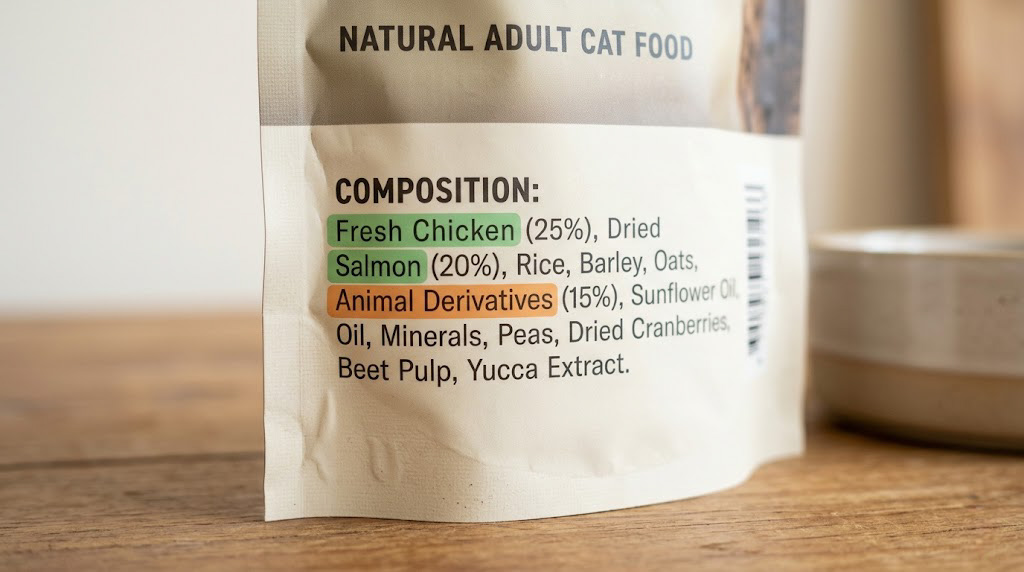
meat and animal derivatives
cereals
oils and fats
These terms do not automatically mean that the ingredients are poor quality.
They can, however, make it harder for owners to understand exactly which ingredients are present without asking the manufacturer for more information.
The more useful questions are:
Is the food complete or complementary?
Is it suitable for the correct species and life stage?
What nutritional information does the manufacturer provide?
Can the company answer questions about the product and its formulation?
2. Marketing Claims Do Not Tell You the Whole Story
Words such as:
“premium”
“natural”
“grain-free”
“high protein”
may influence how a product looks on the shelf, but they do not by themselves tell you whether the food is nutritionally complete or appropriate for your pet.
A better approach is to look beyond the front of the package and evaluate the full diet, feeding instructions, nutritional information, and manufacturer transparency.
3. Manufacturer Transparency Can Vary
Commercial pet food companies differ in how much information they provide about:
who formulates their diets
nutritional expertise
quality-control procedures
finished-product testing
calorie information
product research
The WSAVA guidance on selecting pet food recommends looking beyond the ingredient list and considering the manufacturer’s nutritional expertise, quality control, and ability to provide detailed product information.
This can be more useful than judging a food from one ingredient near the top of the list.
4. Dry Commercial Food Contains Less Moisture
Dry food contains much less water than wet food.
That is not automatically a disadvantage, but moisture intake can matter for some pets, particularly cats or animals that naturally drink relatively little.
If you feed dry food, make sure fresh water is always available and consider your pet’s overall water intake rather than judging the diet only by food format.
For a more practical comparison of moisture, calories, convenience, and feeding style, see our guide to wet vs dry cat food.
5. A Complete Food Still Needs to Fit the Individual Pet
Commercial diets are designed for particular species, life stages, or nutritional purposes, but individual animals can still differ in:
calorie needs
activity level
body condition
appetite
food tolerance
chewing comfort
health requirements
Choosing a complete food is therefore the starting point, not the end of the decision.
You still need to measure the amount, monitor your pet’s weight and body condition, and pay attention to how they respond over time.
The main limitation of commercial feeding is not that the food is manufactured. It is that choosing the right product still requires looking beyond marketing and matching the diet to the individual pet.
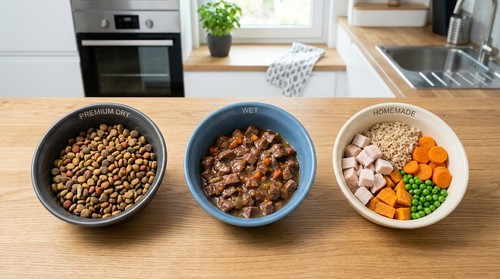
Can Homemade Pet Food Be Better Than Commercial?
Yes, in some situations — but homemade food is not better simply because it is fresh or prepared at home.
A homemade diet may be a good option when there is a clear reason for using it and the recipe has been properly formulated for the individual dog or cat.
Homemade Feeding May Make Sense When:
you want more control over specific ingredients
your pet needs a particular texture or feeding format
you can follow the same recipe accurately every day
you are prepared to weigh ingredients rather than estimate portions
you can include any supplements required by the formulation
the diet has been designed or reviewed with appropriate veterinary nutrition guidance
For pets with diagnosed medical conditions, homemade feeding should be planned with the veterinary team rather than adjusted through trial and error.
When Homemade Food Is Not the Better Choice
Homemade feeding is unlikely to be the better option if:
recipes change frequently
ingredients are substituted without checking the nutritional impact
supplements are skipped
portions are estimated rather than measured
the diet comes from an unverified online recipe
you cannot realistically prepare it consistently long term
The issue is not whether individual ingredients look healthy.
It is whether the whole diet continues to provide the right nutrients in the right amounts every day.
FEDIAF notes that nutritionally balanced homemade diets are possible, but formulating them correctly is complex and recommends developing the meal plan with appropriate veterinary nutrition expertise.
Learn more about home-prepared diets from FEDIAF.
A Simple Way to Decide
If you want more ingredient control and can follow a professionally formulated recipe accurately, homemade feeding may be worth considering.
If you want a feeding approach that is easier to measure, store, and maintain consistently, a complete commercial food will usually be the more practical choice.
Freshness can be valuable, but freshness alone does not make a diet nutritionally complete.
Can Pets Thrive on Commercial Food Alone?
Yes. Many dogs and cats can do well on a complete commercial diet when the food is appropriate for their species and life stage and is fed in the right amount.
The key word is complete.
A complete pet food is designed to provide the nutrients needed as the main daily diet. In Europe, FEDIAF defines complete pet food as food that can provide the nutritional needs of the intended animal when fed appropriately for the relevant life stage.
That does not mean every commercial product will suit every pet.
You still need to consider:
species and life stage
calorie needs
body condition
activity level
digestion and food tolerance
any diagnosed medical condition
how your pet responds over time
When Commercial Food Is a Practical Choice
Commercial feeding is often a good fit when you want:
a nutritionally complete daily diet
consistent portions
easier storage and preparation
a feeding routine that can be repeated reliably
clear feeding instructions and product information
The FEDIAF Nutritional Guidelines provide the main European reference for complete and complementary foods for dogs and cats.
What Commercial Food Does Not Guarantee
The word “commercial” alone does not mean a product is automatically the best choice for your pet.
You still need to check whether the food is complete, suitable for the correct life stage, fed in an appropriate amount, and tolerated well by your dog or cat.
A complete commercial diet therefore offers an important practical advantage: it makes consistent nutritional feeding easier without requiring you to formulate the diet yourself.
But the final test is still whether the food fits the individual animal and can be fed correctly over time.
Common Mistakes When Switching from Commercial to Homemade Food
Moving from commercial food to a homemade diet involves more than changing what goes into the bowl.
You need to manage both the food transition and the nutritional formulation correctly.
Here are some of the most common mistakes to avoid.
1. Changing the Diet Too Quickly
A sudden food change can cause digestive upset in some dogs and cats.
When possible, introduce the new diet gradually while reducing the previous food over several days.
Many pets can transition over roughly 7–14 days, but some may need longer, especially if they have a history of digestive sensitivity or are reluctant to accept new foods.
Slow down the transition if your pet develops:
loose stool
vomiting
reduced appetite
noticeable digestive discomfort
If symptoms are persistent, severe, or your pet seems unwell, contact your veterinarian rather than continuing to adjust the diet on your own.
2. Changing or Skipping Supplements
A professionally formulated homemade recipe may include specific vitamin, mineral, fatty-acid, or other supplements.
These are part of the recipe, not optional extras.
Do not:
skip a supplement because an ingredient “looks nutritious enough”
change the amount without checking the formulation
add extra calcium, vitamins, or minerals without a clear reason
substitute one supplement for another without guidance
Changing supplements can alter the nutritional balance of the entire diet.
3. Using an Unverified Online Recipe
A recipe that looks healthy is not necessarily nutritionally complete.
Homemade diets need to account for factors such as:
species
life stage
body weight
calorie needs
ingredient quantities
required supplementation
any diagnosed medical condition
FEDIAF notes that many home-prepared recipes can fail to provide all required nutrients and that correctly balancing a homemade diet is a complex task.
If homemade food will be your pet’s main diet, use a recipe developed with appropriate veterinary nutrition expertise rather than relying on a general recipe found online.
4. Using the Same Recipe for Dogs and Cats
Dogs and cats do not have identical nutritional requirements.
Cats have several species-specific dietary needs, including a dietary requirement for taurine.
A homemade recipe created for a dog should therefore not simply be used for a cat, and vice versa.
Each diet needs to be formulated for the correct species and life stage.
5. Assuming Every New Symptom Is Caused by the Food
Pay attention to changes after introducing a new diet, but do not assume that every symptom proves the recipe is nutritionally wrong.
Watch for changes such as:
repeated vomiting
persistent diarrhea
reduced appetite
unexpected weight loss
unusual tiredness
difficulty eating
These signs can have many possible causes.
If they persist, become severe, or occur together, veterinary assessment is more useful than repeatedly changing ingredients.
For cats that vomit after eating, our guide to why cats vomit after eating explains some of the possible causes and when veterinary attention may be needed.
6. Changing Too Many Things at Once
If you change the main diet, treats, supplements, toppers, and feeding schedule at the same time, it becomes much harder to understand what your pet is responding to.
Keep the transition as simple and consistent as possible.
Follow the planned recipe, measure portions accurately, and avoid unnecessary changes while you monitor how your pet responds.
The goal is not simply to replace commercial food with homemade food.
It is to move to a diet that can be prepared accurately, tolerated well, and maintained consistently over time.
What Matters More Than the Ingredient List
When comparing homemade and commercial pet food, it is easy to focus too much on individual ingredients.
Ingredients matter, but a diet should be judged as a whole. A food with chicken listed first is not automatically better than another complete food, and a homemade meal made from familiar ingredients is not automatically nutritionally balanced.
1. Do Not Judge a Food by the First Ingredient Alone
The first ingredient tells you which ingredient is listed first by weight before processing. It does not tell you everything about:
overall protein quality
digestibility
vitamin and mineral balance
calorie density
whether the diet is complete
how suitable the food is for your pet
Instead of looking for one “perfect” ingredient, first check whether the food is complete and appropriate for your pet’s species and life stage.
2. Terms Like “Meat and Animal Derivatives” Are Not Automatically a Quality Warning
On European pet food labels, ingredients can be declared individually or under legally permitted categories such as meat and animal derivatives.
That wording does not automatically mean the ingredients are unsafe or nutritionally poor.
FEDIAF explains that “meat and animal derivatives” is a recognized labelling category for animal-derived ingredients used in pet food.
If you want to understand what these terms mean and how to evaluate a commercial product more effectively, see our pet food label guide.
3. Nutritional Completeness Matters More Than Appearance
A meal can look fresh, natural, or protein-rich and still be nutritionally incomplete.
When comparing feeding options, look at the bigger picture:
Is the diet complete for the correct species and life stage?
Does it provide appropriate energy and nutrients?
Can it be fed consistently?
Is the feeding amount appropriate?
Is your pet maintaining a healthy body condition?
Is the food tolerated well?
These questions are more useful than judging a diet from one ingredient or marketing phrase.
4. Dogs and Cats Have Different Nutritional Requirements
A feeding approach that works for a dog should not automatically be used for a cat.
Cats have several species-specific nutritional requirements. For example, taurine is an essential dietary nutrient for cats because they cannot produce enough to meet their needs.
Dogs and cats also differ in other nutrient requirements, which is one reason homemade recipes should be formulated specifically for the correct species rather than shared between them.
If you want a more detailed example of how life stage, activity, weight, and feeding style affect feline nutrition, see our guide to the best diet for indoor cats.
The Practical Takeaway
Do not choose between homemade and commercial food based only on:
the first ingredient
whether the food looks fresh
whether the label sounds natural
one protein percentage
or a marketing claim
Start with nutritional completeness, species and life stage, feeding consistency, and the needs of the individual pet.
Is Homemade Pet Food Cheaper Than Commercial Food?
Sometimes, but not always.
There is no simple rule that homemade food costs less than commercial food. The real cost depends on your pet’s size, the recipe, ingredient prices where you live, any supplements required, and how much time and preparation the diet needs.
The most useful comparison is cost per day, not the price of one ingredient or one bag of food.
What Should You Include in the Cost?
For homemade feeding, consider:
ingredients used in the full recipe
any supplements included in the formulation
preparation and cooking
refrigeration or freezing
food that is not used before it spoils
the time needed to prepare and measure meals consistently
For commercial feeding, consider:
the amount your pet actually eats each day
the feeding guide and calorie density
whether you feed dry, wet, or a combination
treats, toppers, and other foods added to the daily diet
how much food is wasted after opening
Compare Daily Cost, Not Package Price
A cheaper bag is not always cheaper to feed if your pet needs a larger daily amount.
The same applies to homemade food. A few individual ingredients may look inexpensive, but the full recipe may also require additional ingredients, supplements, storage, and preparation.
A simple way to compare the two approaches is:
Calculate roughly how much each feeding option costs per day.
Check whether the diet is nutritionally complete.
Consider how much preparation and storage it requires.
Ask whether you can maintain the same approach consistently.
Cost Should Not Be the Only Decision
Price matters, especially when a feeding plan needs to work for months or years.
But the cheapest option is not automatically the best value, and the most expensive option is not automatically better nutrition.
A feeding approach makes sense when it is nutritionally appropriate, affordable for your household, and realistic to maintain consistently.
If a homemade diet requires ingredients, supplements, or preparation that you cannot reliably maintain, its lower ingredient cost may not make it the more practical choice.
Likewise, a commercial food does not need to be the most expensive product on the shelf to be suitable for your pet.
How to Choose the Right Option for Your Pet
There is no single feeding approach that is right for every dog or cat.
A better decision comes from looking at your pet’s needs and asking whether you can maintain the diet correctly over time.
Use this checklist before choosing homemade or commercial food.
1. Start With Nutritional Completeness
Ask first:
Can this diet provide all the nutrients my pet needs as its main daily food?
For commercial food, check whether the product is labelled as complete and suitable for the correct species and life stage.
For homemade food, use a recipe that has been properly formulated for your individual pet rather than relying on a general recipe or ingredient list.
2. Consider Your Pet’s Life Stage and Health
A healthy adult pet may have different nutritional needs from:
a growing puppy or kitten
a senior pet
a pregnant or nursing animal
an overweight or underweight pet
an animal with a diagnosed medical condition
If your pet has a medical condition, recurring digestive problems, unexplained weight changes, or a prescribed therapeutic diet, involve your veterinarian before making a major feeding change.
3. Be Realistic About Preparation and Consistency
Homemade feeding requires more daily responsibility.
Ask yourself:
Can I measure ingredients accurately?
Can I use the required supplements consistently?
Can I prepare and store the food safely?
Can I follow the same formulation week after week?
If the answer is no, a complete commercial food may be the more practical option.
4. Look at the Full Daily Diet
Do not evaluate only the food in the main bowl.
Also consider:
treats
chews
toppers
table food
supplements
wet or dry food used alongside the main diet
These extras can change calorie intake and, in some cases, the nutritional balance of the overall feeding plan.
5. Watch the Pet, Not Just the Label
After choosing a feeding approach, monitor how it works over time.
Pay attention to:
body weight
body condition
appetite
stool quality
vomiting or digestive changes
energy and activity
eating comfort
These signs do not diagnose whether a diet is nutritionally complete, but they can help you notice when something may need reviewing.
A Simple Decision Guide
If this sounds like you… | A practical starting point |
|---|---|
You want a simple, consistent feeding routine | Choose an appropriate complete commercial food |
You want greater ingredient control and can follow a precise recipe | Consider a professionally formulated homemade diet |
Your pet has a diagnosed medical condition | Discuss the feeding plan with your veterinarian |
You are unsure whether the current diet is complete | Review the label, formulation, and feeding plan before making more changes |
You cannot maintain the diet accurately every day | Choose the option that is simpler to follow consistently |
The best choice is not the one that sounds more natural or more premium.
It is the feeding approach that is nutritionally appropriate for your pet and realistic for you to follow correctly every day.
Signs Your Current Diet May Not Be Working
No matter which feeding approach you choose, homemade, commercial, or mixed, it is useful to monitor how your pet responds over time.
Changes in digestion, appetite, body weight, coat, or energy can be reasons to review the feeding plan, but these signs are not specific to nutrition and can have many other causes.
Watch for changes such as:
Chronic loose stool or gas: A sign of poor digestibility or ingredient sensitivity.
Frequent vomiting: Especially soon after eating, indicating potential intolerance.
Dull or dry coat: Often a sign of missing essential fatty acids or minerals.
Low energy or reduced activity: Could indicate insufficient calorie intake or nutrient gaps.
Itching or skin irritation: Frequently linked to food sensitivities or allergies.
Persistent hunger or “scavenging”: May suggest the diet is not satisfying their biological needs.
Unexplained weight gain or loss: A direct indicator of caloric or metabolic imbalance.
These signs do not prove that the food is the cause. If changes are persistent, severe, or occur together, veterinary assessment is more useful than repeatedly switching foods.
👉 Your pet’s actual health should always guide your feeding decisions.
Not marketing trends.
Not attractive packaging.
Not unverified online opinions.
If symptoms such as frequent vomiting or chronic digestive issues appear, it is essential to investigate the root cause rather than just switching brands randomly.
Learn more about possible causes and when to seek professional advice:

Practical Recommendation for Most Owners
For many healthy dogs and cats, an appropriate complete commercial diet is a practical and nutritionally consistent starting point.
When comparing homemade vs commercial pet food, consistency and nutritional completeness are often more important than preparation method.
A well-selected commercial diet is typically:
easier to use and maintain
easier to portion accurately
more consistent in nutrient delivery
more likely to meet established veterinary nutrition standards
Homemade pet food can absolutely be beneficial.
However, it should be approached as a structured nutrition strategy, not an improvised or casual routine.
That means:
following a properly formulated plan
using appropriate supplementation
maintaining long-term consistency
If you prefer homemade, do it carefully and with structure.
If you prefer convenience, choose commercial food thoughtfully.
The best feeding decision is not about choosing sides,
it is about choosing what you can maintain correctly for your pet over time.
Frequently Asked Questions (FAQ)
Is homemade pet food better than commercial pet food?
Not automatically. Homemade pet food can be excellent if it is scientifically balanced, but for most owners, a high-quality, complete commercial diet is safer and easier to maintain long-term. The “better” choice is always the one that ensures full nutritional adequacy every single day.
Can I feed my dog homemade food every day?
Yes, but only if the recipe is nutritionally complete and remains consistent. Feeding an unbalanced homemade meal daily can lead to gradual nutrient deficiencies. If you choose this path, you must ensure you are not just “cooking,” but following a precise formulation.
Can cats eat homemade food safely?
Yes, but with caution. Cats are obligate carnivores with much stricter nutrient requirements (such as Taurine and Arachidonic acid) than dogs. Homemade cat diets are significantly harder to balance and should never be done casually or without professional guidance.
What is the biggest risk of homemade pet food?
The primary risk is nutritional imbalance. This includes missing essential vitamins, minerals, and amino acids, or having an incorrect calcium-to-phosphorus ratio. These “hidden deficiencies” can lead to serious bone, heart, and metabolic issues over time.
Is wet food better than homemade food?
Not always. A complete wet food can provide a nutritionally complete main diet while also adding moisture, whereas homemade food offers greater control over ingredients and preparation.
The better option depends on whether the full diet is complete, appropriate for the individual pet, and practical to maintain.
How do I know if my pet’s diet is complete?
For commercial food, check whether the product is labelled as complete for the correct species and life stage. For homemade food, nutritional completeness needs to come from a properly formulated recipe.
Body weight, appetite, stool quality, and general wellbeing are useful to monitor, but they cannot confirm by themselves that a diet provides every required nutrient.
Conclusion
The debate around homemade vs commercial pet food is not really about which option sounds more natural or appealing.
It is about one thing:
Which feeding approach consistently provides complete, safe, and sustainable nutrition for your pet?
To summarize the trade-offs:
Homemade diets offer: Ingredient control, customization, and perceived freshness.
Commercial diets offer: Easier access to complete formulations, consistency, and convenience.
Neither approach is universally “better.” The best choice depends entirely on your pet’s biological needs, your ability to maintain consistency, and the actual nutritional quality of the diet over time. That is what responsible feeding truly means.
Make the Right Decision for Your Pet
Still unsure which option is right for your situation?
👉 Don’t rely on guesswork, marketing claims, or conflicting online advice.
Modern pet nutrition decisions are increasingly data-driven, not assumption-based. FAMMO helps you navigate the complexity of pet health by understanding:
Your pet’s specific nutritional requirements
Individual feeding patterns and activity levels
Potential health risk signals
Personalized, data-backed diet recommendations
Take the guesswork out of the bowl and start making decisions based on real health data.
👉 Create your free FAMMO account and start your analysis today