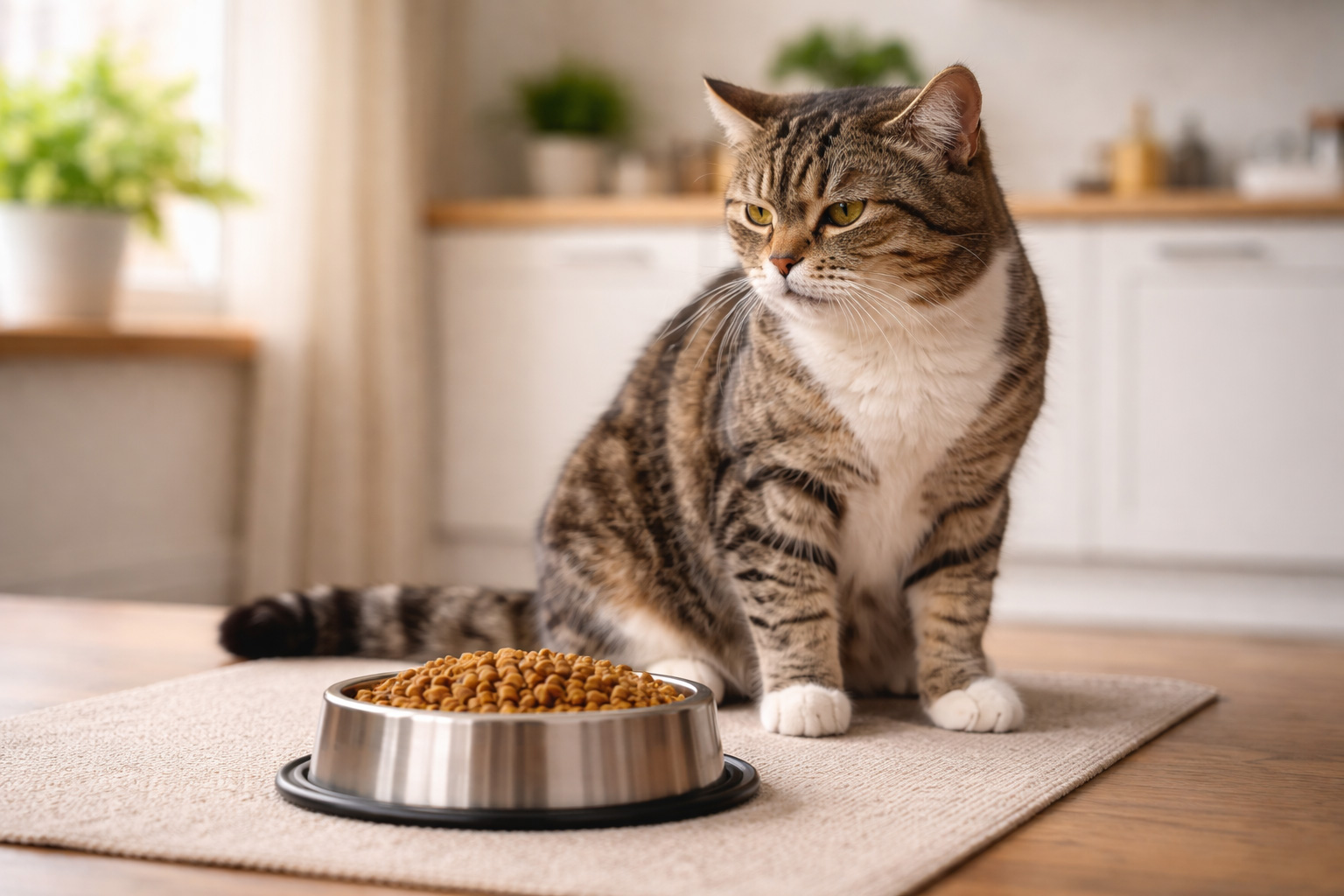
If your cat vomits after eating, the timing, effort, and appearance of what comes up are the first things to check.
Food that comes back up within minutes, looks mostly unchanged, and appears with little effort may be regurgitation rather than true vomiting. Vomiting is usually more active and may involve nausea, retching, abdominal movement, foam, bile, or partially digested food.
If you are also reviewing whether your cat’s diet could be part of the pattern, our guide to the best cat food brands in Europe explains how to compare complete foods, ingredients, moisture, and life-stage suitability without assuming the brand alone is the cause.
Eating too fast, large meals, sudden food changes, hairballs, and digestive irritation can all play a role. Repeated vomiting, however, can also be linked to health problems that need veterinary assessment.
This guide will help you work through the problem step by step: what happened, what the timing may suggest, what you can safely change at home, and when it is time to contact your veterinarian.
Table of Contents
- Quick Answer: Why Is My Cat Vomiting After Eating?
- Cat Vomiting Undigested Food: Vomiting or Regurgitation?
- Why Does My Cat Vomit Right After Eating?
- Common Reasons Cats Vomit After Eating
- When to Worry About Cat Vomiting After Eating
- What to Do If Your Cat Vomits After Eating
- Why Tracking the Pattern Matters
- FAQ
Quick Answer: Why Is My Cat Vomiting After Eating?
If your cat brings food back up soon after eating, first look at how it happened.
If the food looks almost unchanged and comes up with little effort, it may be regurgitation, especially if your cat ate very quickly or had a large meal.
If your cat retches, heaves, looks nauseous, or brings up partly digested food, foam, or bile, it is more likely to be vomiting.
For a one-off episode in a cat that otherwise seems well, start with a few simple checks:
- Meal size: Was the portion larger than usual?
- Eating speed: Did your cat eat very quickly?
- Food changes: Did you recently change the food, brand, texture, or protein?
- Timing: Did it happen immediately after eating or later?
- Pattern: Has it happened once, or is it becoming a regular problem?
If fast eating seems to be the trigger, try smaller meals and a slower feeding method. Avoid changing several foods at once, because that can make the pattern harder to understand.
Contact your veterinarian if vomiting keeps happening, happens several times in a short period, or appears with blood, weight loss, diarrhea, loss of appetite, lethargy, pain, dehydration, or difficulty keeping food or water down.
The goal is not to guess the diagnosis. It is to identify the pattern, make safe feeding adjustments when appropriate, and know when veterinary care is needed.
Cat Vomiting Undigested Food: Is It Vomiting or Regurgitation?
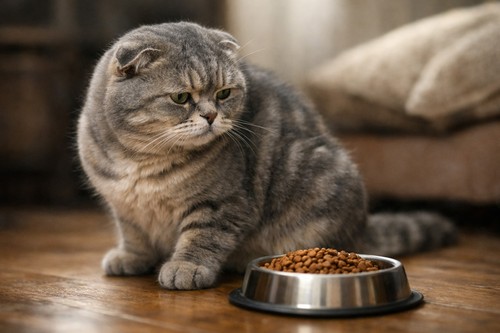
If your cat brings up undigested food soon after eating, the first question is whether it was vomiting or regurgitation.
They can look similar, but they are not the same.
Vomiting is an active process. Your cat may look nauseous, drool, lick their lips, retch, heave, or use their abdominal muscles before anything comes up. The vomit may contain partly digested food, liquid, foam, or bile.
Regurgitation is usually more passive. Food often comes back up suddenly, with little or no retching or abdominal effort. It may look almost unchanged because it has not been fully digested.
According to the MSD Veterinary Manual, regurgitation usually happens without the forceful abdominal contractions seen with vomiting, and the food that comes up is often undigested.
Vomiting vs Regurgitation in Cats
| Sign | Vomiting | Regurgitation |
|---|---|---|
| Effort | Active; retching, heaving, or abdominal contractions may occur | Usually passive, with little or no abdominal effort |
| Timing | May happen soon after eating or later | Often happens soon after eating or drinking |
| Food appearance | May be partly digested or mixed with liquid, foam, or bile | Often undigested and may look similar to the original food |
| Before it happens | Nausea, drooling, lip licking, restlessness, or repeated swallowing may occur | Often happens suddenly with little warning |
| Where it comes from | Stomach or upper digestive tract | Usually the esophagus, before food reaches or remains in the stomach |
Quick Check: What Did You See?
Think back to what happened:
- Was there retching or heaving? This points more toward vomiting.
- Did the food come up suddenly with little effort? This is more consistent with regurgitation.
- Was the food almost completely undigested? Regurgitation becomes more likely.
- Did it happen immediately after the meal? Note the timing, especially if your cat ate very quickly.
- Has it happened again? A repeated pattern matters more than a single isolated episode.
- Is your cat otherwise acting normally? Appetite, energy, stool, drinking, and weight changes can provide useful context.
If this happened once and your cat otherwise seems well, record what happened before making several changes at once. Note the meal size, eating speed, food type, timing, and whether there was any retching.
If fast eating appears to be part of the pattern, smaller meals or a slower feeding method may be worth trying.
If episodes continue, or your cat seems unwell, do not treat the problem as feeding speed alone. Check the warning signs below and contact your veterinarian if needed.
Why Does My Cat Vomit Right After Eating?
When your cat brings food back up soon after a meal, what happened during and just before that meal can be especially useful to check.
If the food came up almost immediately and looked mostly unchanged, go back to the vomiting-versus-regurgitation signs above. If it was true vomiting, the next step is to look for patterns around eating speed, meal size, recent food changes, and other symptoms.
Common Reasons It Happens Soon After a Meal
Eating too fast
Some cats eat so quickly that they swallow a large amount of food in a short time. This is more likely when a cat is very hungry, competes with another pet, or is given a large meal at once.
If the same pattern happens mainly after fast meals, eating speed is worth addressing first.
Eating too much at once
A large meal can be harder for some cats to tolerate than several smaller meals. If vomiting tends to happen after bigger portions, compare the amount served with meals your cat keeps down comfortably.
A recent food change
Vomiting can appear after a sudden change in food, especially when several things change at once, such as the brand, protein source, texture, or feeding schedule.
If you recently changed your cat’s food, note exactly when the change started and whether the vomiting began around the same time.
If you switched from dry food to wet food, or from wet food to dry food, our guide to wet vs dry cat food explains the practical differences in moisture, texture, portion size, and feeding habits between the two formats.
Mealtime stress or competition
Some cats eat unusually fast when they feel rushed or compete with another animal for food.
If you have more than one pet, try feeding your cat in a calm, separate area and see whether their eating speed changes.
A food that does not agree with your cat
If vomiting repeatedly follows the same food or ingredient, the diet may be part of the pattern. But one episode is not enough to identify a food intolerance or allergy.
Avoid switching between several foods while trying to find the cause. Record what your cat ate and discuss repeated food-related vomiting with your veterinarian.
Hairballs or digestive irritation
Swallowed hair and digestive irritation can also contribute to vomiting around mealtimes. Hairballs are more likely to be relevant if you also notice hair in the material brought up or frequent grooming.
Repeated vomiting should not automatically be blamed on hairballs.
An underlying health problem
Vomiting after eating can sometimes be linked to problems that have little to do with the meal itself.
This becomes more important when vomiting is repeated or appears with changes in appetite, weight, stool, energy, drinking, or behaviour.
What Should You Do Next?
If this happened once and your cat otherwise seems well, start with the simplest observations:
- Note how quickly your cat ate.
- Check whether the portion was larger than usual.
- Write down any recent food changes.
- Record how long after eating the episode happened.
- Note whether the food was undigested or partly digested.
- Watch for changes in appetite, stool, drinking, weight, or energy.
If fast eating or large meals seem to be part of the pattern, try smaller meals and a slower feeding method rather than changing several things at once.
If vomiting keeps happening or your cat seems unwell, check the warning signs below rather than continuing to adjust meals at home.
Common Reasons Cats Vomit After Eating
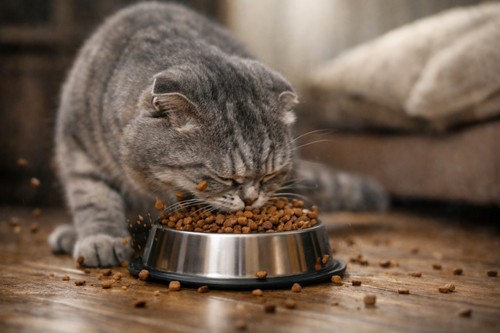
Not every episode of vomiting after a meal is caused by the food itself.
Sometimes the pattern is linked to how your cat eats, such as eating too quickly or having a large meal. Those feeding-related triggers are covered above.
Other cases need a closer look at the food your cat is eating, hairballs, digestive irritation, or changes in your cat’s overall health.
Here is a simple overview:
| Possible Cause | What You May Notice | What to Do Next |
|---|---|---|
| Eating too fast | Food comes back up soon after a fast meal | Try smaller meals and a slower feeding method |
| Large meals | Episodes happen more often after bigger portions | Measure portions and split meals |
| Recent food change | Vomiting began around the time a new food was introduced | Avoid more sudden changes and track the pattern |
| Food-related reaction | The same food repeatedly seems to be followed by vomiting or stool changes | Record the pattern and speak with your vet if it continues |
| Hairballs | Hair is present, grooming is frequent, or retching occurs | Brush regularly and monitor how often it happens |
| Health problem | Vomiting repeats or comes with appetite, weight, stool, or energy changes | Arrange veterinary assessment |
Food Sensitivity, Intolerance, or Allergy
If vomiting repeatedly happens after the same food, it is reasonable to look for a pattern. But one episode does not prove that your cat has a food allergy or intolerance.
Food intolerance and food allergy are not exactly the same.
A food intolerance does not involve the immune system. A true food allergy does. Both can be associated with digestive signs, while food allergy may also appear with skin or itching problems.
The Merck Veterinary Manual explains that food allergies in dogs and cats can involve gastrointestinal signs such as vomiting or diarrhea, but food allergy cannot be reliably identified from symptoms alone.
If you think food may be involved, track:
- what your cat ate
- the main protein source
- whether the food was wet, dry, or mixed
- when the vomiting happened
- stool changes
- itching or skin changes
- appetite and weight changes
Avoid switching between several foods while trying to find the cause. Changing too many things at once makes it harder to see a useful pattern.
If you are considering a grain-free formula because you suspect food sensitivity, remember that grain-free does not automatically mean easier to digest or more suitable for your cat. Our guide to the best grain-free cat food in Europe explains what to check before making that decision.
If vomiting keeps happening, especially with diarrhea, weight loss, appetite changes, or skin problems, speak with your veterinarian. Do not start a strict elimination diet without veterinary guidance.
Hairballs
Cats swallow loose hair while grooming. Most of that hair normally passes through the digestive system, but some can collect and come back up as a hairball.
Hairballs may be more relevant when you notice:
- visible hair in what your cat brings up
- frequent grooming
- repeated retching or gagging
- more episodes during periods of heavier shedding
Regular brushing can reduce the amount of loose hair your cat swallows, especially in long-haired cats.
The Cornell Feline Health Center notes that swallowed hair usually passes through the digestive tract, although accumulated hair can sometimes form a hairball or, less commonly, contribute to a blockage.
Do not assume repeated vomiting is simply caused by hairballs. If vomiting becomes frequent, your cat stops eating, loses weight, seems uncomfortable, or repeatedly retches without bringing anything up, contact your veterinarian.
When Vomiting May Point to a Health Problem
Sometimes a cat vomits after eating even though the meal itself is not the main problem.
Repeated vomiting can occur with digestive disease, intestinal obstruction, parasites, inflammation, kidney or liver problems, thyroid disease, and other medical conditions.
According to VCA Animal Hospitals, vomiting is a clinical sign rather than a diagnosis, and the possible causes range from relatively minor digestive problems to conditions that require veterinary treatment.
You do not need to work out the diagnosis yourself. What matters is noticing whether the vomiting is becoming a pattern and whether anything else has changed.
Contact your veterinarian if vomiting happens together with:
- loss of appetite
- unexplained weight loss
- diarrhea
- lethargy or weakness
- pain or obvious discomfort
- blood in the vomit
- repeated vomiting over a short period
- difficulty keeping food or water down
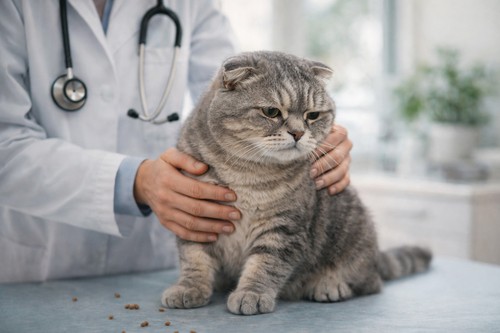
If your cat is repeatedly vomiting, seems unwell, refuses food, or cannot keep water down, do not rely only on feeding changes at home. Contact your veterinarian for advice.
When to Worry About Cat Vomiting After Eating
A single episode does not always mean something serious is wrong, especially if your cat ate very quickly and seems completely normal afterward.
What matters most is whether the vomiting repeats and whether anything else about your cat has changed.
Contact Your Veterinarian If Vomiting Keeps Happening
Arrange veterinary advice if:
- vomiting becomes a repeated pattern
- your cat is eating less or refusing food
- you notice unexplained weight loss
- diarrhea happens at the same time
- your cat seems unusually tired, weak, or withdrawn
- drinking or urination changes noticeably
- your cat appears uncomfortable or painful
The Cornell Feline Health Center advises veterinary evaluation when vomiting becomes frequent or occurs with signs such as weakness, reduced appetite, blood, or diarrhea.
Seek Veterinary Care Promptly for More Serious Signs
Do not rely only on feeding changes at home if:
- there is blood in the vomit
- your cat vomits repeatedly over a short period
- your cat cannot keep food or water down
- your cat appears dehydrated or very weak
- there is obvious abdominal pain or distress
- you suspect your cat swallowed a foreign object
- you suspect exposure to a toxic plant, food, chemical, or medication
The MSD Veterinary Manual notes that severe or persistent vomiting, especially when combined with dehydration, weakness, pain, blood, or weight loss, requires veterinary examination.
If you are unsure how serious the episode is, record what happened and contact your veterinarian for advice rather than repeatedly changing your cat’s food.
Useful details to have ready include:
- when your cat last ate
- what food they ate
- how much they ate
- how soon vomiting happened afterward
- what the vomit looked like
- how many episodes occurred
- any changes in appetite, stool, drinking, weight, or behaviour
These details can help your veterinarian understand the pattern more quickly.
What to Do If Your Cat Vomits After Eating
If your cat has vomited once, seems comfortable afterward, and has none of the warning signs above, the best next step is usually to observe the pattern and avoid changing too many things at once.
Here is a simple way to work through it.
Step 1: Look at What Happened
Before changing the food, note:
- how soon after eating it happened
- whether there was retching or heaving
- whether the food looked undigested or partly digested
- how quickly your cat ate
- how large the meal was
- whether anything about the food had recently changed
These details can help you tell whether the episode looks more like fast eating, regurgitation, a feeding issue, or something that needs closer attention.
Step 2: Make Mealtimes Slower and Smaller
If your cat tends to eat very quickly, try:
- offering a smaller measured portion
- splitting the daily food into smaller meals
- using a slow feeder or puzzle feeder
- spreading food over a wider, flat feeding surface
- feeding pets separately if competition makes your cat rush
Change one thing at a time so you can see whether it actually makes a difference.
Step 3: Avoid Repeated Food Switching
Do not immediately move from one food to another every time your cat vomits.
Frequent changes can make it harder to understand the pattern and may create additional digestive upset.
If you recently introduced a new food, write down when the change started and whether vomiting began around the same time. If your cat continues to vomit, speak with your veterinarian before trying several new diets or removing ingredients on your own.
Step 4: Keep Water Available and Watch Normal Behaviour
Make sure your cat continues to have access to fresh water.
Also watch whether they:
- return to their normal appetite
- drink normally
- use the litter tray normally
- remain active and alert
- keep later meals down
If your cat cannot keep water down, seems unwell, or develops any of the warning signs described above, contact your veterinarian rather than continuing home feeding adjustments.
Step 5: Record the Next Episode If It Happens
If vomiting happens again, record the details while they are fresh.
Useful information includes:
- date and time
- food and portion size
- eating speed
- time between eating and vomiting
- what the vomit looked like
- stool changes
- appetite
- drinking
- energy level
A photo of what your cat brought up can also be useful to show your veterinarian if the problem continues.
The goal is not to diagnose the cause yourself. It is to make one safe change at a time, watch the pattern, and know when home observation is no longer enough.
Why Tracking the Pattern Matters
One vomiting episode does not always tell you much. A pattern over several meals can be more useful.
For example, you may notice that vomiting:
- happens mainly after very fast meals
- appears after larger portions
- started soon after a food change
- follows the same food or protein more than once
- happens even when the food and meal size stay the same
- appears together with changes in stool, appetite, weight, drinking, or energy
These patterns do not diagnose the cause, but they can help you decide what deserves closer attention.
The goal is to avoid guessing.
If you change the food, portion size, feeding speed, and meal schedule all at once, it becomes difficult to know what actually helped. A better approach is to make one reasonable change at a time and keep track of what happens next.
How FAMMO Can Help You Organize the Pattern
When vomiting happens repeatedly, it can be difficult to remember exactly what your cat ate, how much they ate, or what else changed that day.
FAMMO helps you keep important feeding and health information in one place, including details such as:
- food and feeding habits
- appetite
- weight
- activity
- stool changes
- recurring symptoms or changes over time
This can make it easier to look back and notice whether the same pattern keeps appearing.
FAMMO does not diagnose the cause of vomiting and does not replace veterinary care. But keeping clearer records can help you make more informed feeding decisions and give your veterinarian better information if the problem continues.
FAQ
Why does my cat vomit right after eating?
If food comes back up soon after a meal, check how your cat ate and what happened before the food came up.
Eating very quickly, having a large meal, or regurgitation can all be part of the pattern. If there was retching, heaving, nausea, or abdominal effort, it is more likely to be true vomiting.
If this keeps happening, do not assume that eating speed is the only cause. Repeated episodes should be discussed with your veterinarian.
Why is my cat bringing up undigested food after eating?
Food that comes back up almost unchanged soon after eating may be regurgitation rather than vomiting.
Regurgitation is usually passive and happens with little abdominal effort. Eating quickly can sometimes be associated with food coming back up soon after a meal, but repeated regurgitation deserves veterinary attention.
What is the difference between vomiting and regurgitation in cats?
Vomiting is active. A cat may retch, heave, drool, look nauseous, or use the abdominal muscles before bringing something up.
Regurgitation is usually passive. Undigested food may come back up suddenly with little or no retching.
Can eating too fast make my cat throw up after a meal?
Fast eating can be part of the pattern, especially when food comes back up soon after a meal.
If your cat regularly rushes through meals, try smaller measured portions, a slower feeding method, or feeding separately from other pets if competition is making them eat quickly.
Make one change at a time so you can see whether it actually helps.
Can dry food make cats vomit?
Dry food is not automatically a cause of vomiting.
The pattern may instead involve eating speed, portion size, a recent food change, individual tolerance, or another health issue. If vomiting seems to happen mainly after dry food, record what your cat ate, how quickly they ate, and whether the same thing happens repeatedly.
Do not assume that simply switching to wet food will solve repeated vomiting.
Can changing my cat’s food cause vomiting?
A sudden food change can sometimes be followed by vomiting, diarrhea, soft stool, or appetite changes.
If you recently changed the brand, protein source, texture, or food format, note when the change happened and whether the symptoms started around the same time.
Avoid switching between several foods while trying to identify the problem. If vomiting continues, speak with your veterinarian.
Should I change my cat’s food if they vomit after eating?
Not automatically.
If vomiting happened once and your cat otherwise seems well, first look at meal size, eating speed, recent food changes, and whether the episode looked more like vomiting or regurgitation.
Repeatedly changing foods can make the pattern harder to understand. If vomiting continues or you suspect a food-related problem, discuss the next step with your veterinarian before starting a restrictive diet or removing several ingredients.
When should I worry about my cat vomiting after eating?
Contact your veterinarian if vomiting becomes a repeated pattern or happens with other changes such as loss of appetite, weight loss, diarrhea, lethargy, weakness, pain, or unusual drinking or behaviour.
Seek veterinary care promptly if your cat has blood in the vomit, repeatedly vomits over a short period, cannot keep food or water down, appears dehydrated or very weak, or may have swallowed a foreign object or toxic substance.
The important question is not only how often your cat vomits, but also how severe the episode is and whether anything else about your cat has changed.
Final Note: Focus on the Pattern, Not Just One Episode
One episode of vomiting after eating does not always tell you what caused it.
What matters more is the pattern: when it happens, how your cat eats, what comes up, whether anything recently changed, and whether other symptoms appear at the same time.
If your cat otherwise seems well, start with simple observations and make only one reasonable feeding change at a time. If vomiting keeps happening or appears with warning signs, contact your veterinarian rather than continuing to adjust the diet on your own.
Keep Your Cat’s Feeding and Health Records in One Place
FAMMO helps you organize information such as your cat’s food, appetite, weight, activity, stool, and recurring symptoms in one place.
Keeping these details together can make it easier to notice changes over time and give your veterinarian clearer information if a problem continues.
FAMMO does not diagnose the cause of vomiting or replace veterinary care. It is designed to help you keep better records and make more informed decisions about your cat’s everyday nutrition and health.