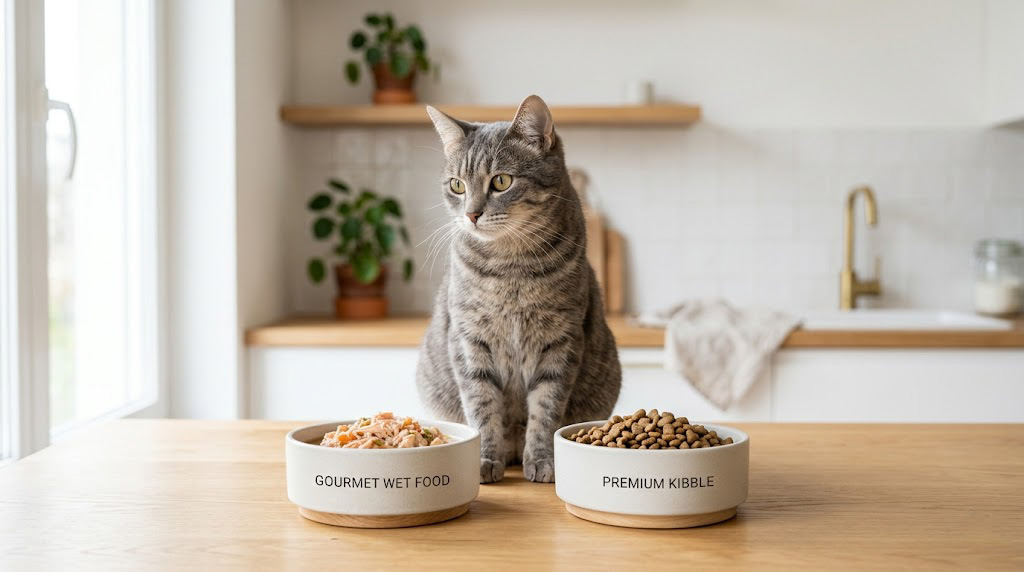
Wet vs Dry Cat Food: What’s Right for Your Cat?
One of the most common questions cat owners ask is:
“Should I feed my cat wet food or dry food?”
The answer is not as simple as choosing one over the other.
The type of food you choose can influence your cat’s:
- water intake through food
- calorie intake
- portion size
- daily feeding routine
Quick Answer: Is Wet or Dry Food Better for Cats?
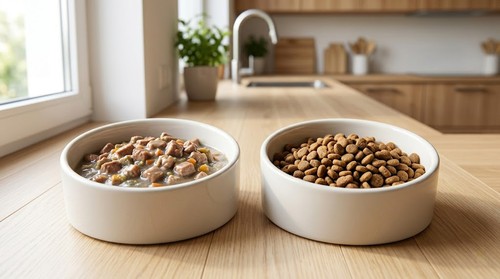
Wet food provides substantially more water through meals than dry food. Dry food can still be appropriate when it is complete for the cat’s life stage, portions are measured, and fresh water is always available.
The better choice depends on your cat’s age, body condition, activity level, drinking habits, food preferences, calorie needs, and medical history.
Wet, dry, or mixed feeding may all be suitable. Mixed feeding is optional rather than automatically healthier, and the calories from both foods must be calculated together.
If your cat drinks very little water, is overweight, has a sensitive stomach, or has a history of urinary problems, speak with your veterinarian before choosing a dry-only diet.
Still comparing brands after choosing wet, dry, or mixed feeding?
Food format is only one part of the decision. Brand quality, protein source, life-stage suitability, ingredient transparency, and nutritional balance matter just as much.
For a full brand-level comparison, read our guide: Best Cat Food Brands in Europe 2026
Wet Cat Food vs Dry Cat Food: Key Differences
| Factor | Wet Cat Food | Dry Cat Food |
|---|---|---|
| Moisture | High moisture, commonly around 70–80% | Low moisture, commonly around 6–10% |
| Water provided through food | Provides substantially more water with each meal | Provides less water through food, so drinking habits matter more |
| Calorie density | Often less calorie-dense per gram because of its higher water content | Often more calorie-dense per gram, so portions should be measured carefully |
| Storage | Requires refrigeration after opening and should be used within the recommended time | Easier to store and usually remains usable longer after opening when handled correctly |
| Cost | Often more expensive per calorie or daily portion | Often less expensive per calorie |
| Texture | Soft texture may be easier to chew for some cats | Crunchy texture may suit some preferences, but individual tolerance varies |
| Digestibility | Depends on the ingredients, processing, and individual cat | Depends on the ingredients, processing, and individual cat |
| Dental considerations | Does not provide a mechanical cleaning effect | Standard kibble should not be treated as a replacement for dental care |
| May suit | Cats that benefit from more food moisture or prefer softer textures | Owners seeking convenience, easier storage, and measured feeding |
| Main consideration | Refrigeration, cost, and portion control | Lower food moisture and often higher calorie density |
The most consistent difference between wet and dry cat food is moisture. Wet food provides substantially more water through meals, while cats eating dry food need to obtain more of their water by drinking.
Food format alone does not determine nutritional quality. Whether you choose wet, dry, or mixed feeding, check that the food is complete for your cat’s species and life stage, and consider calorie density, portion size, drinking habits, body condition, and individual health needs.
If you are comparing higher-priced wet or dry options, our guide to premium cat food brands in Europe explains when premium features may provide practical value and when they may mainly reflect marketing or packaging.
Comparing wet and dry food by price?
Cost matters, but the lowest price does not always mean the best overall value. Nutritional completeness, calorie density, portion size, product transparency, and how well the food matches your cat’s needs can all affect the real daily cost of feeding.
For a deeper breakdown, read our guide to cost vs quality in cat food formulations.
Is Wet or Dry Food Better for Cats?
Wet food is often the better choice for cats that need more hydration, have a low water intake, prefer softer textures, or need help with weight management. Because wet food contains more moisture, it can support daily fluid intake more naturally than dry kibble.
Dry food can still be a useful option for many healthy cats. It is easier to store, more affordable, and practical for owners who need a simple feeding routine. However, dry food should be paired with constant access to fresh water, and portion control is important because kibble is usually more calorie-dense.
For many cats, the best approach is not choosing one forever. A mixed feeding routine can combine the hydration benefits of wet food with the convenience of dry food.
What Is the Difference Between Wet and Dry Cat Food?
The main difference comes down to moisture and nutritional density.
- Wet food → commonly around 70–80% moisture
- Dry food → commonly around 6–10% moisture
This difference affects how much water a cat receives from food, but overall health also depends on total water intake, nutritional completeness, calorie intake, life stage, and individual medical needs.
If you want to understand how nutrients, moisture, and protein levels affect your pet’s health, this guide on understanding pet nutrition and balancing your pet’s diet explains the fundamentals.
Benefits of Wet Cat Food
Wet food provides substantially more moisture than dry food, but food format alone does not determine nutritional quality.
Key benefits:
- provides more water through meals
- offers a softer texture that some cats prefer
- can support food-moisture intake in cats that drink little
- is available in complete formulas for different life stages; always check the label
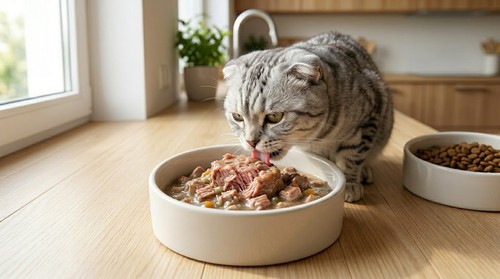
Wet food can increase the amount of water a cat receives through meals. However, it should not be described as preventing urinary or kidney disease, and cats with urinary or kidney conditions need individual veterinary guidance.
Benefits of Dry Cat Food
Dry food is widely used due to convenience.
Key benefits:
- easy storage
- often lower cost per calorie
- convenient for measured feeding
- longer storage time after opening when handled correctly
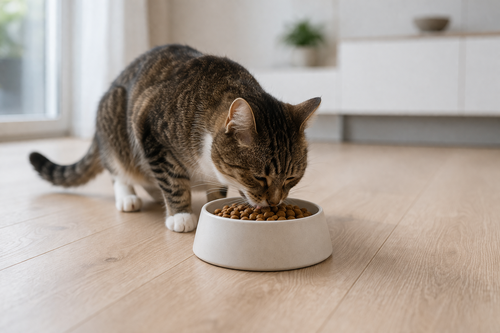
Dry food contains much less moisture and is often more calorie-dense than wet food. Carbohydrate content varies by formulation. Standard kibble should not be treated as a replacement for dental care.
Thinking about grain-free dry or wet food for your cat?
Grain-free does not automatically mean low-carb or healthier. Many grain-free dry foods still use peas, potatoes, or legumes as starch sources.
If you are comparing European grain-free options, read our full guide: Best Grain-Free Cat Food in Europe 2026
How Food Moisture May Affect Long-Term Feeding
Wet food provides more water through meals, while cats eating dry food need to obtain more of their water by drinking.
This does not mean that every dry-food diet causes dehydration or that wet food prevents kidney or urinary disease. A cat’s overall health depends on the completeness of the diet, total water intake, calorie balance, body condition, life stage, activity level, and any existing medical conditions.
For healthy cats, wet, dry, or mixed feeding may all be appropriate when the food is complete for the cat’s life stage and portions are properly controlled.
FEDIAF explains that complete pet food is formulated to provide the nutrients required for the intended species and life stage. Food format alone does not determine whether a diet is nutritionally appropriate. You can read more in the FEDIAF guidance on the nutritional needs of cats and dogs.
Cats with urinary disease, kidney disease, diabetes, obesity, or other medical conditions should have their feeding plan reviewed by a veterinarian.
Wet or Dry Food for Indoor Cats?
Indoor cats often move less than outdoor cats, which means they may be more likely to gain weight if portions are not controlled.
Wet food can be helpful for indoor cats because it adds moisture and may help some cats feel fuller with fewer calories per gram. Dry food can still be used, but it should be measured carefully because it is usually more calorie-dense.
For many indoor cats, a mixed feeding plan works well: wet food for hydration and satiety, and a controlled amount of dry food for convenience.
If your cat lives indoors, choosing the right food format is only part of the plan. You should also consider activity level, body condition, sterilization status, and daily calorie intake.
For a deeper indoor feeding plan, read our guide on the best diet for indoor cats.
Can Cats Eat Dry Food Only?
Yes, some cats can live on dry food only if the food is complete and balanced, properly portioned, and the cat drinks enough water.
However, a dry-only diet is not the best fit for every cat. Cats that drink very little water, are prone to urinary issues, are overweight, or have certain health concerns may benefit from more moisture in their diet.
If you feed dry food only, make sure your cat always has access to fresh water, monitor their weight, and speak with your veterinarian if you notice changes in urination, appetite, digestion, or energy.
How to Combine Wet and Dry Food (Practical Guide)
Mixed feeding can be a practical option for some cats, provided total daily calories are controlled and both foods are complete and suitable for the cat’s life stage.
Example feeding plan:
- Morning → wet food
- Evening → dry food
Benefits:
- more water provided through meals
- a flexible feeding routine
- practical options for some owners
This schedule is only an example. The amount of each food should be calculated from the calorie content of both products so the cat’s total daily intake remains appropriate.
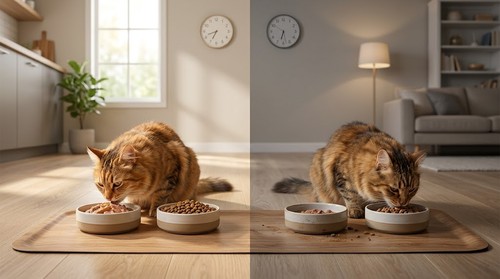
Feeding Schedule Matters More Than You Think
A consistent, measured feeding routine makes it easier to control portions, monitor appetite, and notice changes in eating behaviour.
Many adult cats do well with one or two measured meals per day. Kittens generally need smaller, more frequent meals, with feeding frequency depending on their age and weaning stage.
See our age-by-age kitten feeding guide for feeding frequency, portion guidance, weaning, and wet and dry feeding routines.
Common Mistakes Cat Owners Make
- ignoring total water intake and drinking habits
- overlooking portion size and calorie density
- not checking whether the food is complete for the cat’s life stage
- failing to adjust feeding as body condition or health needs change
Many feeding mistakes happen simply because owners lack clear guidance. Learn more in our article on common mistakes in cat care and how to avoid them.
Smarter Feeding with Data
Cats can respond differently to the same food or feeding routine.
Tracking food format, portion size, drinking habits, body condition, appetite, activity, and digestive changes can help owners identify useful patterns over time.
FAMMO helps organize this information and provides personalized feeding guidance based on the cat’s profile. It does not replace individual veterinary advice.
Conclusion
Wet and dry cat food both have benefits.
But the best choice depends on your cat’s individual needs.
Wet, dry, or mixed feeding can all be appropriate when the food is complete, portions are controlled, and the routine matches the cat’s age, body condition, water intake, preferences, and health needs.
FAQ: Wet vs Dry Cat Food
Is wet or dry food better for cats?
Wet food is often better for hydration because it contains much more moisture than dry food. Dry food is more convenient, easier to store, and usually more affordable. The best choice depends on your cat’s age, weight, drinking habits, digestion, activity level, and overall health needs.
Can I feed my cat only dry food?
Yes, some cats can eat only dry food if it is complete and balanced, properly portioned, and the cat drinks enough water. However, dry-only feeding may not be ideal for cats that drink very little, are overweight, or have urinary-related concerns. If your cat has a health history, ask your veterinarian before choosing a dry-only diet.
Should I mix wet and dry cat food?
You can mix wet and dry food if both products are complete and suitable for your cat’s life stage, and their calories are calculated together. Mixed feeding can be practical, but it is optional and is not automatically healthier than feeding one suitable complete format.
Is wet cat food better for indoor cats?
Wet food can be helpful for indoor cats because it supports hydration and may help some cats feel fuller with fewer calories per gram. Since indoor cats are often less active, portion control is still important whether you feed wet food, dry food, or both.
Is dry cat food bad for cats?
Dry cat food is not automatically bad. A complete dry food suitable for the cat’s life stage can be part of a healthy diet for many cats. The main things to watch are moisture intake, calorie density, ingredient quality, and whether your cat drinks enough water.
How often should I feed my cat?
Most adult cats do well with two measured meals per day, but the right feeding schedule depends on your cat’s age, weight, activity level, and health condition. Kittens, senior cats, and cats with medical needs may require a different feeding routine.
What is the healthiest way to feed a cat?
The healthiest way to feed a cat is to choose a complete and balanced diet that fits the cat’s real needs. Age, weight, body condition, water intake, digestion, sterilization status, and activity level all matter. For many cats, a controlled mix of wet and dry food can be a practical daily routine.
Stop Guessing What Your Cat Should Eat
Choosing between wet and dry food is only the first step.
Your cat’s ideal diet depends on their age, weight, activity level, digestion, water intake, and health profile.
FAMMO helps you understand your cat’s real nutritional needs and gives you personalized feeding recommendations based on their unique profile.
Create your free account and get your cat’s personalized nutrition plan