How Much to Feed a Kitten by Age: Chart & Schedule
Kitten Feeding Guide by Age: How Much & How Often to Feed Your Kitten
Bringing a kitten home is exciting, but feeding them well is not just about filling a tiny bowl. During the first year, your kitten’s needs change quickly as they move from milk to soft food, then to structured kitten meals. Age matters, but so do weight, growth rate, activity level, digestion, and food type.
Before choosing a food brand, it helps to understand quality and life-stage fit. Our guide to best cat food brands in Europe can help with that part.
This kitten feeding guide by age focuses on the daily routine: how much to feed a kitten, how often kittens should eat, when weaning starts, how wet and dry food can fit into a safe schedule, and which feeding mistakes to avoid.
In this guide, you’ll find:
-
✔ A clear kitten feeding chart by age, from newborn to 12 months
-
✔ How often to feed kittens at each stage
-
✔ How much food kittens may need as they grow
-
✔ Wet vs dry food tips for growing kittens
✔ Feeding guidance during the 4–8 week weaning stage
- ✔ Common feeding mistakes and when to call a vet
Quick Answer: How Much to Feed a Kitten by Age
Most kittens need small, frequent meals because they grow quickly and have small stomachs. Newborn kittens need mother’s milk or kitten milk replacer only. From 4–8 weeks, kittens gradually start weaning onto soft wet kitten food or slurry. From 2–6 months, most kittens need 3–4 meals per day. From 6–12 months, they can usually move toward 2–3 structured meals per day while staying on complete kitten food.
The exact amount depends on your kitten’s age, weight, food type, calorie density, activity level, and growth rate. Use the kitten feeding chart below as a starting point, then adjust portions based on your kitten’s weight gain, body condition, and the feeding guide on the food label.
Table of Contents
- Kitten Feeding Chart by Age
- Why Feeding by Age Matters for Kittens
- How Often Should You Feed a Kitten Each Day?
- How Much Should a Kitten Eat?
- 0–4 Weeks: Newborn Kitten Feeding
- 4–8 Weeks: Feeding During Weaning
- 2–4 Months: Rapid Growth Phase
- 4–6 Months: Structured Kitten Feeding Begins
- 6–12 Months: Preparing for Adult Nutrition
- Wet vs Dry Food for Kittens
- Common Kitten Feeding Mistakes
- Dangerous Foods to Keep Away from Your Kitten
- When to Switch From Kitten Food to Adult Cat Food
- When to Ask a Vet About Kitten Feeding
- Build a Personalized Kitten Feeding Routine with FAMMO
- Frequently Asked Questions
Kitten Feeding Chart by Age
Use this kitten feeding chart as a practical starting point for your kitten’s first year. Exact portions vary by food brand, calorie density, body weight, breed size, activity level, and growth rate, so always check the feeding guide on your kitten food label and adjust based on steady weight gain.
| Kitten Age | Main Food Type | How Often to Feed | How Much to Feed | What to Watch |
|---|---|---|---|---|
| 0–4 weeks | Mother’s milk or kitten milk replacer only | Every 2–4 hours if bottle-fed | Follow the kitten milk replacer label and monitor weight daily | Warmth, hydration, steady weight gain, no cow’s milk |
| 4–8 weeks | Soft wet kitten food or slurry during weaning | 4–5 small meals per day | Start with small soft meals while gradually reducing milk | Chewing, interest in food, easier transition to solids |
| 2–4 months | Complete kitten food, wet, dry, or mixed | 3–4 meals per day | Follow the food label by weight and increase gradually as your kitten grows | Fast growth, high energy, healthy appetite |
| 4–6 months | Complete kitten food with measured portions | Around 3 meals per day | Use measured daily portions instead of free-pouring food | Body condition, steady growth, avoiding overfeeding |
| 6–12 months | Complete kitten food with a structured routine | 2–3 meals per day | Adjust portions based on weight, activity, and body condition | Preparing for adult feeding habits without switching too early |
This chart is not a fixed medical rule. A large, active kitten may need more food than a smaller or less active kitten of the same age. Food calorie density also matters: two kitten foods can look similar but provide very different calories per serving.
Why Feeding by Age Matters for Kittens
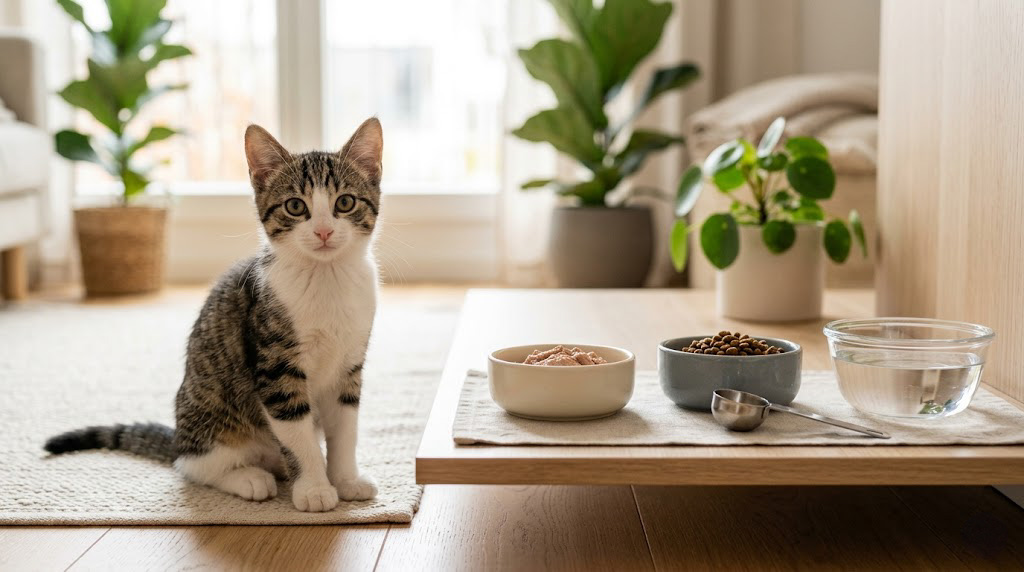
A kitten’s first year is not one single feeding stage. It is a fast-moving growth period. A newborn kitten, a 6-week-old kitten, a 3-month-old kitten, and a 10-month-old kitten all need different food textures, meal frequency, and portion guidance.
That is why feeding by age matters. As kittens grow, their bodies are building muscle, bones, teeth, organs, and healthy body weight at the same time. Their diet needs to support that growth without underfeeding, overfeeding, or switching to adult cat food too early.
Compared with adult cats, growing kittens usually need:
-
More energy for growth, because their bodies are developing quickly
-
High-quality animal protein, to support muscle and tissue development
-
Balanced minerals, especially calcium and phosphorus, for bones and teeth
-
Small, frequent meals, because kittens have small stomachs but high energy needs
-
Age-appropriate food texture, moving from milk to soft food, then to structured wet or dry kitten meals
📚 Expert Resource: European pet food nutrition guidance treats growth as a specific life stage with different nutrient needs. You can learn more from the FEDIAF Nutritional Guidelines for Cats and Dogs.
Feeding mistakes during this stage may contribute to poor weight gain, digestive upset, unhealthy weight gain, or difficulty transitioning between foods. The goal is not simply to feed more. The goal is to feed the right type of food, in the right amount, at the right stage of growth.
How Often Should You Feed a Kitten Each Day?
Use the feeding chart above for the age-by-age schedule. In daily life, the goal is to spread your kitten’s food across smaller meals instead of offering one or two large portions.
Kittens grow quickly and have small stomachs, so a steady routine is easier on their digestion and helps you notice changes in appetite, energy, or weight gain. A young kitten may need several small meals across the day, while an older kitten can gradually move toward a more structured routine.
A good daily feeding routine should be:
-
Consistent, so your kitten learns when to expect food
-
Measured, so you are not guessing portions
-
Flexible, because appetite and growth speed can change week by week
-
Monitored, using weight gain, body condition, energy, and stool quality as signals
Cornell Feline Health Center explains that kittens need more food per pound of body weight than adult cats, which is why feeding frequency matters during growth.
If your kitten is constantly hungry, leaving food behind, vomiting after meals, having diarrhea, or not gaining weight as expected, the feeding schedule may need adjustment. For newborn, orphaned, weak, or underweight kittens, always follow bottle-feeding instructions and speak with a veterinarian or rescue professional.
How Much Should a Kitten Eat?
There is no single perfect amount of food for every kitten. Two kittens of the same age can need different portions depending on their weight, breed size, activity level, growth speed, and the calorie density of the food.
The safest starting point is always the feeding guide on your kitten food label. Kitten foods can vary a lot: one wet food, dry food, or mixed diet may provide more calories per serving than another. That means “one bowl” or “one pouch” is not always the same amount of nutrition.
When deciding how much to feed your kitten, look at:
-
Age: Younger kittens need smaller, more frequent meals.
-
Weight: Food labels usually calculate portions based on body weight.
-
Food type: Wet food, dry food, and mixed feeding have different calorie densities.
-
Activity level: A very playful kitten may need more energy than a calmer indoor kitten.
-
Growth rate: Kittens should gain weight steadily, not suddenly or unevenly.
-
Body condition: Your kitten should look healthy and active, not underweight or overly round.
A healthy kitten should usually show:
- steady weight gain
- good energy between meals
- a healthy appetite
- normal stool quality
- a body shape that is growing without becoming overweight
If your kitten is always hungry, leaving food behind, vomiting after meals, having diarrhea, or not gaining weight as expected, do not simply increase or reduce food at random. Recheck the food label, review the feeding schedule, and speak with a veterinarian if the pattern continues.
0–4 Weeks: Newborn Kitten Feeding
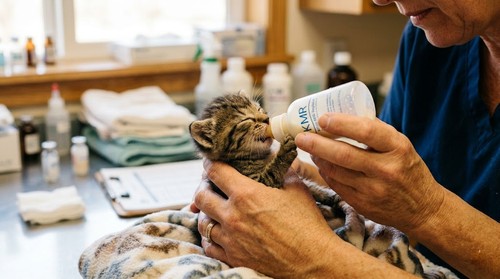
During the first three weeks, kittens normally depend on their mother’s milk or kitten milk replacer for nutrition. At around three to four weeks, some kittens may begin exploring a very small amount of soft kitten food, but mother’s milk or kitten milk replacer should still provide their main nutrition during the early transition.
If the mother cat is present and nursing successfully, her milk should normally remain the kittens’ main food until gradual weaning begins.
At this stage, newborn kittens usually need:
-
Mother’s milk or kitten milk replacer only, never cow’s milk
-
Frequent feeding, often every 2–4 hours if bottle-fed
-
A warm body temperature before feeding, because cold kittens cannot digest food properly
-
Proper bottle-feeding position, with the kitten lying belly-down, not on their back
-
Daily weight monitoring, to make sure they are gaining steadily
Never give a newborn kitten cow’s milk. It does not provide the right balance of nutrients for kittens and may cause digestive upset, diarrhea, and dehydration.
If a newborn kitten is cold, weak, crying constantly, refusing milk, bloated, or not gaining weight, contact a veterinarian or rescue professional as soon as possible.
📚 Expert Resource: For detailed bottle-feeding amounts and stomach capacity guidance, see the Maddie’s Fund Kitten Bottle Feeding and Stomach Capacity Chart.
4–8 Weeks: Feeding During Weaning
Between four and eight weeks, most kittens gradually move from mother’s milk or kitten milk replacer to complete food formulated for kittens. During this stage, the feeding routine should remain gradual and closely monitored.
Most kittens in this age range do well with:
- four to five small meals per day
- soft wet kitten food or thoroughly softened kitten kibble
- a shallow, stable feeding dish
- continued access to mother’s milk or kitten milk replacer during the early transition
- fresh water as solid food becomes a larger part of the diet
- regular weight, appetite, energy, and stool monitoring
Start with small portions and use the feeding guide on the kitten-food label as a starting point. The amount needed will vary depending on the kitten’s age, weight, food calorie density, growth rate, and how much mother’s milk or kitten milk replacer they still receive.
For kittens that are still transitioning from milk to solid food, see our week-by-week kitten weaning guide.
By the end of this stage, many healthy kittens can eat complete kitten food independently. Contact a veterinarian if the kitten refuses food, becomes weak, develops persistent diarrhea or vomiting, or fails to gain weight.
2–4 Months: Rapid Growth Phase
Between 2 and 4 months, your kitten is growing fast and becoming much more active. This is the stage when many kittens are fully weaned, eating regular kitten food, and developing stronger muscles, bones, teeth, and daily routines.
At this age, food should be designed for growth. Adult cat food is not the right choice because kittens need a formula made for their developing body.
A good 2–4 month kitten feeding routine usually includes:
-
Complete kitten food, clearly labeled for growth or kittens
-
3–4 small meals per day, depending on appetite, weight, and routine
-
Measured portions, based on the feeding guide on the food label
-
Wet, dry, or mixed feeding, depending on your kitten’s needs and what they tolerate well
-
Weekly weight checks, to make sure growth is steady
Wet food can help with moisture and softer texture, while dry kitten food can be useful for measured daytime feeding. Some kittens do well with a mixed routine, such as wet food at set meal times and a measured portion of dry kitten food during the day.
Watch your kitten’s appetite, stool quality, energy, and weight gain during this stage. If your kitten is eating well but not gaining weight, constantly hungry, vomiting after meals, or having diarrhea, review the food amount and speak with a veterinarian.
4–6 Months: Structured Kitten Feeding Begins
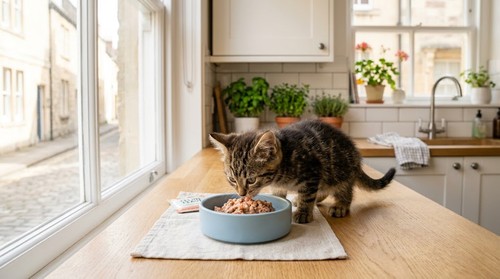
Between 4 and 6 months, your kitten is still growing, but their feeding routine can become more structured. Many kittens at this stage are active, curious, and hungry, but they are also ready for more consistent meal times and measured portions.
This is a good time to move away from guessing or constantly topping up the bowl. Instead, start building a routine that helps you understand how much your kitten actually eats each day.
A 4–6 month kitten feeding routine usually includes:
-
Around 3 meals per day, depending on appetite, activity, and growth rate
-
Measured daily portions, divided across meals instead of free-poured food
-
Complete kitten food, not adult cat food yet
-
Regular body condition checks, not just watching whether the bowl is empty
-
Small adjustments over time, especially if your kitten becomes less active or is sterilized during this stage
Measuring food does not mean feeding less. It means feeding with more control. Some kittens need slightly more during growth spurts, while others may start gaining weight too quickly if dry food is available all day without limits.
A healthy kitten should keep gaining weight steadily, stay energetic, and maintain a growing but balanced body shape. If your kitten is becoming round very quickly, always seems hungry, leaves food behind, or has digestive changes, review both the portion size and the feeding schedule.
6–12 Months: Preparing for Adult Nutrition
By 6 months, your kitten may start looking more like a young adult cat, but they are still growing. Their body is still developing, and most kittens still need complete kitten food until they are closer to maturity.
During this stage, the feeding routine usually becomes more structured. Many kittens can gradually move from frequent small meals toward 2–3 meals per day, while still eating food formulated for kittens.
A 6–12 month kitten feeding routine should focus on:
-
Keeping complete kitten food, rather than switching to adult food too early
-
Moving toward structured meals, usually 2–3 times per day
-
Measuring portions, especially if your kitten is indoor, less active, or sterilized
-
Monitoring body condition, not just appetite
-
Adjusting gradually, because growth rate and activity can change during this stage
Most kittens transition to adult cat food around 12 months of age. Larger breeds, such as Maine Coons or Norwegian Forest Cats, may need kitten food for longer, depending on growth and veterinary guidance.
If you are worried your kitten is gaining weight too quickly, review portion sizes and body condition early. You can also read our guide to signs your cat is overweight for practical warning signs.
The key is not to rush the adult food transition. A kitten that looks grown may still need kitten-specific nutrition while their body finishes developing.

Wet vs Dry Food for Kittens: Finding the Right Balance
Many new kitten parents wonder whether wet food, dry food, or a mix of both is better. The honest answer is that there is no single best format for every kitten. What matters most is that the food is complete, kitten-appropriate, easy to eat, and matched to your kitten’s age, weight, appetite, and digestion.
Wet kitten food can be helpful because it has a soft texture and provides extra moisture. This can make it easier for younger kittens to chew and swallow, especially during and after the weaning stage.
Dry kitten food can also be useful when it is formulated for growth and served in measured portions. It is convenient, calorie-dense, and easier to leave out for short periods, but it should not be free-poured without tracking the total daily amount.
Some kittens do well with mixed feeding, such as wet food at set meal times and a measured amount of dry kitten food during the day. The key is not to follow a fixed wet-to-dry ratio, but to make sure the total daily food amount fits your kitten’s weight, growth rate, and body condition.
If you are comparing both formats in more detail, read our full guide to wet vs dry cat food.
Common Kitten Feeding Mistakes to Avoid
Feeding mistakes in the first year are common, especially because a kitten’s needs change so quickly. The goal is not to make feeding complicated, but to avoid habits that can affect growth, digestion, and long-term body condition.
| Feeding Mistake | Why It Can Be a Problem | Better Approach |
|---|---|---|
| Switching to adult cat food too early | Adult food is not designed for the growth stage and may not match a kitten’s higher nutrient needs. | Keep using complete kitten food until your kitten is close to maturity, unless your vet recommends otherwise. |
| Guessing portions instead of measuring | “A little more” can become overfeeding, while too little may slow healthy weight gain. | Use the food label as a starting point and adjust based on weight, appetite, and body condition. |
| Offering large, infrequent meals | Kittens have small stomachs and may struggle with very large meals. | Split food into smaller meals across the day, especially during the first months. |
| Changing food too quickly | Sudden diet changes can upset digestion and may lead to soft stool, diarrhea, or vomiting. | Transition gradually by mixing the old and new food over several days. |
| Free-pouring dry food without tracking the amount | Dry food is calorie-dense, and unlimited access can make it harder to control portions. | Measure the daily amount before offering dry food, even if you leave some out during the day. |
| Ignoring vomiting, diarrhea, or poor weight gain | Digestive changes can be a sign that the feeding routine, food type, or portion size needs attention. | Watch patterns and speak with a veterinarian if symptoms continue or your kitten is not gaining weight. |
| Forgetting water as solid food increases | As kittens eat more solid food, hydration becomes more important. | Keep fresh water available and consider wet food or mixed feeding if your kitten drinks very little. |
If your kitten often vomits after meals, eats too quickly, or seems uncomfortable after feeding, read our guide to cat vomiting after eating for more detail on possible causes and red flags.
Small feeding mistakes are easier to fix early. The more consistently you track meals, weight, appetite, and stool quality, the easier it becomes to understand what your kitten actually needs.
Dangerous Foods to Keep Away from Your Kitten
Kittens have sensitive digestion, and some human foods can be unsafe even in small amounts. As a rule, do not share table scraps or random human foods with your kitten.
Avoid:
-
Cow’s milk and dairy: Many kittens cannot digest lactose well, which may lead to stomach upset or diarrhea. Use kitten milk replacer only when milk support is needed.
-
Onions and garlic: These can be toxic to cats, including powdered forms often found in sauces, soups, or baby food.
-
Raw meat or raw eggs: These may carry bacteria and are not a balanced diet for a growing kitten.
-
Dog food: Dog food is not formulated for kittens and should not be used as a regular kitten diet.
Also keep chocolate, caffeine, alcohol, and heavily seasoned foods away from your kitten. If your kitten eats something unsafe or shows vomiting, diarrhea, weakness, or unusual behavior, contact a veterinarian.
When to Switch From Kitten Food to Adult Cat Food
Most kittens should stay on complete kitten food until they are close to adult maturity, usually around 12 months of age. Even if your kitten looks grown at 6 or 8 months, their body may still need kitten-specific nutrition to support the final stages of growth.
Some large or slow-maturing breeds, such as Maine Coons or Norwegian Forest Cats, may need kitten food for longer. In those cases, the right timing should depend on growth, body condition, and veterinary guidance.
When it is time to switch, do it gradually. Mix a small amount of adult cat food into the kitten food, then slowly increase the adult food over 7–10 days. A sudden food change may cause digestive upset, soft stool, diarrhea, or vomiting.
A simple transition can look like this:
-
Days 1–2: Mostly kitten food, with a small amount of adult food
-
Days 3–5: Half kitten food, half adult food
-
Days 6–10: Mostly adult food, then fully adult food if your cat tolerates it well
If your kitten vomits, develops diarrhea, refuses food, or loses energy during the transition, slow down and speak with your veterinarian.
When to Ask a Vet About Kitten Feeding
Most kitten feeding questions can be managed with a good schedule, measured portions, and steady weight tracking. But some situations need professional guidance.
Speak with a veterinarian if your kitten:
- refuses food or suddenly loses appetite
- is not gaining weight as expected
- vomits repeatedly after meals
- has ongoing diarrhea or very soft stool
- seems weak, cold, bloated, or unusually tired
- is orphaned, underweight, or under 8 weeks old
- reacts badly during a food transition
- needs a special diet because of illness, allergies, or digestive problems
This guide is for educational purposes and is not a substitute for veterinary advice. If your kitten seems unwell or is not growing normally, it is always safer to ask a vet early.
Build a Personalized Kitten Feeding Routine with FAMMO
A feeding chart is a helpful starting point, but your kitten is not just a number in a table. Their real needs can change with age, weight, breed size, activity level, appetite, digestion, sterilization status, and growth speed.
That is where FAMMO can help.
FAMMO helps pet parents create a smarter profile for their kitten and track the signals that matter most for nutrition decisions, including:
- age and current weight
- feeding routine and food type
- wet, dry, or mixed feeding habits
- appetite and digestion notes
- body condition and weight changes
- growth milestones over time
Instead of guessing from packaging claims alone, you can use your kitten’s real profile to make more informed feeding decisions as they grow.
FAMMO is not a replacement for veterinary care, but it can help you stay more organized, notice patterns earlier, and understand your kitten’s feeding needs more clearly.
👉 Create your free FAMMO profile and start tracking your kitten’s feeding routine
Frequently Asked Questions About Feeding Kittens
How often should I feed a 2-month-old kitten?
Most 2-month-old kittens need 3–4 small meals per day. At this age, they are usually fully weaned or close to it, but still growing quickly. Use complete kitten food and follow the feeding guide on the label based on your kitten’s weight.
How much should a kitten eat each day?
The exact amount depends on your kitten’s age, weight, food type, calorie density, activity level, and growth rate. Start with the feeding guide on the kitten food label, then adjust based on steady weight gain, body condition, appetite, and stool quality.
How much wet food should a kitten eat?
There is no single wet food amount that fits every kitten because wet foods vary in calories per pouch, can, or tray. Check the label, divide the daily amount into small meals, and reduce dry food if you are feeding both wet and dry so the total daily calories stay appropriate.
Can kittens eat dry food?
Yes, kittens can eat dry food once they are ready for solid food, but it should be a complete kitten food, not adult cat food. Younger kittens may need dry kibble softened with warm water during the transition from milk to solid food.
Is wet or dry food better for kittens?
Both wet and dry kitten food can work if they are complete and appropriate for growth. Wet food offers soft texture and extra moisture, while dry food can be convenient and calorie-dense. Many kittens do well with a measured mixed-feeding routine.
Should kittens eat grain-free food?
Grain-free food is not automatically better for kittens. A grain-free kitten food can be suitable if it is complete, balanced, and formulated for growth, but most healthy kittens do not need grain-free food unless there is a confirmed sensitivity or veterinary reason. If you are comparing grain-free options, read our guide to grain-free cat food in Europe before making a change.
When can kittens start eating wet food?
Many kittens begin exploring soft wet kitten food at around four weeks of age as part of gradual weaning. Mother’s milk or kitten milk replacer should not be removed suddenly, and the kitten’s weight, appetite, and digestion should be monitored during the transition.
When should I switch from kitten food to adult cat food?
Most kittens switch to adult cat food around 12 months of age, but large breeds may need longer. Do not switch suddenly. Mix the new adult food with the kitten food over 7–10 days and slow down if vomiting or diarrhea appears.
Can kittens drink cow’s milk?
No. Cow’s milk is not a suitable replacement for mother’s milk or kitten milk replacer. Many kittens do not digest lactose well, and cow’s milk may cause stomach upset or diarrhea.
Should I free-feed my kitten?
Some kittens can handle measured dry food left out for short periods, but unlimited free-feeding can make it harder to control portions. If you leave dry food out, measure the daily amount first and monitor weight, appetite, and body condition.
How do I know if my kitten is eating enough?
A kitten who is eating enough should gain weight steadily, stay active, have a healthy appetite, and pass normal stool. If your kitten is not gaining weight, seems weak, vomits repeatedly, has diarrhea, or refuses food, contact a veterinarian.
Why is my kitten vomiting after eating?
A kitten may vomit after eating because of eating too fast, sudden food changes, large meals, food intolerance, parasites, or illness. Occasional mild upset can happen, but repeated vomiting, weakness, diarrhea, or poor weight gain should be checked by a veterinarian.