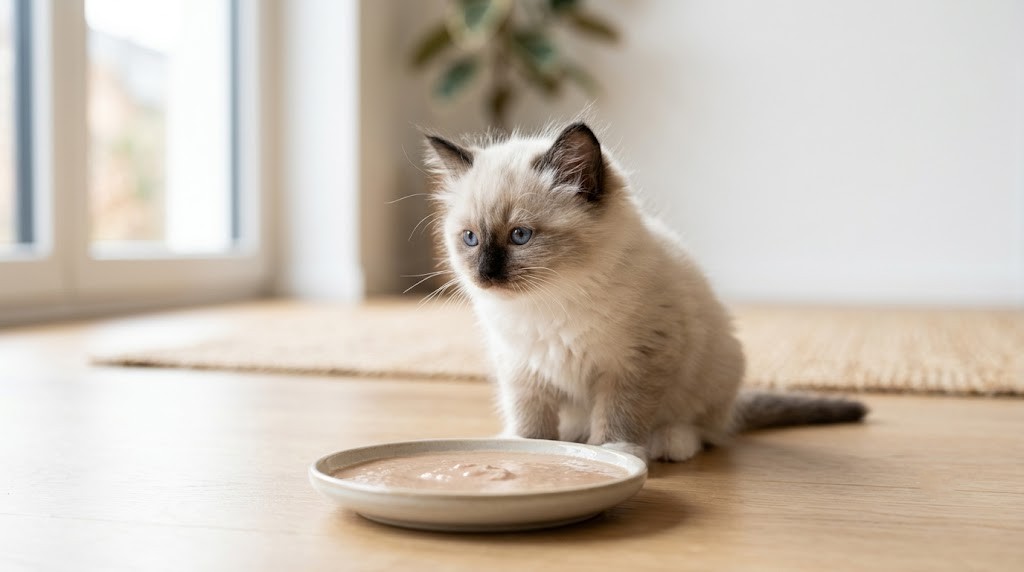
Most kittens begin exploring soft solid food at around three to four weeks of age, but weaning is a gradual transition—not an overnight switch from milk to meals.
During the following weeks, kittens slowly learn to lap, chew, adapt to new textures, digest solid food, and depend less on their mother’s milk or kitten milk replacer. Many kittens can eat solid kitten food independently by six to eight weeks, although individual development can vary.
This guide focuses specifically on the milk-to-solid-food transition. For daily portions, meal frequency, and feeding schedules after weaning, see our kitten feeding guide by age.
Quick Answer: When Can Kittens Eat Solid Food?
Kittens can usually start trying soft solid food at around three to four weeks old, with many becoming ready closer to four weeks.
Begin with a thin slurry made from complete wet kitten food mixed with kitten milk replacer or warm water. Over the next few weeks, gradually make the mixture thicker while allowing the kitten to continue nursing or drinking formula.
By approximately six to eight weeks, most healthy kittens can eat complete kitten food independently.
Mother’s milk or kitten milk replacer should not be removed suddenly. Kittens younger than three weeks generally need mother’s milk or an appropriate kitten milk replacer as their main source of nutrition. VCA Animal Hospitals recommends beginning gradual weaning at around three to four weeks.
Week-by-Week Kitten Weaning Timeline
Kitten Age | Main Feeding Stage | What to Offer | Main Goal |
|---|---|---|---|
Birth to 2 weeks | Milk only | Mother’s milk or kitten milk replacer | Warmth, nursing, and steady weight gain |
Around 3 weeks | Pre-weaning | Mother’s milk or kitten milk replacer; supervised exposure to a shallow dish if the kitten shows interest | Watch for readiness signs, not full meals |
Around 4 weeks | Weaning begins | A thin slurry of wet kitten food mixed with kitten milk replacer or warm water | Learn to lap and explore soft food |
Around 5 weeks | Texture transition | A thicker slurry or soft wet kitten food | Practise lapping and chewing while milk intake gradually decreases |
Around 6 weeks | Mostly solid food | Wet kitten food or thoroughly softened kitten kibble | Eat more independently |
7–8 weeks | Usually eating solid food independently | Complete food formulated for kittens | Maintain steady growth on solid meals |
This is a developmental timeline rather than a fixed medical schedule. Premature, underweight, weak, orphaned, or unwell kittens may need a slower transition, closer monitoring, and veterinary guidance.
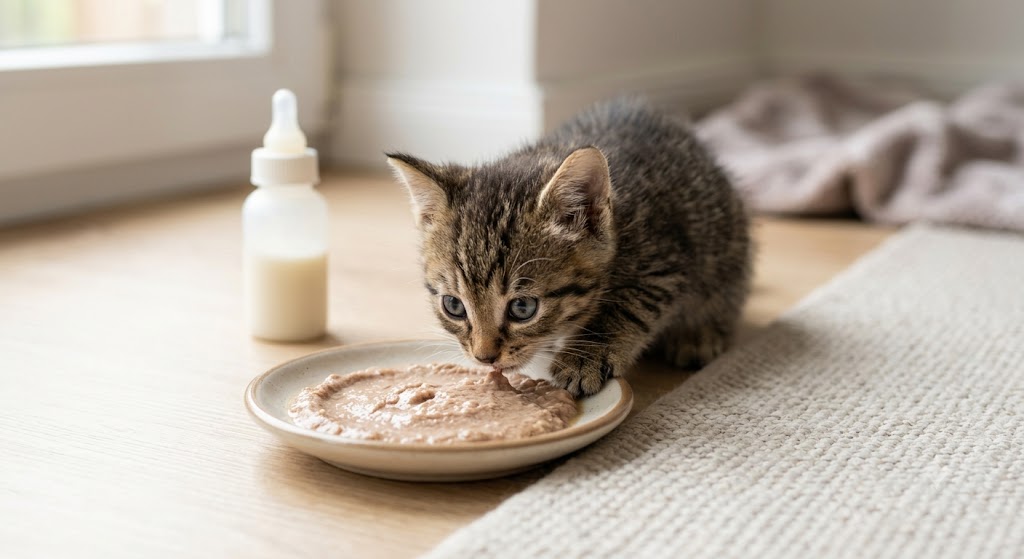
What Does Weaning Mean for a Kitten?
Kitten weaning is the gradual process of moving a kitten from mother’s milk or kitten milk replacer to complete food formulated for kittens.
It includes more than simply placing food in a bowl. During weaning, kittens learn to:
recognise food by smell
lap from a shallow dish
chew and swallow thicker food
begin drinking small amounts of fresh water
adapt to and digest solid food
rely less on mother’s milk or kitten milk replacer over time
eat independently without relying on nursing or bottle-feeding
Some kittens adapt quickly, while others need more time. A gradual transition can make the process less stressful and helps caregivers notice digestive problems, poor appetite, or slow weight gain.
Birth to 2 Weeks: Milk Only
During the first two weeks, kittens depend completely on their mother or a human caregiver for warmth and nutrition.
They are not ready for wet food, dry food, pieces of meat, homemade mixtures, or cow’s milk. Their main priorities are staying warm, nursing regularly, and gaining weight steadily.
If the mother is present and nursing successfully, her milk should normally remain the kittens’ only food.
Orphaned kittens need a commercial kitten milk replacer formulated specifically for young kittens. Kitten milk replacer should be used instead of cow’s milk or improvised homemade formulas because it is designed to support the nutritional needs of neonatal kittens. See VCA Animal Hospitals’ guidance on feeding orphaned kittens.
Seek veterinary advice promptly if a newborn kitten:
feels cold
cannot suckle
cries continuously
becomes unusually quiet or weak
develops persistent diarrhoea
has a swollen or painful abdomen
fails to gain weight
Very young kittens can deteriorate quickly when they are cold, dehydrated, or unable to feed.
Week 3: Preparing for Weaning
At around three weeks, mother’s milk or kitten milk replacer should still provide the kitten’s main source of nutrition.
However, some kittens begin showing early signs that they may soon be ready to explore soft food. They may:
become more mobile and coordinated
show interest in their mother’s food
sniff or investigate a shallow feeding dish
begin licking a small amount of smooth kitten-food slurry
These signs do not mean that milk should be removed.
A three-week-old kitten may be allowed to explore a very small amount of soft kitten-food slurry under close supervision, but there is no need to force the process. Many kittens are not developmentally ready to begin active weaning until closer to four weeks.
Can a 3-Week-Old Kitten Eat Solid Food?
A three-week-old kitten should not depend on solid food as their complete diet.
Mother’s milk or kitten milk replacer remains essential at this age. Any introduction to food should be soft, gradual, closely supervised, and specifically appropriate for kittens.
Week 4: Introducing the First Wet & Soft Kitten Food
Around four weeks is often an appropriate time to begin active weaning. If you are starting a 4-week-old kitten eating wet food, the most important rule is texture. Start with a very soft food mixture that is easy for the kitten to smell and lap. A shallow saucer is usually easier for a young kitten to use than a deep bowl.
How to Make a Simple Kitten Weaning Slurry
Use:
complete wet food formulated for kittens
kitten milk replacer or warm water
a clean, shallow dish
Mix a small amount of wet kitten food with enough liquid to create a smooth, thin consistency.
Offer the mixture fresh and allow the kitten to approach and investigate it independently. Do not push the kitten’s face into the dish or force food into their mouth.
The first attempts may be messy. Kittens may step into the dish, lick food from their paws, or lose interest quickly. This is normal while they learn how to lap and eat a new texture.
Continue providing access to the mother or kitten milk replacer during this stage.
VCA Animal Hospitals’ kitten-raising guidance recommends beginning with a gruel made from kitten food and milk replacer, then gradually reducing the added liquid as kittens become more confident eating independently.
Week 5: Making the Food Thicker
At around five weeks, many kittens can lap more confidently and begin chewing soft food.
Gradually reduce the amount of kitten milk replacer or water mixed into the food. The texture should become thicker over several days rather than changing suddenly.
At this stage, kittens may still nurse or receive kitten milk replacer, but solid food should gradually become a larger part of their diet.
Watch for:
comfortable chewing and swallowing
steady interest in the food dish
normal stool
good energy
continued weight gain
gradually reduced dependence on mother’s milk or kitten milk replacer
Fresh water should also be available in a stable, shallow bowl.
Avoid introducing several new foods, flavours, or textures at the same time. Keeping the first food and texture consistent makes it easier to notice whether a change is followed by digestive upset.
Week 6: Eating More Independently
By six weeks, many kittens can eat soft wet kitten food without kitten milk replacer being mixed into every meal.
Some kittens may also manage softened dry kitten food. If using kitten kibble, soak it thoroughly with warm water until the pieces are soft and easy to chew.
Dependence on mother’s milk or kitten milk replacer usually declines naturally during this stage. Some kittens may continue nursing occasionally even after solid food provides most of their nutrition.
Beginning to eat independently does not mean that a kitten is ready to leave their mother or littermates. Feeding independence is only one part of the kitten’s physical and behavioural development.
Weeks 7–8: Usually Fully Weaned
Most healthy kittens are fully or almost fully weaned by seven to eight weeks.
They should now be able to:
eat kitten food without kitten milk replacer mixed into it
drink fresh water
chew an age-appropriate food texture
maintain steady energy
continue gaining weight
pass normal stool
International Cat Care describes kitten weaning as beginning at approximately three to four weeks and normally being completed by around six to eight weeks.
Once a kitten is fully weaned, the feeding focus changes from texture transition to daily portions, meal frequency, weight monitoring, and healthy growth.
What Should a Kitten’s First Solid Food Be?
A kitten’s first solid food should be:
formulated for kittens or feline growth
labelled as complete rather than complementary
soft enough for the kitten to lap or chew comfortably
easy to mix into a smooth weaning slurry
fresh and handled according to the storage instructions on the label
kept reasonably consistent during the first stage of the transition
In Europe, complete pet food is formulated to provide the nutrients a pet needs when fed as directed. Complementary foods, including many treats, toppers, and snacks, are intended to form only part of the diet and should not be used as a kitten’s main food.
Check the packaging to confirm that the food is both complete and suitable for kittens or growth. Terms such as “natural,” “premium,” or “high in meat” do not by themselves show that a food can provide a complete diet for a growing kitten.
Avoid using the following as a kitten’s main weaning food:
adult cat food
dog food
cow’s milk
plain meat as the sole diet
tuna or other fish as the sole diet
table scraps
unbalanced homemade recipes
complementary foods, treats, or toppers
A growing kitten needs nutritionally complete food designed for growth, not simply something soft enough to eat.
For more information, see FEDIAF’s explanation of complete and complementary pet food.
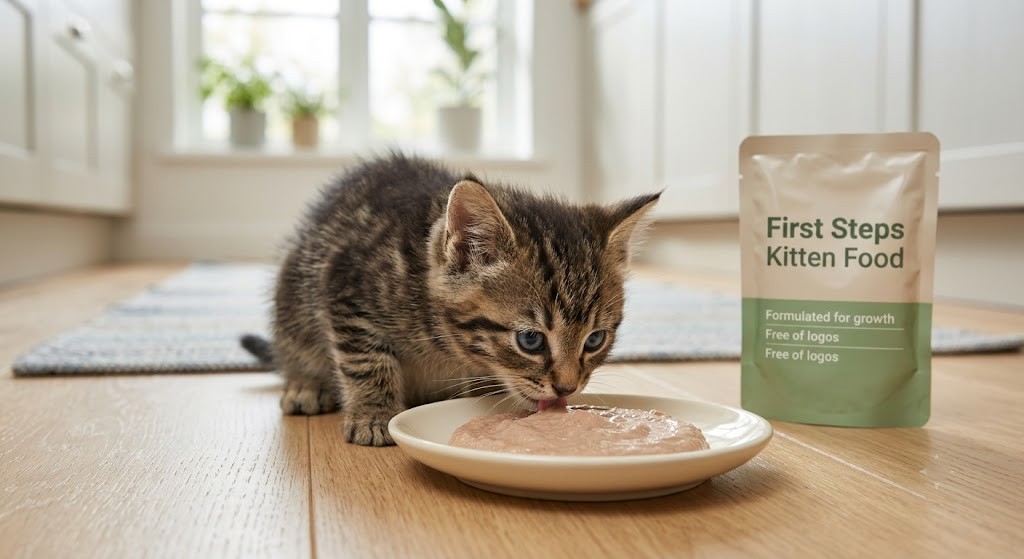
Is Wet or Dry Food Better for Weaning Kittens?
For most weaning kittens, wet kitten food is the easier starting texture, but neither wet nor dry food is automatically better for every kitten.
Wet kitten food can be mashed and mixed smoothly with kitten milk replacer or warm water, making it easier for a young kitten to smell, lap, and swallow.
Dry kitten food may also be introduced during the later stages of weaning. At first, soak the kibble thoroughly with warm water until it becomes soft and easy to chew.
Whichever format you choose, the food should be:
labelled as complete
formulated for kittens or feline growth
soft and easy to eat at the kitten’s current stage
introduced gradually
stored and prepared safely
accepted without persistent vomiting, diarrhoea, or feeding difficulty
The best choice depends on the kitten’s age, chewing ability, individual preference, and how well they tolerate the food. Neither format should be presented as universally healthier.
For a detailed comparison of moisture, texture, calorie density, storage, and mixed feeding, read our guide to wet vs dry cat food.
How to Wean an Orphaned Kitten
The overall transition is similar for an orphaned kitten, but closer monitoring is needed because there is no mother cat supporting feeding, warmth, cleaning, elimination, or early behavioural learning.
Kitten milk replacer should normally remain the sole source of nutrition until the kitten is developmentally ready for weaning, usually at around three to four weeks. VCA Animal Hospitals advises that gradual weaning can begin at this stage.
To start weaning an orphaned kitten:
continue using kitten milk replacer according to the product label and veterinary guidance
introduce a thin slurry when the kitten is developmentally ready, often closer to four weeks
offer the food in a clean, shallow dish
allow the kitten to lick and explore the food rather than forcing it into their mouth
gradually thicken the mixture over several days
monitor body weight, stool, appetite, hydration, and energy
gradually reduce formula only as solid-food intake becomes consistent and reliable
Do not bottle-feed a kitten while they are lying on their back. Position the kitten naturally, with their belly facing downward as if nursing and their head in a neutral position.
A kitten that feels cold should be warmed before feeding. Contact a veterinarian promptly if the kitten remains cold, weak, or unwilling to feed.
If a kitten is too weak to suckle, coughs during feeding, has formula coming from the nose, or struggles to breathe, stop feeding and contact a veterinarian immediately. These signs may indicate that formula has entered the airway, and aspiration can be life-threatening.
Tube feeding should only be performed by someone who has been trained directly by a veterinarian.
How Do You Know Weaning Is Going Well?
A successful weaning transition is not measured only by whether the food dish becomes empty. The kitten should also continue growing, remain active, and become gradually more confident with solid food.
Positive signs include:
increasing interest in solid food
confident lapping, chewing, and swallowing
gradually reduced dependence on mother’s milk or kitten milk replacer
steady weight gain
normal energy and play
drinking water and remaining well hydrated
formed, regular stool
eating without persistent coughing, gagging, or difficulty swallowing
Weighing a young kitten regularly during weaning can help identify a problem before it becomes obvious. VCA Animal Hospitals recommends monitoring kittens’ weight routinely to confirm that they are growing normally.
Failure to gain weight, weight loss, declining appetite, or low energy may indicate that the kitten is not eating enough or has a health problem requiring veterinary assessment.
Common Problems During Kitten Weaning
What If the Kitten Refuses Solid Food?
Some kittens simply need more time to become comfortable with a new smell, texture, and feeding method.
Try warming wet kitten food slightly to strengthen its smell, making the slurry thinner, or allowing the kitten to observe their mother or littermates eating.
Continue providing mother’s milk or kitten milk replacer while the kitten is learning. Never deliberately withhold mother’s milk or kitten milk replacer to create hunger and force a young kitten to eat solid food.
Contact a veterinarian if the kitten also refuses mother’s milk or kitten milk replacer, becomes weak or unusually quiet, or fails to gain weight.
What If the Kitten Develops Diarrhoea?
Loose stool may follow a sudden dietary change, but diarrhoea can also have causes unrelated to weaning. It should not automatically be blamed on the new food.
Return to the last food texture or milk-to-food mixture the kitten tolerated well, and avoid introducing another new food immediately.
Persistent or watery diarrhoea can cause dehydration quickly in a young kitten. Contact a veterinarian promptly if the diarrhoea continues or is accompanied by vomiting, low energy, refusal to eat, weight loss, abdominal discomfort, or blood in the stool.
What If the Kitten Vomits After Eating?
Vomiting during weaning may occur for several reasons and should not automatically be attributed to eating too quickly or changing food texture.
Monitor the kitten closely and avoid introducing additional dietary changes until the cause is clearer. Repeated vomiting, or vomiting accompanied by weakness, diarrhoea, abdominal pain, refusal to eat, dehydration, or poor growth, requires prompt veterinary advice.
Our guide to cat vomiting after eating explains how vomiting differs from regurgitation and outlines warning signs that need veterinary attention.
What If the Kitten Is Not Gaining Weight?
Failure to gain weight during weaning should not be managed simply by increasing the amount of food.
The kitten may not be consuming enough, may be struggling with the transition, or may have an underlying health problem. Regular weighing can help identify a change before weakness or visible weight loss develops.
Contact a veterinarian promptly if the kitten stops gaining weight, begins losing weight, eats poorly, or has low energy. An experienced kitten rescue organisation may also provide practical care support, but it should not replace veterinary assessment.
Warning Signs That Need Veterinary Advice
Contact a veterinarian promptly if a kitten:
refuses both mother’s milk or kitten milk replacer and solid food
becomes weak, cold, unusually quiet, or difficult to wake
fails to gain weight or begins losing weight
has repeated vomiting
has persistent or watery diarrhoea
has blood in vomit or stool
shows signs of dehydration, such as dry or sticky gums, sunken eyes, poor appetite, or marked lethargy
develops a swollen or painful abdomen
cries continuously despite being warm and offered appropriate food
Seek emergency veterinary care immediately if a kitten:
coughs, chokes, or struggles to breathe during or after feeding
has kitten milk replacer, mother’s milk, or food coming from the nose
cannot swallow normally
becomes severely weak, unresponsive, or collapses
VCA Animal Hospitals lists dry gums, reduced skin elasticity, sunken eyes, poor appetite, and lethargy among possible signs of dehydration in kittens.
Very young kittens have limited energy reserves and can become unwell more quickly than healthy adult cats. General online guidance cannot replace a veterinary examination when a kitten is weak, dehydrated, unable to feed, or failing to grow.
Common Kitten Weaning Mistakes to Avoid
Starting too early: Kittens younger than approximately three weeks are generally not ready to rely on solid food. Mother’s milk or kitten milk replacer should remain their main source of nutrition until gradual weaning begins.
Removing milk suddenly: Weaning should happen gradually.Solid food should replace mother’s milk or kitten milk replacer progressively rather than overnight.
Using cow’s milk: Cow’s milk is not an appropriate substitute for mother’s milk or commercial kitten milk replacer and may contribute to digestive upset.
Feeding adult cat food: Adult maintenance food is not formulated to meet the nutritional needs of growing kittens.
Using complementary food as the main diet: Check that the food is labelled as complete and formulated for kittens or feline growth. Treats, toppers, and complementary foods should not be used as the kitten’s sole diet.
Offering hard or large food pieces: Young kittens need soft textures they can lap, chew, and swallow comfortably. Dry kitten food should initially be softened thoroughly if it is introduced during weaning.
Changing several foods at once: Introducing multiple foods, flavours, or textures together can make the transition more difficult and make it harder to identify what may be associated with digestive upset.
Forcing food into the mouth: Do not push a kitten’s face into the dish or force-feed without direct veterinary instruction. Incorrect feeding can cause stress, choking, or aspiration.
Ignoring weight and energy: A kitten may approach the food dish without consuming enough nutrition. Weight gain, appetite, activity, hydration, and stool quality should all be monitored during weaning.
What Comes After Weaning?
Once your kitten can eat solid food independently, their feeding needs will continue to change as they grow.
The next stage involves deciding:
how often to offer meals
how much food to provide
whether to use wet, dry, or mixed feeding
how to monitor weight gain
how to adjust the feeding routine as the kitten grows
Use our kitten feeding guide by age for an age-based feeding chart, meal-frequency guidance, and practical feeding routines.
You can also create a FAMMO profile to help organise information about your kitten’s age, weight, food, appetite, digestion, and feeding routine. Tracking these changes can be especially useful during and after weaning.
FAMMO provides educational and organisational support and does not replace veterinary diagnosis or treatment.
Frequently Asked Questions About Kitten Weaning
Can a 3-Week-Old Kitten Eat Wet Food?
Some three-week-old kittens may begin exploring a tiny amount of very soft kitten-food slurry, but mother’s milk or kitten milk replacer should still provide their main nutrition. Many kittens are more developmentally ready to begin active weaning closer to four weeks.
What Can I Feed a 4-Week-Old Kitten?
A four-week-old kitten can usually begin trying a thin slurry made from complete wet food formulated for kittens, mixed with kitten milk replacer or warm water. Continue providing access to mother’s milk or kitten milk replacer while solid food is introduced gradually.
How Do I Know My Kitten Is Ready for Solid Food?
A kitten may be ready to explore soft food when they become more mobile and coordinated, show interest in their mother’s food, investigate a shallow dish, and begin lapping. These signs commonly appear at around three to four weeks, but mother’s milk or kitten milk replacer should continue during the early stages of weaning.
When Are Kittens Fully Weaned?
Most healthy kittens are fully or almost fully weaned between six and eight weeks of age. Some may continue nursing occasionally even after complete kitten food provides most of their nutrition.
Can Kittens Go Directly From Milk to Dry Food?
A sudden transition from mother’s milk or kitten milk replacer to dry food is not recommended. Begin with soft food or thoroughly softened kitten kibble, then gradually reduce the added liquid as the kitten becomes more comfortable chewing.
What Is the Best First Food for a Kitten?
For many kittens, a suitable first solid food is complete wet food formulated for kittens or feline growth, mixed into a soft slurry. The food should be easy to lap and appropriate for growth, not adult cat food or a complementary product.
Can Kittens Drink Cow’s Milk During Weaning?
No. Cow’s milk is not an appropriate substitute for mother’s milk or kitten milk replacer and may contribute to digestive upset. Use a commercial kitten milk replacer if the mother is not available.
What Should I Do if My Kitten Will Not Eat Solid Food?
Continue providing mother’s milk or kitten milk replacer, make the slurry softer, warm the food slightly, and allow the kitten more time.Contact a veterinarian promptly if the kitten also refuses mother’s milk or kitten milk replacer, becomes weak, develops diarrhoea, or fails to gain weight.
Can Orphaned Kittens Be Weaned the Same Way?
The transition is similar, but orphaned kittens need closer monitoring because there is no mother cat supporting feeding, warmth, cleaning, elimination, or early behavioural learning. Continue kitten milk replacer until the kitten is developmentally ready for weaning, usually at around three to four weeks. Contact a veterinarian if feeding or weight gain is not progressing steadily.
How Much Solid Food Should a Weaning Kitten Eat?
There is no single amount suitable for every weaning kitten. The appropriate quantity depends on the kitten’s age, weight, health, food energy density, and how much mother’s milk or kitten milk replacer they still receive. Use the kitten-food label as a starting point, monitor weight gain, and seek veterinary guidance if growth or appetite is not steady.
For age-based portions, meal frequency, and feeding routines after weaning, see our kitten feeding guide by age.
Sources and Veterinary References
This guide is based on general kitten-weaning and nutrition guidance from veterinary and feline-care organisations, including:
This article provides general educational information and does not replace veterinary assessment for a weak, underweight, dehydrated, vomiting, or unwell kitten.