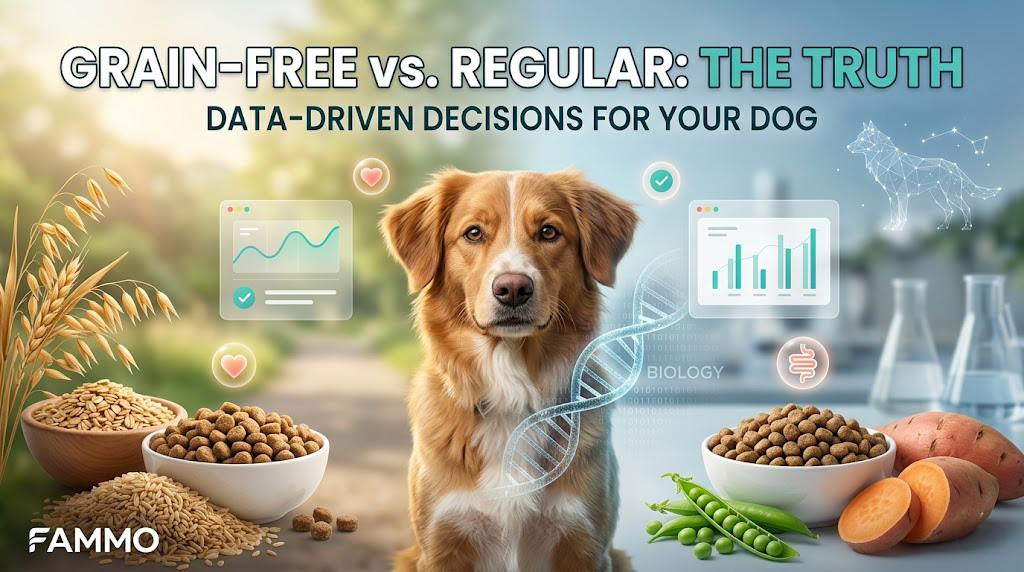
Grain-Free vs Regular Dog Food: Which Is Better?
Should Your Dog Eat Grain-Free or Regular Dog Food?
Most dog owners do not start by comparing nutrition labels.
It usually begins with a small moment: your dog scratching more than usual, leaving food in the bowl, having softer stools, gaining weight, or simply not feeling as energetic as before.
Then you stand in front of two bags of food.
One says “grain-free.”
The other is a regular grain-inclusive dog food.
Both look healthy. Both sound convincing. And suddenly, choosing dog food feels more complicated than it should.
Before deciding which one fits your dog, it helps to understand what actually makes a food complete, balanced, and suitable for your dog’s real needs. If you also want to compare trusted options, start with our full guide to the best dog food brands in Europe.
In this guide, we’ll explain the real difference between grain-free and regular dog food, when each one may make sense, and what to watch for before changing your dog’s diet.
Table of Contents
- Quick Answer: Is Grain-Free Dog Food Better Than Regular Dog Food?
- Grain-Free vs Regular Dog Food: Quick Decision Guide
- What Does Grain-Free Dog Food Actually Mean?
- What Is Regular or Grain-Inclusive Dog Food?
- Grain-Free vs Gluten-Free vs Wheat-Free Dog Food
- Can Dogs Digest Grains? The Wolf Myth Explained
- Are Grains Bad for Dogs? Quality Matters More Than the Label
- Grain-Free vs Regular Dog Food: Side-by-Side Comparison
- When Regular or Grain-Inclusive Dog Food Works Best
- When Does Grain-Free Dog Food Actually Make Sense?
- Grain-Free Dog Food and DCM: What Dog Owners Should Know
- How to Read a Grain-Free Dog Food Label
- How to Switch Dog Food Safely
- How FAMMO Helps You Stop Guessing
- Final Verdict: Grain-Free vs Regular Dog Food
- Frequently Asked Questions
Quick Answer: Is Grain-Free Dog Food Better Than Regular Dog Food?
Choosing between grain-free and regular dog food should not feel like guessing in the pet food aisle.
One bag says “grain-free” and sounds natural.
Another bag contains grains and still promises complete nutrition.
But the real question is not whether grains are automatically good or bad.
Grain-free dog food is not automatically better than regular dog food. For most healthy dogs, a complete and balanced grain-inclusive dog food can be a safe, nutritious, and practical daily choice.
Grains such as rice, oats, barley, corn, and wheat are not automatically “fillers.” In the right formula, they can provide digestible carbohydrates, fiber, energy, and important nutrients.
Grain-free dog food may make sense for some dogs, but usually only when there is a clear reason, such as a confirmed grain or gluten sensitivity, a veterinary elimination diet, or a specific formula that your dog truly does better on.
At FAMMO, we believe your dog’s nutrition should not depend on marketing trends or a pretty bag. It should be a data-driven decision based on your dog’s age, size, activity level, digestion, allergies, weight, health history, and how they actually respond over time.
Because when you stop guessing and start tracking, the right choice becomes much clearer.
Grain-Free vs Regular Dog Food: Quick Decision Guide
If you are trying to choose between grain-free and regular dog food, start with your dog, not the front of the bag.
A healthy dog, a dog with itchy skin, a senior dog, a small breed dog, and a dog with digestive sensitivity may all need different feeding decisions. The right choice depends on the full formula, your dog’s symptoms, and whether there is a real medical reason to avoid grains.
Use this quick guide as a starting point:
| Your dog’s situation | Better starting point | Why it matters |
|---|---|---|
| Healthy adult dog with normal digestion | Regular / grain-inclusive dog food | A complete grain-inclusive formula can provide stable energy, fiber, and balanced daily nutrition. |
| Dog with confirmed grain or gluten sensitivity | Grain-free dog food under veterinary guidance | Grain-free may help when grains are clearly identified as the trigger. |
| Itchy skin, paw licking, or ear infections | Check the protein source first | Many food reactions are linked to proteins or other triggers, not grains alone. |
| Loose stools, gas, or sensitive stomach | Review the full formula and transition speed | Sudden food changes, fat level, protein type, or legume-heavy formulas may affect digestion. |
| Grain-free food with peas, lentils, or chickpeas high on the label | Use extra caution | The issue may be what replaces the grains, not simply the absence of grains. |
| Small breed dog | Choose based on calorie density, kibble size, and digestion | Small dogs need precise portions and formulas that match their size and metabolism. |
| Dog already doing well on regular food | Do not switch only because of marketing | If your dog has good energy, healthy stools, stable weight, and a good coat, the current food may already be working. |
The safest decision is not “grain-free” or “regular” by default.
It is the food that matches your dog’s body, health history, daily routine, and long-term response.
If you are choosing food for a toy or small breed dog, read our guide to the best dog food for small breeds.
What Does Grain-Free Dog Food Actually Mean?
Grain-free dog food is dog food made without cereal grains such as wheat, corn, rice, barley, oats, rye, or sorghum.
But grain-free does not mean carbohydrate-free.
This is one of the biggest misunderstandings in pet food marketing. Many grain-free dog foods still contain carbohydrates, but they come from different sources, such as peas, lentils, chickpeas, potatoes, sweet potatoes, tapioca, or other starch-rich ingredients.
That means “grain-free” is not automatically healthier, lighter, more natural, or better for digestion. It simply means the food does not contain grains.
The more important question is:
What replaced the grains?
A grain-free formula built around high-quality animal protein and balanced ingredients may work well for some dogs. But a grain-free formula that relies heavily on peas, lentils, or potatoes near the top of the ingredient list should be evaluated more carefully, especially if your dog eats it every day.
So before choosing grain-free dog food, do not only look at the front of the bag. Turn it around and read the full ingredient list.
What Is Regular or Grain-Inclusive Dog Food?
Regular dog food usually means dog food that contains grains.
You may also see it called grain-inclusive dog food, dog food with grains, or simply traditional dog food. These formulas may include ingredients such as rice, oats, barley, corn, wheat, millet, or sorghum.
For many healthy dogs, grains are not a problem. In a complete and balanced formula, grains can provide digestible carbohydrates, fiber, energy, vitamins, minerals, and texture that helps make dry kibble stable and easy to feed.
The problem is not that a dog food contains grains.
The real problem is when a formula uses low-quality ingredients, vague protein sources, poor balance, or cheap fillers without enough nutritional value.
That means regular dog food can be a strong daily option when it is well-formulated. A grain-inclusive food with named animal protein, clear ingredients, good digestibility, and the right nutrient balance may be a better choice than a grain-free formula built mostly around marketing.
So when comparing grain-free vs regular dog food, do not judge the food by one label.
Judge the full formula.
Grain-Free vs Gluten-Free vs Wheat-Free Dog Food
Grain-free, gluten-free, and wheat-free dog food are not the same thing.
This is one of the most common mistakes dog owners make when comparing grain-free vs regular dog food.
Grain-free dog food means the food does not contain cereal grains such as wheat, corn, rice, barley, oats, rye, millet, or sorghum.
Gluten-free dog food means the food does not contain gluten, a type of protein found in certain grains such as wheat, barley, and rye. But a gluten-free dog food may still contain other grains, such as rice, corn, oats, or millet.
Wheat-free dog food means the food does not contain wheat, but it may still contain other grains and may not be fully grain-free.
This difference matters because a dog may react to one specific ingredient without needing to avoid every grain.
For example, a dog that does not tolerate wheat may still do well with rice or oats. Another dog may need a veterinary elimination diet to identify the real trigger. In many cases, the issue is not “all grains,” but one ingredient, one protein source, or the overall formula.
According to the FEDIAF grain-free pet food factsheet, grain-free pet foods typically do not contain grains, but they may still contain carbohydrate sources such as pulses, potatoes, or sweet potatoes.
So before choosing a grain-free dog food, check what your dog actually needs:
| Label term | What it means | Important note |
|---|---|---|
| Grain-free | No cereal grains | Often uses peas, lentils, potatoes, or other starches instead |
| Gluten-free | No gluten-containing grains | May still contain grains like rice, corn, oats, or millet |
| Wheat-free | No wheat | May still contain other grains or gluten sources |
The safest approach is to avoid guessing. If your dog has itching, digestive upset, ear infections, or repeated reactions to food, work with your veterinarian to identify the real trigger before removing entire food groups.
Can Dogs Digest Grains? The Wolf Myth Explained
One of the biggest arguments behind grain-free dog food is simple:
“Dogs came from wolves, and wolves do not eat grains.”
It sounds logical at first.
But modern dogs are not wolves.
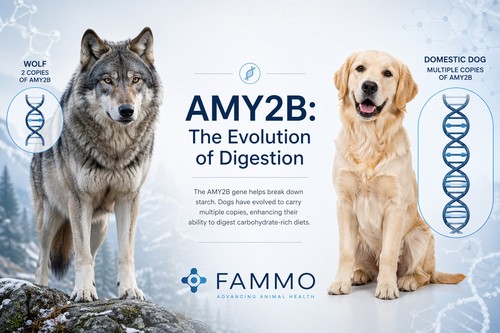
Over thousands of years of living alongside humans, dogs adapted to a different diet. Research published in Nature found that domestic dogs developed genetic changes that helped them digest starch more efficiently than wolves, including changes related to the AMY2B gene.
That matters because grains such as rice, oats, barley, corn, and wheat are sources of starch and carbohydrates. In a properly balanced dog food, these ingredients can provide usable energy, fiber, and nutrients for many healthy dogs.
This does not mean every grain-inclusive dog food is good.
It also does not mean every grain-free dog food is bad.
It means the “dogs are wolves, so grains are bad” argument is too simple.
A better way to think about dog food is this:
Modern dogs need complete and balanced nutrition based on their age, size, activity level, digestion, and health status, not a diet chosen only because it sounds closer to a wolf’s diet.
If you want to understand the science behind this, you can read the Nature study on dog domestication and starch-rich diets and the AKC explanation of whether dogs can eat wheat and other grains.
Are Grains Bad for Dogs? Quality Matters More Than the Label
Grains are not automatically bad for dogs.
The real issue is not whether a dog food contains grains. The real issue is the quality, balance, and purpose of the ingredients inside the formula.
A well-formulated grain-inclusive dog food can include healthy carbohydrate sources such as rice, oats, barley, corn, wheat, millet, or sorghum. These ingredients can provide energy, fiber, texture, and important nutrients when used properly.
But not every grain-inclusive formula is high quality.
And not every grain-free formula is better.
Healthy grains and carbohydrates in dog food
Some grains and carbohydrate sources can be useful in dog food when they are part of a complete and balanced recipe.
Examples include:
-
Oats: A source of soluble fiber that may support digestion.
-
Brown rice: Often easy to digest and commonly used in sensitive-stomach formulas.
-
Barley: A fiber-rich grain that can support steady energy.
-
Millet and sorghum: Alternative grains used in some dog food formulas.
-
Corn and wheat: Not automatically bad, but quality, processing, and the overall formula matter.
The mistake is treating all grains as “fillers.”
Some low-quality dog foods may use cheap ingredients mainly to bulk up the formula. But high-quality grains in a balanced recipe are very different from vague, poorly balanced filler ingredients.
What replaces grains in grain-free dog food?
Grain-free dog food still needs structure and carbohydrates, especially in dry kibble.
So instead of grains, many grain-free formulas use ingredients such as:
- Peas
- Lentils
- Chickpeas
- Beans
- Potatoes
- Sweet potatoes
- Tapioca
These ingredients are not automatically bad either.
But if peas, lentils, chickpeas, or potatoes appear very high on the ingredient list, the formula deserves closer attention. In many cases, the question is not “grains or no grains?” but whether the food is balanced, digestible, and suitable for your dog long term.
FAMMO takeaway
Do not judge dog food by one label.
A regular dog food with clear animal protein, balanced nutrients, and digestible grains may be better for your dog than a grain-free food built mostly around marketing.
And if your dog has itching, paw licking, ear infections, gas, or loose stools, do not assume grains are the problem right away. Sometimes the real trigger is the protein source, a sudden food change, poor digestibility, or another ingredient in the formula.
To understand this better, read our guide to the common signs of food allergy in dogs.
Grain-Free vs Regular Dog Food: Side-by-Side Comparison
Choosing between grain-free and regular dog food is easier when you compare the full formula, not just the marketing label.
Both types of food can be complete and balanced. Both can be low quality if the formula is poor. And both can work well for the right dog.
The difference comes down to ingredients, balance, digestibility, and whether your dog has a real reason to avoid grains.
| Factor | Regular / Grain-Inclusive Dog Food | Grain-Free Dog Food |
|---|---|---|
| Main carbohydrate sources | Rice, oats, barley, corn, wheat, millet, sorghum | Peas, lentils, chickpeas, beans, potatoes, sweet potatoes, tapioca |
| Best for | Many healthy dogs with normal digestion and no confirmed grain sensitivity | Dogs with a confirmed grain or gluten sensitivity, or dogs that do better on a specific grain-free formula |
| Allergy logic | Grains are not automatically the problem | Grain-free may help only if grains are actually the trigger |
| Digestive impact | Can support steady stools and daily fiber intake when well-formulated | Depends heavily on the replacement ingredients and overall formula |
| Ingredient risk | Low-quality formulas may rely on vague fillers or unclear protein sources | Some formulas may rely heavily on peas, lentils, chickpeas, or potatoes |
| Cost | Often available across budget, mid-range, and premium options | Often marketed as premium and may cost more |
| Main mistake owners make | Assuming all grains are cheap fillers | Assuming grain-free automatically means healthier |
| Best decision method | Check the full formula, life stage, protein source, and your dog’s response | Check the full formula, ingredient order, vet guidance, and your dog’s response |
The key takeaway is simple:
Grain-free dog food is not automatically better. Regular dog food is not automatically lower quality.
A grain-inclusive formula with clear animal protein, balanced nutrients, and digestible carbohydrates may be a better choice than a grain-free formula built mostly around marketing.
At the same time, a carefully chosen grain-free formula may help a dog with a confirmed sensitivity or a specific dietary need.
The best choice is the one that fits your dog, not the one with the trendiest label.
When Regular or Grain-Inclusive Dog Food Works Best
Regular dog food, or grain-inclusive dog food, can be a strong choice for many healthy dogs when the formula is complete, balanced, and made with clear ingredients.
The word “regular” does not mean low quality.
A grain-inclusive dog food can still be premium, digestible, science-informed, and well suited to your dog’s daily needs. The important question is not whether the food contains grains, but whether the full formula supports your dog’s age, size, activity level, digestion, weight, and health status.
1. It can provide steady daily energy
Many grain-inclusive dog foods use carbohydrate sources such as rice, oats, barley, corn, wheat, millet, or sorghum.
When used properly, these ingredients can provide digestible energy for daily activity, training, walking, playing, and normal body function.
This can be especially useful for healthy adult dogs, active dogs, and dogs that already do well on a balanced grain-inclusive diet.
2. It can support normal digestion
Some grains and carbohydrate sources provide fiber, which can help support normal stool quality and digestive consistency.
For many dogs, the goal is not to remove every grain. The goal is to choose a formula that your dog digests well.
If your dog has stable stools, good energy, a healthy coat, and a normal appetite on a grain-inclusive food, switching to grain-free only because of marketing may not be necessary.
3. It can be easier to evaluate and maintain
Regular dog food is available across many price ranges, life stages, breed sizes, and feeding formats.
That makes it easier for many owners to find a complete and balanced formula that fits their dog’s daily routine and budget.
But quality still matters.
A grain-inclusive food should have:
- A clearly named animal protein source
- A formula suitable for your dog’s life stage
- Clear ingredient labeling
- Good digestibility
- Balanced nutrients
- Feeding guidance that matches your dog’s weight and activity level
FAMMO Insight
A regular dog food may be a great choice for one dog and the wrong choice for another.
An active Labrador, a senior Beagle, a small Pomeranian, and a dog with sensitive digestion may all respond differently to the same food. That is why tracking your dog’s energy, stool quality, appetite, coat condition, weight, and symptoms over time matters more than following a trend.
Choosing the right food is only part of the decision. How often you feed your dog also matters. For more guidance, read our guide on how often you should feed your dog.
When Does Grain-Free Dog Food Actually Make Sense?
Grain-free dog food is not automatically bad.
It is also not automatically better.
The problem is that grain-free has often been marketed as a universal solution for itching, digestive issues, low energy, allergies, and “natural” feeding. But in real life, most dogs do not need to avoid all grains unless there is a clear reason.
Grain-free dog food may make sense in specific situations, especially when the decision is guided by your veterinarian.
1. Your dog has a confirmed grain or gluten sensitivity
Some dogs may react poorly to a specific grain or gluten-containing ingredient, such as wheat.
But that does not always mean your dog needs to avoid every grain. A dog that reacts to wheat may still tolerate rice, oats, corn, barley, or other grains.
This is why guessing can be misleading. A proper elimination diet or veterinary guidance is the safest way to understand what your dog is actually reacting to.
2. Your veterinarian recommends an elimination diet
Grain-free food may be used as part of a veterinary elimination diet when a vet is trying to identify a possible food trigger.
In this situation, the goal is not to follow a trend. The goal is to reduce variables and carefully observe how your dog responds.
This should be done slowly, consistently, and with proper tracking.
3. Your dog does better on a specific complete grain-free formula
Some dogs may genuinely do well on a grain-free formula.
But the reason may not be the absence of grains alone. It may be the protein source, fat level, fiber balance, digestibility, fewer ingredients, or the overall formula.
That is why it is important to track your dog’s real response:
- Stool quality
- Gas or bloating
- Itching or paw licking
- Ear issues
- Energy level
- Appetite
- Coat condition
- Weight changes
If your dog improves on a grain-free food, the next question is not only “Did removing grains help?”
The better question is:
“What changed in the full formula?”
4. Your dog needs a carefully selected limited-ingredient diet
Some grain-free foods are also limited-ingredient diets, which may help dogs with suspected sensitivities.
But limited-ingredient does not always mean grain-free, and grain-free does not always mean limited-ingredient.
A dog with food sensitivity may need a simpler formula, but the key is identifying the real trigger, not removing grains blindly.
The biggest mistake: assuming itching means grain allergy
Many dog owners switch to grain-free food because their dog has itchy skin, paw licking, hot spots, or ear infections.
But itching does not automatically mean grain allergy.
Food reactions can involve many triggers, including animal proteins, environmental allergies, fleas, storage mites, treats, sudden diet changes, or other ingredients in the formula.
For example, switching from a regular chicken-and-rice food to a grain-free chicken-and-pea food may not help if chicken is the real trigger.
To understand the warning signs better, read our guide to the common signs of food allergy in dogs. You can also review the AKC guide to dog food allergies.
FAMMO takeaway
Grain-free dog food makes sense when it solves a real problem for your dog.
It does not make sense when it is chosen only because the front of the bag sounds healthier.
The safest path is to look at your dog’s symptoms, your vet’s advice, the full ingredient list, and your dog’s response over time.
Grain-Free Dog Food and DCM: What Dog Owners Should Know
This is the part of the grain-free dog food debate where careful language matters.
In 2018, the U.S. Food and Drug Administration (FDA) began investigating reports of canine dilated cardiomyopathy, also known as DCM, in dogs eating certain diets. Many of the reported diets were labeled “grain-free” and contained high levels of peas, lentils, other pulses, or potatoes.
DCM is a heart condition where the heart muscle becomes enlarged and weakened, making it harder for the heart to pump blood effectively.

But it is important to understand this clearly:
The FDA has not said that every grain-free dog food causes DCM.
The concern is more specific. Some reported diets were grain-free or legume-heavy formulas, especially foods where peas, lentils, chickpeas, or potatoes appeared high on the ingredient list. The issue may involve several factors, including formula design, ingredient proportions, processing, nutrient bioavailability, genetics, breed risk, and underlying health conditions.
You can read the FDA’s official investigation here: FDA investigation into certain diets and canine DCM.
Why peas, lentils, and legumes matter
Many grain-free dry dog foods need ingredients that help create structure, texture, and carbohydrate content.
Instead of grains like rice, oats, barley, or corn, some grain-free formulas use:
- Peas
- Pea protein
- Lentils
- Chickpeas
- Beans
- Potatoes
- Sweet potatoes
These ingredients are not automatically dangerous.
But when they appear very high on the ingredient list, especially in a food your dog eats every day for a long time, the formula deserves closer attention.
The issue is not simply “grain-free.”
The better question is:
What replaced the grains, and is the full formula complete, balanced, and suitable for your dog?
What should dog owners do?
If your dog is eating grain-free food, do not panic and do not make sudden diet changes without guidance.
Instead:
- Check the ingredient list.
- Look for peas, lentils, chickpeas, beans, or potatoes near the top.
- Review whether your dog actually needs grain-free food.
- Talk to your veterinarian if your dog has been eating a grain-free diet long term.
- Ask your vet before changing diets if your dog has heart disease, digestive disease, allergies, or another medical condition.
You should also contact your veterinarian if your dog shows concerning signs such as unusual tiredness, coughing, difficulty breathing, weakness, fainting, reduced exercise tolerance, or unexplained weight loss.
For more detail, read the FDA’s official Q&A on non-hereditary DCM in dogs.
FAMMO takeaway
The DCM discussion does not mean every grain-free food is bad.
It means dog owners should look deeper than the front label.
A safe dog food decision should consider the full ingredient list, your dog’s health history, your veterinarian’s advice, and how your dog responds over time.
Grain-free is not the problem by default.
Guessing is.
How to Read a Grain-Free Dog Food Label
After understanding the DCM discussion, the next step is not panic.
The next step is reading the label more carefully.
The front of the bag may say “grain-free,” “natural,” “premium,” or “high protein,” but the real information is usually on the back of the package.
A grain-free dog food label can tell you whether the formula is built around high-quality animal protein, balanced ingredients, and clear nutrition, or whether it relies heavily on starches and legumes to replace grains.
1. Start with the first five ingredients
The first ingredients matter because they usually make up a large part of the formula.
Look for a clearly named animal protein source, such as:
- Chicken
- Salmon
- Turkey
- Lamb
- Beef
- Duck
- White fish
Be more careful with vague terms such as “meat meal,” “animal derivatives,” or unclear protein descriptions.
A good dog food label should make it easy to understand where the main protein comes from.
2. Check where peas, lentils, chickpeas, or potatoes appear
Many grain-free dog foods use peas, lentils, chickpeas, beans, potatoes, or sweet potatoes instead of grains.
These ingredients are not automatically bad.
But if they appear very high on the ingredient list, especially in the first few ingredients, the food deserves closer attention.
Look for ingredients such as:
- Peas
- Pea protein
- Lentils
- Chickpeas
- Beans
- Potatoes
- Sweet potatoes
- Tapioca
The question is not simply whether the food is grain-free.
The better question is whether the replacement ingredients are balanced and appropriate for daily long-term feeding.
3. Do not confuse “grain-free” with “better protein”
Some grain-free dog foods look high in protein, but part of that protein may come from plant ingredients such as peas, lentils, or chickpeas.
That does not automatically make the food bad, but it means you should look carefully at the balance between animal protein and plant-based ingredients.
For many dogs, the quality and clarity of the protein source matter more than whether the food contains grains.
4. Check life stage and nutritional completeness
A good dog food should be suitable for your dog’s life stage.
A puppy, adult dog, senior dog, small breed dog, and highly active dog may all need different nutrient levels.
Before choosing any grain-free or regular dog food, check whether the food is designed for:
- Puppies
- Adult dogs
- Senior dogs
- All life stages
- Small breeds
- Large breeds
- Sensitive digestion
- Weight control
A food can have attractive ingredients and still be the wrong match for your dog.
5. Watch your dog’s response over time
The label is only the starting point.
Your dog’s body gives the real feedback.
After choosing a food, track:
- Stool quality
- Gas or bloating
- Itching or paw licking
- Ear issues
- Energy level
- Appetite
- Coat condition
- Weight changes
- Vomiting or digestive discomfort
If symptoms appear or continue, do not keep switching bags randomly. Look for patterns and speak with your veterinarian when needed.
Quick label-reading checklist
| What to check | Why it matters |
|---|---|
| First ingredient | Shows the main protein or base ingredient |
| Peas, lentils, chickpeas, potatoes | Important in many grain-free formulas |
| Protein clarity | Helps identify possible allergy or sensitivity triggers |
| Life stage | Puppies, adults, seniors, and small breeds need different nutrition |
| Complete and balanced claim | Helps confirm the food is designed for daily feeding |
| Your dog’s response | Real-world digestion and symptoms matter more than marketing |
Reading the label does not mean you need to become a nutrition expert.
It means you stop choosing based only on the front of the bag.
If you want to understand the bigger picture of commercial food, homemade meals, and complete nutrition, read our guide to homemade vs commercial pet food.
How to Switch Dog Food Safely
If you decide to change your dog’s food, do not switch overnight.
A sudden food change can upset your dog’s digestion, even if the new food is high quality. Loose stools, gas, vomiting, low appetite, or stomach discomfort can happen when the gut does not have enough time to adjust.
This is especially important when switching between grain-free and regular dog food because the carbohydrate sources, fiber level, protein source, and fat content may all change at the same time.
Use a gradual 7 to 10 day transition
A slow transition gives your dog’s digestive system time to adapt.
A simple approach looks like this:
| Days | Old food | New food |
|---|---|---|
| Days 1–2 | 75% | 25% |
| Days 3–4 | 50% | 50% |
| Days 5–6 | 25% | 75% |
| Day 7+ | 0% | 100% |
Some sensitive dogs may need a slower transition over 10 to 14 days.
Track your dog’s response during the switch
During the transition, watch your dog carefully.
Track:
- Stool quality
- Gas or bloating
- Vomiting
- Appetite
- Energy level
- Itching or paw licking
- Ear issues
- Coat condition
- Weight changes
If your dog develops severe diarrhea, repeated vomiting, weakness, coughing, breathing difficulty, or refuses food, stop guessing and contact your veterinarian.
Do not change too many things at once
One of the biggest mistakes dog owners make is changing everything at the same time.
For example:
- New brand
- New protein
- New carb source
- New treats
- New feeding schedule
- New wet/dry format
When too many things change at once, it becomes harder to know what helped or what caused a reaction.
If your dog has a sensitive stomach or suspected food allergy, keep the transition simple and consistent.
Switching format matters too
Changing from dry food to wet food, or from wet food to dry food, can also affect hydration, calories, digestion, and appetite.
If you are comparing food formats as well as ingredients, read our guide to wet vs dry dog food.
FAMMO takeaway
Switching dog food should not be a random experiment.
Whether you move from grain-free to regular dog food, from regular to grain-free, or from one formula to another, the goal is to track how your dog actually responds over time.
The right food is not the one that sounds best on the bag.
It is the one your dog’s body handles well.
How FAMMO Helps You Stop Guessing
Choosing between grain-free and regular dog food should not be based on fear, trends, or the most convincing label.
It should be based on your dog.
That means looking at your dog’s food, symptoms, digestion, weight, activity level, appetite, coat condition, and daily response over time.
This is where FAMMO helps.
FAMMO is designed to help dog owners move from random food changes to clearer, more structured nutrition decisions.
Instead of asking the same general question again and again:
“Is grain-free better?”
You can start asking a better question:
“What is actually working for my dog?”
What you can track with FAMMO
With FAMMO, you can follow the signals that matter most when changing or comparing dog food, including:
- Food type and ingredients
- Grain-free vs grain-inclusive formulas
- Protein sources
- Stool quality
- Itching or paw licking
- Ear issues
- Energy level
- Appetite
- Weight changes
- Activity level
- General health notes
These details matter because many feeding problems are not obvious from one meal or one label.
Patterns appear over time.
Why tracking matters
A dog may improve after switching food, but that does not always mean grains were the problem.
Maybe the protein source changed.
Maybe the fat level changed.
Maybe the food became easier to digest.
Maybe the old food was not the right match for your dog’s life stage, size, or activity level.
Without tracking, it is easy to guess wrong.
With better records, you can make more informed decisions and have clearer conversations with your veterinarian when needed.
FAMMO takeaway
FAMMO does not replace your veterinarian.
It helps you understand your dog’s daily nutrition signals more clearly, so you are not relying only on marketing claims, fear, or trial and error.
The goal is simple:
Stop guessing.
Start understanding what your dog’s body is telling you.
Create your dog’s nutrition profile with FAMMO.
Final Verdict: Grain-Free vs Regular Dog Food
There is no universal winner between grain-free and regular dog food.
For many healthy dogs, a complete and balanced grain-inclusive dog food can be a safe, practical, and nutritious daily choice.
For some dogs, grain-free dog food may make sense, especially when there is a confirmed grain or gluten sensitivity, a veterinary elimination diet, or a specific formula that clearly works better for that dog.
The mistake is choosing based only on the label.
“Grain-free” does not automatically mean healthier.
“Regular” does not automatically mean lower quality.
The best dog food is the one that fits your dog’s real needs:
- Age
- Breed size
- Activity level
- Weight
- Digestion
- Allergy history
- Health background
- Ingredient tolerance
- Long-term response
If your dog is healthy, has stable digestion, good energy, a healthy coat, and no confirmed grain sensitivity, there may be no reason to switch to grain-free food just because it sounds more premium.
If your dog has repeated symptoms such as itching, loose stools, ear issues, low appetite, or digestive discomfort, do not guess. Look at the full formula, track your dog’s response, and speak with your veterinarian when needed.
The smartest choice is not the trendiest food.
It is the food your dog’s body handles well over time.
Frequently Asked Questions
Is grain-free dog food better than regular dog food?
No, grain-free dog food is not automatically better than regular dog food.
For many healthy dogs, a complete and balanced grain-inclusive dog food can be a safe, nutritious, and practical daily choice. Grain-free dog food may make sense for some dogs, but usually only when there is a clear reason, such as a confirmed grain or gluten sensitivity, a veterinary elimination diet, or a specific formula that your dog truly does better on.
Is grain-free dog food bad for dogs?
Grain-free dog food is not automatically bad.
The concern is that some grain-free formulas rely heavily on peas, lentils, chickpeas, beans, potatoes, or sweet potatoes to replace grains. If these ingredients appear high on the ingredient list, the formula deserves closer attention, especially for long-term daily feeding.
The safest approach is to evaluate the full formula, not just the grain-free label.
Do vets recommend grain-free dog food?
Many veterinarians do not recommend grain-free dog food as a default choice for every dog.
Grain-free may be recommended in specific cases, such as a confirmed sensitivity, allergy investigation, or veterinary elimination diet. But for a healthy dog with no confirmed grain issue, grain-free is usually not necessary just because it sounds more premium.
Can dogs digest grains?
Yes, many dogs can digest grains.
Domestic dogs are not identical to wolves. Over thousands of years, dogs adapted to living with humans and became better able to digest starch-rich foods. That does not mean every grain-inclusive food is high quality, but it does mean grains are not automatically inappropriate for dogs.
Are grains just fillers in dog food?
Not always.
Low-quality formulas may use cheap ingredients mainly to bulk up the food. But high-quality grains such as rice, oats, barley, corn, wheat, millet, or sorghum can provide digestible carbohydrates, fiber, energy, and nutrients when used properly in a complete and balanced formula.
The real question is ingredient quality, not just whether grains are present.
Can grains cause skin allergies or itching in dogs?
Grains can be a trigger for some dogs, but they are not the first thing to blame.
Itching, paw licking, ear infections, and hot spots can be linked to many causes, including animal proteins, environmental allergies, fleas, storage mites, treats, sudden food changes, or other ingredients.
If your dog has repeated itching or digestive problems, do not guess. Look at the full diet and speak with your veterinarian. You can also read our guide to the common signs of food allergy in dogs.
What is the link between grain-free dog food and DCM?
The FDA has investigated reports of canine dilated cardiomyopathy, also known as DCM, in dogs eating certain diets. Many of the reported diets were labeled grain-free and contained high levels of peas, lentils, other pulses, or potatoes.
This does not mean every grain-free dog food causes DCM.
The issue appears more complex and may involve formula design, ingredient proportions, genetics, breed risk, processing, nutrient bioavailability, and underlying health conditions.
For details, read the FDA’s official page on certain diets and canine DCM.
What is the difference between grain-free and gluten-free dog food?
Grain-free dog food contains no cereal grains, such as wheat, corn, rice, barley, oats, rye, millet, or sorghum.
Gluten-free dog food avoids gluten-containing grains such as wheat, barley, and rye, but it may still contain other grains such as rice, corn, oats, or millet.
Wheat-free dog food only means the food does not contain wheat. It may still contain other grains.
What ingredients should I watch for in grain-free dog food?
When reading a grain-free dog food label, pay close attention to ingredients such as:
- Peas
- Pea protein
- Lentils
- Chickpeas
- Beans
- Potatoes
- Sweet potatoes
- Tapioca
These ingredients are not automatically bad. But if they appear very high on the ingredient list, especially in a food your dog eats every day, it is worth reviewing the formula carefully.
Should I switch my dog from grain-free to regular dog food?
Do not switch suddenly just because you are worried.
If your dog is doing well, has stable stools, good energy, a healthy coat, and no concerning symptoms, talk to your veterinarian before making major changes.
If you do switch, transition gradually over 7 to 10 days and track your dog’s stool, appetite, energy, itching, weight, and digestion.
How do I know which food is best for my dog?
The best dog food is the one that fits your dog’s age, size, breed, activity level, weight, digestion, allergy history, health background, and long-term response.
Do not choose based only on the front label.
Read the ingredients, check the formula, transition slowly, and track how your dog actually responds over time.
FAMMO helps you organize these signals so you can make better feeding decisions instead of guessing.
Still Unsure Which Food Fits Your Dog?
Choosing between grain-free and regular dog food should not be a guessing game.
FAMMO helps you track your dog’s food, digestion, symptoms, weight, activity, and daily health signals — so you can understand what actually works for your dog over time.