
Best Dog Food Brands in Europe 2026: Top Picks Compared
A practical guide to comparing European dog food brands by life stage, breed size, ingredients, digestion, and daily value.
Last updated: August 1, 2026 | Published by FAMMO
Choosing the best dog food brand in Europe is not about picking the most famous name on the shelf.
It is about finding a formula that fits your dog’s age, breed size, activity level, digestion, weight, and health background.
In this 2026 guide, we compare popular dog food brands available in Europe, including Farmina N&D, Royal Canin, Orijen, Bozita, Acana, Hill’s Science Plan, Prins, and Yarrah, so you can understand which option may fit your dog’s real needs.
Quick Answer: What Are the Best Dog Food Brands in Europe?
The best dog food brand in Europe depends on your dog’s individual profile, not just the brand name.
For comparison, Farmina N&D offers broad N&D formula ranges, Royal Canin provides extensive size and life-stage options, Orijen focuses on protein-rich formulas, Bozita offers Swedish wet and dry ranges, Acana provides several animal-ingredient-focused dry formulas, Hill’s Science Plan covers multiple life stages, Prins offers Dutch-market feeding ranges, and Yarrah focuses on certified-organic options.
The right choice depends on your dog’s age, breed size, activity level, health background, food format, and ingredient tolerance.
| Brand | Useful Starting Point | Check Before Choosing |
|---|---|---|
| Farmina N&D | Broad N&D dry and wet formula range | Exact formula, life stage, calorie information and local availability |
| Royal Canin | Extensive size, life-stage and veterinary ranges | Retail vs veterinary formula, complete-food status and feeding guidance |
| Orijen | Protein-rich dry-food ranges | Calorie density, life-stage fit, individual tolerance and availability |
| Bozita | Swedish wet and dry food ranges | Complete-food status, recipe details and country-specific availability |
| ACANA | Dry-food ranges across life stages and breed sizes | Exact recipe, life stage, calorie information and formula availability |
| Hill’s Science Plan | Broad life-stage and nutritional ranges | Science Plan vs veterinary diet and whether professional guidance is required |
| Prins | Pressed, extruded and dietetic dog-food ranges | Product type, life stage, energy information and whether veterinary guidance is required |
| Yarrah | Certified-organic dry and wet dog-food ranges | Complete-food status, life stage, certification, calorie information and product type |
A mid-priced dog food with clearly named ingredients and the right nutritional balance can be better for your dog than an expensive brand that does not match their life stage, calorie needs, or digestion.
Not sure whether your dog needs dry, wet, or mixed feeding? Read our full guide to wet vs dry dog food before choosing a brand.

Table of Contents
Use this guide to compare the selected dog food brands, understand how they were evaluated and review the factors that matter when choosing a formula.
- Quick Answer: What Are the Best Dog Food Brands in Europe?
- How We Evaluated the Dog Food Brands
- Top Dog Food Brands in Europe (2026)
- Farmina N&D — Broad Formula Range and Product-Level Information
- Royal Canin — Broad Size, Life-Stage and Veterinary Ranges
- ORIJEN — Protein-Rich Complete Dry Food Range
- Bozita — Swedish Dry and Wet Dog Food Range
- ACANA — Dry Food Ranges Across Life Stages and Breed Sizes
- Hill’s Science Plan — Life-Stage and Veterinary Nutrition Ranges
- Prins — Pressed, Extruded and Dietetic Dog Food Ranges
- Yarrah — Certified-Organic Dry and Wet Dog Food Range
- Quick Overview: Top European Dog Food Categories for 2026
- Why European Dog Food Standards Matter
- What Makes a Dog Food Brand High Quality?
- Look Beyond the First Ingredient
- Ingredient Transparency and Splitting
- How to Read a Dog Food Label
- How to Interpret the Ingredient List in Context
- Choosing by Breed and Life Stage
- Large Breeds
- Small Breeds
- Puppies
- Senior Dogs
- Go Beyond the Brand Name
- FAQ — Best Dog Food Brands in Europe
- Sources and Editorial Notes
- Final Note: The Best Dog Food Is the One That Fits Your Dog
How We Evaluated the Dog Food Brands
This comparison is based on publicly available product labels, official manufacturer information and recognised European pet-nutrition guidance.
We reviewed each brand using the following practical criteria:
1. Complete-Food and Life-Stage Information
We checked whether the brand clearly identifies formulas intended for puppies, adult dogs, senior dogs or other defined life stages.
A brand name alone does not determine suitability. The individual product should also be labelled as complete or complementary and appropriate for the intended life stage.
2. Formula Range
We reviewed whether the brand offers practical options across different life stages, breed sizes, feeding formats and nutritional needs.
A broad product range can make comparison easier, but it does not mean every formula from that brand will suit every dog.
3. Label and Manufacturer Transparency
We considered how clearly each manufacturer provides information about:
- composition
- analytical constituents
- life-stage suitability
- feeding instructions
- energy or calorie information where available
- product and manufacturer details
Ingredient terminology and label format may differ between countries and formulas.
4. Availability in European Markets
We considered whether the brand and reliable product information were accessible in parts of Europe.
Availability, formula names, packaging and product composition can vary between European countries and may change over time.
5. Practical Strengths and Limitations
We reviewed the main practical reasons an owner might consider each brand, as well as important limitations such as:
- formula variation
- calorie density
- price differences
- country-specific availability
- feeding-format limitations
- the need to evaluate the individual product rather than relying only on the brand name
Important Limitations of This Comparison
FAMMO did not conduct laboratory testing, independent feeding trials or veterinary clinical evaluation for this article.
The inclusion of a brand does not mean that:
- every formula from that brand is suitable for every dog
- one brand is universally better than all alternatives
- the listed products can replace veterinary therapeutic diets
- a brand ranking should override the dog’s life stage, body condition, activity, health history or individual tolerance
Product information was last reviewed on August 1, 2026.
This article is intended for general educational comparison and does not replace individual veterinary advice.
Editorial disclosure: This article is editorially independent and contains no paid placements or affiliate links.
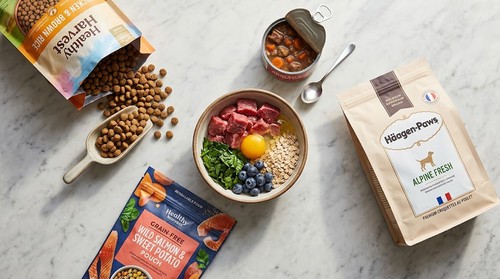
Top Dog Food Brands in Europe (2026)
The brands below are not ranked as a universal “best for every dog” list.
Instead, they illustrate different product-range structures, including life-stage and breed-size ranges, dry and wet formats, protein-rich formulas, organic products and separate dietetic ranges.
1. Farmina N&D — Broad Formula Range and Product-Level Information
Why it may be useful to compare:
Farmina offers several N&D dog-food ranges covering different life stages, breed sizes, feeding formats and recipe types.
Its official dog-food catalogue includes ranges such as N&D Prime, N&D Pumpkin, N&D Ocean, N&D Ancestral Grain, N&D Quinoa and other specialised product lines. Depending on the range and market, products may be available as dry or wet food and may be intended for puppies, adult dogs, senior dogs or particular breed sizes.
This variety can help owners compare formulas according to practical needs. However, the N&D name does not describe one single nutritional profile. Ingredients, analytical constituents, calorie density, feeding amounts and life-stage suitability differ between individual products.
For example, some N&D Pumpkin formulas are presented as grain-free complete foods, while N&D Ancestral Grain formulas may contain grains such as spelt and oats. Neither approach is automatically better for every dog. The relevant question is whether the exact formula is complete, appropriate for the dog’s life stage and suitable for the individual dog’s energy needs and health background.
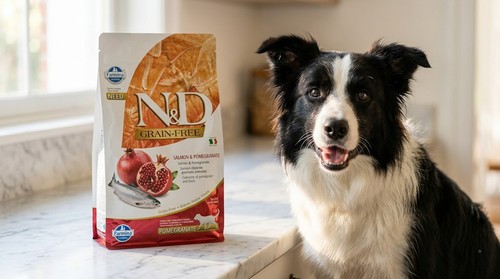
Often considered by: Owners who want to compare a broad selection of formulas across different life stages, breed sizes, food formats and grain or grain-free preferences.
What to check before choosing:
- Complete or complementary status: Confirm whether the exact product is intended as a complete daily food or only as part of the diet.
- Life stage: Check whether it is intended for puppies, adult dogs, senior dogs or another stated life stage.
- Breed-size guidance: Confirm whether the formula is designed for Mini, Medium or Maxi dogs where applicable.
- Energy and feeding information: Review calorie information and feeding instructions rather than estimating portions from the brand name.
- Full product composition: Check the composition, analytical constituents and nutritional additives of the exact formula.
- Grain status: Verify whether the selected product contains grains or is labelled grain-free.
- Food format: Check whether the product is dry, wet or complementary and how it fits the dog’s overall feeding routine.
- Country-specific product details: Formula names, package sizes and availability may differ between markets.
Practical strengths and important limitations🐾 FAMMO note: Evaluate Farmina at formula level rather than assuming that all N&D products have the same nutritional profile. The appropriate choice depends on the dog’s life stage, body condition, activity, health history, calorie needs and response to the food.
| Potential strengths | Important limitations |
|---|---|
| Multiple N&D ranges and recipe types are available | Nutritional profiles differ substantially between formulas |
| Products are available for different life stages and breed sizes | Not every product is appropriate for every life stage or breed size |
| Both grain-free and grain-containing product ranges are available | Grain-free status does not by itself establish better nutritional suitability |
| Official product pages provide formula-specific composition and nutritional information | Owners still need to interpret this information for the individual dog |
| Dry and wet formats are available within parts of the range | Product availability, package size and price vary by formula and country |
Important distinction: This section describes Farmina’s general N&D ranges. Farmina Vet Life products are intended for specific nutritional purposes and should not be selected as ordinary daily foods without appropriate veterinary guidance.
2. Royal Canin — Broad Size, Life-Stage and Veterinary Ranges
Why it may be useful to compare:
Royal Canin offers a broad dog-food portfolio organised around factors such as life stage, adult size, breed and stated nutritional purpose.
Its retail ranges include products for puppies, adult dogs, ageing dogs and senior dogs, together with size-based options ranging from X-Small to X-Large. The brand also offers selected breed-labelled formulas and separate veterinary diet ranges intended for specific nutritional purposes.
This structure can make it easier for owners to narrow the available options according to the dog’s age and expected adult size. However, a product name such as Mini, Medium, Maxi, Breed Health Nutrition or Veterinary Nutrition does not by itself establish that the formula is appropriate for an individual dog.
The exact product should still be checked for complete-food status, intended life stage, calorie information, feeding instructions and any requirement for veterinary supervision.

Often considered by: Owners comparing structured product ranges based on puppy or adult life stage, dog size, selected breeds or veterinary nutritional needs.
What to check before choosing:
- Retail or veterinary product: Confirm whether the formula is intended for routine feeding or belongs to a veterinary diet range.
- Complete-food status: Check whether the exact product is labelled as a complete feed for the stated life stage.
- Life stage: Verify whether the product is intended for puppies, adult dogs, ageing dogs or senior dogs.
- Adult size or breed range: Confirm the size category and do not rely only on the breed name printed on the package.
- Energy and feeding guidance: Review calorie information and the feeding table for the exact product.
- Body condition and activity: Adjust feeding according to the dog’s body weight, body condition and activity rather than treating the package amount as a fixed prescription.
- Ingredient terminology: Review the full composition and analytical constituents in context rather than judging the food from the first ingredient alone.
- Country-specific product information: Formula names, availability and packaging can differ between European markets.
Practical strengths and important limitations🐾 FAMMO note: Royal Canin’s structured ranges can help narrow the options, but the final decision should be made at product level. Breed, size or life-stage labels are starting points—not proof that a formula is automatically suitable for every dog in that category.
| Potential strengths | Important limitations |
|---|---|
| Broad ranges organised by life stage and adult dog size | The range name does not replace assessment of the exact product |
| Selected breed-labelled formulas are available | Dogs of the same breed can differ in body condition, activity and health needs |
| Both retail and veterinary diet ranges are clearly separated | Veterinary diets should be selected and monitored with professional guidance |
| Product pages provide life-stage, size and feeding information | Ingredient terminology and product details vary between formulas |
| Dry and wet options are available within parts of the portfolio | Availability, package size and price vary by product and country |
Important distinction: Royal Canin Veterinary Nutrition products are intended for specific nutritional purposes. They should not be selected as ordinary daily foods solely because a dog has symptoms or because a product name appears relevant. Veterinary assessment may be necessary before use.
3. ORIJEN — Protein-Rich Complete Dry Food Range
Why it may be useful to compare:
ORIJEN offers a range of complete dry dog foods across different life stages, breed sizes and recipe types.
Its official EMEA portfolio includes formulas such as ORIJEN Original, Six Fish, Regional Red, Tundra, Puppy, Puppy Large Breed, Senior, Small Breed and Fit & Trim. Product availability and package sizes can vary between European markets.
Many ORIJEN formulas contain several identified animal ingredients and are positioned as protein-rich dry foods. However, the number or position of animal ingredients on a label does not by itself establish that a formula is nutritionally superior or suitable for a particular dog.
Each ORIJEN product has its own composition, analytical constituents, calorie density, intended life stage and feeding guidance. These details should be evaluated at product level rather than assuming that all ORIJEN formulas have the same nutritional profile.

Often considered by: Owners comparing protein-rich complete dry foods across puppy, adult, senior and selected breed-size ranges.
What to check before choosing:
- Complete-food status: Confirm that the exact product is labelled as a complete dog food.
- Life stage: Check whether it is intended for puppies, adult dogs, senior dogs or another stated life stage.
- Breed-size guidance: Verify whether the selected formula is intended for small breeds, large-breed puppies or dogs of different sizes.
- Calorie density: Review the energy information for the exact product, particularly for dogs whose weight or body condition needs close monitoring.
- Feeding instructions: Treat the manufacturer’s feeding guide as a starting point and adjust portions according to body weight, body condition and activity.
- Formula composition: Review the full composition, analytical constituents and nutritional additives rather than evaluating the food from the first few ingredients alone.
- Individual tolerance: Monitor appetite, stool quality, body weight and general response after changing food.
- Country-specific availability: Formula names, package sizes and availability may differ between European markets.
Practical strengths and important limitations🐾 FAMMO note: A protein-rich formula is not automatically the right choice for every active, working, senior or less active dog. Suitability depends on the exact product, calorie needs, life stage, body condition, health history and individual response.
| Potential strengths | Important limitations |
|---|---|
| Complete dry-food formulas are available across several life stages | Nutritional profiles and calorie density differ between products |
| Selected puppy, senior and breed-size formulas are available | A life-stage or breed-size label does not guarantee suitability for every dog in that category |
| Many products identify multiple animal ingredients on the label | Ingredient quantity or order alone does not establish overall nutritional quality |
| Official product pages provide feeding guides and formula-specific information | Feeding guides require adjustment according to the individual dog’s weight, activity and body condition |
| Several recipe types are available within the dry-food portfolio | Price, product availability and package size vary by formula, retailer and country |
Important transition note: Introduce a new ORIJEN formula gradually rather than replacing the previous food in one meal. Monitor appetite, stool quality, body weight and any new signs during the transition. Dogs with diagnosed medical conditions or prescribed diets should follow veterinary guidance.
4. Bozita — Swedish Dry and Wet Dog Food Range
Why it may be useful to compare:
Bozita offers Swedish-made dry and wet dog-food ranges covering different life stages, dog sizes, activity levels and recipe types.
Its official portfolio includes products for puppies, junior dogs, adults and senior dogs. Depending on the range, owners can also compare formulas using factors such as dog size, activity level, dry or wet format, grain-free recipes and single-animal-protein options.
This range can give owners several practical starting points when comparing feeding formats and life-stage options. However, the Bozita name does not represent one single nutritional profile. Composition, analytical constituents, calorie density, feeding amounts and intended use vary between individual products.
Wet foods can be used as the main food or as part of a mixed-feeding routine, depending on the exact product and how it is labelled. Owners should therefore confirm whether the selected food is complete or complementary and calculate the total daily intake when combining wet food, dry food, treats or toppers.
Often considered by: Owners comparing Swedish dry and wet dog foods across puppy, adult and senior ranges or considering a mixed wet-and-dry feeding routine.
What to check before choosing:
- Complete or complementary status: Confirm whether the exact product is intended as a complete daily food or only as part of the diet.
- Life stage: Check whether the product is intended for puppies, junior dogs, adults, senior dogs or another stated life stage.
- Dog size and activity: Review any stated size or activity guidance, but also consider the individual dog’s body condition and actual energy needs.
- Dry or wet format: Decide how the selected format will fit into the total daily feeding plan.
- Energy and feeding information: Check calorie information and the feeding guide for the exact product.
- Full product composition: Review the complete composition, analytical constituents and nutritional additives.
- Recipe characteristics: Verify grain-free, wheat-free or single-protein claims on the exact product rather than assuming they apply to the whole brand.
- Individual tolerance: Monitor appetite, stool quality, body weight and general response during and after a food transition.
- Country-specific details: Availability, package size, recipe name and product information may differ between European markets.
Practical strengths and important limitations🐾 FAMMO note: Bozita should be evaluated at product level rather than as a universally affordable or suitable option. The appropriate formula depends on the dog’s life stage, body condition, activity, calorie needs, health history and response to the food.
| Potential strengths | Important limitations |
|---|---|
| Both dry and wet dog-food ranges are available | Nutritional profiles and feeding amounts differ between products |
| Products are available across several life stages | A life-stage label does not guarantee suitability for every dog in that group |
| The portfolio includes different recipe and feeding-format options | Recipe characteristics must be confirmed on the exact product label |
| Wet and dry products can support different feeding routines | Mixed feeding requires calculation of the combined daily calorie intake |
| Official product pages provide formula-specific composition and feeding information | Availability, package size and price vary by product, retailer and country |
Important distinction: Product categories such as sensitive stomach, single protein, grain-free or weight-related formulas should not be treated as a diagnosis or as proof that the product will resolve symptoms. Dogs with persistent digestive, skin, appetite or weight-related concerns should be assessed by a veterinarian.
5. ACANA — Dry Food Ranges Across Life Stages and Breed Sizes
Why it may be useful to compare:
ACANA offers a broad dry dog-food portfolio covering different life stages, breed sizes, activity profiles and recipe types.
Its official EMEA range includes products for puppies, adult dogs and senior dogs, together with selected formulas for small breeds, large-breed puppies, large adult dogs and different activity profiles. The portfolio also includes recipe-focused lines such as ACANA Singles and both grain-free and grain-inclusive options.
This variety gives owners several practical starting points for comparison. However, ACANA does not represent one single nutritional profile. Ingredients, analytical constituents, calorie density, feeding amounts and intended life stage differ between individual formulas.
A product such as Puppy Large Breed, Adult Small Breed, Senior, Light & Fit or Sport & Agility should therefore be assessed from its exact label and feeding information. The name of the range is useful for narrowing the options, but it does not replace assessment of the individual dog.
Often considered by: Owners comparing dry dog foods across puppy, adult and senior life stages, different breed sizes and a variety of recipe types.
What to check before choosing:
- Complete-food status: Confirm whether the exact product is labelled as a complete dog food for the intended life stage.
- Life stage: Verify whether the formula is intended for puppies, adult dogs, senior dogs or another stated stage.
- Expected adult size: For puppies, check whether the formula is appropriate for the dog’s expected adult weight and breed size.
- Breed-size guidance: Review whether the product is intended for small, medium or large dogs where applicable.
- Calorie density: Check the metabolizable energy or calorie information for the exact product.
- Feeding instructions: Use the feeding guide as a starting point and adjust according to body weight, body condition and activity.
- Full composition: Review the composition, analytical constituents and nutritional additives rather than relying on the first ingredient alone.
- Grain status: Confirm whether the exact recipe is grain-free or grain-inclusive.
- Recipe characteristics: Verify any single-animal-protein or limited-ingredient positioning on the exact product page.
- Country-specific information: Availability, package sizes, recipe names and product details may vary between European markets.
Practical strengths and important limitations🐾 FAMMO note: ACANA formulas should be evaluated individually rather than treated as one uniform nutritional option. The appropriate choice depends on the exact product, the dog’s life stage, expected adult size, body condition, activity, health history and response to the food.
| Potential strengths | Important limitations |
|---|---|
| Dry-food formulas are available across several life stages | Nutritional profiles differ between individual formulas |
| Selected small-breed and large-breed products are available | Breed-size labels do not guarantee suitability for every dog in that category |
| The portfolio includes puppy, adult and senior ranges | Life-stage suitability must be confirmed on the exact product label |
| Both grain-free and grain-inclusive recipe types are available | Grain-free status does not by itself establish better nutritional suitability |
| Official product pages provide formula-specific ingredient and feeding information | Manufacturer claims should be interpreted together with nutritional adequacy and the dog’s individual needs |
| Different recipe types allow owners to compare several starting options | Price, package size and availability vary by formula, retailer and country |
Important distinction: ACANA Singles and other single-animal-protein or limited-ingredient products should not automatically be treated as veterinary elimination diets. Suspected food allergy requires a structured elimination diet and controlled food challenge planned with a veterinarian.
6. Hill’s Science Plan — Life-Stage and Veterinary Nutrition Ranges
Why it may be useful to compare:
Hill’s offers two clearly different types of dog-food portfolio: Science Plan products intended for everyday feeding and Prescription Diet products intended for specific nutritional purposes.
The Science Plan range includes dry and wet foods for puppies, adult dogs, mature adult dogs and senior dogs. Depending on the product, owners may also find options organised by dog size or a stated nutritional focus.
This structure can help owners narrow the available options according to life stage, expected adult size and feeding format. However, the Hill’s name does not represent one single nutritional profile. Ingredients, analytical constituents, calorie density, feeding amounts and intended use differ between individual products.
Prescription Diet products should be considered separately from routine Science Plan foods. A product intended for kidney, urinary, digestive, weight-related or another specific nutritional purpose should not be selected only because its name appears relevant to a dog’s symptoms.

Often considered by: Owners comparing structured everyday foods across different life stages and dog sizes, or discussing a veterinary nutrition plan with their veterinarian.
What to check before choosing:
- Science Plan or Prescription Diet: Confirm whether the exact product is intended for routine daily feeding or for a specific nutritional purpose.
- Complete-food status: Check whether the product is labelled as a complete pet food for the stated species and life stage.
- Life stage: Verify whether the formula is intended for puppies, adult dogs, mature adult dogs or senior dogs.
- Breed-size guidance: Check whether the product is designed for small, medium or large dogs where applicable.
- Food format: Confirm whether the product is dry, wet or intended to be combined with another feeding format.
- Energy information: Review calorie information and feeding instructions for the exact product.
- Body weight and body condition: Use the feeding guide as a starting point and monitor the dog’s weight and body condition over time.
- Full formula information: Review the composition, analytical constituents and nutritional additives rather than judging the product from one ingredient.
- Veterinary supervision: Ask a veterinarian before using a Prescription Diet or changing a diet because of persistent symptoms or a diagnosed medical condition.
- Country-specific information: Product names, ranges, packaging and availability may differ between European markets.
Practical strengths and important limitations🐾 FAMMO note: Hill’s products should be evaluated at product level. A Science Plan formula intended for routine feeding and a Prescription Diet intended for a specific nutritional purpose are not interchangeable.
| Potential strengths | Important limitations |
|---|---|
| Science Plan products are available across several life stages | Nutritional profiles differ between individual products |
| Dry and wet feeding formats are available within parts of the portfolio | Food format does not by itself establish suitability for an individual dog |
| Selected products are organised by life stage and dog size | Life-stage and size labels are starting points rather than individual feeding prescriptions |
| Routine Science Plan foods and Prescription Diet products are presented as separate ranges | Prescription Diet products require appropriate veterinary assessment and guidance |
| Official product pages provide formula-specific feeding and nutritional information | Manufacturer claims must still be interpreted in the context of the individual dog |
| Several formula types give owners different starting points for comparison | Product names, price, package size and availability vary by formula and country |
Important distinction: Hill’s Prescription Diet products are dietetic foods intended for particular nutritional purposes. They should not be used to diagnose or self-manage kidney, urinary, gastrointestinal, weight-related, skin or other health conditions. The appropriate product and duration of use should be determined with veterinary guidance.
7. Prins — Pressed, Extruded and Dietetic Dog Food Ranges
Why it may be useful to compare:
Prins offers several dog-food ranges using different feeding formats and production methods.
Its everyday portfolio includes pressed kibble ranges such as ProCare, extruded kibble ranges such as Protection Croque and Fit Selection, and selected products intended for puppies, adult dogs, senior dogs, small breeds and dogs with different stated activity levels.
Prins also offers separate dietetic ranges in pressed, extruded and wet-food formats. These products are intended for specific nutritional purposes and should be distinguished from routine daily foods.
The choice between pressed and extruded kibble should not be based on an assumption that one production method is automatically healthier or more digestible. Nutritional suitability depends on the complete formulation, life-stage statement, energy density, feeding instructions and the individual dog.
Products within the Prins portfolio differ in composition, analytical constituents, calorie density and intended use. The exact product should therefore be evaluated rather than treating the whole brand as one uniform nutritional option.
Often considered by: Owners comparing pressed and extruded dry-food formats, life-stage-specific products or dietetic ranges available in their market.
What to check before choosing:
- Routine or dietetic product: Confirm whether the exact formula is intended for everyday feeding or for a specific nutritional purpose.
- Complete-food status: Check whether the product is labelled as a complete food for the intended species and life stage.
- Life stage: Verify whether it is intended for puppies, adult dogs, senior dogs or another stated stage.
- Breed-size guidance: Check whether the formula is intended for small dogs or medium and large breeds where applicable.
- Pressed or extruded format: Treat the manufacturing method as a product characteristic, not as proof of superior nutritional quality.
- Energy information: Review the declared energy value and feeding instructions for the exact product.
- Activity guidance: Do not select an “active” or “performance” formula only from the product name. Compare calorie density with the dog’s actual workload and body condition.
- Full formula information: Review the composition, analytical constituents and nutritional additives.
- Dietetic claims: Veterinary Diet products should be selected for a defined nutritional purpose with appropriate professional guidance.
- Country-specific availability: Product ranges, package sizes, names and availability may differ between markets.
Practical strengths and important limitations🐾 FAMMO note: Prins should be evaluated at product level. Pressed, extruded, activity-labelled and dietetic foods can have substantially different calorie levels and nutritional purposes.
| Potential strengths | Important limitations |
|---|---|
| Both pressed and extruded dry-food ranges are available | Processing method alone does not establish nutritional superiority |
| Products are available across several life stages and breed sizes | Life-stage and breed-size labels are only starting points for selection |
| Selected formulas are organised by stated activity level | Activity-labelled foods may have different calorie densities and require careful portioning |
| Separate veterinary diet ranges are available in different formats | Dietetic products should not be selected by symptom or product name alone |
| Official product pages provide composition, analysis and energy information | Nutritional profiles differ between individual products |
| Several feeding formats provide different starting points for comparison | Price, package size and availability vary by product, retailer and country |
Important distinction: Prins Veterinary Diet products are dietetic foods intended for particular nutritional purposes. They should not be used to diagnose or self-manage diabetes, obesity, urinary disease, kidney or liver disease, gastrointestinal problems, skin disease or mobility concerns. Product selection and duration of use should be discussed with a veterinarian.
8. Yarrah — Certified-Organic Dry and Wet Dog Food Range
Why it may be useful to compare:
Yarrah is a Dutch pet food brand focused on certified-organic dog and cat food products.
Its dog-food portfolio includes dry food, wet food and treats. Depending on the product, owners may also find grain-free, wheat-free or plant-based options.
Organic certification can be relevant to owners who want to consider farming practices, ingredient sourcing and production standards. However, organic certification does not describe one single nutritional profile and does not automatically mean that a product is more complete, more digestible or more suitable for an individual dog.
Products within the Yarrah range differ in composition, analytical constituents, calorie density, feeding format and intended use. The exact product label should therefore be reviewed before using it as the dog’s main food.
Some Yarrah products are intended as complete foods, while treats, snacks or other products may be complementary. This distinction is especially important when combining dry food, wet food and treats within the same daily feeding routine.
Often considered by: Owners comparing certified-organic dry and wet dog foods or looking for grain-free, wheat-free or plant-based product options.
What to check before choosing:
- Complete or complementary status: Confirm whether the exact product is intended as a complete daily food or only as part of the diet.
- Life stage: Check whether the formula is intended for puppies, adult dogs, senior dogs or another stated life stage.
- Organic certification: Verify the certification shown on the exact product rather than assuming that every product has identical certification or composition.
- Dry, wet or treat format: Determine how the product fits into the dog’s complete daily feeding plan.
- Energy and feeding information: Review calorie information and feeding instructions for the exact product.
- Full product composition: Check the composition, analytical constituents and nutritional additives.
- Grain or wheat status: Confirm whether the selected product is grain-free, wheat-free or contains grains.
- Animal-based or plant-based formula: Check the exact protein sources and confirm that a plant-based product is labelled as complete for the intended life stage before using it as the main diet.
- Combined calorie intake: Include wet food, dry food, treats and snacks when calculating the total daily intake.
- Individual response: Monitor appetite, stool quality, body weight, body condition and general response after changing food.
- Country-specific information: Product availability, package size, formulation and price may differ between European markets.
Practical strengths and important limitations🐾 FAMMO note: Organic certification is a production and sourcing characteristic—not proof that a product is nutritionally superior or automatically appropriate for every dog. Suitability depends on the exact formula, complete-food status, life stage, calorie needs, health history and individual response.
| Potential strengths | Important limitations |
|---|---|
| Certified-organic dry and wet product options are available | Organic certification does not by itself establish nutritional suitability |
| The portfolio includes different feeding formats | Complete and complementary products must be distinguished carefully |
| Selected grain-free, wheat-free and plant-based products are available | These product characteristics do not automatically make a formula appropriate for a particular dog |
| Official product pages provide formula-specific ingredient and feeding information | Nutritional profiles differ between individual products |
| Dry and wet products can support different feeding routines | Combining food formats and treats requires calculation of total daily calories |
| Organic certification may help owners evaluate sourcing and production preferences | Price, package size and availability vary by product, retailer and country |
Important distinction: Grain-free, wheat-free, plant-based or “sensitive” product labels should not be treated as a diagnosis or as proof that a food will resolve digestive or skin symptoms. Persistent symptoms or suspected food reactions require veterinary assessment. A long-term plant-based diet should only be considered when the exact product is nutritionally complete for the dog’s life stage and the dog’s response is monitored appropriately.
Quick Overview: Top European Dog Food Categories for 2026
Before choosing a brand, it helps to understand which category your dog actually needs. A senior Labrador, an active Border Collie, and a small indoor Chihuahua should not be evaluated with the same feeding logic.
| Category | What to Check | May Be Relevant When |
|---|---|---|
| General Adult Formulas | Complete-food status, adult life-stage suitability, calories and feeding guidance | Comparing routine daily foods for an adult dog |
| Wet-Food Options | Complete or complementary status, calories and feeding amount | Moisture, aroma or softer texture is an important practical consideration |
| Dry-Food Options | Complete-food status, calorie density and portion guidance | Storage, measuring and routine feeding convenience matter |
| Large-Breed Formulas | Expected adult size, growth guidance, calories and mineral balance | Comparing foods for large-breed puppies or adult large dogs |
| Small-Breed Formulas | Kibble size, calorie density, life stage and portion size | Comparing formulas intended for small or toy-sized dogs |
| Grain-Free Formulas | Exact ingredients, complete-food status and reason for avoiding grains | A veterinarian or structured dietary assessment supports that choice |
| Puppy Formulas | Growth suitability, expected adult size, calories and feeding guidance | Feeding a growing puppy |
| Senior-Dog Formulas | Body condition, calories, appetite, health history and life-stage statement | Age-related changes make reassessment appropriate |
Choosing the right category is often more important than choosing the most famous brand. Once you know your dog’s life stage, size, activity level, and health background, comparing brands becomes much easier.
If you have a Chihuahua, Pomeranian, Maltese, Shih Tzu, Toy Poodle, Dachshund, or another small breed dog, choosing the right formula depends on kibble size, calorie density, digestion, life stage, and portion control. For a deeper guide, read our full article on best dog food for small breeds in 2026.
Once you have chosen the right food category, the next questions are how much and how often to feed. Use our practical guides to understand how much to feed your dog and how often to feed your dog.
Why European Dog Food Standards Matter
Before comparing brands, it helps to understand why European dog food standards matter.
Dog food sold across Europe is shaped by strong rules and industry guidance around safety, labeling, traceability, and nutritional completeness. One of the most important references is FEDIAF — the European Pet Food Industry Federation, which provides science-based nutritional guidelines for complete dog food at different life stages.
For dog owners, this matters because a good dog food brand should not only look premium on the shelf. It should also provide clear information about what the food is, who it is suitable for, and whether it is designed as a complete daily diet.
European pet food standards and industry guidance emphasize:
-
Ingredient safety and traceability, animal-origin ingredients should meet strict safety controls
-
Nutritional completeness, food should clearly state whether it is complete or complementary
-
Life-stage suitability, puppy, adult, and senior dogs have different nutritional needs
-
Clearer labeling, owners should be able to understand the main ingredients and feeding purpose
-
Responsible nutrition claims, marketing language should not replace real nutritional quality
For dog owners in the Netherlands, Germany, Finland, and across the EU, this creates a stronger baseline for comparing brands, but it still does not mean every food is right for every dog.
That is where knowing your dog’s individual profile becomes more important than knowing the brand.
What Makes a Dog Food Brand High Quality?
The word ‘premium’ on a dog food bag means nothing on its own. What matters is what the food actually provides.
It is defined by what the food actually provides: clear ingredients, complete nutrition, appropriate calories, and a formula that matches your dog’s life stage and health needs.
Look Beyond the First Ingredient
The first ingredient can provide useful information, but it should not be used as the only measure of dog food quality.
Ingredient order is influenced by ingredient weight before processing, moisture content and the way individual materials are declared on the label. A clearly identified animal source may improve label transparency, but its position alone does not show whether the complete formula is nutritionally appropriate for a particular dog.
When comparing foods, consider the full label:
- whether the product is labelled as complete or complementary
- the intended species and life stage
- analytical constituents and energy information
- feeding instructions
- the manufacturer’s nutritional and quality-control information
- the individual dog’s age, body condition, activity and health needs
A familiar-looking ingredient list does not automatically make one formula better than another. The complete formulation and suitability for the individual dog matter more than one ingredient in isolation.
Ingredient Transparency and Splitting
Ingredient transparency can help owners understand a formula, but it should be considered together with nutritional completeness, life-stage suitability, feeding guidance and manufacturer information.
Watch for ingredient splitting, when a brand lists similar ingredients separately, such as corn, corn gluten, and corn starch. This can make each ingredient appear lower on the list, even if that ingredient group still makes up a large part of the formula.
A transparent brand should:
-
List protein sources clearly
-
Specify the animal species when possible
-
Avoid unnecessary artificial colors
-
Explain whether the food is complete or complementary
-
Make feeding guidelines easy to understand
The best dog food brands are not always the most expensive. They are the ones that make it easier for owners to understand what they are actually feeding.
How to Read a Dog Food Label
Understanding what is actually in your dog’s food is one of the most important skills any dog owner can develop.
For a step-by-step European checklist covering composition, analytical constituents, additives, feeding instructions, responsible-company details, and complete versus complementary food, read how to read a pet food label like a pro.
How to Interpret the Ingredient List in Context
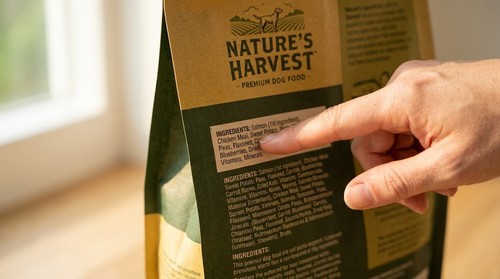
Ingredients are generally listed in descending order by weight before processing. Moisture content, ingredient form and labelling conventions can therefore affect where an ingredient appears in the list.
The ingredient list can help you identify what a formula contains, compare terminology and avoid a known ingredient when a veterinarian has advised you to do so. However, it should not be used alone to rank the nutritional quality of a food.
When reviewing a dog food label, check:
-
Complete or complementary status — confirm whether the product is intended as a complete daily diet or only as part of the diet.
-
Species and life stage — make sure the formula is intended for dogs and appropriate for growth, adult maintenance or another stated life stage.
-
Analytical constituents and energy information — review the declared nutrients and calorie information where available.
-
Feeding instructions — use the feeding guide as a starting point, then monitor body weight and body condition.
-
Manufacturer information — look for clear contact details, nutritional expertise, quality-control information and answers to product questions.
-
The individual dog — consider age, body condition, activity, health history, food tolerance and veterinary guidance.
Ingredient terminology can vary between formulas and countries. A familiar-looking ingredient list does not automatically prove that one food is more complete, digestible or suitable than another.
Grain-free labels can also be confusing. Some grain-free foods replace grains with peas, lentils, potatoes or other starch sources, so “grain-free” does not automatically mean lower carbohydrate or higher nutritional quality.
For a deeper comparison, read our guide on grain-free vs regular dog food and learn what actually matters beyond the front-of-pack claim.
Choosing by Breed and Life Stage
Choosing the right dog food is not only about the brand. Breed size and life stage can completely change what your dog needs from a formula.
A growing large-breed puppy, a small adult dog, and a senior Labrador should not be fed with the same nutritional logic. Calories, protein, minerals, kibble size, digestibility, and joint support can all matter depending on the dog.
Brand comparison is only the first step. For a broader decision framework based on breed, weight, age, activity level, and individual feeding needs, read the ultimate guide to choosing healthy dog food.
Large Breeds (Labrador, German Shepherd, Golden Retriever)
Large-breed puppies, in particular, need carefully controlled calcium, phosphorus, calories, and growth support. Too much energy or poorly balanced minerals during growth may increase the risk of skeletal development problems.
Adult large breeds often benefit from controlled calorie density, high-quality protein, and joint-supporting nutrients such as glucosamine and chondroitin, especially if they are prone to weight gain or reduced mobility.
Options to compare: Royal Canin Maxi Adult, Farmina N&D Large Breed, Hill’s Science Plan Large Breed
🐾 FAMMO note: Large breed dogs are often more sensitive to weight gain and joint stress, so calorie control can be just as important as protein quality.
Small Breeds (Chihuahua, Dachshund, Pomeranian, Shih Tzu)
Small breed dogs have higher energy needs per kilogram of body weight compared with larger dogs.
They may also benefit from smaller kibble sizes that are easier to chew, especially for toy breeds or dogs with dental sensitivity.
Because small dogs eat smaller portions, every bite needs to be nutritionally dense and suitable for their life stage.
Options to compare: Acana Small Breed, Royal Canin Mini Adult, Bozita Small Breed
🐾 FAMMO note: Small breed food should not only be small in kibble size. It should also match your dog’s calorie needs, dental comfort, digestion, and activity level.
Puppies
A good puppy formula should support healthy growth with appropriate protein, fat, DHA, and balanced calcium and phosphorus. Large-breed puppies need extra care because growing too quickly can put stress on developing bones and joints.
Feeding an adult formula to a puppy, or choosing the wrong breed-size formula, may create nutritional gaps during an important growth period.
Always choose food labeled for growth, puppies, or all life stages, and check whether it is suitable for your puppy’s expected adult size.
For a Europe-focused comparison of growth formulas, breed-size suitability, nutritional completeness, and label quality, read our guide to the best puppy food in Europe.
🐾 FAMMO note: Puppy nutrition changes quickly as your dog grows. Reassessing food and portion size every few weeks can help avoid underfeeding or overfeeding.
Senior Dogs
Some may benefit from lower calorie formulas to prevent weight gain. Others may need easier digestibility, joint support, or adjusted nutrients depending on their health status.
However, not every dog becomes “senior” at the same age. Large breeds may show age-related changes earlier, while small breeds may stay active for longer.
Options to compare: Hill’s Science Plan Senior, Royal Canin Mature, Farmina N&D Senior
🐾 FAMMO note: Senior dog food should be chosen based on body condition, mobility, appetite, digestion, and veterinary history, not age alone.
Go Beyond the Brand Name
A brand comparison can help narrow the options, but the final choice should still reflect the individual dog.
Age, body weight, body condition, activity, reproductive status, food energy density, feeding format and health history can all affect suitability and portion needs.
FAMMO helps dog owners organise these factors into a more personalised nutrition profile. It does not diagnose medical conditions or replace veterinary advice.
Create your dog’s FAMMO profile to explore a more individual starting point.

FAQ — Best Dog Food Brands in Europe
Is expensive dog food always better?
No. A higher price does not automatically mean that a dog food is more nutritious, more suitable or better for every dog.
Price can be influenced by ingredients, manufacturing, packaging, distribution, marketing and the country where the product is sold. Instead of judging a food by price alone, check:
- whether it is labelled as complete or complementary
- the intended species and life stage
- feeding instructions and energy information
- the full composition and analytical constituents
- manufacturer and quality-control information
- how well the individual dog tolerates the formula
A less expensive complete food that suits the dog’s life stage, calorie needs and digestion may be a more appropriate choice than a premium-priced formula that does not.
How should I compare dog food brands?
Compare the individual formulas, not only the brand names.
Start by checking whether the product is complete and suitable for your dog’s life stage. Then review:
- the intended age or life stage
- breed-size guidance where relevant
- feeding format, such as dry, wet or mixed feeding
- energy or calorie information
- composition and analytical constituents
- feeding instructions
- manufacturer transparency
- availability and formula consistency in your country
- important limitations for your individual dog
Do not judge quality from the first ingredient or protein percentage alone. The complete formulation, life-stage suitability, feeding guidance and the dog’s individual response all matter.
Is grain-free dog food better for dogs?
Not automatically.
Grain-free means that the formula does not contain conventional grains, but it does not mean that the food is carbohydrate-free, more digestible or nutritionally superior. Grain-free products may use ingredients such as potatoes, peas, lentils or other carbohydrate sources instead.
Most dogs do not need a grain-free diet simply because it appears more natural or premium. The complete formulation, life-stage suitability, calorie content and the individual dog’s needs are more important than the absence of grains.
Dogs with suspected food reactions, recurring digestive signs or skin problems should be assessed by a veterinarian rather than moved through multiple diets without a structured plan.
What is the difference between complete and complementary dog food?
A complete dog food is formulated to provide the nutrients needed for the stated species and life stage when it is fed according to the manufacturer’s instructions.
A complementary dog food is intended to be used alongside other foods or for a limited purpose. Examples may include certain treats, toppers, snacks and supplementary products.
A product should not be used as the dog’s only long-term food merely because its packaging looks premium or healthy. Always check the label for the words complete or complementary, together with the intended species and life stage.
If the wording is unclear, ask the manufacturer or your veterinarian before relying on the product as the main diet.
How should I choose food for a dog with digestive problems?
Persistent digestive problems should not be managed only by choosing a brand described as “sensitive” or by removing ingredients at random.
Vomiting, diarrhoea, changes in appetite, weight loss, abdominal discomfort or changes in stool can have many possible causes. The appropriate food may depend on the underlying issue, the dog’s medical history and whether a veterinary diet is required.
Before changing food:
- record the current food, treats and extras
- note when the symptoms started
- check whether the problem followed a food change
- avoid changing several foods or ingredients at once
- ask a veterinarian for guidance when signs are persistent, recurring or severe
Seek veterinary attention promptly if the dog has repeated vomiting, blood in vomit or stool, marked lethargy, abdominal pain, significant weight loss, difficulty keeping water down or another concerning change.
This article provides general comparison guidance and does not diagnose digestive disease or replace veterinary treatment.
How should I switch my dog to a new food?
Unless a veterinarian recommends a different approach, introduce a new food gradually rather than replacing the entire diet in one meal.
Begin with a small amount of the new food mixed with the current food, then increase the new portion progressively over several days while reducing the old food.
During the transition, monitor:
- appetite
- stool consistency
- vomiting or regurgitation
- abdominal discomfort
- itching or other new signs
- energy and general behaviour
Keep treats, table scraps and other dietary changes consistent during the transition so it is easier to identify how the dog responds to the new food.
If significant or persistent symptoms appear, pause further changes and contact your veterinarian. Dogs with diagnosed medical conditions or prescribed therapeutic diets should follow the transition plan provided by their veterinary team.
Sources and Editorial Notes
This article was developed using recognised European pet-nutrition guidance and publicly available information from official manufacturer websites.
The general nutrition and food-selection sources below informed the sections on complete and complementary food, life-stage suitability, label interpretation, manufacturer transparency and individual nutritional assessment.
Official manufacturer sources were used only to verify brand ranges, product information, stated formula characteristics and availability information. Manufacturer pages were not treated as independent evidence that one brand is universally better than another.
Product names, compositions, analytical constituents, packaging and availability may differ between countries and may change over time. Always check the current label for the exact product sold in your country.
Information was last reviewed on August 1, 2026.
Core Nutrition and Food-Evaluation Sources
-
Merck Veterinary Manual — Cutaneous Food Allergy in Animals
Used for the distinction between commercial single-protein products and a structured elimination diet followed by a controlled dietary challenge when food allergy is suspected. -
FEDIAF Nutritional Guidelines for Complete and Complementary Pet Food for Cats and Dogs — 2025
Used for European guidance on complete and complementary pet food, life-stage nutrition and recommended nutrient levels. -
FEDIAF Nutritional Guidelines for Cats and Dogs
Used as the official landing page for the current FEDIAF nutritional guidelines and future version updates. -
WSAVA Global Nutrition Guidelines
Used for individual nutritional assessment, life-stage context and the principle that food selection should reflect the individual animal. -
WSAVA Guidelines on Selecting Pet Foods
Used for evaluating manufacturer information, nutritional expertise, quality-control practices and the limitations of judging food from the ingredient list alone.
Official Manufacturer Sources
The links below were used to review publicly available brand and product information. Inclusion in this list is not an endorsement of every formula produced by the company.
-
Farmina Pet Foods — Official UK and English Website
Used to review Farmina N&D canine ranges and publicly available product information. -
ORIJEN Pet Foods — Official EMEA Website
Used to review ORIJEN dog-food ranges and formula information available for Europe, the Middle East and Africa. -
ACANA Pet Foods — Official EMEA Website
Used to review ACANA dog-food ranges and formula information available for European markets. -
Royal Canin — Official UK Website
Used to review Royal Canin life-stage, breed-size and dog-food product ranges. -
Bozita Dog Food — Official International Website
Used to review Bozita dry and wet dog-food ranges and official product information. -
Hill’s Dog Food — Official Website
Used to review Hill’s Science Plan, Science Diet and other publicly available dog-food ranges. Product names may differ by country. -
Prins Petfoods — Official Website
Used to review official company and dog-food range information from the Dutch manufacturer. -
Yarrah Organic Dog Food — Official English Website
Used to review Yarrah organic dry food, wet food and other dog-product ranges.
Editorial Disclosure
This article is editorially independent and contains no paid brand placements or affiliate links.
No manufacturer listed in this guide reviewed, approved or influenced the brand selection or editorial conclusions.
Final Note: The Best Dog Food Is the One That Fits Your Dog
The brands in this guide represent strong options to compare across Europe in 2026. The best choice is always the one that fits your dog’s real profile, not the one that looks best on a shelf. FAMMO helps you make that decision with clearer, more personalized nutrition guidance.
If your dog has symptoms such as sudden weight loss, vomiting, diarrhea, excessive thirst, appetite changes, urinary problems, severe itching, or unusual behavior, always consult a veterinarian.
👉 Learn how the FAMMO AI nutrition engine works
👉 Create your free FAMMO dog nutrition profile
This article is for informational purposes only and does not constitute veterinary advice. Always consult a qualified veterinarian for your dog’s health, diagnosis, treatment, or medical needs.