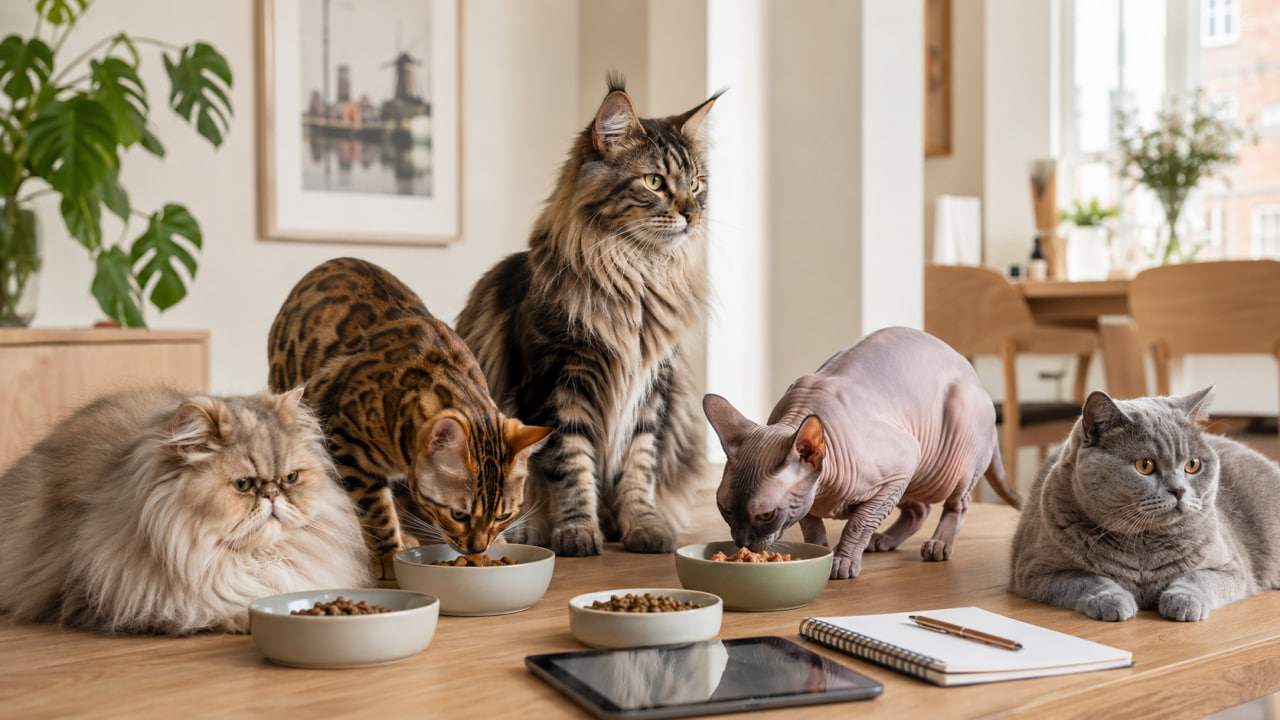
Not all cats have the same feeding needs, but breed is only one part of the picture.
A Persian, Bengal, Maine Coon, Sphynx or British Shorthair may differ in body size, coat type, facial structure and typical activity patterns. These traits can influence practical feeding choices such as food texture, portion control, weight monitoring, grooming support and meal routine.
However, your cat’s breed does not automatically determine the right food.
For most cats, life stage, body weight, body condition, neutering status, activity level, indoor or outdoor lifestyle, digestion, hydration habits and medical history matter more than breed alone.
If you are comparing cat food products, our guide to the best cat food brands in Europe explains how to assess nutritional completeness, life-stage suitability, manufacturer transparency and everyday feeding value.
This guide explains when breed may matter, which individual factors deserve more attention, and how to choose cat food without relying only on breed-based marketing.
Quick Answer: Does Cat Breed Decide What Food Your Cat Needs?
Not by itself. Breed can influence some feeding considerations, but it rarely determines the right diet on its own.
A cat’s breed may affect practical details such as food texture, ease of eating, calorie control, hairball management, weight monitoring or feeding routine. For example, a long-haired indoor Persian may need more attention to grooming, hairball management and weight control, while an active Bengal may need enough energy and high-quality protein to support its individual activity level.
But the safest starting point is not breed alone.
Choose a complete cat food suitable for your cat’s life stage, then adjust portions, meal frequency and food format based on body condition, activity level, digestion, hydration, neutering status and veterinary guidance.
Table of Contents
- Cat Food by Breed: Quick Comparison
- Does Breed Really Matter When Choosing Cat Food?
- What Matters More Than Breed?
- Bengal Cats
- British Shorthair Cats
- Maine Coon Cats
- Sphynx Cats
- Scottish Fold Cats
- American Shorthair Cats
- Ragdoll Cats
- Siamese Cats
- How to Choose Cat Food Safely
- When to Ask a Veterinarian
- Want a More Personalized Feeding Plan?
- Frequently Asked Questions
- Sources and Editorial Notes
Cat Food by Breed: Quick Comparison
Breed can give useful clues, but it should not be used as a feeding prescription. A well-informed feeding decision also considers life stage, body condition, activity level, indoor or outdoor lifestyle, digestion, hydration habits and health history.
This individually tailored approach is consistent with the WSAVA Global Nutrition Guidelines, which emphasize nutritional assessment based on the individual pet rather than one factor alone.
The table below highlights practical feeding considerations for common cat breeds while keeping the focus on each cat’s real condition.
| Cat breed | What breed may influence | Practical feeding focus | What usually matters more |
|---|---|---|---|
| Persian | Long coat, flatter facial structure and often lower activity | Comfortable food texture, grooming support, hairball management and calorie control | Body condition, grooming routine, digestion and indoor lifestyle |
| Bengal | Active, athletic and muscular body type | Adequate energy, high-quality protein, hydration and regular weight monitoring | Actual activity level, body condition, neutering status and health history |
| British Shorthair | Stocky build and lower activity tendency in some cats | Portion control, lean body condition and balanced daily feeding | Calorie intake, activity, neutering status and weight trend |
| Maine Coon | Large body size and longer physical development | Controlled growth, muscle maintenance and avoiding excess weight | Age, body condition, growth stage and veterinary guidance |
| Sphynx | Hairless coat and possible higher energy needs | Monitoring calorie intake, skin condition, digestion and meal routine | Weight, body condition, appetite, activity and indoor temperature |
| Scottish Fold | Inherited cartilage and mobility concerns | Maintaining a lean body condition and avoiding unnecessary joint load | Mobility, pain signs, calorie control and veterinary monitoring |
| American Shorthair | Some cats may gain weight easily when inactive | Portion control, satiety and consistent meal routines | Activity level, neutering status, treats and weight history |
| Ragdoll | Large frame, calm temperament and often indoor lifestyle | Weight monitoring, controlled portions and maintaining lean muscle | Activity, body condition, age and indoor lifestyle |
| Siamese | Lean build and often higher activity | Adequate energy, muscle maintenance and regular weight checks | Individual activity, appetite, body condition and medical history |
Individual cats may not match the typical traits associated with their breed.
Use this comparison as a starting point, not as a strict diet plan. The best cat food choice should still be based on your cat’s life stage, weight, body condition, activity level, digestion, hydration habits and veterinary advice.

Does Breed Really Matter When Choosing Cat Food?
Yes, but breed should be treated as context, not as a complete feeding plan.
A cat’s breed can influence certain physical traits and inherited tendencies. Facial structure may affect how comfortably a cat picks up or chews food. Body size and growth pattern may affect calorie intake and weight monitoring. Coat length may increase the practical importance of grooming and hairball management.
Some breeds are often described as more active than others, but your cat’s actual activity level, not the breed label, should determine how closely calorie intake and body condition are monitored.
Breed can therefore help you ask better feeding questions, such as:
- Is the food texture comfortable for this cat to eat?
- Does the portion match their actual activity level and body condition?
- Is their weight increasing or decreasing over time?
- Does this cat need closer monitoring for hairballs, mobility or digestion?
- Is there a known health concern that requires veterinary assessment?
Breed-specific cat foods sometimes modify kibble shape, energy density, fibre or other nutritional features to address characteristics associated with a particular breed. However, a breed label does not automatically make a food healthier or more suitable for an individual cat.
VCA’s overview of breed-specific diets notes that evidence for clear health advantages over other appropriate diets remains limited.
This does not mean that every breed-specific product is unnecessary. A particular formula may still suit an individual cat because of its texture, calorie level, nutrient profile or palatability. The important point is that the decision should be based on the cat’s real needs, not on breed marketing alone.
For most healthy cats, the stronger starting point is a complete cat food suitable for their life stage, followed by regular monitoring of weight, body condition, muscle condition, appetite, digestion and overall health.
If your cat has a diagnosed condition, persistent vomiting or diarrhoea, urinary signs, appetite changes, unexplained weight loss or mobility problems, food should be selected with veterinary guidance rather than according to breed alone.
What Matters More Than Breed?
Breed can provide useful background, but feeding decisions should be based primarily on the individual cat.
Two cats of the same breed may have very different calorie needs, activity levels, food preferences, body conditions and medical histories. One British Shorthair may be lean and active, while another may be neutered, sedentary and gradually gaining weight. Their breed is the same, but their feeding plans should not necessarily be.
The following factors usually provide more useful guidance than breed alone.
Life Stage
Kittens, adult cats and senior cats have different nutritional priorities.
Kittens need complete food formulated for growth because they are developing rapidly and require appropriate levels of energy and essential nutrients. Adult cats generally need food intended for maintenance, while senior cats may require closer monitoring of weight, muscle condition, appetite, hydration and age-related health changes.
Do not choose food only because it carries the name of your cat’s breed. First confirm that it is complete and suitable for the correct species and life stage.
For practical guidance during growth, see our kitten feeding guide by age.
Body Weight, Body Condition and Muscle Condition
A cat’s current body condition is more informative than an assumed ideal size based on breed.
Body weight alone does not show whether a cat is carrying excess fat, losing muscle or growing appropriately. Monitor weight trends together with waist definition, rib coverage, overall shape and muscle condition rather than waiting for a visible problem.
Portions may need to be reviewed when a cat:
- gains weight steadily;
- loses weight without an intended reason;
- becomes less active;
- appears to lose muscle;
- regularly leaves food unfinished;
- remains unusually hungry despite receiving the expected portion.
Feeding guides on packaging are starting estimates, not exact prescriptions. Portions should be adjusted according to the cat’s real response, while avoiding sudden or aggressive food restriction.
Unexplained weight loss, rapid weight gain or clear muscle loss should be discussed with a veterinarian.
Neutering Status, Activity and Lifestyle
Neutering status, daily movement and living environment can all influence calorie and portion planning.
An active cat that climbs, explores and plays regularly may use more energy than a cat of the same breed that spends most of the day resting indoors. Neutering may also affect weight management, but it does not mean that every neutered cat automatically needs the same light or reduced-calorie formula.
Consider:
- how much the cat moves during a normal day;
- whether they live indoors, outdoors or in a mixed environment;
- whether food is freely available between meals;
- how many calories come from treats or table food;
- whether several cats share food;
- changes in activity after neutering, ageing or illness.
For cats that spend most of their time inside, our guide to the best diet for indoor cats explains how portions, activity, enrichment and weight monitoring fit together.
Digestion and Individual Food Tolerance
A food may appear suitable on paper but still not agree with an individual cat.
Monitor appetite, stool quality, vomiting, regurgitation, comfort after eating and any changes that follow a new food. Unless a veterinarian advises otherwise, dietary transitions should usually be gradual.
Digestive symptoms can have many possible causes and should not automatically be blamed on breed or a single ingredient. Persistent vomiting, repeated diarrhoea, reduced appetite or weight loss requires veterinary assessment rather than repeated trial-and-error food changes.
Our guide to cat vomiting after eating explains the difference between vomiting and regurgitation and highlights warning signs that need prompt veterinary attention.
Hydration and Food Format
Breed does not determine whether every cat should eat wet food, dry food or a fixed combination of both.
Hydration depends on total water intake, food moisture, drinking behaviour, environment and health. Wet food provides more moisture through meals, while cats eating dry food obtain a larger proportion of their water by drinking. Neither format is automatically the best option for every cat.
The food should be complete, suitable for the cat’s life stage, acceptable to the cat and practical for the owner to feed consistently. Fresh water should always be easily accessible.
Our comparison of wet vs dry cat food explains the differences in moisture, calorie density, storage, portion measurement and everyday feeding.
Medical History and Veterinary Diagnosis
A diagnosed or suspected health condition can be more important than every other factor on this list.
Cats with urinary disease, kidney disease, diabetes, chronic digestive problems, significant food allergies, dental pain or mobility problems may require a feeding strategy selected with veterinary guidance. A commercial food marketed for a particular breed should not replace a therapeutic diet or an individual veterinary plan.
Supplements should not be added simply because a breed is associated with coat, joint, heart or digestive concerns. Complete cat food is formulated to provide essential nutrients for its intended life stage, and unnecessary supplementation may create nutritional imbalance or other risks.
The WSAVA Global Nutrition Guidelines support evaluating factors such as life stage, body condition, muscle condition, sterilisation status, lifestyle and health history as part of an individual nutritional assessment.
The most useful question is therefore not only:
“What food is recommended for this breed?”
It is:
“What does this individual cat need at their current life stage, body condition, activity level and health status?”
Breed-by-Breed Feeding Considerations
The sections below highlight the practical feeding issues most closely associated with each breed. They are not fixed diet rules.
For every breed, start with complete cat food suitable for the correct life stage. Keep fresh water available, introduce food changes gradually, and base portions on the individual cat’s weight trend, body condition, muscle condition and activity. Persistent vomiting, diarrhoea, appetite changes, unexplained weight loss or mobility problems require veterinary assessment rather than repeated food changes.
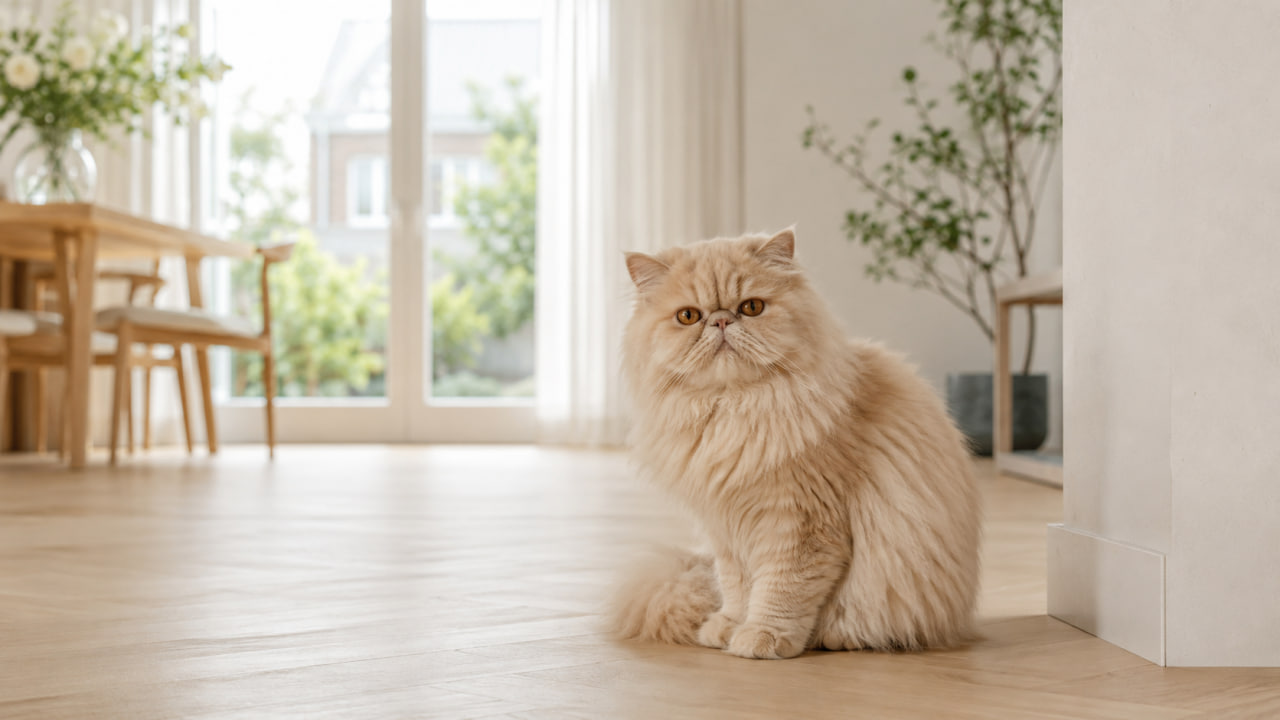
Persian Cats
Persian cats have a long coat, compact build and flatter facial structure. The most useful feeding considerations are eating comfort, coat care and weight monitoring—not the breed name on the package.
Key Feeding Considerations
-
Observe eating comfort. Some Persians may pick up certain textures or shapes more easily than others. Watch whether your cat can take, chew and swallow food comfortably rather than assuming that one kibble design is essential.
-
Monitor body condition and portions. Indoor or less-active Persians may gain excess weight if portions, treats and free feeding are not measured.
-
Support coat care with regular grooming. Brushing helps remove loose hair, but food alone cannot prevent every hairball or explain repeated vomiting.
-
Consider total moisture intake. Wet food can add moisture through meals, while dry food may also be appropriate when the cat drinks adequately and the overall diet suits them.
Bottom line: choose food according to life stage, body condition, eating comfort and individual tolerance, not simply because it is labelled for Persians.
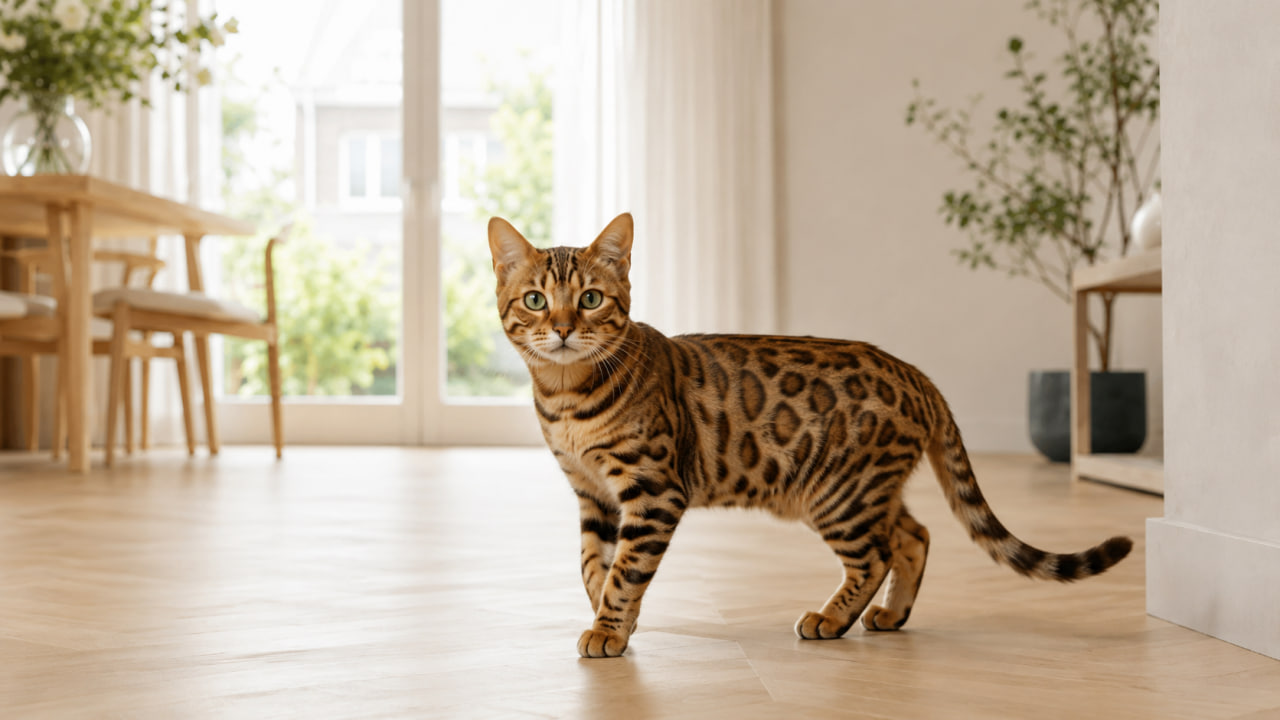
Bengal Cats
Bengals are often described as athletic and active, but individual activity can vary widely. Their feeding plan should follow actual energy use rather than the breed’s energetic reputation.
Key Feeding Considerations
-
Match portions to real activity. A highly active Bengal may use more energy than a sedentary one, but not every Bengal needs high-calorie food.
-
Monitor body and muscle condition. A muscular appearance does not confirm that calorie intake is appropriate; track weight trends, rib coverage, waist definition and muscle condition.
-
Look beyond “high-protein” marketing. Cats need nutritionally appropriate protein, but the phrase alone does not show that a food is complete, life-stage appropriate or suitable for the cat’s calorie needs.
-
Use enrichment without adding calories. Puzzle feeders can encourage activity and slower eating, but the food used should remain part of the measured daily portion.
Bottom line: an active reputation does not justify unlimited food, performance formulas, raw feeding or supplements without an individual reason.
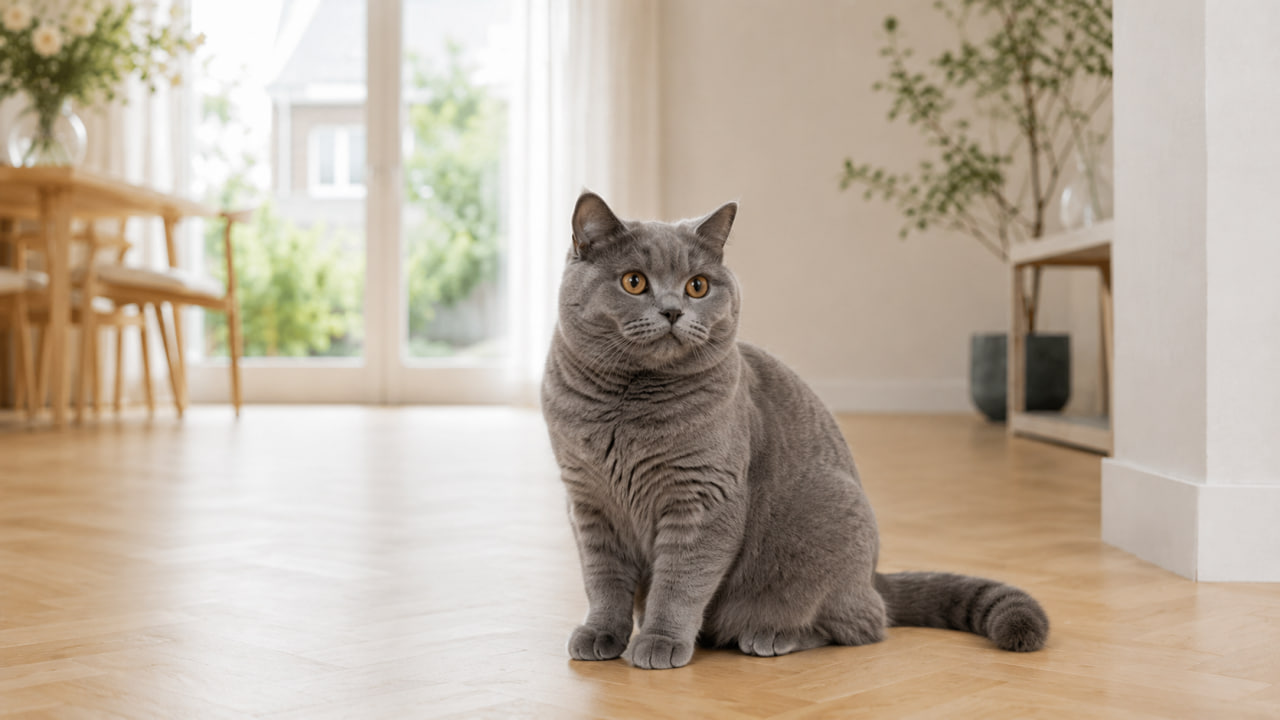
British Shorthair Cats
British Shorthairs have a sturdy build and are often described as calm. Their rounded appearance can make gradual weight gain easier to overlook.
Key Feeding Considerations
-
Distinguish a stocky frame from excess body fat. Assess rib coverage, waist definition, abdominal shape and weight trend rather than assuming that a heavy outline is normal.
-
Use measured portions when weight is difficult to manage. Free feeding can make intake and appetite changes harder to track.
-
Base calories on actual activity. Not every British Shorthair has low activity or a “slow metabolism.” Neutering status, treats and daily movement matter more.
-
Include treats and enrichment food in the daily total. Small extras can become a meaningful source of calories over time.
Bottom line: a British Shorthair does not automatically need low-fat or weight-control food; the decision should follow body condition and weight trend.
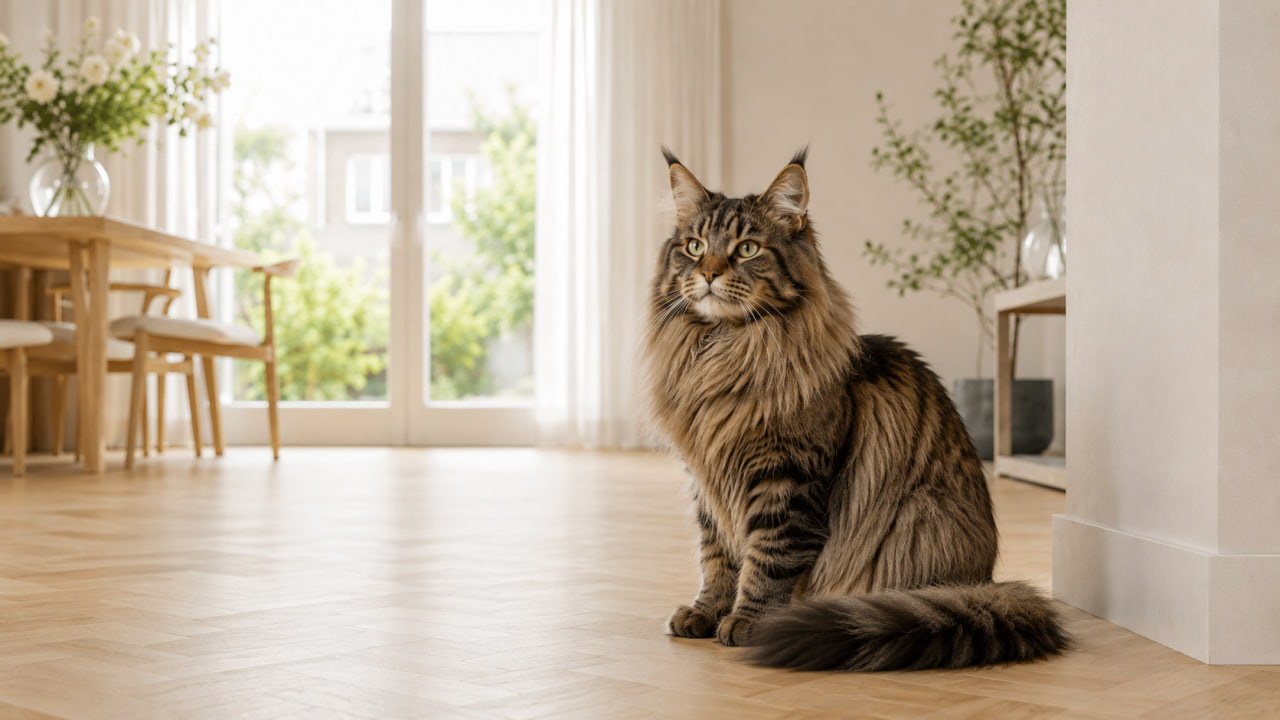
Maine Coon Cats
Maine Coons have a large frame, substantial build and long coat. A naturally large body should not be confused with excess body fat, and large size alone does not justify oversized portions.
Key Feeding Considerations
-
Support steady growth without encouraging excess weight. Maine Coon kittens need growth-appropriate food, but rapid weight gain is not automatically healthier development.
-
Assess body and muscle condition, not weight alone. A heavy cat may still carry excess fat or lose muscle. Check the ribs, waist, spine, shoulders and hindquarters.
-
Match portions to calorie density and activity. Not every Maine Coon needs more food than an average-sized cat, and kitten food should not continue beyond the appropriate growth stage solely because of breed size.
-
Do not add joint supplements automatically. Glucosamine, chondroitin or other supplements should be considered only for a defined reason and with veterinary guidance.
-
Maintain regular grooming. Brushing helps manage loose hair, but repeated vomiting or changes in grooming should not automatically be blamed on hairballs or body size.
Bottom line: feed for life stage, growth, body condition and mobility, not for the expectation that every Maine Coon must become as large as possible.
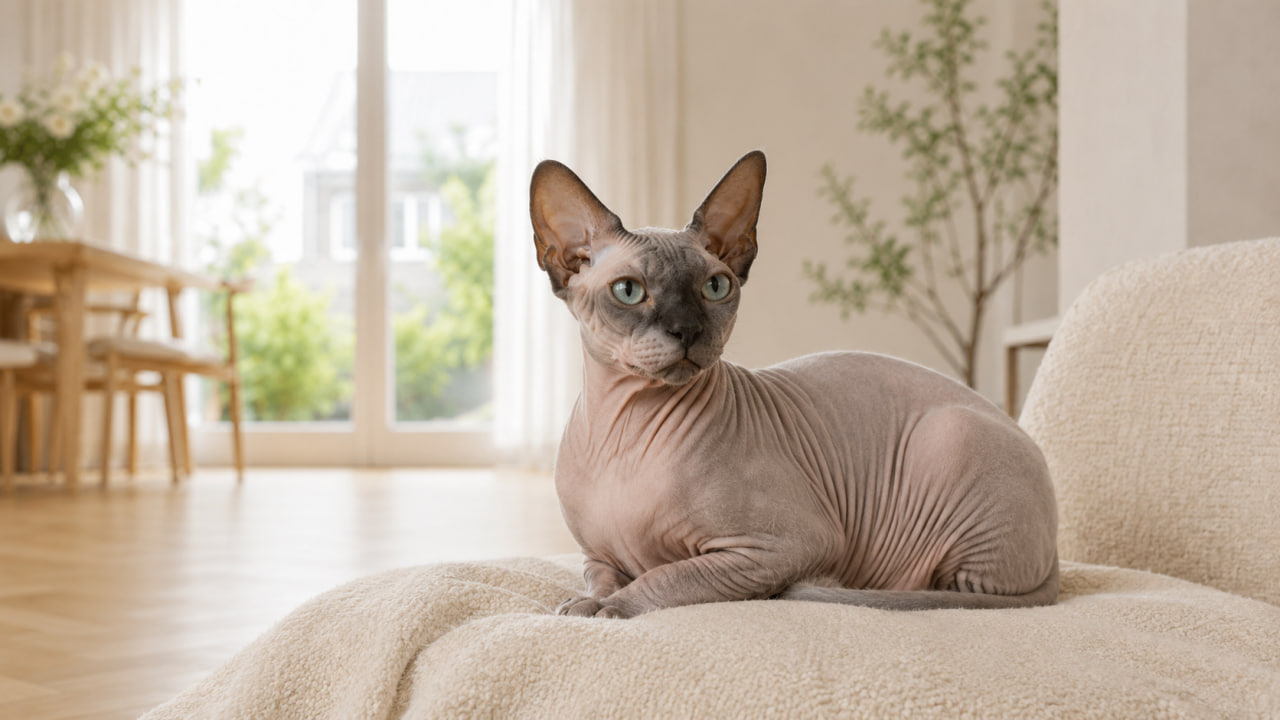
Sphynx Cats
Sphynx cats lack a typical insulating coat, which can affect thermal comfort. Hairlessness, however, does not create one fixed calorie requirement for every cat.
Key Feeding Considerations
-
Do not assume extra calories are always necessary. Energy needs vary with body size, activity, neutering status, environment, health and food calorie density.
-
Support warmth through the environment. Comfortable bedding and a suitably warm indoor space are more appropriate than relying on extra food to compensate for cold conditions.
-
Use measured portions when appetite appears strong. Food motivation does not by itself prove that calorie intake is inadequate.
-
Do not treat skin changes as proof of a nutritional deficiency. Oily or irritated skin can have several causes. Supplements or restrictive diets should not be started without an appropriate assessment.
Bottom line: choose portions according to weight trend, body condition, activity and environment, not simply because the cat is hairless.
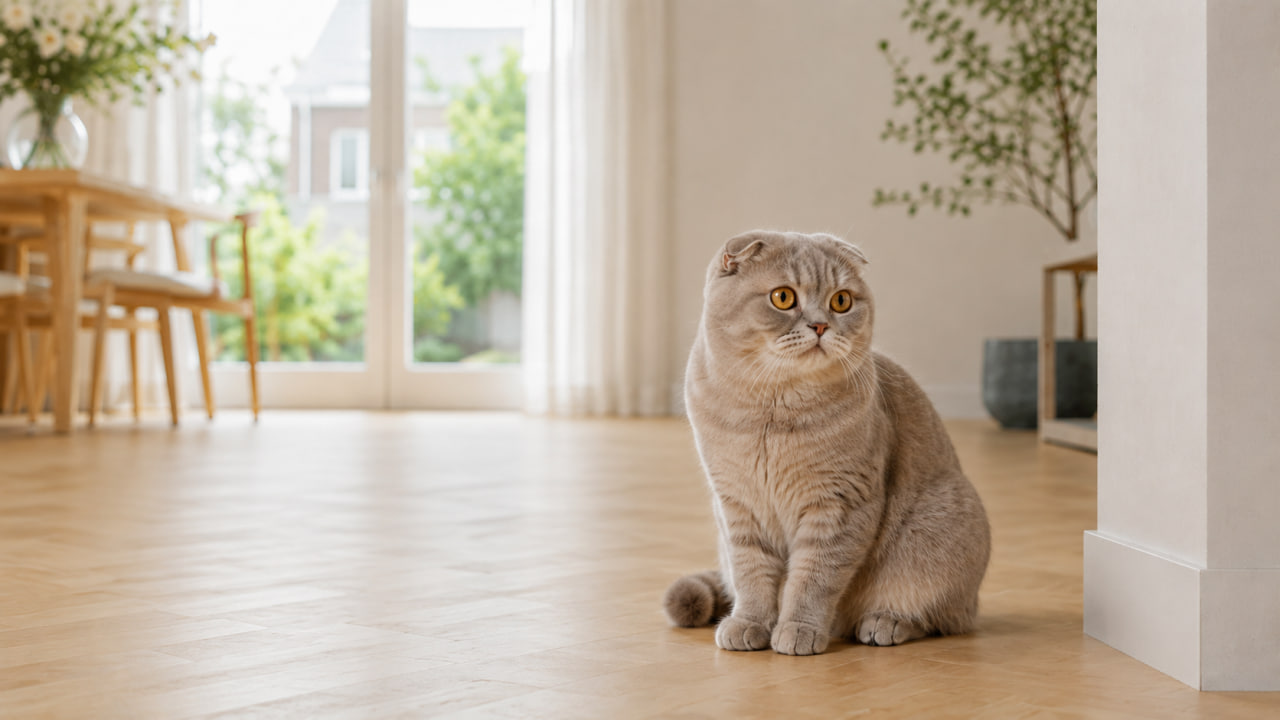
Scottish Fold Cats
The genetic trait responsible for folded ears can also be associated with cartilage and skeletal abnormalities. Nutrition cannot prevent or correct this inherited condition.
Key Feeding Considerations
-
Maintain a lean, stable body condition. Excess body fat may add physical demand when mobility is already reduced, but sudden or aggressive restriction is not appropriate.
-
Monitor movement and muscle condition. Reluctance to jump, stiffness, limping, reduced play or muscle loss should not be treated only as a calorie issue.
-
Make meals easy to reach. Stable bowls and accessible feeding areas may help cats with diagnosed mobility limitations.
-
Do not use joint supplements or specialised food as treatment. These products should be considered only for a defined clinical reason and with veterinary guidance.
Bottom line: body condition can be supported through feeding, but persistent mobility or pain signs require veterinary assessment rather than nutritional trial and error.
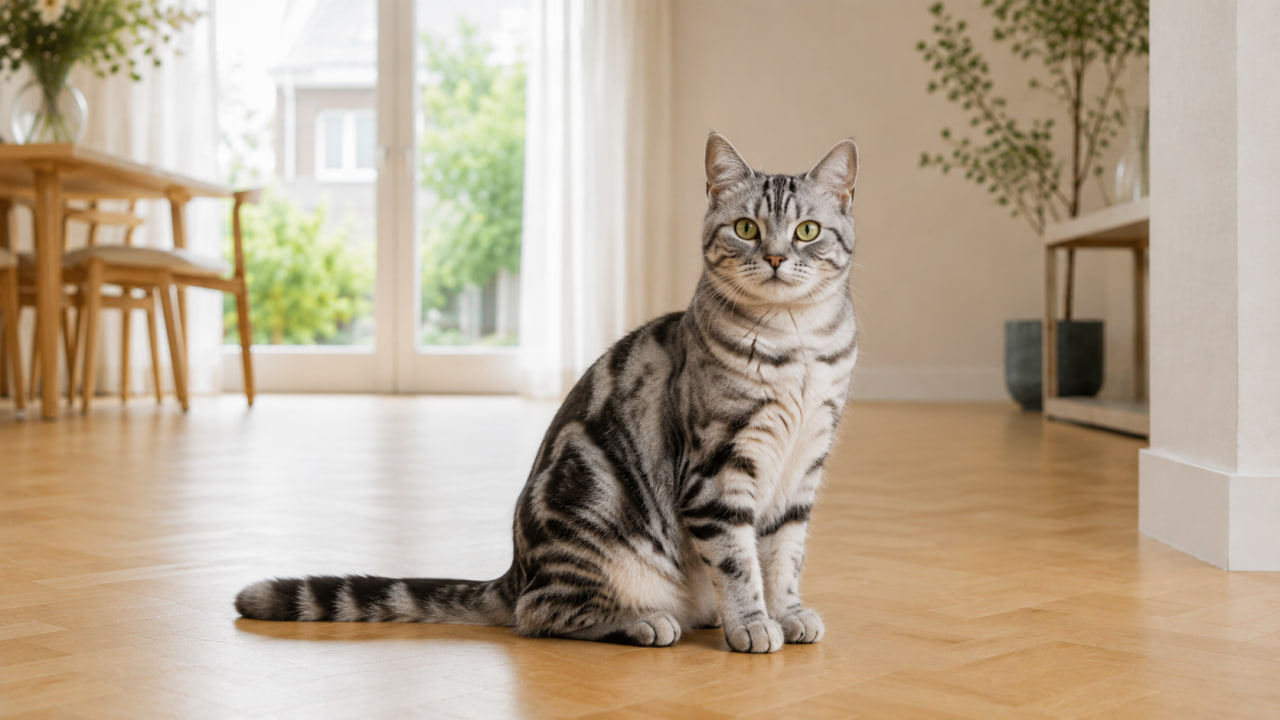
American Shorthair Cats
American Shorthairs have a sturdy, muscular build, but activity and appetite differ between individuals. The main goal is to distinguish natural build from gradual fat gain.
Key Feeding Considerations
-
Assess body condition beneath the sturdy outline. Use rib coverage, waist definition, abdominal shape and weight trend instead of appearance alone.
-
Match portions to actual activity. Playful cats and quieter cats of the same breed may need different calorie intakes.
-
Use measured meals when intake is unclear. This makes appetite changes and gradual weight gain easier to recognise.
-
Include treats and puzzle-feeder food in the daily portion. Enrichment can support movement without increasing total calories.
Bottom line: American Shorthairs do not automatically need weight-control or high-protein food; portions should follow the individual cat’s condition and lifestyle.
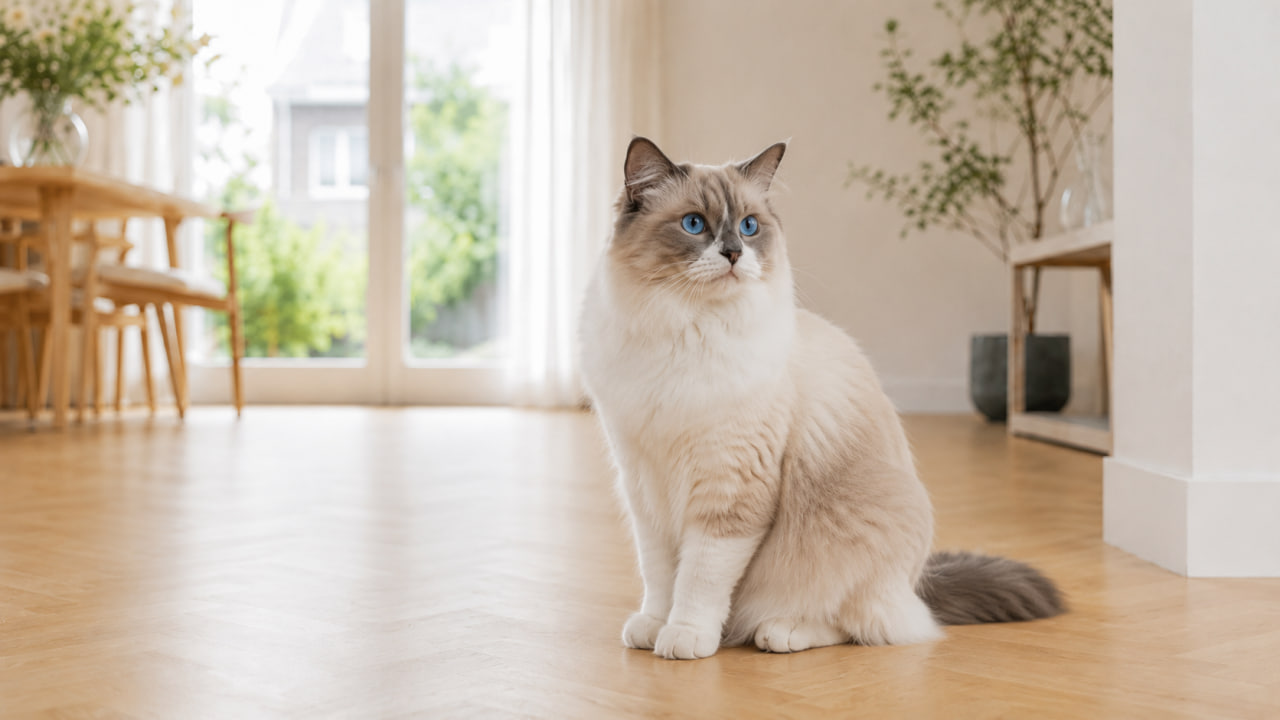
Ragdoll Cats
Ragdolls have a large frame and semi-long coat and are often described as relaxed. Their coat and body size can make excess fat or muscle loss harder to recognise visually.
Key Feeding Considerations
-
Use hands-on body-condition checks. Gently assess the ribs, waist and body outline instead of relying only on the appearance of the coat.
-
Separate large size from excess weight. A Ragdoll may naturally weigh more than a smaller cat, but body weight alone does not show fat or muscle condition.
-
Match portions to actual activity. A calm reputation does not mean that all Ragdolls have identical calorie needs.
-
Monitor muscle condition as the cat ages. A large or heavy cat is not necessarily well muscled.
-
Maintain regular grooming. Food cannot replace coat care or explain repeated vomiting, skin irritation or difficulty grooming.
Bottom line: choose food according to life stage, body and muscle condition, activity and coat care, not only the breed’s size or relaxed reputation.
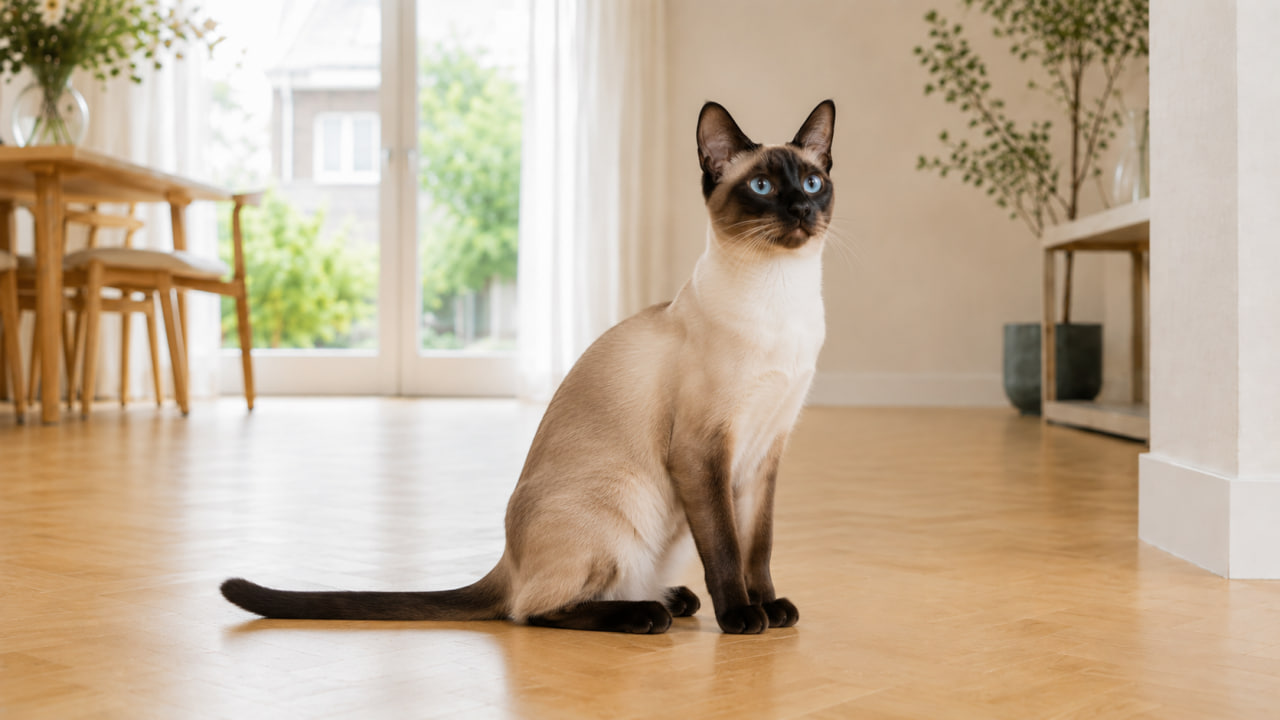
Siamese Cats
Siamese cats have a slender, athletic outline and are often active and vocal. A naturally lean appearance should not automatically be interpreted as underfeeding.
Key Feeding Considerations
-
Distinguish a lean build from being underweight. Track rib coverage, weight trends and muscle condition rather than responding only to appearance.
-
Match portions to actual activity. An active Siamese may use more energy than a sedentary one, but the breed does not automatically require high-calorie food.
-
Do not treat vocalisation as proof of hunger. Use measured portions, body condition and weight trend to decide whether intake needs adjustment.
-
Look beyond high-protein marketing. The food should first be complete, life-stage appropriate and suitable for total calorie needs.
-
Use enrichment food as part of the daily allowance. Puzzle feeders and training rewards can add stimulation without adding unmeasured calories.
Bottom line: feed according to body condition, muscle condition, activity and appetite changes, not solely the Siamese cat’s slender build or vocal behaviour.
How to Choose Cat Food Safely
Breed can provide useful background, but it should not be the main reason for choosing cat food.
Start by confirming that the food is appropriate for the cat’s species and life stage. Then consider body condition, activity, health history, food tolerance, calorie needs and whether the food can be measured and fed consistently.
Marketing phrases such as “breed-specific,” “premium,” “natural” or “high protein” should not replace a careful review of the actual label. For a practical explanation of European declarations, see our step-by-step guide to reading a pet food label.
A Practical Selection Checklist
-
Confirm that the product is complete cat food. Check whether the label identifies the product as complete or complementary. Complementary foods, treats and toppers should not automatically replace a complete main diet.
-
Match the food to the correct life stage. Kittens need food formulated for growth, while healthy adult cats generally need food suitable for adult maintenance. Senior age alone does not determine one universal formula, so changing needs should be assessed individually.
-
Check the intended species. Food formulated for dogs should not be used as a cat’s regular diet. The package should clearly identify cats as the intended species.
-
Read beyond the front of the package. Review the composition, analytical constituents, additives, feeding instructions and responsible company details rather than relying only on images or promotional claims.
-
Consider calorie density and portion size. Two foods may recommend very different daily amounts. Use the feeding guide as a starting estimate, then adjust according to the cat’s weight trend, body condition, activity and response.
-
Include treats and extras in the daily intake. Treats, human food, toppers and food used in puzzle feeders all contribute to total calorie intake.
-
Choose a practical food format. Wet food, dry food or a measured combination may all be appropriate when the diet is complete, suitable for the cat and fed in an amount that supports a healthy body condition.
-
Introduce changes gradually. Unless a veterinarian advises otherwise, transition between foods progressively and monitor appetite, stool quality, vomiting and general comfort during the change.
-
Avoid adding supplements without a defined reason. Complete cat food is intended to provide the essential nutrients required for its stated species and life stage. Vitamins, minerals, fatty acids or joint supplements should not be added automatically because of breed, coat type or marketing claims. Only use them when there is a specific reason and appropriate veterinary guidance.
Reassess the Choice Over Time
A food that suited a kitten may not remain appropriate in adulthood, and a diet that worked for an active young cat may need reassessment after neutering, ageing, reduced activity or a change in health.
Monitor:
- body weight and body condition;
- muscle condition;
- appetite and eating behaviour;
- stool quality and digestive comfort;
- water intake and urination patterns;
- skin and coat condition;
- activity and mobility;
- the amount of treats and extra food being offered.
The goal is not to find one product that is permanently “best” for the breed. It is to choose complete cat food that continues to suit the individual cat’s life stage, body condition, activity, tolerance and health needs.
When to Ask a Veterinarian
Breed-based feeding guidance is intended for general education about healthy cats. It cannot diagnose a medical condition, calculate an individual calorie requirement or replace a veterinary examination.
Ask a veterinarian for guidance when a cat has a diagnosed health condition, takes ongoing medication, has been advised to follow a therapeutic diet or shows persistent changes in weight, appetite, digestion, drinking, urination, mobility or behaviour. In these situations, repeatedly changing foods or adding supplements without identifying the underlying cause may delay appropriate care.
Arrange a Veterinary Assessment If You Notice
-
Unexplained weight loss or weight gain. A meaningful change in weight may occur even when the amount of food appears unchanged. Weight should be considered alongside body condition, muscle condition, appetite and activity.
-
A sustained change in appetite. Eating much less, refusing food, appearing continuously hungry or showing a new pattern of food-seeking behaviour can have several possible causes and should not automatically be attributed to breed or preference.
-
Repeated vomiting or persistent diarrhoea. Occasional digestive upset may have several explanations, but recurring symptoms, blood, lethargy, reduced appetite or weight loss require veterinary assessment.
-
A noticeable increase in drinking or urination. Changes in water intake, urine volume, litter-box frequency or urination outside the litter box may be associated with health problems rather than food preference alone.
-
Difficulty eating or apparent mouth discomfort. Dropping food, chewing on one side, avoiding certain textures, excessive drooling or reluctance to eat may indicate dental, oral or other discomfort.
-
Changes in movement or grooming. Stiffness, limping, reluctance to jump, difficulty reaching food or water, reduced play or an unkempt coat may indicate pain, reduced mobility or illness.
-
Persistent skin or coat changes. Ongoing irritation, hair loss, sores, excessive oiliness, matting or poor coat condition should not automatically be managed with supplements or restrictive diets.
-
Difficulty achieving a healthy body condition. If measured portions and appropriate activity do not produce a healthy weight trend, ask a veterinarian to assess calorie intake, body condition, muscle condition and possible medical factors.
-
A possible need for supplements or a therapeutic diet. Joint supplements, fatty acids, vitamins, minerals, elimination diets and veterinary diets should be used for a defined reason and with appropriate veterinary guidance rather than selected only because of breed-related marketing.
Seek Urgent Veterinary Care
Contact a veterinarian or emergency veterinary clinic immediately if the cat:
- has difficulty breathing or breathes with an open mouth;
- repeatedly strains to urinate but produces little or no urine;
- collapses, appears severely weak or becomes difficult to rouse;
- repeatedly vomits or cannot keep water down;
- has blood in vomit, urine or stool;
- shows severe pain, sudden loss of movement or major difficulty walking;
- may have swallowed a toxin, foreign object or unsafe substance.
Do not wait for a food change to resolve these signs. Difficulty breathing and an inability to pass urine can be life-threatening emergencies requiring immediate veterinary treatment.
Prepare Useful Information for the Appointment
Before the appointment, record or bring:
- the exact food name and a clear photograph of the label;
- the amount offered and the amount normally eaten;
- treats, toppers, supplements and human food;
- when the symptoms began and how often they occur;
- recent body-weight measurements, if available;
- changes in drinking, urination, stool or vomiting;
- videos of unusual eating, walking or breathing behaviour;
- recent food changes and the transition method used.
This information can help the veterinarian assess the complete feeding pattern and distinguish a possible dietary issue from an underlying medical problem.
Want a More Personalized Feeding Plan?
Breed is useful context, but age, life stage, weight, body condition, neutering status, activity, digestion and health history usually have a greater influence on feeding decisions.
FAMMO helps you organise these individual details so you can review portions, food format, weight trends and feeding routines more clearly.
FAMMO provides general guidance and does not diagnose medical conditions or replace veterinary care. Cats with persistent symptoms, diagnosed conditions or therapeutic-diet needs should be assessed by a veterinarian.
Frequently Asked Questions
Does a Cat’s Breed Affect What Food They Should Eat?
Breed can influence practical details such as body size, coat care, eating comfort and typical activity. It should not determine the feeding plan by itself. Life stage, body condition, muscle condition, activity, neutering status, health history and individual tolerance usually matter more.
Do Cats Need Breed-Specific Cat Food?
Not automatically. A breed-specific formula may suit an individual cat because of its texture, calorie density or other features, but the breed name does not prove that it is more appropriate. First confirm that the food is complete and suitable for the correct life stage.
What Is the Best Cat Food for Persian Cats?
There is no single best food for every Persian. Choose complete, life-stage-appropriate food, then consider body condition, eating comfort, grooming, hydration and digestive tolerance. Observe whether the cat can pick up and eat the chosen texture comfortably.
Do Bengal Cats Need High-Protein Food?
Bengals do not automatically need a product simply because it is marketed as high protein. The food must still be complete, life-stage appropriate and compatible with the cat’s calorie needs. Portions should follow actual activity, weight trend and body and muscle condition.
Do Maine Coon Cats Need More Food?
Not necessarily. Maine Coons may have larger frames, but large size alone does not justify unlimited food or oversized portions. The appropriate amount depends on life stage, calorie density, activity, weight trend, body condition and muscle condition.
Do Sphynx Cats Need More Calories Because They Are Hairless?
Hairlessness alone does not prove that every Sphynx needs extra food. Energy needs vary with size, activity, environment, neutering status, health and food calorie density. Provide a warm environment and adjust portions according to weight trend and body condition.
Do Scottish Fold Cats Need Joint Supplements?
Not automatically. Supplements or therapeutic diets should be used only for a defined reason and with veterinary guidance. They cannot prevent or correct the inherited skeletal condition associated with the folded-ear trait.
Is Wet or Dry Food Better for Different Cat Breeds?
Breed alone does not decide the best format. Wet food can contribute more moisture through meals, while dry food may be convenient for measured feeding and enrichment. The product should be complete, life-stage appropriate, well tolerated and practical to feed consistently.
How Can I Tell Whether a Cat Food Suits My Cat?
Monitor appetite, stool quality, vomiting or regurgitation, weight trend, body condition, muscle condition, energy and coat quality. Persistent digestive symptoms, reduced appetite, unexplained weight change or mobility problems require veterinary assessment rather than repeated trial-and-error food changes.
Sources and Editorial Notes
This article was developed using guidance from recognised veterinary, pet-nutrition, feline-health and breed organisations.
The core nutrition and health sources below informed the general principles on complete cat food, life-stage suitability, body condition, muscle condition, grooming, feeding safety and veterinary warning signs. Breed traits were checked separately using recognised breed profiles.
These sources do not provide one fixed diet or feeding amount for every cat within a breed.
Core Nutrition and Health Sources
Used for European terminology, complete and complementary food, life-stage suitability and general nutritional adequacy.
Used for individual nutritional assessment, body-condition monitoring, muscle-condition monitoring and the role of veterinary guidance.
Used to distinguish body size from excess or insufficient body fat.
Used to explain why muscle condition should be assessed separately from body weight and body fat.
Used as contextual veterinary guidance on breed-specific food features and the limited evidence for clear health advantages over other appropriate diets.
Used for general guidance on swallowed hair, long coats, grooming and when repeated symptoms require veterinary attention.
Used for the relationship between the folded-ear genetic variant and inherited cartilage and skeletal abnormalities.
Used for emergency warning signs, including difficulty breathing and inability to urinate.
Breed Information
General physical and behavioural descriptions were checked against breed profiles and standards published by The International Cat Association.
Breed registries were used only to describe common appearance and temperament characteristics. They were not used as the primary evidence for nutritional, medical or supplement recommendations.
Editorial Notes
- This article provides general educational guidance for healthy cats.
- Breed should be treated as background information, not as a complete feeding prescription.
- Individual feeding needs may vary according to life stage, body condition, muscle condition, activity, neutering status, environment, health history and food tolerance.
- Commercial marketing terms and breed-specific product claims were not treated as independent scientific evidence.
- No supplement, therapeutic diet or restrictive feeding plan should be started solely because of breed.
- Persistent symptoms, unexplained weight changes or diagnosed medical conditions require veterinary assessment.
- Product formulations, feeding instructions and label declarations can change. Always check the current package before feeding.
Editorial review date: 2026-07-26
Source links checked: 2026-07-26