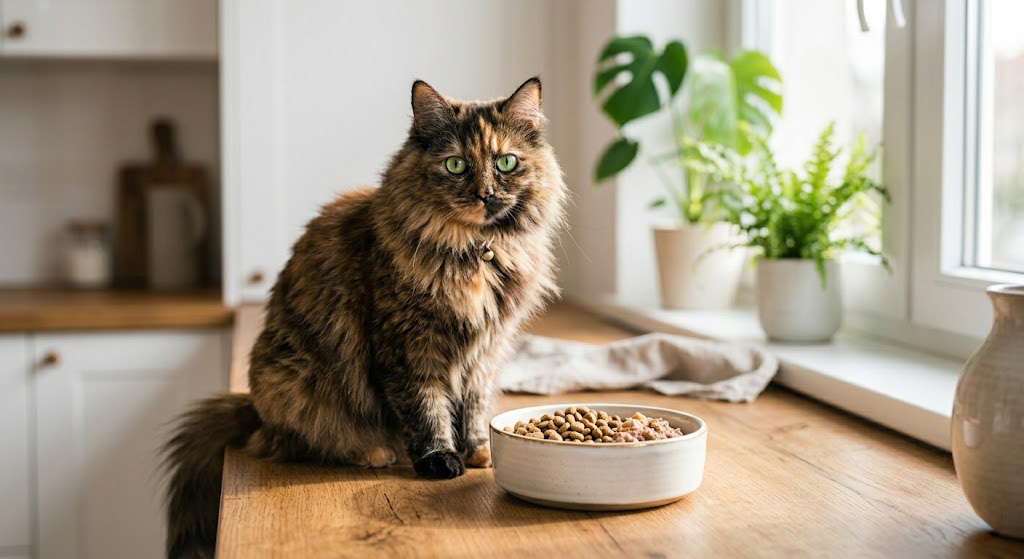
Looking for the best grain-free cat food in Europe? This guide compares specific wet and dry options from seven brands, with practical checks for ingredients, life stage, nutritional completeness and daily feeding cost.
If you are also considering grain-inclusive recipes, our best cat food brands in Europe guide covers a broader shortlist.
Quick Answer: What Is the Best Grain-Free Cat Food in Europe?
There is no single best grain-free cat food for every cat. For dry food, this guide includes Farmina N&D Prime Chicken & Pomegranate Adult and Edgard & Cooper Adult Fresh Chicken. Wet options include selected recipes from Animonda Carny, Bozita, Almo Nature HFC Complete, Yarrah and Lily’s Kitchen.
Start with the comparison table below to find the exact recipes or ranges. Choose a complete food for your cat’s life stage, check the current ingredients and compare daily feeding costs. Grain-free does not automatically mean low-carbohydrate, hypoallergenic or better for weight control.
Best Grain-Free Cat Food in Europe: Quick Comparison
Use this shortlist to compare specific grain-free cat food recipes, rather than assuming every product from a brand is grain-free. The examples below include wet and dry options. Check the exact product label for ingredients, life stage and whether it is a complete or complementary food.
Brand | Grain-Free Recipe or Range to Compare | Format | What to Check |
|---|---|---|---|
Farmina N&D | Prime Chicken & Pomegranate Adult | Dry | Check the full range name and life stage when choosing a recipe. |
Animonda Carny | Adult Beef + Chicken | Wet | This is a mixed-protein recipe; check all ingredients if avoiding a particular animal protein. |
Bozita | Turkey in Jelly | Wet | The recipe also contains chicken, pork and beef; it is not turkey-only. |
Almo Nature | HFC Complete Tuna with Pumpkin | Wet | Look for “Complete” on the exact product. Do not assume every HFC recipe is a complete food. |
Edgard & Cooper | Adult Fresh Chicken kibble | Dry | Match the adult recipe to your cat’s life stage and follow its feeding guide. |
Yarrah | Organic Chicken & Turkey Pâté | Wet | Check the exact recipe. “Wheat-free” and “grain-free” are different claims. |
Lily’s Kitchen | Selected Paté and Tasty Cuts cat recipes | Wet | Check the current recipe, complete-food declaration and intended life stage. |
These examples are a comparison shortlist, not a best-to-worst ranking. Recipes, packaging and availability can vary by market and change over time. Check the current label before buying, and compare feeding costs using the recommended daily portion rather than pack price alone.
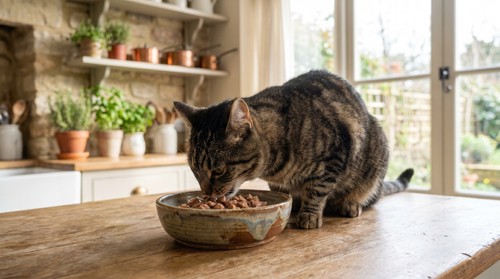
Top Grain-Free Cat Food Brands in Europe (2026)
The following examples match the shortlist above. They are not ranked from best to worst, and the comments apply to the named recipes or ranges rather than every product sold by each brand.
1. Farmina N&D Prime
Recipe to compare: Chicken & Pomegranate Adult dry food.
Potential strengths: Farmina publishes the recipe’s composition, analytical constituents and energy information, helping owners compare ingredients and feeding amounts.
Important limitations: Despite the chicken-based name, the listed ingredients also include egg and herring. It is not a chicken-only recipe. Check the exact N&D range and life stage rather than choosing by flavour name alone.
2. Animonda Carny
Recipe to compare: Carny Adult Beef + Chicken wet food.
Potential strengths: This complete adult recipe declares the proportions and animal components of its beef and chicken ingredients. The manufacturer states that it contains no added grains, soya or sugar.
Important limitations: It contains both beef and chicken, including organs. It is unsuitable if either protein must be excluded, and its short ingredient list does not make it a veterinary elimination diet.
3. Bozita Grain-Free
Recipe to compare: Turkey in Jelly wet food.
Potential strengths: Bozita identifies this as a complete, grain-free wet food for adult cats and publishes composition, moisture, energy and feeding information.
Important limitations: Turkey is not its only animal ingredient: the recipe also contains chicken, pork and beef. Check all ingredients if your cat needs a protein restriction. A high-moisture recipe is not, by itself, a diet for treating urinary or kidney disease.
4. Almo Nature HFC Complete
Recipe to compare: HFC Complete Tuna with Pumpkin wet food.
Potential strengths: The specific product is labelled complete for cats aged one year and older, with no added grains. Its product page provides ingredient, nutrient and calorie information.
Important limitations: Check the full product name and feeding declaration when buying. Do not assume another HFC product has the same complete-food status. The recipe also contains tapioca starch, illustrating why grain-free does not mean carbohydrate-free.
5. Edgard & Cooper
Recipe to compare: Adult Fresh Chicken dry food.
Potential strengths: The manufacturer identifies this kibble as a complete, grain-free recipe for adult cats, including neutered cats. It provides a dry-food option alongside the wet recipes in this shortlist.
Important limitations: Suitability for neutered cats does not remove the need to measure portions and monitor weight. Check the current composition and feeding guide; the adult recipe should not be assumed suitable for growing kittens.
6. Yarrah Organic
Recipe to compare: Organic Chicken & Turkey Pâté wet food.
Potential strengths: Yarrah offers this as an organic, grain-free wet recipe, providing an option for owners who want to include organic sourcing in their comparison.
Important limitations: The recipe also lists beef, so it is not limited to the two proteins in its name. Check other Yarrah products individually: a wheat-free claim does not establish that a food excludes all grains.
7. Lily’s Kitchen
Range to compare: Selected Paté and Tasty Cuts wet cat recipes.
Potential strengths: Lily’s Kitchen describes these wet recipes as grain-free with complete nutrition, offering different textures to investigate according to your cat’s preferences.
Important limitations: Recipes and packaging can change. Check the current ingredients, intended age and complete-food declaration on the exact product. The description here should not be applied automatically to every food or treat sold by the brand.
What Does Grain-Free Actually Mean?
Grain-free cat food is formulated without cereal grains such as wheat, maize, rice, barley, oats or rye. The term describes ingredients excluded from the recipe; it does not tell you whether the food is complete, low in carbohydrates or suitable for your individual cat.
What Replaces the Grains?
Grain-free dry recipes may use potato, tapioca, peas, lentils or chickpeas as alternative sources of starch. These ingredients can also contribute protein, fibre and other nutrients, depending on the ingredient used. Starch helps give many dry kibbles their structure.
There is no universal replacement ingredient that makes every recipe better. The amount used, processing and balance of the finished food matter.
Does Grain-Free Mean Low-Carbohydrate?
No. A grain-free recipe can still contain substantial starch from non-grain ingredients. You cannot determine its carbohydrate content from the grain-free claim or ingredient order alone.
If carbohydrate content matters for your comparison, ask the manufacturer for typical nutrient information. Compare products on the same basis: percentages on wet and dry food labels include very different amounts of water.
Is Wheat-Free the Same as Grain-Free?
No. A wheat-free recipe may still contain rice, maize or other cereal ingredients. Likewise, gluten-free does not necessarily mean grain-free.
When comparing the products in this guide, check the exact recipe and current ingredient list rather than relying on the brand name or a retailer’s category filter.
Do Cats Need Grain-Free Food?
Most healthy cats do not need a grain-free diet. Both grain-free and grain-inclusive foods can be suitable when they provide complete nutrition for the cat’s life stage and individual needs.
Being an obligate carnivore does not mean a cat must avoid all grains. It describes specific nutritional requirements; it does not make the grain-free label a measure of food quality.
When Might Avoiding a Grain Be Appropriate?
Avoiding a specific grain may be appropriate if your veterinarian identifies it as a trigger for an adverse food reaction. However, reacting to one ingredient does not automatically mean your cat needs to avoid every grain.
Food allergies can also involve animal proteins, including ingredients found in grain-free recipes. A food containing chicken or fish does not become suitable for a cat allergic to that protein simply because it contains no grains.
If you prefer a grain-free recipe for a healthy cat, choose it using the same checks as any other food: nutritional completeness, appropriate life stage, manufacturer expertise and suitability for your cat.
What If Your Cat Has Digestive or Skin Problems?
Recurring vomiting, diarrhoea or itching can have several causes. These signs alone cannot identify a grain allergy, and changing to a grain-free food does not confirm the diagnosis.
Contact your veterinarian if symptoms persist or recur. If a food allergy is suspected, they may recommend a controlled elimination diet followed by a supervised food challenge. Follow the prescribed diet consistently rather than repeatedly switching between retail recipes.
For cats with an existing medical condition, discuss diet changes with your veterinarian before replacing their current food.
Compare Your Cat’s Food With Their Profile
Shortlisted a grain-free recipe? Create your cat’s FAMMO profile with details such as age, weight, activity level and sterilisation status. Then use the Food Scanner to upload photos of the ingredient list and nutritional information.
FAMMO helps you review the label alongside your cat’s profile and highlights points that may need closer attention. Use these insights to compare options and prepare questions for your veterinarian, especially if your cat has symptoms or a diagnosed condition.
European Standards and Grain-Free Cat Food
For cat owners in the Netherlands and other EU countries, the label provides a useful starting point. EU Regulation (EC) No 767/2009 sets rules for feed marketing and labelling, including how ingredients and claims are presented.
What Should You Check on the Label?
Complete or complementary: Check the food’s declared type and intended animal group before using it as the main diet.
Composition: Ingredients are listed in descending order by weight. Pet food labels may use permitted ingredient categories instead of naming every individual material.
Analytical constituents: Complete cat foods declare protein, fat, crude fibre and crude ash. Moisture declaration depends on the applicable rules; it is not mandatory on every product.
Feeding instructions: Read the directions for the specific recipe and pack size.
A category description such as “meat and animal derivatives” does not, by itself, establish poor nutritional quality. If you need to avoid a particular animal protein, ask the manufacturer for more detailed information.
What Does FEDIAF Do?
FEDIAF publishes nutritional guidelines that manufacturers can use to formulate and assess complete and complementary cat foods. These include recommended nutrient levels for different life stages.
The guidelines are a nutritional reference, not EU legislation or a product certification scheme. Avoid treating “FEDIAF-approved” as a quality badge. Instead, ask the manufacturer how the specific recipe’s nutritional adequacy is established.
Does Grain-Free Guarantee Higher Standards?
No. Grain-free foods are subject to the applicable labelling and marketing rules, just like grain-inclusive foods. Claims must be objective, verifiable and substantiated.
The grain-free claim does not establish nutritional completeness, superior quality or suitability for a medical condition.
What to Look for in a Grain-Free Cat Food
The grain-free label is only one part of choosing a food. Before buying, check whether the specific recipe provides complete nutrition for your cat’s life stage, how the manufacturer evaluates it, and how it fits your feeding routine.
1. Start With Complete Food and the Right Life Stage
If the food will be your cat’s main diet, look for a declaration that it is a complete food for the appropriate life stage, such as kittens or adult cats.
Complementary foods, including some broths, fillets and toppers, do not provide a complete diet when fed alone. A short ingredient list or a high meat percentage does not change that distinction.
2. Look Beyond the First Ingredient
Read the ingredient list to identify what the recipe contains, especially if your cat needs to avoid a particular ingredient. However, the first ingredient alone cannot tell you whether the finished food is nutritionally balanced or how well its nutrients are digested.
Fresh meat and dried ingredients also contain different amounts of water, so their listed percentages are not directly comparable. Avoid choosing solely because one product advertises a larger meat percentage.
3. Check What Replaces the Grains
Grain-free recipes may contain potato, tapioca, peas or lentils. Removing grains does not automatically make a food low in carbohydrates.
Cats can digest appropriately processed starch. The source, amount, processing and overall formulation matter more than a simple list of “good” and “bad” carbohydrate ingredients. Ask the manufacturer for carbohydrate information if you need to compare specific recipes.
4. Ask About Formulation and Quality Control
Useful questions for the manufacturer include:
Who formulates the food, and what nutrition qualifications do they have?
How is the finished recipe checked for nutritional adequacy?
What testing and quality controls are used?
Can the company provide a typical nutrient analysis and calorie information?
Clear answers help you assess the food beyond front-of-pack claims such as “premium” or “natural.”
5. Compare Calories and Practical Feeding Costs
Check calories per 100 g, pouch or measured portion, alongside the feeding instructions. If calorie information is missing, ask the manufacturer.
Use the recommended daily amount to estimate feeding cost. Pack price alone can be misleading because different recipes require different portions. Treat the feeding guide as a starting point and adjust portions according to your cat’s weight and body condition.
6. Match the Food to Your Cat’s Health Needs
A grain-free label does not tell you whether a food is suitable for kidney disease, diabetes, urinary problems or a suspected food allergy.
If your cat has a diagnosed condition or persistent symptoms, ask your veterinarian which nutritional characteristics matter before choosing a replacement. For a healthy cat, focus on an appropriate complete diet, consistent eating, digestive tolerance and maintaining a healthy body condition.
Grain-Free Cat Food for Sensitive Stomachs and Coat Health
Claims such as “sensitive digestion” or “skin and coat support” can help you identify recipes to investigate, but they do not explain whether a food will suit your cat. Look for information about the finished recipe and evidence supporting the specific claim.
Fibre and Prebiotics: The Type and Amount Matter
Different fibres have different roles. Some fermentable fibres support intestinal bacteria, while other fibres help regulate stool consistency. Their effects depend on the type, amount and overall diet.
The presence of pumpkin, chicory or a prebiotic ingredient does not, by itself, show that a recipe will resolve digestive problems. Ask the manufacturer what evidence supports its digestive-health claims.
What Does “Sensitive Stomach” Tell You?
A short ingredient list does not establish digestibility, and a grain-free recipe is not automatically a suitable allergy diet.
When comparing foods, ask whether the manufacturer has evaluated the recipe’s digestibility and which cats it is intended for. If your veterinarian has recommended avoiding a particular ingredient, check the full composition rather than relying on the flavour name.
Persistent vomiting, diarrhoea or weight loss needs veterinary assessment rather than repeated changes between foods marketed as “sensitive.”
How Should You Assess Skin and Coat Claims?
Look for a complete diet suitable for your cat’s life stage before focusing on individual additions such as fish oil. Ask the manufacturer which nutrients and product evidence support a skin-and-coat claim.
Do not add oils or supplements simply because your cat’s coat looks dull. Discuss persistent itching, hair loss or skin changes with your veterinarian so the cause can be investigated.
Keep Weight Management Separate From Ingredient Claims
Neither “grain-free” nor a list of functional ingredients tells you whether a food provides the right number of calories for your cat.
For indoor and sterilised cats, check calorie information, measure portions and monitor weight and body condition. The dedicated section below explains how to compare grain-free options for these cats.
Grain-Free Dry vs Wet Food: Which Is Better?
Grain-free wet and dry foods can both provide complete nutrition. Compare the specific recipes, your cat’s preferences and your daily feeding routine. The grain-free label does not make either format automatically better.
What to Compare | Grain-Free Dry Food | Grain-Free Wet Food |
|---|---|---|
Water content | Contains less water; keep fresh drinking water available. | Provides more water through meals. |
Portion control | Weigh portions and check calories; small amounts can supply substantial energy. | Check calories per pouch or tray; pack sizes and energy content vary. |
Nutrient comparison | Use the same comparison basis for both formats. | Water dilutes label percentages, so a lower protein percentage does not necessarily mean less protein on a dry matter basis. |
Storage | Keep sealed and follow storage instructions. | Refrigerate unused food after opening and follow the stated use-by instructions. |
Main-diet suitability | Check that the exact recipe is complete for your cat’s life stage. | Check that the exact recipe is complete; some wet products are complementary. |
How to Compare the Daily Cost of Grain-Free Cat Food
A lower pack price does not always mean a lower feeding cost. For each product, check the pack weight and the daily feeding amount on its label for a cat like yours.
Then use this calculation:
Daily cost = pack price ÷ pack weight × recommended daily feeding amount
For example, imagine a six-pack of 200 g trays costs €12 and the feeding guide recommends 200 g per day. The total pack contains 1,200 g, so the estimated daily cost is €12 ÷ 1,200 × 200 = €2 per day. This is an illustration, not a current retail price.
Calculate wet and dry food separately using each product’s own feeding guide. Check that a food used as the main diet is labelled complete; a complementary food is not a like-for-like comparison. Prices and feeding amounts vary by retailer, country and individual cat.
Mixed feeding is another option. If you combine complete wet and dry foods, adjust both portions so their combined calories fit your cat’s daily needs rather than feeding a full daily allowance of each.
For a cat with a diagnosed urinary or kidney condition, ask your veterinarian which diet is appropriate. Choosing a wet or grain-free product alone does not establish that it meets those medical needs.
For a broader comparison of feeding formats, read our wet vs dry cat food guide.
Wet vs Dry Cat Food, Which Is Better for Your Cat?
Is Grain-Free Cat Food Good for Sterilized Cats?
Sterilised cats can eat grain-free food, but they do not need it simply because they have been neutered or spayed. Choose a complete food appropriate to their life stage and adjust the daily portion to their energy needs.
After neutering, cats typically need fewer calories. A grain-free label does not tell you whether a recipe is lower in calories or suitable for weight management.
A Practical Feeding Checklist
Check the life stage: A neutered kitten still needs food suitable for growth; neutering alone is not a reason to switch to adult-maintenance food.
Find the calorie information: Compare the specific products you are considering. Ask the manufacturer if calories are not shown.
Measure the daily allowance: Include treats and any additional wet or dry food in the total.
Monitor weight and body condition: Use the feeding guide as a starting point and review portions as your cat’s needs change.
Assess the individual cat: Indoor living and sterilisation do not create identical feeding needs for every cat. Activity, age and current body condition also matter.
A product labelled “sterilised” may be worth comparing, but check its nutritional information and feeding instructions rather than choosing by the label alone.
If your cat is already overweight, ask your veterinarian for a weight-management plan instead of sharply reducing their usual food. For diagnosed urinary or other medical conditions, follow veterinary dietary advice rather than selecting a food solely because it is grain-free.
How to Transition Your Cat to a Grain-Free Diet
Introduce a new food gradually over a week or longer, unless your veterinarian recommends a different approach. Some cats need more time, particularly when the new food has a different texture or flavour.
Introduce, Increase, Then Replace
Offer a small amount of the new food alongside the familiar food. Use a separate dish if mixing makes your cat reject the meal.
Once your cat willingly eats the new food, gradually increase it while reducing the old food.
Continue until the new food replaces the old diet, moving at your cat’s pace rather than following a fixed deadline.
Keep the total daily intake appropriate. When switching between wet and dry foods, do not replace equal weights without checking their calorie content and feeding instructions.
Watch Appetite and Digestive Tolerance
Monitor how much your cat actually eats, along with stool consistency, vomiting and behaviour. Do not withhold familiar food to force acceptance of the new recipe.
If your cat refuses the new food but still eats their usual diet, slow the transition. If they stop eating altogether, suddenly eat much less or become unwell, contact your veterinarian promptly.
Do not assume diarrhoea, vomiting or weight loss is a normal adjustment. Seek veterinary advice if these occur, particularly in kittens, older cats or cats with an existing illness.
Follow Veterinary Instructions for Medical Diets
If the change involves a prescribed diet or an allergy investigation, follow your veterinarian’s transition instructions. Mixing in the previous food may interfere with a controlled elimination trial.
Grain-Free Food for Kittens: What Changes?
A grain-free recipe can be suitable for a weaned kitten if it is a complete food intended for growth. The grain-free claim alone does not establish that it meets a kitten’s nutritional needs.
Check the Exact Recipe’s Life Stage
Choose a complete kitten food, or a complete food explicitly suitable for growth. Do not assume an adult recipe is appropriate because it contains a high percentage of meat or comes from the same brand as a kitten formula.
Complementary fillets, broths and toppers should not replace a complete kitten diet. If the intended life stage is unclear, ask the manufacturer before using the product as your kitten’s main food.
Wet, dry or mixed feeding can be considered using suitable complete recipes. Follow the kitten feeding instructions and monitor growth, appetite and body condition.
When Should You Switch to Adult Food?
Many kittens move to adult food at around 12 months, but timing depends on their development and the specific diet. Check the product’s age guidance and discuss the transition with your veterinarian if growth or body condition is uncertain.
Neutering alone is not a reason to replace a growth diet with adult-maintenance food. Review portions as energy needs change while continuing to meet growth requirements.
For age-specific meals, portions and feeding routines, see our kitten feeding guide by age.
Common Mistakes When Choosing Grain-Free Cat Food
Before buying a shortlisted product, check these four details to avoid choosing a different recipe or feeding it incorrectly.
1. Assuming Every Recipe From a Brand Is Grain-Free
One brand may sell both grain-free and grain-inclusive foods. Check the exact range, recipe and current packaging, especially when ordering from a retailer or accepting a substitute.
2. Treating the Flavour Name as the Full Ingredient List
“Turkey” or “salmon” on the front does not mean the food contains only that animal protein. Read the full composition, particularly if your veterinarian has advised avoiding a specific ingredient.
3. Comparing Wet and Dry Label Percentages Directly
The percentages printed on the label include the food’s water content. A wet food’s lower protein percentage does not necessarily mean it provides less protein when moisture differences are accounted for. Use a consistent comparison basis or request comparable figures from the manufacturers.
4. Replacing Portions Gram for Gram
Different recipes can supply different amounts of energy in the same weight of food. Recheck feeding instructions when changing products, and account for both foods during mixed feeding.
For help understanding composition, analytical constituents and feeding declarations, read our pet food label guide.
FAQ: Grain-Free Cat Food in Europe
Is grain-free cat food better for all cats?
No. Both grain-free and grain-inclusive recipes can provide appropriate nutrition. Choose a complete food for your cat’s life stage and needs rather than treating grain-free as a quality guarantee.
What is the best grain-free wet cat food in Europe?
There is no single best choice for every cat. Start with the specific wet recipes in our comparison table, then check nutritional completeness, life stage, ingredients, feeding cost and your cat’s preferences. Do not assume every product from a listed brand has the same characteristics.
Is grain-free cat food better for sensitive stomachs?
Not automatically. Digestive tolerance depends on the individual cat and the finished recipe. Recurring vomiting, diarrhoea or weight loss needs veterinary assessment; choosing a grain-free product does not identify or treat the cause.
How do I know whether my cat is allergic to grains?
Symptoms alone cannot identify a grain allergy. Your veterinarian may recommend a controlled elimination diet followed by a food challenge. Grain-free recipes can still contain other ingredients your cat reacts to, including animal proteins.
Can grain-free cat food cause heart disease?
The FDA investigation into diet-associated dilated cardiomyopathy has focused mainly on dogs. Those findings do not establish that grain-free cat foods as a category cause heart disease in cats. They also do not prove every recipe is risk-free. Discuss concerns about a specific food or your cat’s heart health with your veterinarian.
Can sterilised or indoor cats eat grain-free food?
Yes, if the food is complete and appropriate for their life stage. Check calories, measure portions and monitor body condition. Neither sterilisation nor indoor living makes a grain-free diet necessary.
Can kittens eat grain-free cat food?
Yes, if the exact product is a complete food suitable for growth. An adult-maintenance recipe or complementary food is not a substitute for a complete kitten diet.
Can I mix grain-free and grain-inclusive food?
For a healthy cat without a prescribed dietary restriction, both can be included in a feeding plan using suitable complete foods. Adjust portions to account for their combined calories. Follow your veterinarian’s instructions during an elimination trial or when feeding a medical diet.
Is grain-free cat food more expensive?
Not necessarily. Compare the cost of the daily feeding amount rather than pack price alone. Use current local prices and the specific product’s feeding instructions, as shown in the daily-cost example above.
Where can I buy grain-free cat food in the Netherlands?
Check Dutch pet shops, online pet retailers and manufacturers’ store locators for the exact recipe. Availability varies, so confirm the product’s current label, pack size and delivery options before ordering.
Choosing the Right Grain-Free Cat Food in Europe
Use the comparison table to shortlist two or three specific recipes. Before buying, confirm that each is complete for your cat’s life stage, check the current ingredients and compare the estimated daily feeding cost.
Farmina N&D, Animonda Carny, Bozita, Almo Nature, Edgard & Cooper, Yarrah and Lily’s Kitchen offer options to investigate. Choose the exact recipe rather than assuming every product from a brand has the same characteristics.
The best grain-free cat food for your household is one that meets your cat’s nutritional needs, is consistently available and fits your feeding routine. If your cat has persistent symptoms or a diagnosed condition, make the choice with your veterinarian.
Take a Closer Look at Your Cat’s Food
Have a recipe in mind? Create your cat’s FAMMO profile, then upload photos of the ingredients and nutritional information to the Food Scanner.
Review the label alongside details such as your cat’s age, weight, activity and sterilisation status. Use the findings to compare your shortlist and identify questions to discuss with your veterinarian.