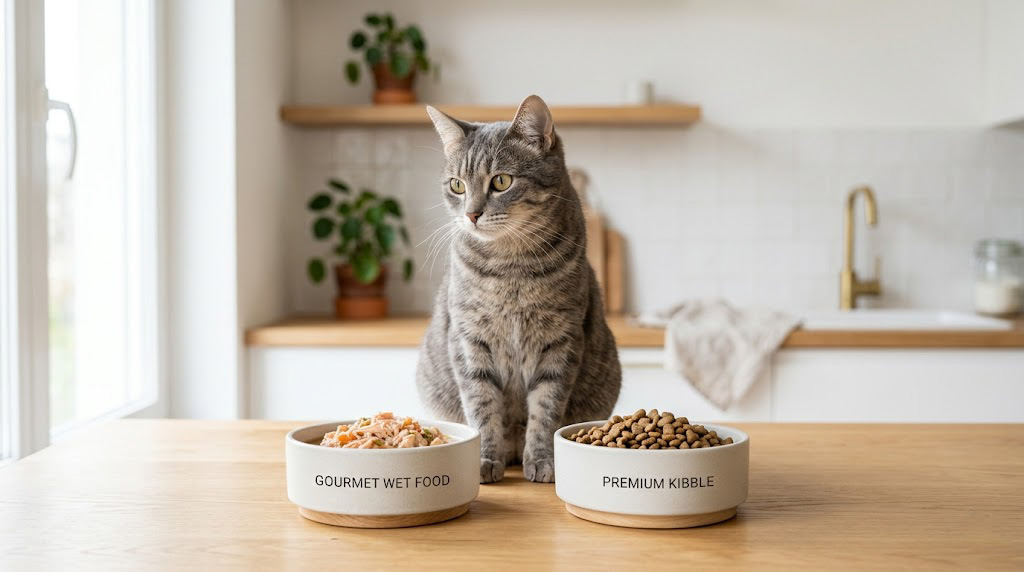
Wet vs Dry Cat Food: Which Is Better in 2026?
One of the most common questions cat owners ask is:
“Should I feed my cat wet food or dry food?”
The answer is not as simple as choosing one over the other.
The type of food you choose directly affects your cat’s:
- hydration
- weight
- digestion
- long-term health
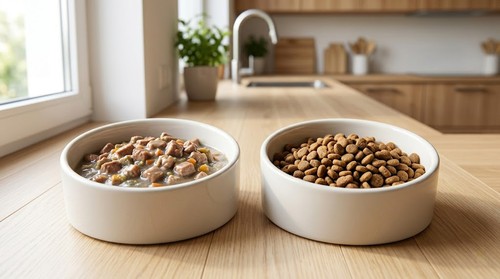
Quick Answer: Is Wet or Dry Food Better for Cats?
For most cats, wet food is usually better for hydration because it contains much more moisture than dry kibble. Dry food can still be useful because it is convenient, easier to store, and often more affordable for daily feeding.
But the best choice is not simply “wet or dry.”
The right answer depends on your cat’s age, weight, activity level, indoor lifestyle, drinking habits, digestion, dental needs, and whether they are prone to weight gain or urinary issues.
For many cats, a balanced mixed-feeding routine, using wet food for moisture and dry food for convenience, can be a practical middle ground.
If your cat drinks very little water, is overweight, has a sensitive stomach, or has a history of urinary problems, speak with your veterinarian before choosing a dry-only diet.
Still comparing brands after choosing wet, dry, or mixed feeding?
Food format is only one part of the decision. Brand quality, protein source, life-stage suitability, ingredient transparency, and nutritional balance matter just as much.
For a full brand-level comparison, read our guide: Best Cat Food Brands in Europe 2026
Wet Cat Food vs Dry Cat Food: Key Differences
| Factor | Wet Cat Food | Dry Cat Food |
|---|---|---|
| Moisture | High moisture, usually around 70–80% | Low moisture, often around 10% |
| Hydration support | Better for cats that drink little water | Less supportive unless the cat drinks enough water |
| Calories | Often lower calorie density per gram | Usually more calorie-dense |
| Convenience | Needs refrigeration after opening | Easy to store and measure |
| Cost | Usually more expensive per meal | Usually more affordable |
| Digestion | Often easier for some cats to chew and digest | May be harder for some sensitive cats |
| Dental impact | Softer texture, less chewing | Crunchy texture, but not a replacement for dental care |
| Best for | Hydration, picky cats, senior cats, urinary support routines | Convenience, portion control, budget-friendly feeding |
| Main risk | Overfeeding if portions are not controlled | Low moisture intake and higher calorie density |
The biggest difference between wet and dry cat food is moisture. Cats naturally have a low thirst drive, so food moisture can play an important role in their daily hydration routine.
If you are comparing higher-priced wet or dry options, our guide to premium cat food brands in Europe explains when premium is worth it, and when it is mostly marketing.
Comparing wet and dry food by price?
Cost matters, but the cheapest option is not always the best long-term value. Ingredient quality, protein source, moisture level, calorie density, and how well the food matches your cat’s needs can all affect the real cost of feeding.
For a deeper breakdown, read our guide on cost vs quality in cat food formulations.
Is Wet or Dry Food Better for Cats?
Wet food is often the better choice for cats that need more hydration, have a low water intake, prefer softer textures, or need help with weight management. Because wet food contains more moisture, it can support daily fluid intake more naturally than dry kibble.
Dry food can still be a useful option for many healthy cats. It is easier to store, more affordable, and practical for owners who need a simple feeding routine. However, dry food should be paired with constant access to fresh water, and portion control is important because kibble is usually more calorie-dense.
For many cats, the best approach is not choosing one forever. A mixed feeding routine can combine the hydration benefits of wet food with the convenience of dry food.
What Is the Difference Between Wet and Dry Cat Food?
The main difference comes down to moisture and nutritional density.
- Wet food → 70–80% moisture
- Dry food → ~10% moisture
This difference plays a critical role in your cat’s hydration and kidney health.
If you want to understand how nutrients, moisture, and protein levels affect your pet’s health, this guide on understanding pet nutrition and balancing your pet’s diet explains the fundamentals.
Benefits of Wet Cat Food
Wet food is closer to a cat’s natural diet.
Key benefits:
- supports hydration
- higher protein content
- lower carbohydrate levels
- easier digestion
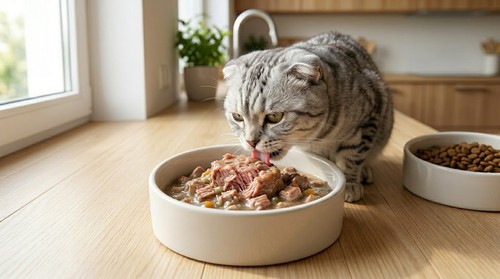
Cats naturally drink less water, so wet food helps prevent urinary and kidney issues.
Benefits of Dry Cat Food
Dry food is widely used due to convenience.
Key benefits:
- easy storage
- lower cost
- practical for busy owners
- can support dental health
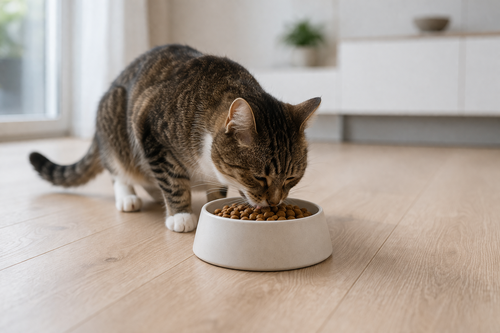
However, dry food usually contains more carbohydrates and less moisture.
Thinking about grain-free dry or wet food for your cat?
Grain-free does not automatically mean low-carb or healthier. Many grain-free dry foods still use peas, potatoes, or legumes as starch sources.
If you are comparing European grain-free options, read our full guide: Best Grain-Free Cat Food in Europe 2026
Wet vs Dry Cat Food: Long-Term Health Impact
This is where the real difference appears.
Long-term risks of dry-only diet:
- chronic dehydration
- kidney stress
- urinary tract issues
Long-term benefits of wet food:
- better hydration
- healthier kidneys
- improved digestion
Hydration plays a critical role in maintaining long-term feline health. According to the Cornell Feline Health Center, adequate water intake helps support kidney function and reduce the risk of urinary tract problems in cats.
Wet or Dry Food for Indoor Cats?
Indoor cats often move less than outdoor cats, which means they may be more likely to gain weight if portions are not controlled.
Wet food can be helpful for indoor cats because it adds moisture and may help some cats feel fuller with fewer calories per gram. Dry food can still be used, but it should be measured carefully because it is usually more calorie-dense.
For many indoor cats, a mixed feeding plan works well: wet food for hydration and satiety, and a controlled amount of dry food for convenience.
If your cat lives indoors, choosing the right food format is only part of the plan. You should also consider activity level, body condition, sterilization status, and daily calorie intake.
For a deeper indoor feeding plan, read our guide on the best diet for indoor cats.
Can Cats Eat Dry Food Only?
Yes, some cats can live on dry food only if the food is complete and balanced, properly portioned, and the cat drinks enough water.
However, a dry-only diet is not the best fit for every cat. Cats that drink very little water, are prone to urinary issues, are overweight, or have certain health concerns may benefit from more moisture in their diet.
If you feed dry food only, make sure your cat always has access to fresh water, monitor their weight, and speak with your veterinarian if you notice changes in urination, appetite, digestion, or energy.
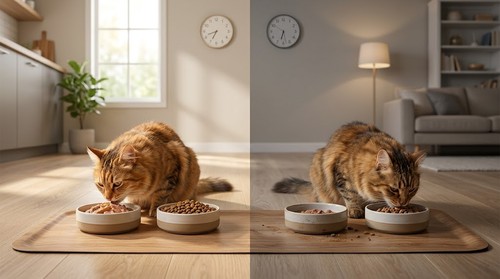
How to Combine Wet and Dry Food (Practical Guide)
The best approach for most cats is a mixed diet.
Example feeding plan:
- Morning → wet food
- Evening → dry food
Benefits:
- better hydration
- balanced nutrition
- practical for owners
Feeding Schedule Matters More Than You Think
Consistency helps regulate digestion and prevent overeating.
Recommended schedule:
- Adult cats → 2 meals per day
- Kittens → 3–4 meals per day
Common Mistakes Cat Owners Make
- feeding only dry food
- ignoring portion control
- choosing low-quality brands
- not adjusting diet over time
Many feeding mistakes happen simply because owners lack clear guidance. Learn more in our article on common mistakes in cat care and how to avoid them.
Smarter Feeding with Data
Every cat is unique.
Two cats eating the same food can have very different health outcomes.
That’s why personalized nutrition is becoming essential.
FAMMO analyzes your cat’s diet, activity, and health data to give personalized feeding recommendations.
Conclusion
Wet and dry cat food both have benefits.
But the best choice depends on your cat’s individual needs.
For most cats, a combination of both provides the best balance between health and practicality.
FAQ: Wet vs Dry Cat Food
Is wet or dry food better for cats?
Wet food is often better for hydration because it contains much more moisture than dry food. Dry food is more convenient, easier to store, and usually more affordable. The best choice depends on your cat’s age, weight, drinking habits, digestion, activity level, and overall health needs.
Is dry or wet food best for cats?
There is no single best option for every cat. Wet food may be better for cats that drink very little water, need more moisture, prefer softer textures, or need support with weight control. Dry food may work well for healthy cats when portions are controlled and fresh water is always available.
Can I feed my cat only dry food?
Yes, some cats can eat only dry food if it is complete and balanced, properly portioned, and the cat drinks enough water. However, dry-only feeding may not be ideal for cats that drink very little, are overweight, or have urinary-related concerns. If your cat has a health history, ask your veterinarian before choosing a dry-only diet.
Should I mix wet and dry cat food?
Yes, mixed feeding can be a practical option for many cats. Wet food adds moisture and can help with fullness, while dry food adds convenience and easier portion control. The key is to calculate total daily calories so your cat does not accidentally overeat.
Is wet cat food better for indoor cats?
Wet food can be helpful for indoor cats because it supports hydration and may help some cats feel fuller with fewer calories per gram. Since indoor cats are often less active, portion control is still important whether you feed wet food, dry food, or both.
Is dry cat food bad for cats?
Dry cat food is not automatically bad. A high-quality complete dry food can be part of a healthy diet for many cats. The main things to watch are moisture intake, calorie density, ingredient quality, and whether your cat drinks enough water.
How often should I feed my cat?
Most adult cats do well with two measured meals per day, but the right feeding schedule depends on your cat’s age, weight, activity level, and health condition. Kittens, senior cats, and cats with medical needs may require a different feeding routine.
What is the healthiest way to feed a cat?
The healthiest way to feed a cat is to choose a complete and balanced diet that fits the cat’s real needs. Age, weight, body condition, water intake, digestion, sterilization status, and activity level all matter. For many cats, a controlled mix of wet and dry food can be a practical daily routine.
Stop Guessing What Your Cat Should Eat
Choosing between wet and dry food is only the first step.
Your cat’s ideal diet depends on their age, weight, activity level, digestion, water intake, and health profile.
FAMMO helps you understand your cat’s real nutritional needs and gives you personalized feeding recommendations based on their unique profile.
Create your free account and get your cat’s personalized nutrition plan