
Looking for a vet in Amsterdam? Compare five local clinics by neighbourhood, services and booking requirements. This guide also explains what to confirm about English-language appointments, who to call for emergency care, and what to bring to your first visit.
Information checked: 2026-11-09. Clinic names, listed addresses and emergency contact numbers were checked against official websites. Confirm opening hours, language support and new-client availability directly before booking.
Quick Answer: How to Find a Vet in Amsterdam Fast
For routine care, use the comparison table below to shortlist a nearby clinic. Before booking, confirm that it treats your pet’s species, accepts new clients and can provide an appointment in English if needed.
For urgent care, call before travelling:
Medisch Centrum voor Dieren: +31 20 740 0600
Evidensia Dierenziekenhuis Amsterdam: +31 20 308 07 50
Explain your pet’s symptoms and follow the veterinary team’s instructions about where and when to attend.
Quick Comparison: 5 Veterinary Clinics in Amsterdam
The table below gives a quick overview of several Amsterdam veterinary clinics that may be useful for expat pet owners to research.
Always check the clinic’s official website, opening hours, appointment availability, services, and emergency instructions before visiting.
Clinic | Area / Location | Good for | Useful to know |
|---|---|---|---|
Dierenkliniek Vondelpark | Near Vondelpark / Oud-Zuid | Dogs, cats, small pets, preventive care | Temporary client stop noted; check current new-client availability before booking |
Dierenkliniek Amsterdam | Amsterdam West | Dogs, cats, rabbits, rodents | Multiple branches may make booking and access easier |
Dierenkliniek de Pijp | De Pijp / Amsterdam-Zuid | Dogs, cats, rabbits and rodents; routine and preventive care | Appointment-based care with Saturday opening |
Stadskliniek Dierenartsen Amsterdam | Amsterdam South, East, North | Pet owners who prefer a clinic group with multiple locations | Useful if you move within Amsterdam or need location flexibility |
Dierenkliniek De Jordaan | Jordaan / Central Amsterdam | Routine care, dental care, senior pets, surgery | Convenient for pet owners in central Amsterdam |
This table is not a ranking from best to worst. The right clinic depends on your pet’s needs, your location, appointment availability, and whether your case is routine or urgent.
5 Veterinary Clinics in Amsterdam to Compare
Amsterdam has many veterinary clinics, and the best choice depends on your location, pet type, language needs, and whether your situation is routine or urgent.
The clinics below are examples of veterinary clinics in Amsterdam that may be useful for expat pet owners to research. This guide is informational and does not replace direct advice from a veterinarian.
1. Dierenkliniek Vondelpark
Location: Sophialaan 53-HS, 1075 BP Amsterdam
Best for: Dog and cat owners looking for an established veterinary clinic near Vondelpark
Website: Dierenkliniek Vondelpark
Dierenkliniek Vondelpark is located near one of Amsterdam’s most recognizable areas, making it convenient for pet owners living around Oud-Zuid, Vondelpark, and nearby neighborhoods.
The clinic provides veterinary care for dogs, cats, and small pets. Its website highlights services such as vaccinations, neutering and spaying, senior checks, kidney consultations, and nutritional advice.
This makes it a useful option for pet owners who want more than a one-time appointment. If your dog or cat needs preventive care, diet guidance, or ongoing monitoring, it is worth checking whether this clinic fits your needs.
Good to know before booking:
Dierenkliniek Vondelpark currently notes a temporary client stop on its appointment page. Check the clinic’s official website before planning a first visit, as new-client availability can change.
2. Dierenkliniek Amsterdam
Locations: Amsterdam West, including Spaarndammerstraat, Frederik Hendrikstraat and Columbusplein.
Best for: Pet owners looking for local veterinary care in Amsterdam West.
Website: Dierenkliniek Amsterdam
Dierenkliniek Amsterdam offers veterinary care for dogs, cats, rabbits, and rodents. Because the clinic has multiple locations in Amsterdam West, it may be convenient for pet owners living in areas such as Westerpark, Frederik Hendrikbuurt, and nearby neighbourhoods.
For expats, having more than one branch can be helpful. If one location is fully booked, another branch may have different availability. This can be especially useful for routine care, vaccinations, or follow-up appointments.
Good to know before booking:
Check which branch is closest to you and whether online booking is available. If your pet is a rabbit or rodent, confirm that the appointment is suitable for that species.
3. Dierenkliniek de Pijp
Location: Ceintuurbaan 199, 1074 CV Amsterdam
Best for: Pet owners in De Pijp and Amsterdam-Zuid looking for routine and preventive veterinary care.
Website: Dierenkliniek de Pijp
Dierenkliniek de Pijp is a general veterinary clinic in Amsterdam that treats dogs, cats, rabbits, rodents, and other small companion animals.
Its location makes it a practical option to research for pet owners in De Pijp and nearby parts of Amsterdam-Zuid. Contact the clinic before booking to confirm the services your pet needs and whether an appointment in English is available.
The clinic works by appointment and offers extended opening hours on weekdays as well as Saturday appointments. Home visits may also be available for suitable cases.
Good to know before booking:
Appointments are required. Check the clinic’s current opening hours and availability before visiting. If your pet needs urgent care outside normal opening hours, follow the clinic’s current emergency instructions.
4. Stadskliniek Dierenartsen Amsterdam
Locations: Uiterwaardenstraat 109 in Amsterdam Zuid, Krugerplein 13 in Amsterdam Oost, and Elpermeer 41 in Amsterdam Noord.
Best for: Pet owners comparing a veterinary practice with locations in different parts of Amsterdam.
Website: Stadskliniek Dierenartsen Amsterdam
The practice provides companion-animal care across three Amsterdam locations. This may be useful if one branch is easier to reach from your home or workplace.
Before booking: Confirm which branch you need, whether it treats your pet’s species, and whether an appointment in English is available. Ask about its current emergency arrangements and follow-up process.
5. Dierenkliniek De Jordaan
Location: 2e Goudsbloemdwarsstraat 19, 1015 JX Amsterdam
Best for: Pet owners in central Amsterdam looking for routine and advanced veterinary services
Website: Dierenkliniek De Jordaan
Dierenkliniek De Jordaan is located in the center of Amsterdam and may be convenient for pet owners living in Jordaan, Centrum, and surrounding neighbourhoods.
The clinic provides routine veterinary care and also mentions services such as surgery, dental treatments, X-rays, laparoscopic sterilization, geriatric guidance, and preparing pets for travel.
This makes it a strong option to research if your pet is older, needs dental care, or requires a more detailed consultation beyond a basic check-up.
Good to know before booking:
The clinic works by appointment, so check availability before visiting. If your pet is senior or has several symptoms, ask whether you should book a longer consultation.
What Does “Dierenarts” Mean in the Netherlands?
Dierenarts is Dutch for veterinarian or vet. Knowing a few local terms can help you understand clinic websites and search for veterinary care in Amsterdam.
Dutch term | English meaning |
|---|---|
Dierenarts | Veterinarian / vet |
Dierenkliniek | Veterinary clinic |
Dierenziekenhuis | Animal hospital |
Spoed | Emergency / urgent care |
Dierenambulance | Animal ambulance |
Hond | Dog |
Kat | Cat |
For local searches, combine the relevant term with your neighbourhood, such as “dierenarts De Pijp” or “dierenkliniek Amsterdam West.” For urgent care, use the emergency contacts in this guide and call before travelling.
Routine Vet Visit vs Emergency Vet Care in Amsterdam
Not every vet visit is an emergency. Understanding the difference can save time, reduce stress, and help your pet get the right care faster.
Situation | Regular vet appointment | Emergency vet care |
|---|---|---|
Annual vaccination | Yes | Usually no |
Mild skin itching | Yes | Usually no |
Dental check | Yes | Usually no |
Nutrition or weight advice | Yes | Usually no |
Senior pet check-up | Yes | Usually no |
Repeated vomiting | Call first | Yes, if severe or worsening |
Breathing difficulty | No | Yes |
Collapse or seizure | No | Yes |
Suspected poisoning | No | Yes |
Serious injury or bleeding | No | Yes |
Inability to urinate | No | Yes |
Sudden inability to walk | No | Yes |
When to Book a Regular Vet Appointment
A regular appointment is usually suitable for non-urgent issues such as:
Annual health checks
Vaccinations
Microchip checks
EU pet passport questions
Dental checks
Weight management
Mild itching or skin issues
Diet and nutrition questions
Behaviour changes that are not sudden or severe
Senior pet check-ups
Mild digestive changes that are not worsening
For routine visits, you can usually book online or call during opening hours. If you are unsure whether your pet’s symptoms are urgent, call the clinic and explain what is happening.
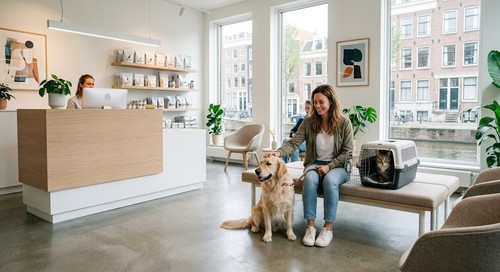
English-Speaking Vets in Amsterdam: What Expats Should Know
Amsterdam is an international city, and many veterinary clinics are used to helping English-speaking pet owners. Still, it is smart to confirm language support before booking.
When contacting a clinic, you can ask:
Hello, do you offer appointments in English?
I am looking for a veterinarian for my dog/cat.
Do you accept new clients?
Can I book a first appointment?
If your pet has a medical history from another country, ask whether you can send records by email before the appointment. This is especially useful if your pet has:
Previous surgery
Chronic illness
Allergies
Long-term medication
Vaccination history
Blood test results
Dental records
Previous diagnosis
Special diet requirements
For expats, the first appointment is often about more than a symptom. It is also a chance to build a local veterinary relationship.
A good first vet visit can help you understand:
Which vaccines your pet needs in the Netherlands
Whether your microchip information is correct
Whether your dog needs registration steps
Whether your pet’s diet fits their lifestyle
What to do in an emergency
Which clinic to call after hours
Walk-In Visits, Pet Insurance and Payment Options in Amsterdam
Before choosing a veterinary clinic in Amsterdam, it is worth checking how appointments, insurance paperwork and payment options work. These details can vary between clinics, so confirm them directly before your visit.
Can I Visit a Vet in Amsterdam Without an Appointment?
Walk-in availability varies between veterinary clinics.
Many clinics work mainly by appointment, so if you need same-day care, call first and explain what is happening. The clinic can tell you whether they can see your pet that day or whether another service would be more appropriate.
If your pet has severe or rapidly worsening symptoms, contact an emergency veterinary service rather than relying on walk-in availability.
Do Vets in Amsterdam Accept Pet Insurance?
Pet insurance procedures can vary between clinics and insurers.
Before your appointment, ask the clinic what documents or invoices they can provide for an insurance claim. You should also check directly with your insurer to understand how your policy handles veterinary costs and reimbursement.
Do not assume that every clinic works with every insurer in the same way.
Do Vets in Amsterdam Offer Payment Plans?
Payment options and arrangements vary between veterinary clinics.
If cost is a concern, ask the clinic for information about expected fees and available payment options before treatment whenever possible.
Do not assume that a payment plan is available. Confirm directly with the clinic, especially for more expensive procedures or ongoing treatment.
Emergency Vet Amsterdam: Who to Call and What to Say
If your pet needs urgent care, call your own veterinary practice during its opening hours where appropriate. If it is closed, contact an emergency service:
Medisch Centrum voor Dieren: +31 20 740 0600
Evidensia Dierenziekenhuis Amsterdam: +31 20 308 07 50
Call before travelling so the team can assess the situation and explain its admission or referral arrangements.
Have the following information ready:
Your pet’s species, age and approximate weight
What happened and when symptoms started
Any medication, injury or possible toxin exposure
Your location and how quickly you can travel
The situations listed earlier are examples, not a complete checklist. If your pet seems seriously unwell or symptoms are worsening, call a veterinarian for guidance.
What to Bring to Your First Vet Appointment
Many pet owners arrive at the vet with only the pet and a general explanation.
But the more useful information you bring, the better the conversation can be.
For your first vet appointment in Amsterdam, prepare:
Information to bring | Why it matters |
|---|---|
Vaccination records | Helps the vet understand protection status and booster needs |
Microchip number | Important for identification and registration |
EU pet passport or health certificate | Useful for travel, relocation, and official records |
Previous medical records | Helps avoid repeated tests and gives context |
Medication list | Prevents unsafe combinations or dosage confusion |
Food brand and product name | Helps assess diet quality and suitability |
Daily portion size | Important for weight and calorie discussion |
Treats and supplements | These can affect digestion, weight, and symptoms |
Recent weight changes | Useful for detecting health or nutrition problems |
Photos or videos of symptoms | Helps explain issues that may not happen during the visit |
Why Nutrition Data Matters
Nutrition is often connected to the reason for a vet visit.
Your vet may ask:
What food does your dog or cat eat?
How much do they eat per day?
Has the food changed recently?
Do they eat wet food, dry food, homemade food, or mixed feeding?
Do they receive treats?
Are they losing or gaining weight?
Do they vomit after meals?
Do they have diarrhoea, constipation, itching, or dental issues?
If your appointment is related to food, digestion, weight, allergies, or feeding habits, these guides may help you prepare:
These guides can help you understand what to look for before discussing diet with your veterinarian.

Prepare for Your Vet Visit with FAMMO
Create a FAMMO pet profile to organise basic details such as your pet’s age, breed, weight, food and feeding routine.
Before the appointment, also prepare vaccination records, medication details and notes about symptoms or recent changes. Use the checklist above to avoid missing useful information.
FAMMO supports everyday nutrition decisions and does not replace veterinary diagnosis, treatment or emergency care.
Create your free FAMMO pet profile

How to Choose the Right Vet for Your Dog or Cat
Choosing a vet in Amsterdam is not only about finding the closest clinic.
Here are the main things to compare.
1. Location and Accessibility
A nearby clinic is helpful for routine care, especially if you do not have a car. Check whether the clinic is easy to reach by walking, bike, tram, metro, or car.
For emergency situations, also know where the nearest after-hours emergency clinic is.
2. Language and Communication
If you are an expat, clear communication matters.
Look for clinics that provide English information or are comfortable handling appointments in English. This is especially important when discussing symptoms, medication, costs, or treatment options.
3. Species Experience
Some clinics treat dogs, cats, rabbits, rodents, and other small pets. Others may be more focused on dogs and cats.
If you have a rabbit, guinea pig, or exotic pet, confirm that the clinic can help before booking.
4. Preventive Care
A good vet should help not only when your pet is sick, but also with prevention.
Preventive care may include:
Vaccinations
Weight checks
Dental care
Parasite prevention
Senior pet monitoring
Nutrition advice
Lifestyle recommendations
5. Emergency Instructions
Every pet owner should know what to do outside opening hours.
Before choosing a clinic, check:
Do they handle emergencies?
What should you do after hours?
Which emergency hospital do they refer to?
Is there a phone number for urgent cases?
6. Transparency and Trust
A good clinic should explain options clearly. You should feel comfortable asking:
What are the possible causes?
What tests are needed?
What are the costs?
Are there alternatives?
What should I monitor at home?
When should I come back?
Trust is built through clear communication.
For Dog Owners in Amsterdam
Dog owners in Amsterdam may need to think about more than routine veterinary care.
Depending on your situation, you may need to consider:
Microchip registration
EU pet passport
Imported dog registration
Vaccination history
Parasite prevention
Weight management
Joint health
Diet and activity level
Behaviour after moving
Exercise routine in an urban environment
If your dog recently moved to the Netherlands, check official requirements for imported dogs, microchip registration, and pet passports.
For diet-related preparation, you may also want to read:
For Cat Owners in Amsterdam
Cats can hide symptoms very well.
A cat may look calm but still have pain, dental issues, kidney problems, digestive discomfort, or stress after moving.
For cat owners, it is useful to monitor:
Appetite
Water intake
Litter box changes
Vomiting
Weight loss or gain
Hiding behaviour
Coat condition
Activity level
Food preferences
Stress after relocation
If your cat is indoor-only, overweight, senior, or has digestive issues, nutrition and lifestyle information can be very useful for your vet.
For food-related preparation, you may also want to read:
Useful Resources for Pet Owners in Amsterdam
Here are some useful resources to check if you are a pet owner in Amsterdam or moving to the Netherlands with a dog or cat:
Official rules can change, so always check government sources before making decisions about travel, registration, microchips, or pet passports.
FAQ: Finding a Vet in Amsterdam
How do I find a vet near me in Amsterdam?
Search for “vet near me Amsterdam,” “veterinarian Amsterdam,” “English-speaking vet Amsterdam,” or the Dutch term “dierenarts Amsterdam.” You can also add your neighbourhood, such as Jordaan, De Pijp, Amsterdam West, Zuid, Oost, or Noord.
Do vets in Amsterdam speak English?
Many veterinary clinics in Amsterdam are used to helping international pet owners, and several provide English information online. However, it is always best to confirm language support before booking an appointment.
What is “dierenarts” in Dutch?
“Dierenarts” means veterinarian or vet in Dutch. “Dierenkliniek” means veterinary clinic, and “dierenziekenhuis” means animal hospital.
When should I call an emergency vet in Amsterdam?
Call an emergency vet if your pet has breathing problems, collapse, seizures, suspected poisoning, serious injury, uncontrolled bleeding, repeated vomiting, inability to urinate, severe pain, or any sudden and serious change in condition.
Are there 24-hour vets in Amsterdam?
Amsterdam has emergency veterinary services and animal hospitals that can help outside regular opening hours. Check local emergency vet information before you need it, so you know who to call in a stressful situation.
What should I bring to my first vet appointment?
Bring vaccination records, microchip information, EU pet passport or health certificate if available, medication details, previous medical records, food information, portion sizes, symptoms, and any photos or videos that show the problem.
Should I bring my pet’s food information to the vet?
Yes. Food type, feeding routine, treats, supplements, appetite changes, and weight changes can all help your vet understand your pet’s health better, especially if the visit is related to digestion, weight, skin, dental health, or energy levels.
How do I choose between different veterinary clinics in Amsterdam?
Compare location, language support, opening hours, services, species treated, emergency instructions, communication style, and whether the clinic offers preventive care and clear follow-up guidance.
Is FAMMO a replacement for a veterinarian?
No. FAMMO does not replace veterinary diagnosis, treatment, or emergency care. FAMMO helps pet owners organise nutrition and health information so they can have clearer, better-informed conversations with their veterinarian.
Your Next Step: Shortlist a Clinic and Confirm the Details
Choose two nearby clinics from the comparison table. Confirm new-client availability, language support, services and booking arrangements before deciding.
Save an emergency contact in your phone and keep your pet’s medical records, medication list and feeding information ready for the first appointment.
Create your free FAMMO pet profile to organise your pet’s basic nutrition information.
For veterinary teams: If you represent an Amsterdam clinic, you can explore clinic registration with FAMMO.