
Indoor cats can have very different feeding needs. A young, active cat living indoors may need a different portion and feeding routine from an older, neutered cat that spends most of the day resting.
The best diet for an indoor cat starts with a complete food that matches the cat’s life stage, followed by portions adjusted to body condition, activity level, neutering status, health, and the calorie density of the food.
If you are comparing foods, our guide to the best cat food brands in Europe explains what to look for beyond packaging and marketing claims.
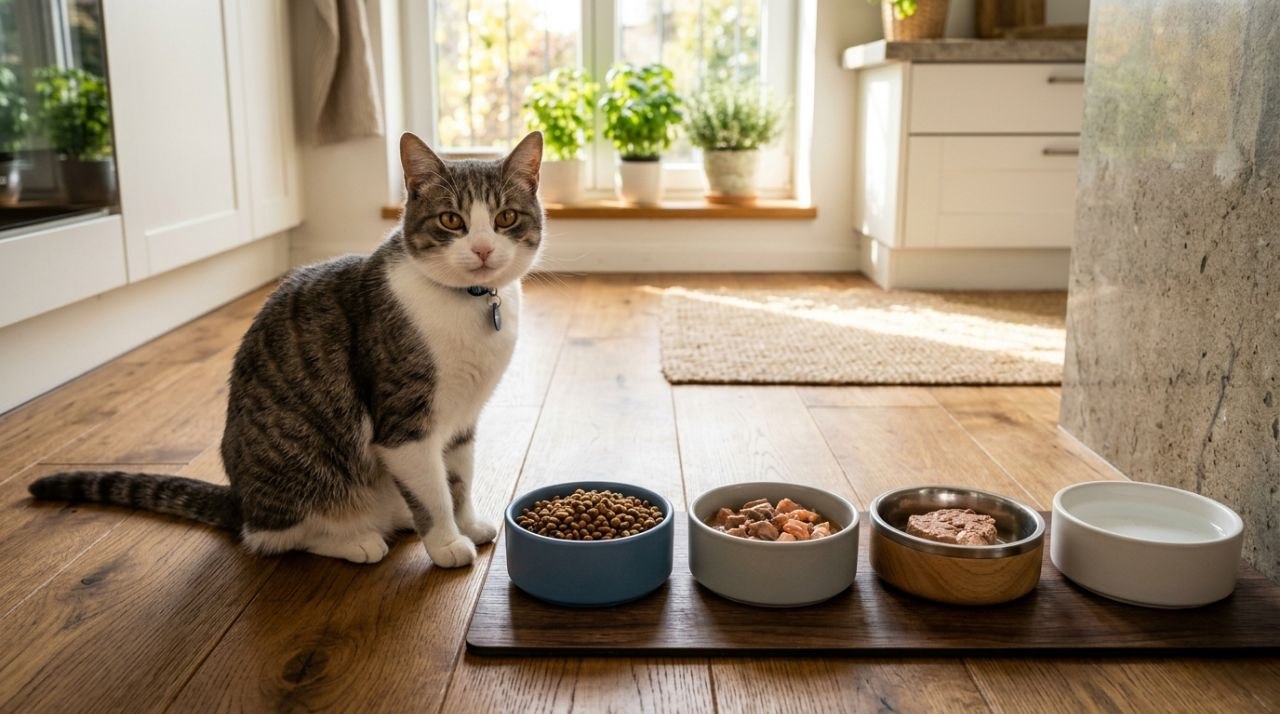
In this guide, we’ll explain what indoor cats need from their diet, how much to feed, whether wet or dry food is better, how to manage weight without underfeeding, and when feeding changes should be discussed with a veterinarian.
Quick Answer: What Is the Best Diet for an Indoor Cat?
For most healthy indoor cats, the best starting point is a complete cat food made for the correct life stage, combined with measured portions and regular monitoring of weight and body condition.
There is no single food or feeding method that is best for every indoor cat. Wet food, dry food, or a combination of both can work well when the overall diet is nutritionally complete and the total amount matches the cat’s individual needs.
When choosing portions, consider your cat’s age, body condition, activity, neutering status, treats, and the calorie density of the food rather than relying only on a generic feeding amount.

What Is the Best Diet for an Indoor Cat?
For most healthy indoor cats, the best diet is not a particular brand or a food simply labelled “indoor.” A better way to choose is to ask four questions:
1. Is the food nutritionally complete for my cat?
2. Is it suitable for their current life stage?
3. Am I feeding an appropriate amount for this individual cat?
4. Is my cat maintaining a healthy body condition on it?
If the answer to all four is yes, you are already much closer to an appropriate diet than you would be by choosing food based only on words such as “indoor,” “premium,” or “natural.”
1. Make sure the food can be used as the main diet
Start by checking whether the food is labelled complete rather than complementary.
According to the FEDIAF Nutritional Guidelines for Cats and Dogs , a complete pet food is formulated to provide the nutrients needed for the species and life stage it is intended for when fed as the daily diet.
Treats, toppers and other complementary foods can be part of the diet, but they are not necessarily designed to provide everything your cat needs when fed alone.
So check the package for two things first: Is the food complete, and is it intended for your cat’s life stage? A kitten, adult cat, and pregnant or nursing cat do not have identical nutritional requirements.
2. Check the food’s energy information
Two foods can look similar in the bowl but provide very different amounts of energy. When possible, check the package or manufacturer information for:
What to check | Why it matters |
|---|---|
| Shows how energy-dense the food is |
Recommended daily amount | Gives a starting point for portioning |
Cat’s weight range | Shows which body weight the guide refers to |
Life-stage statement | Confirms who the food is intended for |
Treat the feeding guide as a starting point, not a precise prescription. Your cat’s actual portion may need adjustment based on activity, body condition, neutering status, treats, and weight trend.
We explain this step-by-step in How Much Should an Indoor Cat Eat? below.
3. Judge the diet by the result, not just the label
A food can look excellent on the package and still be fed in the wrong amount.
A useful question is: “Is this food, in this amount, working for my cat?”
The WSAVA Global Nutrition Guidelines and Body Condition tools can help assess body fat alongside body weight. For a cat around an ideal body condition, you should generally be able to feel the ribs without a heavy layer of fat, with some waist visible from above.
Check your cat’s weight and body shape periodically. A steady change in either direction is a reason to review the feeding plan rather than automatically changing brands.
4. Think about the whole daily diet
Treats, toppers, table scraps, wet food, and dry food all contribute to the day’s total intake. If you combine wet and dry food, their portions should be considered together rather than feeding the full recommended amount of each.
The simplest rule is:
Choose a complete food for the right life stage, feed an appropriate total amount, and check whether your cat maintains a healthy body condition over time.
The sections below explain wet vs dry feeding, portion size, weight control, and food selection in more detail.
If your cat is steadily gaining or losing weight, has a major appetite change, persistent vomiting or diarrhoea, or a diagnosed medical condition, ask your veterinarian to review the feeding plan rather than relying on trial and error.
What Makes Indoor Feeding Different?
Living indoors does not automatically mean a cat needs a special type of food. What often changes is how much energy the cat uses and how food fits into the daily routine.
Some indoor cats are highly active, while others spend much of the day resting. Neutering can also affect energy needs. For this reason, FEDIAF’s nutritional guidelines distinguish between the average energy needs of indoor or neutered adult cats and more active cats, but these are still starting points, not fixed rules for every individual.
The bigger practical issue is often how food is offered.
Indoor cats may have food available throughout the day even when they have few opportunities to climb, chase, explore, or hunt. For cats that do not regulate their own intake well, continually topping up the bowl can make it difficult to know how much they are actually eating.
A more useful routine is to:
- measure the total food offered each day
- divide it into several smaller meals if that suits your cat
- include treats in the daily food allowance
- use part of the normal food for puzzle feeders or food-dispensing toys
- provide daily play and opportunities to climb, explore, and search for food
The WSAVA Global Nutrition Committee notes that food-dispensing toys, multiple meals, hiding food, and reducing boredom can be useful feeding strategies for cats.
The goal is not simply to feed an indoor cat less. It is to match food intake with the individual cat’s activity, body condition, and daily routine.
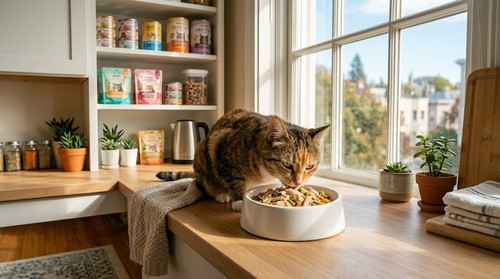
Indoor Cat Feeding Priorities
When deciding how to feed an indoor cat, focus on the factors that actually change nutritional needs rather than choosing food based only on the word “indoor” on the package.
1. Life stage comes first
A kitten, adult cat, and senior cat should not automatically follow the same feeding plan.
Choose a complete food intended for your cat’s current life stage, then adjust the amount based on the individual cat. This matters more than choosing a product simply because it is marketed for indoor cats.
2. Watch body condition, not just body weight
The number on the scale is useful, but it does not tell the whole story.
Look at your cat’s shape and feel the ribs regularly. Gradual changes in waistline, rib coverage, or overall body shape can show that the current portion needs adjusting before the change becomes obvious.
The WSAVA Global Nutrition Guidelines recommend using body condition and muscle condition as part of routine nutritional assessment.
3. Pay attention to muscle, especially as cats age
A cat can maintain a similar body weight while losing muscle.
This is particularly important in older cats. Check for visible or noticeable changes around the spine, shoulders, and hips rather than assuming that stable weight always means the feeding plan is ideal.
4. Match food intake to real activity
Some indoor cats are very active. Others spend much of the day sleeping.
Do not reduce food automatically just because a cat lives indoors. Instead, look at how much the cat actually moves, plays, climbs, and explores, then adjust portions according to weight and body condition over time.
Neutering status can also affect energy needs, but it should be considered together with activity and body condition rather than used as a reason to automatically switch foods.
5. Look at hydration and digestion
Fresh water should always be easy to access.
Also pay attention to how your cat responds to the diet. Persistent vomiting, diarrhoea, constipation, or a noticeable change in stool quality should not simply be treated as a reason to keep switching foods.
If digestive problems continue, the cause may need veterinary assessment.
6. Health history can change the feeding plan
A healthy indoor cat and a cat with a diagnosed urinary, kidney, gastrointestinal, metabolic, or other medical condition should not automatically be fed in the same way.
Therapeutic or restrictive diets should be chosen with veterinary guidance rather than by trial and error.
A simple way to prioritise
When reviewing your indoor cat’s diet, ask these questions in order:
- Is the food complete and suitable for the life stage?
- Is my cat maintaining an appropriate body condition?
- Is muscle condition stable?
- Does the portion match actual activity and weight trend?
- Is hydration adequate?
- Is the food well tolerated?
- Is there any medical condition that changes the feeding plan?
If these basics are right, there is usually no reason to keep changing foods simply because another product claims to be “better for indoor cats.”
Wet vs Dry Food for Indoor Cats
Both wet and dry food can be suitable for indoor cats. The better choice depends on your cat, the product, and how the food fits into the overall feeding plan.
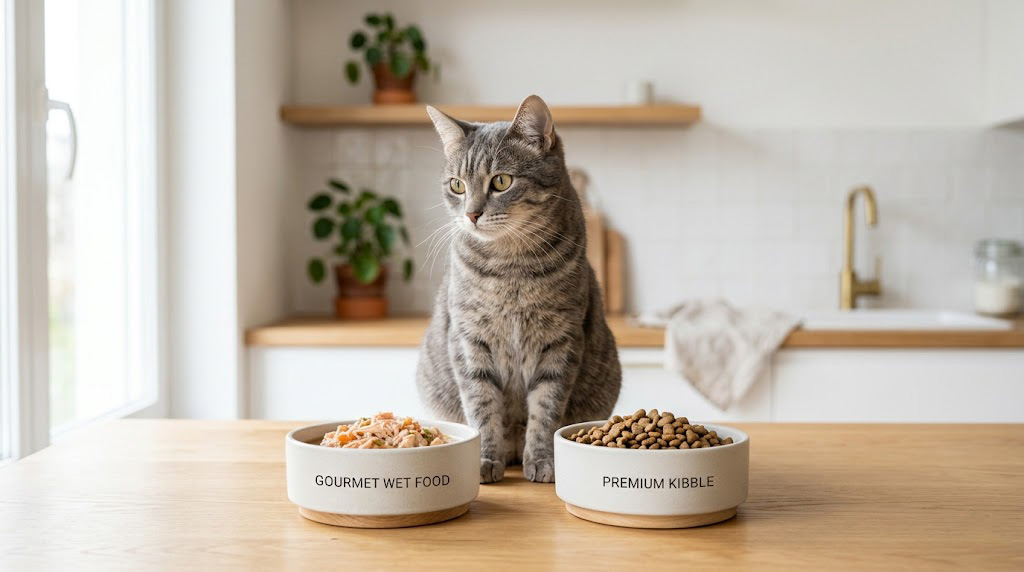
Wet food contains much more moisture, which can contribute to a cat’s total water intake. It also tends to provide a larger volume of food for the same amount of energy, which some cats may prefer.
Dry food is convenient, easy to portion, and useful in puzzle feeders or food-dispensing toys. However, because many dry foods are more energy-dense, even a small extra portion can add more calories than expected.
A mixed feeding approach can also work well. For example, some owners use wet food for regular meals and reserve part of the daily dry-food allowance for puzzle feeders or enrichment.
The important point is not to feed the full daily recommendation of both foods at the same time. If wet and dry food are combined, their calories should be counted together as one daily feeding plan.
Whatever format you choose, check that the main food is labelled complete for your cat’s life stage.
There is no universal wet-to-dry ratio that works for every indoor cat. The best option is the one your cat tolerates well, enjoys eating, and can be fed in an amount that maintains an appropriate body condition.
For a more detailed comparison of moisture, calories, convenience, dental claims, and feeding combinations, see our guide to wet vs dry cat food
How Much Should an Indoor Cat Eat?
There is no single amount of food that is right for every indoor cat. The right portion depends on your cat’s body weight, body condition, activity, neutering status, life stage, treats, and the calorie density of the food.
A simple way to find a sensible starting amount is:
1. Start with the feeding guide
Check the recommended daily amount on the food package for your cat’s weight and life stage.
Treat this as a starting point, not a fixed prescription. Feeding guides cannot account perfectly for differences between individual cats.
2. Check how calorie-dense the food is
Look for information such as kcal/kg, kcal per 100 g, or calories per pouch or can.
This matters because two foods can provide very different amounts of energy even when the portions look similar.
For dry food, weighing the daily portion in grams is usually more accurate than estimating it by eye.
3. Count the whole day, not just the main meal
Wet food, dry food, treats, toppers, and snacks all contribute to the daily total.
If you use mixed feeding, calculate the wet and dry portions together rather than feeding the full recommended amount of each.
The WSAVA Nutrition Committee recommends keeping treats to no more than about 10% of a healthy cat’s daily calorie intake, so most nutrition still comes from the complete diet.
4. Let your cat’s body condition guide adjustments
After choosing a starting portion, monitor weight and body condition.
If your cat is gradually gaining weight, the total daily intake may be too high. If they are losing weight unexpectedly, constantly hungry, or their body or muscle condition is changing, do not simply keep reducing or increasing food without understanding why.
The WSAVA Global Nutrition Guidelines provide body-condition tools that can help you monitor changes alongside body weight.
For cats that are overweight, underweight, growing, pregnant, nursing, elderly, or living with a medical condition, ask a veterinarian to help determine an appropriate feeding plan.

How to Choose an Indoor Cat Food
When comparing cat foods, ignore the front of the package for a moment and check the information that actually helps you make a decision.
A simple way to narrow down your options is to use these five checks:
1. Confirm it can be used as the main diet
Look for the word “complete” and make sure the food is intended for your cat’s life stage.
If a product is labelled complementary, it may be suitable as a treat, topper, or part of the diet, but it should not automatically replace a complete everyday food.
2. Check what you would actually be feeding
Look at the recommended daily amount and the food’s energy information, such as kcal/kg, kcal per 100 g, or calories per pouch.
You do not need to choose the food with the lowest calorie number. The useful question is whether you can feed an appropriate portion without regularly overfeeding your cat.
3. Look beyond the ingredient list
Do not judge a food only because meat appears first on the ingredient list or because it says “grain-free,” “natural,” “premium,” or “high protein.”
Instead, look at the complete formulation, nutritional adequacy, feeding information, and whether the manufacturer provides clear product details.
If you are unsure what the information on the package means, read our guide to how to read a pet food label
4. Prefer clear information over vague claims
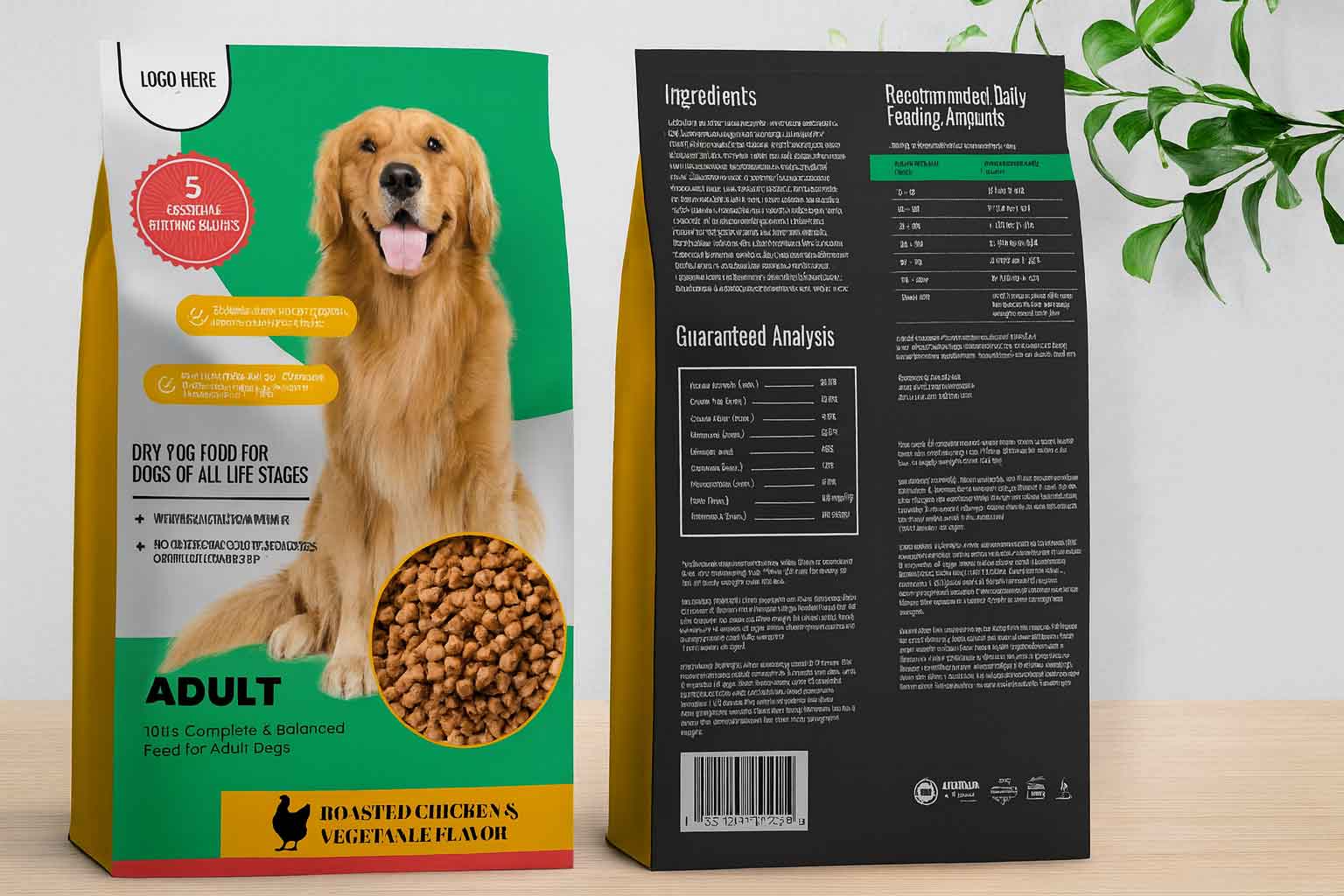
A useful product page or label should make it reasonably easy to find:
- whether the food is complete or complementary
- the intended life stage
- feeding guidance
- calorie or energy information
- product composition and nutritional information
- manufacturer contact or product-support information
Clear information makes it easier to compare foods and adjust the feeding plan later.
5. Choose something you can feed consistently
The best choice is not necessarily the most expensive or heavily marketed product.
Choose a nutritionally appropriate food that your cat accepts and that you can measure, buy, store, and feed consistently.
A good food still needs a good feeding routine.
Weight Control Without Underfeeding
Weight control for indoor cats is not about simply giving less food. The goal is to reduce unnecessary calories while still providing a complete diet and enough food to support normal nutrition.
If your indoor cat is gaining weight, start with the easiest places to make small changes.
Stop “invisible” extra calories
Before cutting the main meals, check what is being added during the day.
Common sources include:
- treats
- table scraps
- toppers
- food given by different family members
- repeatedly refilling a dry-food bowl
These extras can make a carefully measured feeding plan much larger than it appears.
Avoid unlimited free-feeding if weight is increasing
Leaving food available all day works for some cats, but it can make indoor cat weight control difficult when a cat regularly eats more than needed.
Instead, measure the total daily amount and divide it into planned meals. Part of the daily food can also be used in puzzle feeders or food-dispensing toys so the cat works for some of its food rather than receiving extra treats.
Make small changes, not drastic cuts
If your cat needs less food, avoid suddenly cutting the portion by a large amount.
Make gradual adjustments and monitor the weight trend and body condition over time. The aim is controlled weight management, not rapid weight loss.
Cats that are significantly overweight should ideally have a weight-loss plan discussed with a veterinarian rather than following aggressive calorie restriction at home.
Keep the diet complete
Do not replace a large part of the normal diet with low-calorie treats, vegetables, or homemade additions just to make the bowl look fuller.
The main diet should still provide complete nutrition.
Increase activity as well as controlling food
For many indoor cats, better weight management also means creating more opportunities to move.
Short play sessions, climbing areas, chasing toys, food puzzles, and hiding small portions of the normal daily food around the home can add activity without adding extra calories.
The key is simple:
Control the total intake, keep the diet nutritionally complete, and make changes gradually rather than simply feeding less.
Hairballs, Hydration and Digestion
Indoor cats often spend a lot of time grooming, so hairballs can be part of normal life — especially in long-haired cats or during shedding periods. If hairballs are becoming a regular problem, our guide to stopping cat hairballs naturally explains practical ways to reduce swallowed hair and improve the feeding and grooming routine.

The simplest way to reduce swallowed hair is regular brushing. The Cornell Feline Health Center recommends regular grooming as one practical way to reduce the amount of loose hair a cat swallows.
If hairballs become frequent, your cat repeatedly retches without bringing anything up, or vomiting becomes persistent, speak with a veterinarian rather than assuming hairballs are always the cause.
Hydration matters too. Cats get water from both drinking and the moisture in their food. The Cornell Feline Health Center’s hydration guide t explains why access to fresh water and total moisture intake both matter.
Wet food can contribute more moisture to the diet, but it should not be treated as a guaranteed way to prevent urinary or kidney disease.
Finally, watch how your cat tolerates the diet. Persistent vomiting, diarrhoea, constipation, or a sudden change in stool quality should not simply be managed by repeatedly switching foods.
If digestive problems continue, especially alongside appetite or weight changes, ask a veterinarian to investigate the cause.
Should You Choose Indoor Cat Food Based on Breed?
Usually, breed should not be the first thing you use to choose an indoor cat’s food.
What matters more is your cat’s age, body condition, activity level, neutering status, health, and how well they tolerate the food.
Breed can still provide useful context. For example, some breeds tend to be larger, more active, or have different coat and grooming needs. But two cats of the same breed can still need different portions and feeding routines.
So instead of looking for a food simply because it is marketed for a particular breed, first ask:
- Is the food complete and suitable for my cat’s life stage?
- Is the portion keeping my cat at a healthy body condition?
- Does the feeding plan match their real activity level?
- Is the food well tolerated?
If you want to understand when breed can influence feeding decisions, read our guide to feeding your cat based on breed.
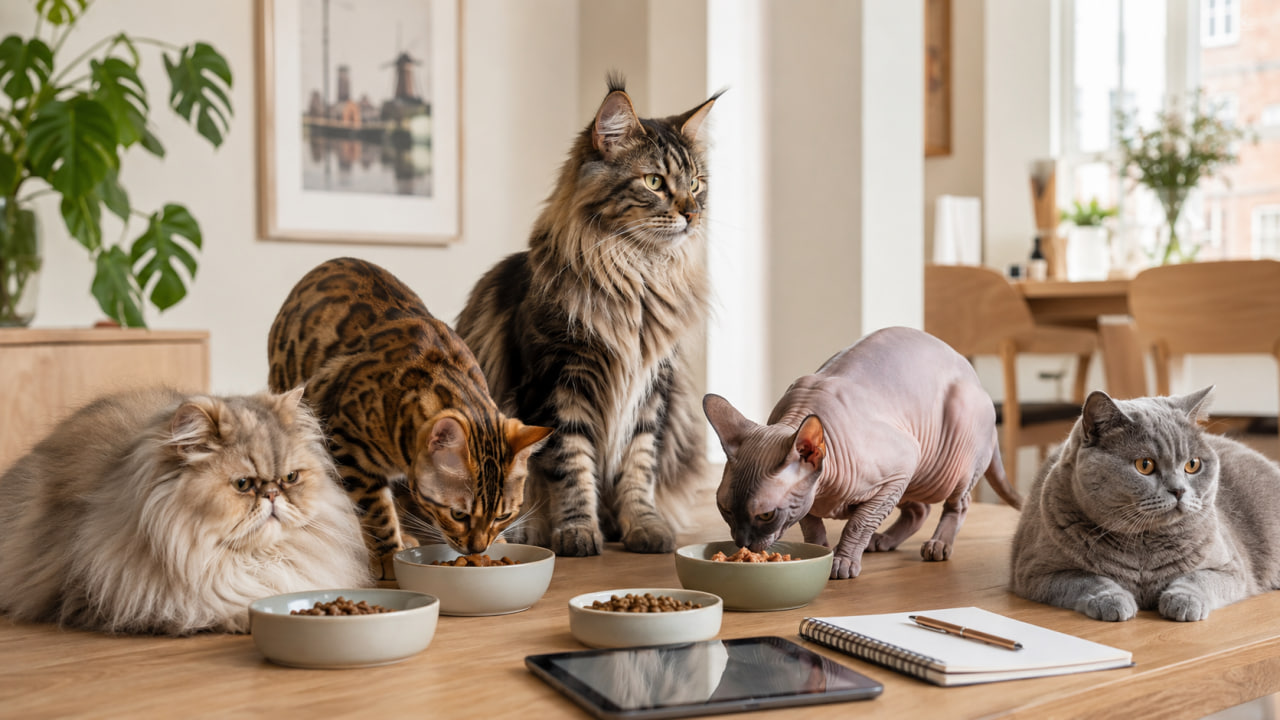
The practical takeaway: use breed as supporting information, not as the main rule for choosing food.
Common Indoor Cat Feeding Mistakes to Avoid
Even a good cat food can cause problems when the feeding routine is not managed well. These are some of the most common indoor cat feeding mistakes to watch for:
Leaving food out without measuring it
Free-feeding makes it difficult to know how much your cat actually eats. If weight is increasing, measure the full daily amount instead of repeatedly topping up the bowl.
Forgetting treats and extras
Treats, toppers, table scraps, and food given by other family members all count toward the daily intake. Small extras can add up quickly.
Changing foods too often
Do not keep switching foods simply because your cat seems bored or because another product looks better. Frequent changes can also make it harder to understand which food your cat tolerates well.
Choosing food mainly by marketing claims
Words such as “indoor,” “premium,” “natural,” or “high protein” should not be the main reason to choose a food. Check nutritional completeness, life-stage suitability, feeding information, and how the food works for your individual cat.
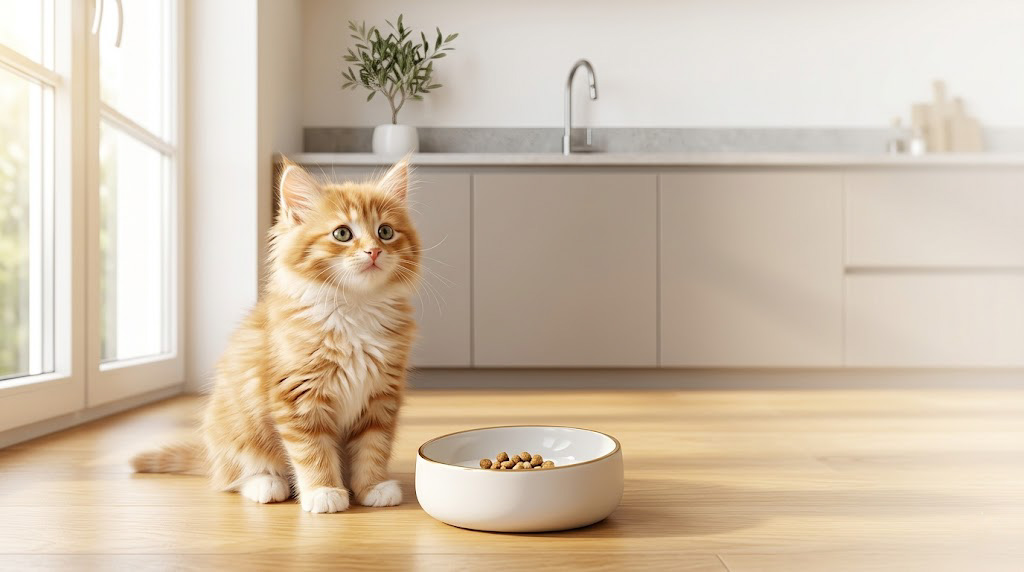
Feeding kittens like adult cats
Kittens have different nutritional needs from adult cats. If you have a young indoor cat, our kitten feeding guide by age explains how feeding changes as they grow.
Adding supplements without a clear reason
A complete diet is designed to provide essential nutrients. Adding supplements “just in case” is not automatically beneficial and may be unnecessary unless there is a specific reason to use them.
When to Ask a Vet About Your Indoor Cat’s Diet
Most feeding adjustments can be made gradually at home, but some changes should not be treated as a simple food problem.
Contact your veterinarian if your cat has:
- unexplained weight loss or rapid weight gain
- a major or persistent change in appetite
- repeated vomiting or ongoing diarrhoea
- unusual lethargy or weakness
- a noticeable increase in thirst or urination
- persistent constipation or difficulty passing stool
- a diagnosed condition that may require a specialised diet
If vomiting is becoming a recurring problem, our guide to cat vomiting
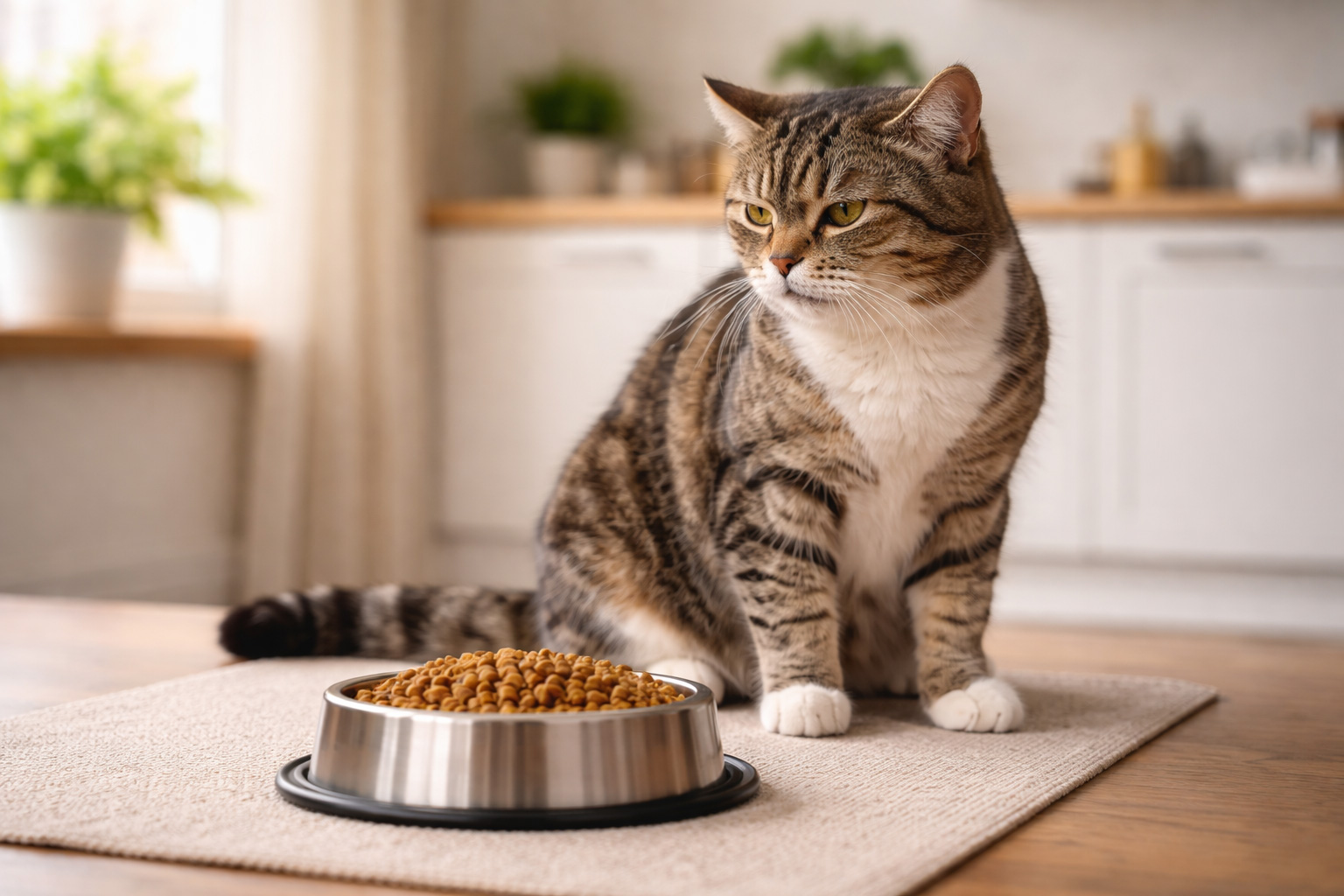
The Cornell Feline Health Center also recommends veterinary assessment when vomiting is frequent or occurs alongside signs such as weakness, reduced appetite, increased thirst, or diarrhoea.
One sign should be treated more urgently: if your cat repeatedly strains to urinate but produces little or no urine, seek veterinary care immediately. Urinary obstruction can become life-threatening and requires prompt treatment.
The key point is simple: do not keep changing foods to manage persistent symptoms without finding out what is causing them.
Frequently Asked Questions About Feeding Indoor Cats
What is the best food for an indoor cat?
For most healthy indoor cats, start with a complete food appropriate for their life stage. The right choice also depends on body condition, activity, neutering status, health, and how well the cat tolerates the food. A product does not need to say “indoor” on the package to be suitable.
How much should an indoor cat eat each day?
There is no single daily amount that works for every indoor cat. Start with the feeding guide on the food, check its calorie density, and include treats and any other foods in the daily total. Then adjust the portion based on your cat’s weight trend and body condition.
Is wet or dry food better for indoor cats?
Neither is automatically better for every cat. Complete wet food, complete dry food, or a measured combination can all work. Wet food contributes more moisture, while dry food can be convenient for portioning and puzzle feeders. Our wet vs dry cat food guide explains the differences in more detail.
Do indoor cats need fewer calories than outdoor cats?
Not always. Some indoor cats are very active, while others move much less. Activity, body condition, neutering status, age, and the food’s energy density are more useful than simply assuming every indoor cat needs fewer calories.
Should a neutered indoor cat eat special food?
Not necessarily. Neutering can affect energy needs, but that does not mean every neutered cat requires a food labelled “sterilised” or “indoor.” The more important question is whether the food is complete and whether the portion helps the cat maintain an appropriate body condition.
Is high-protein food better for indoor cats?
A higher protein percentage does not automatically make one food better. Cats need appropriate nutrition as part of a complete diet, but food quality should not be judged from one nutrient or marketing claim alone. Life stage, total formulation, calorie density, feeding amount, and individual tolerance all matter.
How can I tell if my indoor cat is overweight?
Look at both body weight and body condition. You should generally be able to feel the ribs without a thick layer of fat, and some waist should be visible when viewed from above. If you are unsure, a veterinarian can assess your cat’s Body Condition Score and help determine whether weight loss is needed.
Does breed change what an indoor cat should eat?
Breed can provide useful context, but it should not determine the diet by itself. Age, body condition, activity, neutering status, health, and individual tolerance are usually more important.
Sources and Editorial Notes
This guide was written using current European pet-nutrition guidance and recognised veterinary resources. Key references include:
- FEDIAF Nutritional Guidelines for Complete and Complementary Pet Food for Cats and Dogs
- WSAVA Global Nutrition Guidelines
- Cornell Feline Health Center — Hairballs
- Cornell Feline Health Center — Hydration
Editorial note: This article provides general nutrition and feeding information for cat owners. Individual needs can vary with age, body condition, activity, neutering status, health, and the food being used. It is not a substitute for veterinary diagnosis or treatment. If your cat has persistent symptoms, unexplained weight changes, or a diagnosed medical condition, discuss feeding decisions with your veterinarian.
Make Your Cat’s Feeding Plan More Personal
General feeding guidelines are useful, but your cat’s needs depend on more than simply living indoors.
FAMMO helps you look at factors such as your cat’s age, breed, weight, neutering status, and lifestyle together, so you can make more informed nutrition and preventive-care decisions.
Create your cat’s profile with FAMMO and start building guidance around your individual pet.

FAMMO provides educational and personalised guidance and does not replace veterinary diagnosis or treatment.