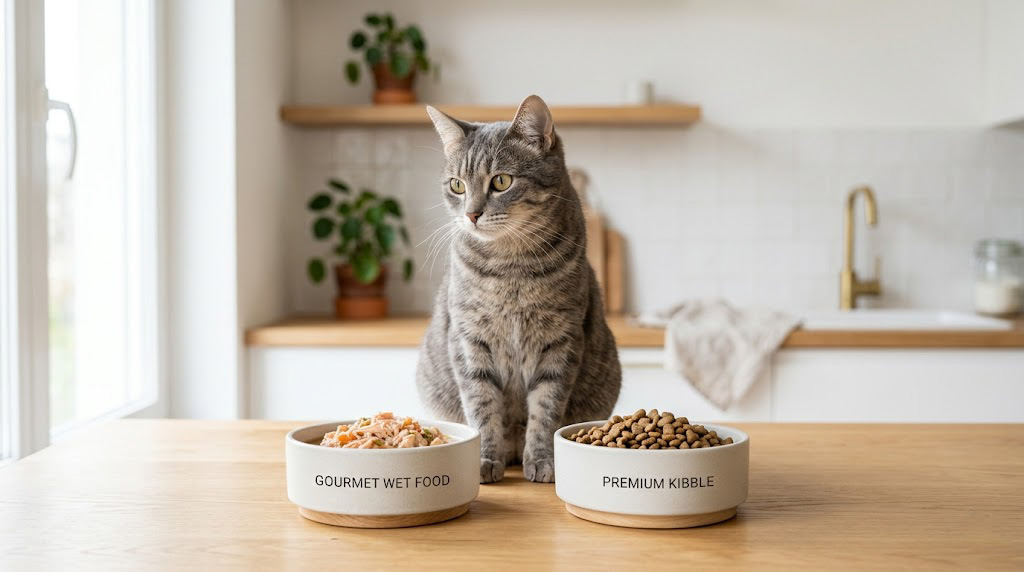
Wet vs Dry Cat Food: Which Is Better for Your Cat? (Complete 2026 Guide)
One of the most common questions cat owners ask is:
“Should I feed my cat wet food or dry food?”
The answer is not as simple as choosing one over the other.
The type of food you choose directly affects your cat’s:
- hydration
- weight
- digestion
- long-term health

Quick Answer (Snippet-Ready)
👉 Wet food is better for hydration and overall health
👉 Dry food is more convenient and cost-effective
👉 The best option for most cats is a combination of both
What Is the Difference Between Wet and Dry Cat Food?
The main difference comes down to moisture and nutritional density.
- Wet food → 70–80% moisture
- Dry food → ~10% moisture
This difference plays a critical role in your cat’s hydration and kidney health.
If you want to understand how nutrients, moisture, and protein levels affect your pet’s health, this guide on understanding pet nutrition and balancing your pet’s diet explains the fundamentals.
Benefits of Wet Cat Food
Wet food is closer to a cat’s natural diet.
Key benefits:
- supports hydration
- higher protein content
- lower carbohydrate levels
- easier digestion

Cats naturally drink less water, so wet food helps prevent urinary and kidney issues.
Benefits of Dry Cat Food
Dry food is widely used due to convenience.
Key benefits:
- easy storage
- lower cost
- practical for busy owners
- can support dental health
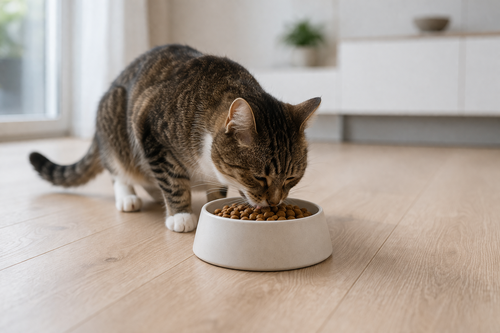
However, dry food usually contains more carbohydrates and less moisture.
Wet vs Dry Cat Food: Long-Term Health Impact
This is where the real difference appears.
Long-term risks of dry-only diet:
- chronic dehydration
- kidney stress
- urinary tract issues
Long-term benefits of wet food:
- better hydration
- healthier kidneys
- improved digestion
Hydration plays a critical role in maintaining long-term feline health. According to the Cornell Feline Health Center, adequate water intake helps support kidney function and reduce the risk of urinary tract problems in cats.
Indoor vs Outdoor Cats: Does It Matter?
Yes — significantly.
Indoor cats:
- lower activity
- higher obesity risk
- benefit more from wet food
Outdoor cats:
- more active
- higher calorie burn
- can tolerate more dry food
👉 This means indoor cats usually need more controlled, moisture-rich diets.
Indoor cats often require a more controlled and moisture-rich diet. Our guide on the best diet for indoor cats explains how to build a balanced feeding plan for indoor lifestyles.
Can Cats Live on Dry Food Only?
👉 Yes — but it is not ideal.
Cats can survive on dry food if:
- it is high-quality
- fresh water is always available
However, over time this may increase the risk of:
- dehydration
- kidney problems
- obesity
How to Combine Wet and Dry Food (Practical Guide)
The best approach for most cats is a mixed diet.
Example feeding plan:
- Morning → wet food
- Evening → dry food
Benefits:
- better hydration
- balanced nutrition
- practical for owners

Feeding Schedule Matters More Than You Think
Consistency helps regulate digestion and prevent overeating.
Recommended schedule:
- Adult cats → 2 meals per day
- Kittens → 3–4 meals per day
Common Mistakes Cat Owners Make
- feeding only dry food
- ignoring portion control
- choosing low-quality brands
- not adjusting diet over time
Many feeding mistakes happen simply because owners lack clear guidance. Learn more in our article on common mistakes in cat care and how to avoid them.
Smarter Feeding with Data
Every cat is unique.
Two cats eating the same food can have very different health outcomes.
That’s why personalized nutrition is becoming essential.
FAMMO analyzes your cat’s diet, activity, and health data to give personalized feeding recommendations.
Conclusion
Wet and dry cat food both have benefits.
But the best choice depends on your cat’s individual needs.
For most cats, a combination of both provides the best balance between health and practicality.
FAQ (SEO Boost Section)
Is wet or dry food better for cats?
Wet food is generally better for hydration and long-term health, while dry food is more convenient.
Can I feed my cat only dry food?
Yes, but it may increase the risk of dehydration and kidney problems over time.
How often should I feed my cat?
Most adult cats should be fed twice a day.
Should I mix wet and dry food?
Yes, combining both is often the best approach for balanced nutrition.
Stop guessing what your cat should eat.
FAMMO analyzes your cat’s diet, activity level, and health data to generate personalized feeding recommendations designed for your pet’s real needs.
Create your free account and get your cat’s personalized nutrition plan