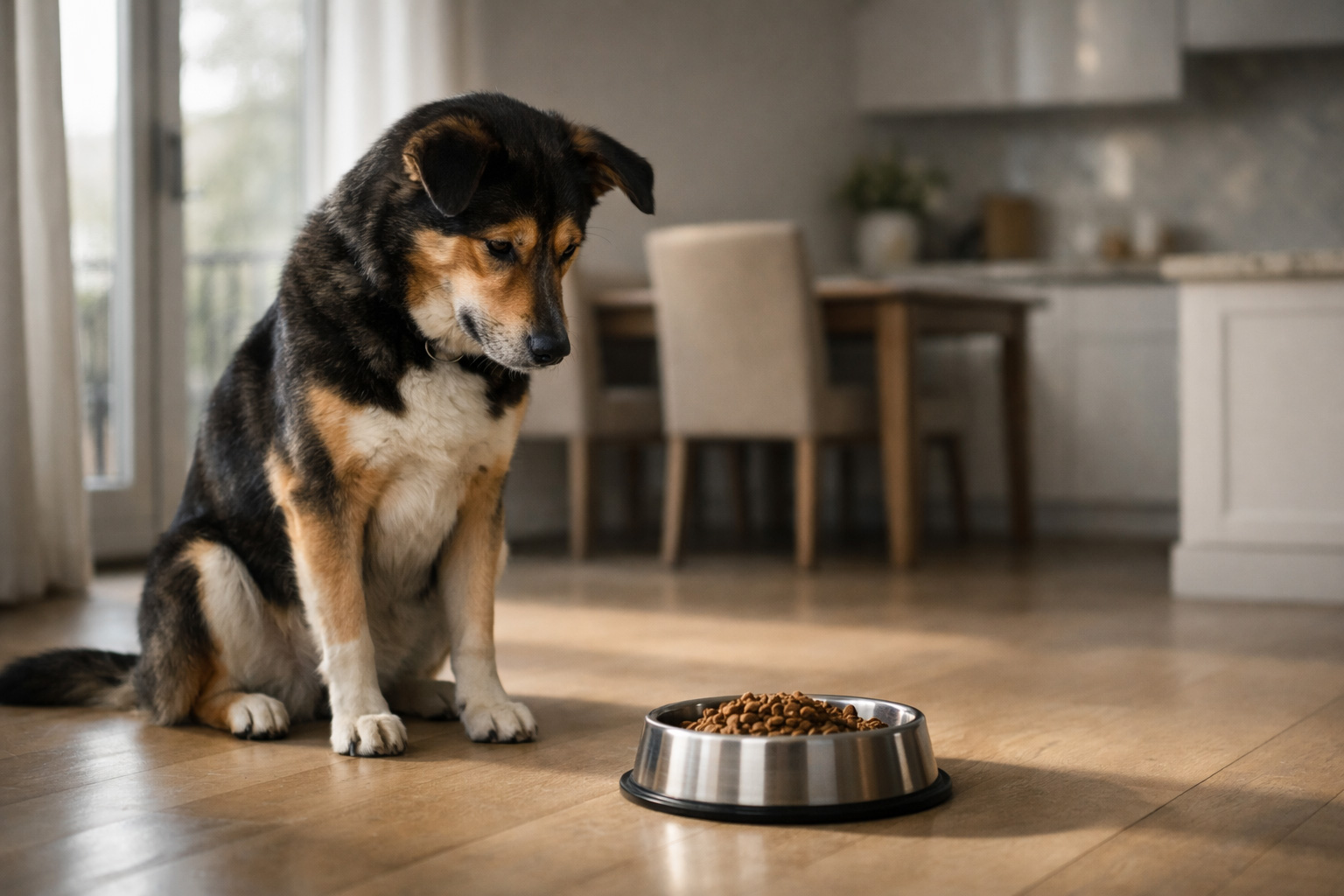
How Often Should I Feed My Dog? Feeding Schedule by Age
How often you feed your dog matters because meal timing can affect digestion, energy, weight, appetite, and daily routine.
This guide explains how often to feed puppies, adult dogs, and senior dogs, and when your dog’s feeding schedule may need to change.
How Often Should I Feed My Dog? Quick Answer
Most healthy adult dogs should be fed twice a day, usually once in the morning and once in the evening.
Puppies usually need 3–4 smaller meals per day because they are growing quickly and have smaller stomachs. Senior dogs often do well with two smaller, consistent meals, although some may need a different routine depending on digestion, weight, activity level, or health history.
If you are also unsure about portion size, read our full guide on how much you should feed your dog before changing the number of meals.
Changing from one meal to two meals does not usually mean giving more food. It means splitting the same daily amount into a safer, more consistent routine.
Feeding frequency is not just about routine. It can affect your dog’s digestion, energy, appetite, weight, behavior, and long-term health.
Table of Contents
- How Often Should I Feed My Dog? Quick Answer
- Why Feeding Frequency Matters More Than You Think
- How Often Should You Feed Your Dog by Age?
- Dog Feeding Schedule by Age and Life Stage
- How Often Should You Feed a Puppy?
- How Often Should You Feed an Adult Dog?
- How Often Should You Feed a Senior Dog?
- How Often Should You Feed Small or Toy Breed Dogs?
- What Do Veterinarians Recommend?
- Should You Feed Your Dog Once or Twice a Day?
- What Time Should You Feed Your Dog?
- Is Free Feeding Good for Dogs?
- Common Feeding Mistakes
- How Often Should I Feed My Dog If They Always Seem Hungry?
- When to Adjust Your Dog’s Feeding Schedule
- Why Tracking Feeding Patterns Changes Everything
- FAQ
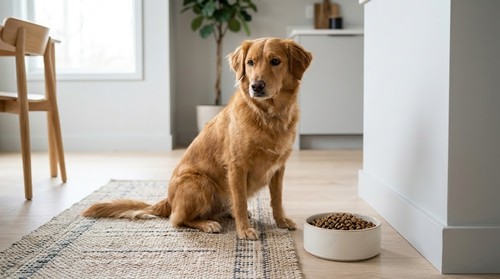
Why Feeding Frequency Matters More Than You Think
Feeding frequency is more than a daily habit. It helps shape your dog’s digestion, appetite, energy, behavior, and weight over time.
When meals are too random, too large, or too far apart, some dogs may become overly hungry, eat too fast, beg more often, or struggle with digestive discomfort.
A consistent feeding schedule can also help you notice patterns earlier, such as appetite changes, stool changes, vomiting after meals, low energy, or weight gain.
That is why feeding frequency should not be treated separately from your dog’s age, size, activity level, food type, and overall health.
Veterinary resources such as VCA Animal Hospitals also recommend consistent feeding times and explain why most dogs are commonly fed at least twice per day.
How Often Should You Feed Your Dog by Age?
The right feeding frequency changes as your dog grows.
Puppies usually need smaller meals more often. Most adult dogs do well with two measured meals per day. Senior dogs may need a gentler routine depending on digestion, appetite, dental comfort, and activity level.
Here is a simple starting point:
Dog Feeding Schedule by Age and Life Stage
| Dog age or life stage | How often to feed | Why it matters |
|---|---|---|
| Puppy under 12 weeks | 4 meals per day | Small stomach, fast growth, steady energy |
| Puppy 3–6 months | 3 meals per day | Supports growth while building routine |
| Puppy 6–12 months | 2 meals per day | Helps transition toward an adult schedule |
| Adult dog | 2 meals per day | Best standard for most healthy adult dogs |
| Senior dog | 2 smaller meals per day | Easier for slower digestion and lower activity |
| Toy or small breed dog | 2–3 meals per day if needed | Small stomachs may do better with smaller meals |
| Dogs with medical issues | Ask your veterinarian | Diabetes, obesity, reflux, GI issues, or medication may require a custom plan |
This table is a general guide, not a medical rule.
If your dog has a health condition, sudden appetite changes, vomiting, diarrhea, weight loss, or unusual tiredness, speak with your veterinarian before changing the feeding schedule.
How Often Should You Feed a Puppy?
Puppies need more frequent meals than adult dogs because they are growing quickly and cannot comfortably eat large portions at once.
A simple puppy feeding schedule is:
- Under 12 weeks: usually 4 meals per day
- 3–6 months: usually 3 meals per day
- 6–12 months: usually 2 meals per day
Smaller, regular meals help support steady energy and reduce the risk of a puppy becoming overly hungry between meals.
If your puppy skips meals, seems weak, vomits often, has diarrhea, or is not gaining weight as expected, do not simply increase food without guidance. A veterinarian can help check whether the issue is feeding amount, food type, digestion, or health-related.
How Often Should You Feed an Adult Dog?
Most healthy adult dogs do best with two measured meals per day: one in the morning and one in the evening.
This routine is simple, predictable, and easier to track than random feeding. It also helps you notice changes in appetite, eating speed, stool quality, and weight.
Some adult dogs may tolerate once-daily feeding, but for most owners, twice-daily feeding is a safer and more balanced routine.
Feeding twice a day does not mean giving more food. It means splitting the correct daily amount into two meals.
If you are unsure about the right amount, compare the feeding schedule with your dog’s daily portion size, calories, body condition, and weight trend.
How Often Should You Feed a Senior Dog?
Most senior dogs can stay on two meals per day, but the meals may need to be smaller, softer, or easier to digest.
Older dogs may have:
- lower activity levels
- slower digestion
- dental discomfort
- appetite changes
- weight gain or weight loss
- sensitivity to large meals
If your senior dog is leaving food, gaining weight, losing weight, vomiting after meals, or acting unusually tired, it may be time to review both the feeding schedule and the food itself.
For many senior dogs, consistency matters more than complexity. A stable routine makes it easier to notice when something changes.
How Often Should You Feed Small or Toy Breed Dogs?
Small and toy breed dogs may sometimes do better with 2–3 smaller measured meals per day, especially if they have small stomachs, fast energy needs, or become hungry quickly between meals.
This does not mean giving extra food. It means splitting the right daily amount into smaller meals that are easier to manage.
If you have a small breed dog, food choice also matters because calorie density, kibble size, digestion, and portion control can all affect the routine. You can read our guide to the best dog food for small breeds for more detail.

What Do Veterinarians Recommend?
Veterinarians usually look at feeding frequency as part of a dog’s full health picture, not as a separate rule.
A good feeding routine should match your dog’s:
- age and life stage
- breed size
- body condition
- activity level
- digestion
- appetite pattern
- weight trend
- medical history
For most healthy adult dogs, two measured meals per day is a practical and balanced starting point. Puppies usually need smaller meals more often, while senior dogs may need a gentler routine depending on their digestion, appetite, and activity level.
The most important point is consistency. A stable feeding routine makes it easier to notice when something changes, such as eating less, begging more, vomiting after meals, gaining weight, or losing weight unexpectedly.
If your dog has diabetes, obesity, reflux, repeated vomiting, chronic diarrhea, or takes medication with food, ask your veterinarian before changing the number or timing of meals.
Should You Feed Your Dog Once or Twice a Day?
Most adult dogs do better with two meals per day instead of one large meal.
Feeding once a day may work for some healthy adult dogs, but it can also make some dogs overly hungry, more likely to beg, or more likely to eat too fast when food finally arrives.
Feeding twice a day is usually easier to manage because it creates a more predictable routine and makes appetite changes easier to notice.
| Feeding routine | Best for | Possible risk |
|---|---|---|
| Once per day | Some healthy adult dogs with stable appetite and weight | Hunger spikes, faster eating, harder appetite tracking |
| Twice per day | Most healthy adult dogs | Requires measuring each meal correctly |
| 3+ meals per day | Puppies, toy breeds, some senior dogs, or dogs with specific needs | Can lead to overfeeding if portions are not controlled |
Feeding more often does not mean feeding more food. The total daily amount should stay appropriate for your dog’s weight, body condition, activity level, and calorie needs.
What Time Should You Feed Your Dog?
For most adult dogs, a simple morning and evening routine works well.
A common schedule is:
- one meal in the morning
- one meal in the evening
- meals spaced roughly 8–12 hours apart, depending on your household routine
The exact time matters less than consistency. Feeding at roughly the same times each day can help your dog build a predictable routine and may make changes in appetite or digestion easier to notice.
Try not to feed your dog randomly throughout the day unless your veterinarian has recommended a special schedule.
If your dog exercises heavily, avoid intense activity immediately before or after a large meal, especially for large or deep-chested breeds. A calm routine around meals is usually safer.
Is Free Feeding Good for Dogs?
Free feeding means leaving food out all day so your dog can eat whenever they want.
It may sound convenient, but it is not the best option for most dogs.
Free feeding can make it harder to:
- control portions
- prevent weight gain
- notice appetite changes
- track how much your dog actually eats
- manage multiple pets in the same home
- build a consistent feeding routine
Scheduled meals are usually better because they help you measure food more accurately and notice health signals earlier.
Free feeding may only make sense in limited situations, such as with specific veterinary guidance or for dogs with very stable eating habits and body condition. For most dogs, measured meals are a safer and more trackable routine.
Common Feeding Mistakes That Can Affect Your Dog’s Routine
Many feeding problems do not start with the food itself. They start with small daily habits that slowly affect digestion, appetite, weight, or behavior.
Here are some common mistakes to avoid:
| Feeding mistake | Why it can be a problem |
|---|---|
| Feeding at random times | Makes appetite and digestion harder to track |
| Giving too many treats | Adds hidden calories and may cause weight gain |
| Changing food too quickly | Can trigger soft stool, vomiting, or digestive upset |
| Guessing portion sizes | Makes overfeeding or underfeeding more likely |
| Leaving food out all day | Makes appetite and weight changes harder to notice |
| Feeding right before intense exercise | May not be ideal for some dogs, especially large or deep-chested breeds |
| Ignoring weight changes | Small weight shifts can become bigger health problems over time |
A better routine does not have to be complicated. Start with measured meals, consistent feeding times, and a simple way to track appetite, stool, weight, and behavior.
If you are also comparing food quality, ingredient labels, or product types, our guide to dog food brands in Europe can help you review options more carefully.

How Often Should I Feed My Dog If They Always Seem Hungry?
Some dogs always act hungry, even after eating.
But hunger signs do not always mean your dog needs more food.
Constant begging or searching for food can be caused by:
- boredom
- learned behavior
- too many treats between meals
- low-fiber or poorly satisfying food
- eating too quickly
- not enough daily calories
- medical issues that affect appetite
Before adding more food, check the full routine. Look at your dog’s meal times, portion size, treats, body condition, activity level, stool quality, and recent weight changes.
If your dog suddenly becomes much hungrier than usual, loses weight, drinks more water, vomits, has diarrhea, or seems unusually tired, ask your veterinarian for advice.
For many dogs, the answer is not simply more food. It may be a better schedule, better portion control, slower feeding, more activity, or a food that matches their needs more closely.
When to Adjust Your Dog’s Feeding Schedule
A feeding schedule should not stay the same forever. Your dog’s needs can change with age, activity, weight, health, and daily routine.
You may need to adjust your dog’s feeding schedule if you notice:
| Sign | What it may suggest |
|---|---|
| Weight gain | Too many calories, too many treats, or low activity |
| Weight loss | Not enough food, poor digestion, illness, or higher energy needs |
| Vomiting after meals | Eating too fast, meal size, food transition, or digestive sensitivity |
| Soft stool or diarrhea | Food change, poor tolerance, too much food, or a health issue |
| Constant hunger | Habit, boredom, underfeeding, or a medical concern |
| Leaving food behind | Stress, dental discomfort, illness, or dislike of food |
| Low energy | Poor routine, wrong portion size, illness, or age-related changes |
| Begging more than usual | Treat habits, boredom, or an inconsistent routine |
Do not change everything at once. Adjust one thing at a time, such as meal timing, portion size, treat amount, or feeding speed, and watch how your dog responds.
If symptoms are sudden, severe, repeated, or combined with weight loss, vomiting, diarrhea, or unusual tiredness, speak with your veterinarian before making major feeding changes.
Why Tracking Feeding Patterns Changes Everything
Most dog owners notice obvious problems, but feeding issues often begin as small patterns.
Your dog may still eat normally, but small changes can appear in:
- appetite
- eating speed
- stool quality
- vomiting after meals
- begging behavior
- weight changes
- energy levels
- reaction to different foods
These patterns are easy to miss when you only rely on memory.
Tracking your dog’s feeding routine can help you understand whether the schedule is actually working. It can also make conversations with your veterinarian clearer if something changes.
For example, if your dog starts eating faster, begging more often, gaining weight, or having softer stool, the issue may be connected to meal timing, portion size, treats, food type, or activity level.
Feeding is not just about filling the bowl. It is one of the easiest daily patterns to track.
Stop Guessing Your Dog’s Feeding Routine
If you are unsure whether your dog’s feeding schedule is actually working, you are not alone.
Many owners do not have a clear way to connect feeding habits with digestion, weight, appetite, and behavior over time.
FAMMO helps you track your dog’s meals, appetite, stool, weight changes, behavior, and health signals, so you can understand what works and what may need to change.
Instead of guessing, you can build a feeding routine based on your dog’s real patterns.
👉 Create your dog’s free profile with FAMMO
Frequently Asked Questions About Dog Feeding
How often should I feed my dog per day?
Most healthy adult dogs should be fed twice a day, usually once in the morning and once in the evening. Puppies need more frequent meals, while senior dogs may need a gentler routine depending on digestion, appetite, activity level, and health history.
Should dogs eat once or twice a day?
Most adult dogs do better with two measured meals per day. Once-daily feeding may work for some healthy adult dogs, but twice-daily feeding is usually easier for appetite tracking, digestion, and routine consistency.
What time should I feed my dog?
A simple morning and evening routine works well for most adult dogs. The exact time matters less than consistency, but many owners space meals roughly 8–12 hours apart.
How often should puppies eat?
Puppies usually need smaller meals more often because they are growing quickly and have smaller stomachs. Many puppies eat 3–4 meals per day, then gradually move toward two meals per day as they grow.
How often should senior dogs eat?
Most senior dogs can stay on two meals per day, but some may do better with smaller, easier-to-digest meals. If your senior dog has appetite changes, weight loss, vomiting, dental discomfort, or low energy, ask your veterinarian before changing the routine.
Is free feeding good for dogs?
Free feeding is not ideal for most dogs because it makes portion control, appetite tracking, and weight management harder. Scheduled meals are usually better for tracking how much your dog eats and noticing changes earlier.
What should I do if my dog always seems hungry?
Do not immediately add more food. First, check meal timing, portion size, treats, body condition, activity level, stool quality, and weight trend. Constant hunger can be caused by habit, boredom, underfeeding, fast eating, or medical issues.
Should I feed my dog before or after a walk?
Avoid intense exercise immediately before or after a large meal, especially for large or deep-chested breeds. A calm routine around meals is usually safer. If your dog has a history of digestive problems, ask your veterinarian for specific guidance.
Does feeding twice a day mean giving more food?
No. Feeding twice a day usually means splitting the same total daily amount into two meals. The total calories should still match your dog’s weight, body condition, activity level, and health needs.
Is feeding frequency the same as portion size?
No. Feeding frequency means how many meals your dog eats per day. Portion size means how much food your dog eats in total. If you move from one meal to two meals, you usually split the same daily amount instead of increasing the total food.
When should I ask a veterinarian about my dog’s feeding schedule?
Ask your veterinarian if your dog has sudden appetite changes, repeated vomiting, diarrhea, weight loss, unusual tiredness, diabetes, obesity, reflux, or takes medication with food. These situations may require a custom feeding schedule.