
It starts with a simple pat on the back.
You’re sitting on the sofa, your dog leans against your leg, and as your hand slides down their side, you feel it, the unmistakable, sharp ridge of a rib that wasn’t that prominent last month. You look down, squinting, trying to remember: Is it just the lighting? Or did they lose their “winter fluff” a bit too fast?
You check the food bowl. It’s empty. They’re eating, they’re wagging their tail, but the scale says otherwise.
That sudden “gut feeling” that something is off is one of the most stressful parts of being a pet parent. You’re not overreacting, you’re noticing a signal. Weight loss isn’t a disease itself, but it is the body’s loudest way of whispering that something inside has changed.
Let’s figure out exactly what that whisper means.

🧠 Featured Snippet
The main causes of unexpected weight loss in dogs include internal parasites, malabsorption (poor nutrient absorption), high stress levels, and chronic health conditions like diabetes, kidney disease, or gastrointestinal issues.
Unexplained weight loss is never “normal.” If your dog is losing weight while eating normally, or if the weight loss is paired with lethargy, vomiting, or diarrhea, you should consult a veterinarian immediately for a professional evaluation..
🐶 The Subtle Sign Most Owners Miss…
At first, it doesn’t seem like a big deal.
Your dog looks… just a little slimmer. Maybe it’s a good thing?
👉 “He was a bit overweight anyway…”
But here is the truth: Dogs are masters at hiding discomfort. Because weight loss often happens gradually, and is sometimes hidden under a thick coat of fur, many owners don’t realize there is a problem until the dog has already lost 10% or more of their body mass.
By then, you start to notice:
-
Ribs and spine becoming more visible when they move.
-
Lower stamina during your usual afternoon walks.
-
The “Empty Bowl” Paradox: The food disappears, but the weight keeps dropping.
And that’s when the reality hits:
👉 “Why is my dog losing weight despite eating?”
At FAMMO, we don’t treat weight loss as a coincidence. We treat it as a critical health signal your dog’s body is trying to send. Tracking these subtle changes is the only way to catch issues before they become emergencies.
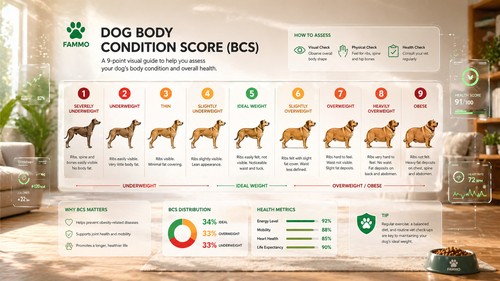
🔗 Related: How to Tell if Your Dog is at a Healthy Weight (BCS Guide)
⚡ Quick Decision Guide (Read This First)
Time is of the essence when it comes to metabolic changes. If your dog is losing weight, use this fast-check list to determine your next steps:
-
⚠️ Eating normally but losing weight → Likely a malabsorption issue, parasites, or early-stage metabolic disease (like diabetes).
-
⚠️ Not eating well + Weight loss → Usually points to dental pain, high stress, or acute illness.
-
🚨 Weight loss + Low energy (Lethargy) → This is a major red flag. Consult a vet within 24-48 hours.
-
🚨 Weight loss + Vomiting/Diarrhea → This is a potential emergency. Seek urgent veterinary evaluation.
👉 Not sure what’s causing the drop? This is exactly where tracking patterns with FAMMO becomes critical. Instead of telling the vet “he looks thinner,” you can show them exactly when the drop started and how it relates to their calorie intake.

🤔 What Counts as “Unhealthy” Weight Loss?
Is it just a bad hair day, or a health crisis? Here is how to tell the difference:
-
A small fluctuation (1-2%)? ✔️ Normal. Just like humans, dogs’ weight can shift slightly based on hydration or activity.
-
Ongoing or sudden loss (5-10%)? ❌ Warning sign. Losing 10% of body weight (e.g., 2kg for a 20kg dog) is a clinical emergency that requires testing.
Red Flags to Watch For:
-
The Rib Test: Ribs, spine, or pelvic bones become easily visible or feel sharp to the touch.
-
Muscle Wasting: Loss of muscle mass around the hindquarters or temples (sunken head look).
-
Abnormal Appetite: Either a sudden lack of interest in food or,surprisingly,being ravenously hungry while still losing weight.
-
Coat Changes: Thinning hair or a “dull” look often accompanies unhealthy weight loss.
📌 Veterinary Insight: Unintentional weight loss is often the first clinical sign of internal disease, sometimes appearing months before other symptoms like pain or lethargy.
📚 Expert Resource for Pet Parents
If you are looking for a deeper clinical perspective on how veterinarians diagnose these symptoms, we highly recommend reviewing the official standards. Understanding the difference between “getting older” and “getting sick” is the first step toward effective care.
🔗 Deep Dive: Expert Guide on Unexplained Weight Loss in Dogs (AKC)
(This resource from the American Kennel Club provides a comprehensive look at diagnostic tests your vet might perform.)
🧬 The Real Causes of Weight Loss in Dogs
Here’s where most owners get it wrong: They assume it’s simply about “not eating enough.” In reality, weight loss is a complex symptom that can be broken down into three categories: Metabolic, Digestive, and Behavioral.
Below are the 7 most common causes that require your attention:
1. 🦠 Internal Parasites (The Silent Thieves)
Worms (like hookworms or roundworms) live in the intestines and literally steal the calories your dog consumes.
- The Red Flag: Your dog has a massive appetite but stays skinny, sometimes accompanied by a “pot-bellied” look.
2. 🥣 Poor Nutrient Absorption (Malabsorption)
It’s not just about what goes in; it’s about what stays in.
Conditions like IBD (Inflammatory Bowel Disease) or EPI (Exocrine Pancreatic Insufficiency) prevent the body from breaking down nutrients.
- The Red Flag: Frequent diarrhea, greasy stools, or chronic gas.
🔗 Related Reading: If your dog has a sensitive stomach, choosing the right diet is the first step to recovery. Learn more in our guide: Grain-Free vs. Regular Dog Food: What’s Best for Your Pet?
3. 🧪 Metabolic Diseases (Diabetes & Thyroid)
Just like humans, dogs can suffer from hormonal imbalances.
-
Diabetes: Your dog might eat more than ever but lose weight because their body can’t process sugar.
-
Hyperthyroidism: Rare in dogs but common in seniors, this kicks the metabolism into overdrive.
4. 🩺 Chronic Organ Issues (Kidney & Liver)
When the kidneys or liver aren’t filtering toxins properly, the body starts to waste away.
- The Red Flag: Increased thirst (drinking more water than usual) and a dull, dry coat.
5. 🦷 Dental Pain & Oral Health
If it hurts to chew, your dog won’t eat. It’s that simple.
- The Red Flag: Dropping food from the mouth, chewing on one side, or sudden bad breath.
6. 🧠 Stress, Anxiety, or Cognitive Decline
A move to a new house, a new baby, or (in older dogs)
Canine Cognitive Dysfunction (Dementia) can lead to forgotten mealtimes or a loss of appetite due to high cortisol levels.
7. 🍽️ Feeding Errors vs. High Activity
Sometimes, the math is just off. High-energy breeds or dogs with increased exercise need significantly more “bioavailable” calories than the bag’s label might suggest.
📌 Pro Tip for FAMMO Users: When you see a weight drop, check the “Activity Logs” in FAMMO. Did you increase walk times? Did the food brand change? Often, the answer is hidden in the data.
📊 Quick Comparison: Causes vs. Symptoms
Use this table to quickly identify which category your dog’s symptoms might fall into. Remember, this is a starting point, not a final diagnosis.
| Cause | Appetite | Key Physical Sign | Risk Level | Home Action |
|---|---|---|---|---|
| Parasites | Normal/Increased | Bloated belly, dull coat | Medium | Check stool for worms |
| Poor Diet | Normal | High poop volume, low energy | Medium | Compare protein labels |
| Stress | Decreased | Hiding, panting, pacing | Low | Identify environmental changes |
| Dental Issues | Decreased | Dropping food, bad breath | Medium | Gently check gums for redness |
| Digestive Disease | Normal/Increased | Chronic diarrhea, gas | High | Monitor stool consistency |
| Chronic Disease | Decreased/Normal | Excessive thirst, lethargy | Very High | Immediate Vet Consult |
🔬 Need More Technical Detail?
If you want to understand the clinical side of how a dog’s metabolism changes during illness, we recommend checking out the specialized research on canine internal medicine.
🔗 External Resource: Understanding Canine Digestive Health (Cornell University Veterinary Specialists)
(Note: Cornell’s Veterinary database is one of the world’s leading authorities on pet metabolic health.)
🚀 This Is Where FAMMO Helps: From Guessing to Knowing
Most pet owners react when it’s already too late. When they notice weight loss, they often:
-
Change food randomly, which can further upset a sensitive stomach.
-
Guess the cause, wasting precious time on the wrong treatments.
-
Wait for “visible” symptoms, missing the early internal signals.
👉 FAMMO changes the game by turning subtle changes into actionable data.
🔍 How FAMMO Protects Your Dog:
-
Precision Weight Tracking: Spot a 2% drop before it becomes a 10% crisis. FAMMO’s visual trends show you exactly when the decline started.
-
Smart Nutrition Logs: Track calorie intake vs. activity levels to see if your dog is truly “eating enough” for their lifestyle.
-
Early Warning Patterns: Our AI-driven insights detect if weight loss correlates with behavioral changes or digestive upsets.
Because weight loss is not random, it’s a pattern. And with FAMMO, you finally have the tools to read it.
⚠️ Common Mistakes Dog Owners Make
-
Ignoring “Minor” Drops: A loss of just 0.5kg in a small dog is the equivalent of a human losing 5-7kg. It’s never minor.
-
Switching Diets Without Data: Moving to a new food brand without knowing the root cause can mask serious symptoms like IBD or parasites.
-
The “Wait and See” Approach: In 2026, we have the technology to act early. Waiting until your dog is lethargic means the disease has already progressed.
🏁 Final Thoughts: Your Proactive Path Forward
Weight loss in dogs is rarely just about “the food in the bowl.”
It is a complex physiological puzzle that involves metabolism, efficient absorption, and internal health signals.
As a pet parent, your most powerful tool is not a new bag of kibble, it is observation and early data.
If your dog is losing weight:
-
🚫 Don’t Guess: Don’t assume it’s just aging or a picky phase.
-
🚫 Don’t Wait: Early intervention can be the difference between a simple treatment and a chronic condition.
-
✅ Understand the Pattern: Look for the “why” behind the numbers.
At the end of the day, your dog can’t tell you where it hurts or why they feel weaker.
Their weight is their voice. By listening to that signal early, you aren’t just managing their health, you are extending their life.
🚀 Take Control of Your Dog’s Health Today
Stop the guesswork and start knowing.
Join thousands of proactive pet owners who use FAMMO to detect health trends before they become emergencies.
Because when you understand the data, you can act before it’s too late.
❓ Frequently Asked Questions (FAQ)
Why is my dog losing weight but still eating like normal?
This is often a sign of malabsorption or metabolic issues. Conditions like internal parasites (worms), IBD, or even early-stage diabetes allow your dog to eat, but prevent the body from actually absorbing the calories. In senior dogs, this can also point to hyperthyroidism.
Is weight loss always serious in dogs?
Not every minor shift is a crisis, but unexplained weight loss is never normal. If the weight drop happens without a change in diet or exercise, it is a clinical signal that something is happening internally. It’s always better to rule out issues early than to treat a late-stage disease.
How fast is too fast for dog weight loss?
A loss of 5% to 10% of total body weight within a month is considered a significant clinical sign. For a 10kg dog, that’s only 0.5kg to 1kg, it might look small, but it’s a major change for their metabolism.
When should I go to the vet immediately?
You should book an appointment if the weight loss is accompanied by any of these “Red Flags”:
- Persistent vomiting or diarrhea.
- Extreme lethargy or weakness.
- Changes in thirst (drinking much more water).
- Visible ribs, spine, or hip bones (The Rib Test).