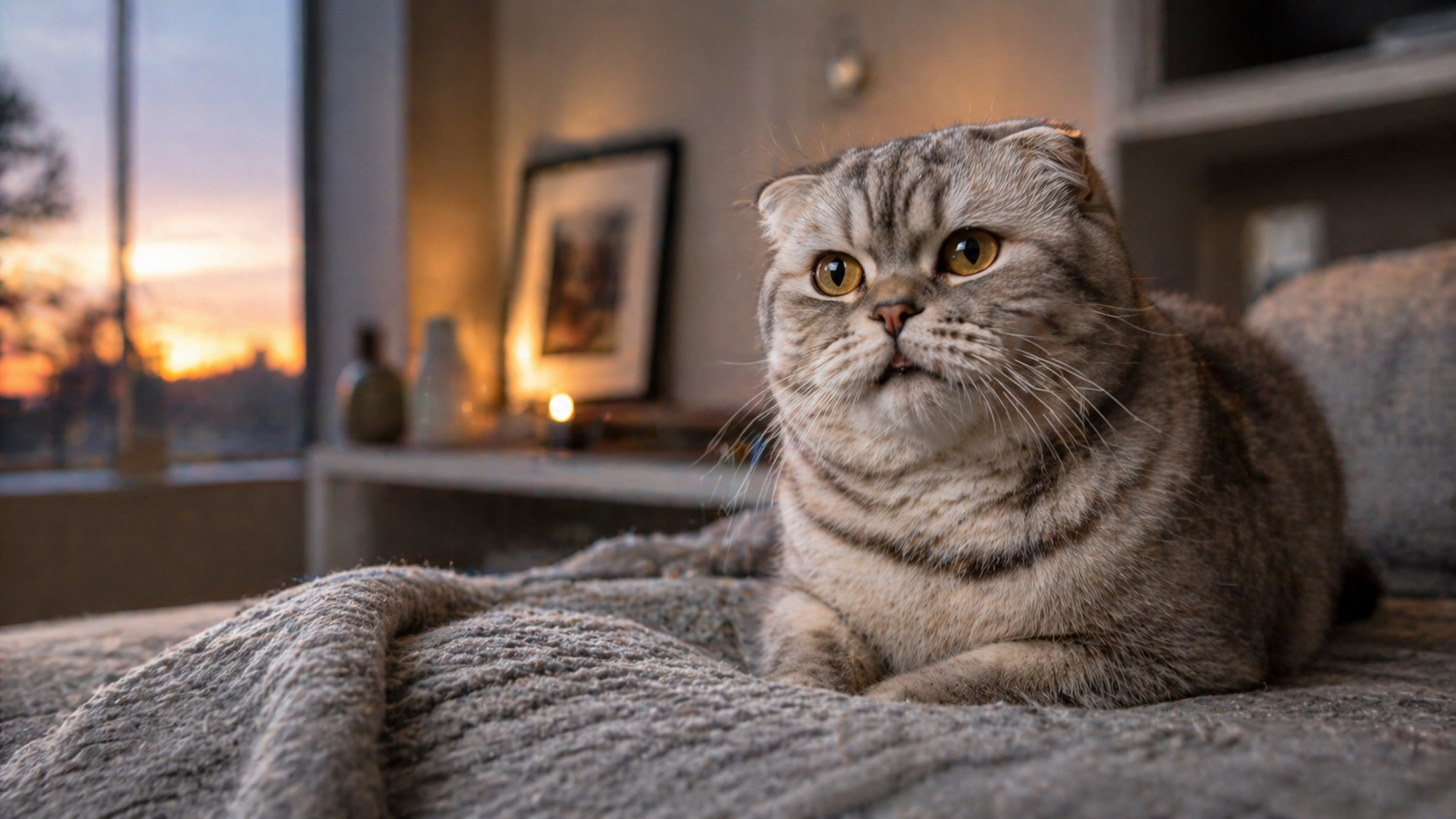
Hairballs are common in cats, but frequent hairballs should not simply be accepted as “normal.”
Most hairballs form because cats swallow loose fur while grooming. In many cases, you can reduce how often they happen by removing more loose hair before it is swallowed, supporting normal hydration, reviewing the diet, and paying attention to changes in grooming or digestion.
If your cat is bringing up hair more often than usual, the first step is to look at the pattern: how often it happens, whether anything else has changed, and whether your cat seems well between episodes.
If what you are seeing looks more like vomiting than a typical hairball, our guide on cat vomiting after eating explains the differences and warning signs to watch for.
In this guide, you’ll learn how to stop cat hairballs naturally with practical prevention steps, which home remedies need caution, and when frequent hairballs should be discussed with a veterinarian.
Quick Answer: How Can You Reduce Cat Hairballs?
Most hairballs begin with normal grooming. Cats swallow loose fur while cleaning themselves, and while most of that hair passes through the digestive tract, some can collect in the stomach and come back up as a hairball.
To reduce cat hairballs naturally:
Brush regularly to remove loose fur before your cat swallows it.
Support normal hydration with fresh water and appropriate moisture from food.
Keep the diet complete and consistent before adding fiber, oils, or other remedies.
Watch for overgrooming because itching, skin problems, stress, or pain can increase hair swallowing.
Track the pattern and contact your veterinarian if hairballs become more frequent or appear with other concerning changes.
The goal is not to stop normal grooming. It is to reduce loose hair, support normal daily care, and notice when your cat’s usual pattern changes.

Why Do Cats Get Hairballs?
Hairballs begin with a completely normal behaviour: grooming.
When your cat licks their coat, tiny backward-facing structures on the tongue collect loose and dead hair. Some of that hair is swallowed.
Most swallowed hair normally moves through the digestive tract and leaves the body in the stool. But sometimes hair remains in the stomach, collects together, and is eventually brought back up as a hairball.
Cornell Feline Health Center explains that most swallowed hair normally passes through the digestive tract, while some can remain in the stomach and gradually collect into a hairball. It also notes that long-haired cats, heavier shedding, and excessive grooming can increase the likelihood of hairball problems. You can read their veterinary overview in the Cornell Feline Health Center guide to hairballs.
This means that an occasional hairball can happen even in an otherwise healthy cat.
The more useful question is:
Why is my cat swallowing more hair than usual, or why are hairballs happening more often than before?
Looking at that pattern helps you decide what you can change at home and when the problem may need veterinary attention.
Which Cats Are More Likely to Get Hairballs?
Some cats are more likely to swallow larger amounts of loose hair.
Cats with Long or Dense Coats
Long-haired cats naturally have more fur available to swallow while grooming.
Cats with thick coats may also shed heavily at certain times of the year.
If you notice more loose fur around the home or on your cat's brush, it is a useful sign that increasing grooming may help remove more of that hair before your cat swallows it.
Cats That Are Shedding Heavily
Hairballs can become more noticeable during periods of increased shedding, even in short-haired cats.
This does not mean every hairball during shedding season is a problem.
Instead, pay attention to whether the frequency returns to your cat's usual pattern as shedding decreases.
Excessive Grooming Can Increase the Amount of Hair Swallowed
If your cat suddenly starts licking or chewing their coat much more than usual, they may also swallow more hair.
Look for other changes such as:
thinning or bald patches
red or irritated skin
frequent scratching
licking the same area repeatedly
biting or chewing the coat
In this situation, simply brushing more may not solve the real problem.
Excessive grooming can sometimes be associated with skin irritation, parasites, allergies, stress, or pain. If the behaviour is new, persistent, or causing hair loss or skin damage, discuss it with your veterinarian.
Digestive Health Can Matter Too
Most swallowed hair should continue through the digestive tract.
If your cat develops repeated hairballs together with vomiting, diarrhea, appetite changes, weight loss, or reduced energy, it is worth looking beyond grooming alone.
These signs do not prove that your cat has a digestive disorder, but they make veterinary assessment more important.
Focus on Changes in Your Cat's Normal Pattern
One hairball does not tell you much by itself.
What matters more is whether something has changed.
Ask yourself:
Are hairballs happening more often than before?
Is your cat shedding more?
Are they grooming more than usual?
Have you noticed skin problems?
Has their appetite, weight, stool, or energy changed?
Are they repeatedly retching without producing a hairball?
These observations will be much more useful than simply counting hairballs.
Hairball prevention starts by understanding where the extra swallowed hair may be coming from and whether anything else about your cat has changed.
When Are Hairballs a Sign of a Problem?
An occasional hairball can happen even when a cat is otherwise healthy.
What matters more is whether the pattern has changed.
If your cat brings up a hairball and then quickly returns to their normal routine, eating, drinking, using the litter box, resting, and playing as usual, you can usually start by monitoring what happens next.
But if hairballs are becoming more frequent, harder to bring up, or are appearing alongside other changes, it is worth looking more closely.
When You Can Usually Monitor at Home
A single hairball is less concerning when your cat:
returns to normal soon afterwards
continues eating and drinking normally
is not repeatedly retching or vomiting
is passing stool normally
has no noticeable weight loss
is behaving normally between episodes
In this situation, make a note of when the hairball happened and watch for another episode.
Also pay attention to shedding and grooming. If your cat is losing more loose fur than usual, increasing regular brushing may help reduce how much hair they swallow.
The important thing is not to assume that one episode predicts what will happen next.
Watch the pattern rather than reacting to one hairball.
When Should You Contact Your Veterinarian?
Arrange veterinary advice if you notice that hairballs are becoming clearly more frequent or if they appear together with other changes such as:
repeated vomiting
reduced appetite
unexplained weight loss
diarrhea or constipation
lower energy or increased hiding
excessive grooming or new bald patches
repeated retching or hacking between hairballs
If your cat is also eating less than usual or refusing food, our guide on why cats stop eating explains what appetite changes to watch for and when they need veterinary attention.
These signs do not automatically mean there is a serious problem.
However, they suggest that it may be useful to look beyond the hairball itself and check for an underlying skin, grooming, digestive, or other health issue.
If the pattern is changing, do not keep trying different home remedies indefinitely. Record what you are seeing and discuss it with your veterinarian.
When Is It More Urgent?
A hairball can occasionally contribute to a gastrointestinal obstruction if a mass of hair becomes lodged and cannot pass normally.
Seek prompt veterinary care if your cat:
repeatedly retches or tries to vomit but nothing comes up
has repeated vomiting and cannot keep food or water down
becomes markedly weak or lethargic
appears to have abdominal pain
stops passing stool while also vomiting or appearing unwell
suddenly stops eating and is clearly unwell
Do not try to force food, give human laxatives, or repeatedly use home remedies while these signs are present.
VCA Animal Hospitals notes that an obstructing trichobezoar can cause signs such as vomiting, abdominal pain, and lack of bowel movements, and that veterinary treatment is needed if a cat cannot keep food or water down. You can read more in their guide to trichobezoars and hairballs in cats.
Is It Really a Hairball, or Is Your Cat Coughing?
This is an important distinction because not every episode of “hacking” is caused by a hairball.
Hairball retching and coughing can sometimes look similar to a cat owner, especially when no hairball appears.
If your cat repeatedly crouches, extends their neck, coughs or hacks, but no hairball comes up, do not automatically assume that a hairball is stuck.
Respiratory problems can sometimes be mistaken for hairball episodes.
If the behaviour happens again, record a short video on your phone if you can do so safely.
A video can be very useful when explaining the episode to your veterinarian because the behaviour may have stopped by the time your cat reaches the clinic.
Keep a Simple Hairball Record
If you are unsure whether the problem is becoming more frequent, keep a simple note for a few weeks.
Record:
Date → hairball or no hairball → vomiting/retching → appetite → stool → grooming changes
You do not need a complicated tracker.
The goal is simply to answer one useful question:
Is this an isolated hairball, or is a pattern beginning to develop?

How to Reduce Cat Hairballs: 5 Practical Steps
Once you understand why your cat is getting hairballs, prevention becomes much more practical.
There is no single food, supplement, or home remedy that works for every cat. The best approach is usually to reduce the amount of loose hair your cat swallows, support normal hydration and nutrition, and pay attention to changes in grooming or digestion.
Here is a simple way to approach it:
Step | What to Do | Why It Helps |
|---|---|---|
1. Brush regularly | Remove loose fur before your cat swallows it | Reduces the amount of hair entering the digestive tract |
2. Support normal hydration | Keep fresh water available and consider moisture from food | Supports normal digestive function and overall hydration |
3. Review the diet | Keep the diet complete and balanced before adding remedies | Some cats may benefit from hairball-focused diets or appropriate fiber |
4. Watch for overgrooming | Check the coat and skin for changes | Excessive grooming can greatly increase the amount of hair swallowed |
5. Track the pattern | Record hairballs, grooming and other changes | Helps you notice whether prevention is working or the problem is changing |
1. Brush Your Cat Regularly
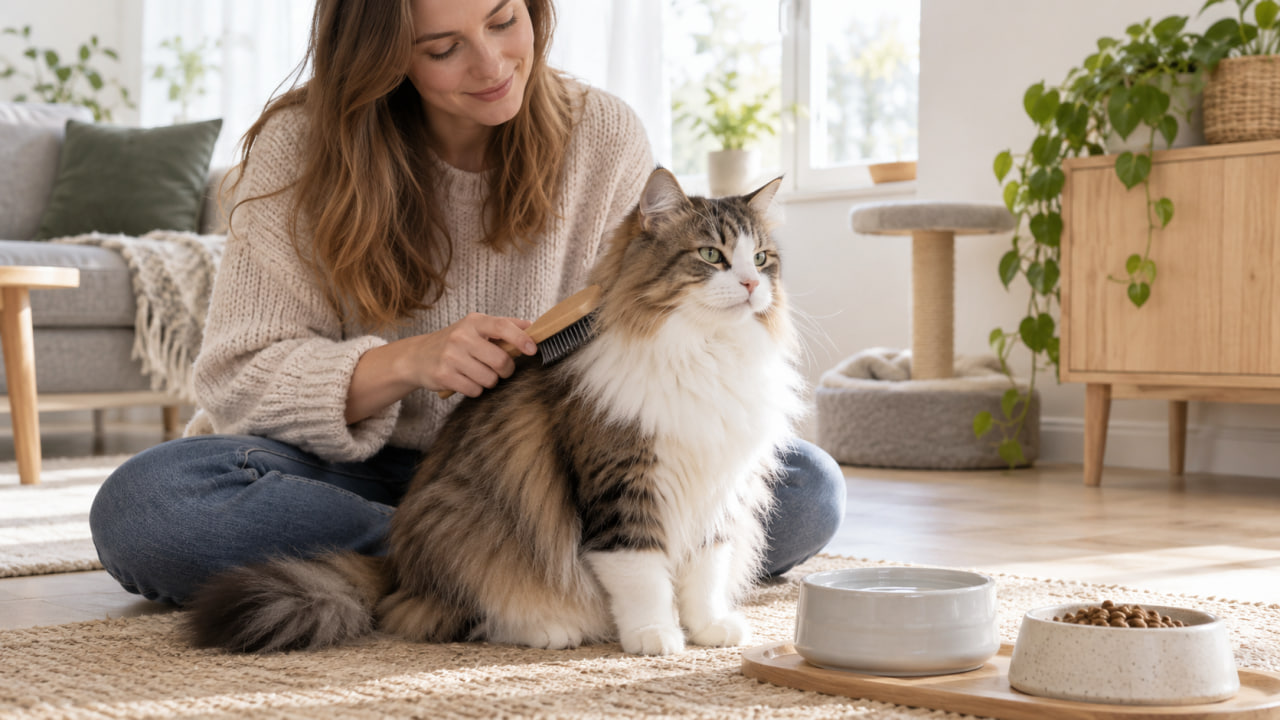
The simplest place to start is also one of the most useful: remove loose hair before your cat swallows it.
When you brush your cat, some of the fur that would otherwise end up on their tongue and in their stomach ends up on the brush instead.
How often you need to brush depends on the coat.
Long-haired, silky, or dense-coated cats may benefit from daily brushing, particularly during periods of heavier shedding.
Short-haired cats may need less frequent brushing, but regular grooming is still useful, especially when you notice more loose fur than usual.
VCA Animal Hospitals notes that long-haired cats generally require more frequent grooming and that daily brushing can reduce the amount of hair swallowed during self-grooming.
Make Brushing Easy for Your Cat
A five-minute calm grooming session is usually more useful than a long session your cat hates.
Try to:
brush when your cat is relaxed
start with short sessions
use a brush or comb suitable for their coat
work gently instead of pulling through tangles
stop if your cat becomes stressed or uncomfortable
Pay particular attention to areas where loose fur or tangles can build up, such as around the neck, behind the legs, and along a long coat.
If your cat has severe mats, painful skin, or strongly resists being touched in one area, do not pull or cut at the coat yourself. A veterinarian or experienced cat groomer can help you deal with it safely.
A useful rule is simple: the more loose hair you remove safely with grooming, the less loose hair is available for your cat to swallow.
2. Support Normal Hydration
Hydration matters for overall health and normal digestive function, but water should not be presented as a “hairball cure.”
The practical goal is to make normal drinking easy for your cat.
Keep fresh water available every day and consider:
using more than one water bowl if your home is large
placing water away from a dirty litter area
cleaning bowls regularly
trying a water fountain if your cat prefers moving water
considering the moisture your cat already receives from wet food
Cats eating mostly wet food may get a significant amount of their water through their meals, while cats eating mostly dry food generally need to drink more separately.
If you are unsure whether your cat's drinking pattern has changed, our guide on cat drinking too much water explains how to monitor water intake and when a change deserves attention.
One important distinction:
Encouraging normal hydration is useful. Trying to make a cat drink excessive amounts of water to “flush out” hairballs is not necessary.
3. Review the Diet Before Adding Fiber or Home Remedies
This is where many owners make prevention more complicated than it needs to be.
If your cat is already eating a complete and balanced diet that suits them, do not immediately start adding pumpkin, psyllium, oils, butter, or multiple supplements every time a hairball appears.
Some hairball-focused diets contain additional fiber designed to help swallowed hair move through the gastrointestinal tract. VCA Animal Hospitals discusses dietary and veterinary management as part of the approach to recurrent hairballs and trichobezoars.
That does not mean every cat with a hairball needs extra fiber.
Too much or inappropriate supplementation can also change stool quality or interfere with an otherwise suitable diet.
A better approach is:
check whether the current diet is complete and balanced
avoid repeatedly switching foods after individual hairballs
discuss persistent hairball problems with your veterinarian
ask whether a hairball-specific diet or fiber adjustment makes sense for your cat
And remember:
“Natural” does not automatically mean safe or appropriate.
Hairball gels, lubricants and supplements should still be used according to veterinary or product guidance. VCA Animal Hospitals advises that digestive lubricants and hairball gels should be used under veterinary direction.
4. Do Not Ignore Excessive Grooming
Sometimes the most useful hairball prevention happens on the skin rather than in the food bowl.
If your cat is grooming much more than usual, they may be swallowing more fur regardless of what you feed them.
Once or twice a week, take a quick look at the coat while you are petting or brushing your cat.
Watch for:
thinning hair
bald patches
redness or irritated skin
frequent scratching
biting or chewing the coat
repeated licking of one particular area
noticeably heavier shedding
If you see these changes, simply brushing more may not solve the problem.
Skin disease, allergies, parasites, stress, or pain can contribute to excessive grooming. VCA also notes that skin disease, pain and stress can increase grooming and therefore increase hair ingestion.
The practical goal is not just to remove more fur.
It is to understand why your cat is producing or swallowing more loose hair than usual.
5. Track Whether the Prevention Plan Is Actually Working
Do not change five things at once and then try to guess which one helped.
Start with the basics:
regular grooming → normal hydration → appropriate diet → monitoring
Then keep a simple record.
You can write:
Date → hairball → grooming frequency → shedding level → appetite/stool changes
After a few weeks, ask:
Are hairballs happening less often?
Is shedding easier to manage?
Is your cat grooming normally?
Are appetite and litter-box habits unchanged?
Have any new symptoms appeared?
This is much more useful than reacting to every individual hairball with a new food or home remedy.
Seasonal changes also matter. If hairballs increase during a period of heavy shedding and improve when regular grooming increases, that pattern gives you useful information for the next shedding season.
But if hairballs continue to become more frequent despite a sensible prevention routine, or if vomiting, appetite changes, weight loss, constipation, diarrhea, or excessive grooming appear at the same time, bring the pattern to your veterinarian rather than continuing to experiment at home.
Good hairball prevention is not about finding one magic remedy. It is about reducing loose hair, keeping daily care consistent, and noticing when your cat's normal pattern changes.
Common Hairball Remedies: What Should You Avoid?
When a cat starts producing more hairballs, it is tempting to try the first home remedy you find online.
Butter, cooking oils, pumpkin, fiber powders, hairball gels, and sudden food changes are all commonly suggested.
The problem is that a remedy that sounds “natural” is not automatically useful or appropriate for every cat.
Before adding anything to your cat’s diet, it helps to understand what you are trying to fix.
Do Not Use Butter or Cooking Oil as a Routine Hairball Remedy
Adding butter, olive oil, coconut oil, or other fats to food is sometimes suggested as a way to “lubricate” a hairball.
This is not a good routine prevention strategy.
Extra fat adds calories and can upset the digestive system, while it does not address why your cat is swallowing more hair in the first place.
A better first step is to focus on regular grooming, normal hydration, and understanding whether hairballs are becoming more frequent.
Be Careful With Pumpkin and Fiber Supplements
Fiber can play a role in some hairball-management diets, but adding fiber at home is not as simple as giving every cat the same amount of pumpkin or psyllium.
Your cat may already be receiving appropriate fiber from a complete diet.
Adding more can change stool consistency or affect how well the overall diet works for that individual cat.
If you are considering a fiber supplement because hairballs are happening repeatedly, ask your veterinarian whether extra fiber is appropriate and what type or amount makes sense.
Do Not Change Food After Every Hairball
One hairball is not a good reason to immediately replace your cat’s diet.
Frequent food changes can make it harder to understand what is actually happening and may cause digestive upset in some cats.
Instead, ask:
Is the current food complete and balanced?
Has the hairball frequency actually increased?
Is your cat shedding or grooming more?
Are there other digestive or health changes?
If a diet change is appropriate, transition gradually rather than switching suddenly.
Do Not Shave Your Cat Just to Prevent Hairballs
Long-haired cats may swallow more loose fur, but shaving the coat is not usually the first solution.
Regular brushing and coat maintenance are much more practical for most cats.
Shaving may be appropriate in some situations, such as severe matting or a medical need, but it should be discussed with a veterinarian or experienced cat groomer.
Never use scissors close to tight mats. Cat skin can be very thin and easy to injure.
Use Hairball Gels and Lubricants Carefully
Hairball gels and lubricants are available for cats, but they should not become a substitute for understanding why hairballs are increasing.
If you use one, follow the product directions and veterinary advice rather than increasing the amount on your own.
VCA recommends using digestive lubricants and hairball gels according to veterinary guidance. You can read more in the VCA guide to digestive lubricants and hairball gels.
If your cat continues to have frequent hairballs despite grooming and appropriate care, the next step should be to investigate the pattern rather than keep adding more remedies.
Start With the Lowest-Risk Changes
For most cats, the most sensible first steps are simple:
brush regularly → keep fresh water available → maintain a suitable complete diet → watch grooming behaviour → track the pattern
Then make additional changes only when there is a clear reason to do so.
The goal is not to try every possible hairball remedy.
It is to use the safest, simplest approach that addresses what is actually happening with your cat.
Frequently Asked Questions
Are Hairballs Normal in Cats?
An occasional hairball can happen because cats naturally swallow loose fur while grooming.
What matters more than one isolated hairball is whether the pattern is changing.
If hairballs are becoming more frequent, harder to bring up, or are happening alongside vomiting, appetite changes, weight loss, excessive grooming, or low energy, it is worth discussing the change with your veterinarian.
How Can I Prevent Hairballs in My Cat?
The most practical place to start is regular grooming.
Removing loose fur with a brush means there is less hair available for your cat to swallow during self-grooming.
You can also support normal hydration, keep the diet complete and consistent, watch for excessive grooming, and track whether hairballs are becoming more or less frequent.
If these steps do not help and hairballs continue to increase, veterinary advice is more useful than repeatedly trying new home remedies.
What Is the Best Natural Remedy for Cat Hairballs?
There is no single natural remedy that works for every cat.
For many cats, the lowest-risk starting point is regular brushing, because it reduces loose fur before it enters the digestive system.
Diet, hydration, fiber, and hairball products may also play a role for some cats, but they should be considered in the context of the cat’s overall diet and health.
Avoid assuming that ingredients such as pumpkin, oils, or supplements are automatically safe or necessary just because they are described as “natural.”
Does Wet Food Help With Hairballs?
Wet food provides more moisture than dry food and can contribute to a cat’s overall water intake.
However, switching to wet food alone is not a guaranteed hairball treatment.
Hairballs are also influenced by how much loose fur a cat swallows, grooming behaviour, shedding, coat type, and digestive health.
If your cat already eats a suitable complete diet, focus first on the overall pattern rather than changing food after a single hairball.
Can Overgrooming Cause More Hairballs?
Yes. A cat that grooms much more than usual may swallow more loose hair.
If you notice bald patches, thinning fur, redness, scratching, or repeated licking of one area, the important issue may be the reason for the excessive grooming rather than the hairball itself.
Skin irritation, parasites, allergies, stress, or pain can all be reasons to discuss the change with your veterinarian.
Why Is My Cat Retching but No Hairball Comes Out?
Not every episode of retching or hacking is caused by a hairball.
A cat may be trying to vomit, or the behaviour may sometimes be related to coughing or another health problem.
If your cat repeatedly retches without producing a hairball, especially if they also stop eating, vomit repeatedly, become lethargic, or appear unwell, contact your veterinarian.
If possible, record a short video of the episode. It can help your veterinarian understand what you are seeing.
Should I Give My Cat Hairball Gel?
Hairball gels and lubricants can be useful in some situations, but they should not automatically become a daily solution.
Follow the product directions and veterinary advice rather than increasing the amount or frequency on your own.
If your cat needs hairball products repeatedly, it is worth asking why the hairballs are happening so often and whether grooming, skin, diet, or digestive issues should be assessed.
When Should I Worry About Frequent Hairballs?
There is no single frequency that is appropriate for every cat.
A change from your cat’s usual pattern is more useful than relying on one fixed number.
Contact your veterinarian if hairballs are clearly becoming more frequent or if they are accompanied by repeated vomiting, reduced appetite, weight loss, constipation, diarrhea, excessive grooming, low energy, or repeated unproductive retching.
Final Takeaway: Focus on the Pattern, Not One Hairball
An occasional hairball can happen as part of normal grooming.
What matters more is whether the pattern is changing.
If your cat is producing more hairballs than usual, start with the basics: remove loose fur with regular brushing, support normal hydration, keep the diet consistent, and watch for excessive grooming or other changes.
Do not rush to try several remedies at once.
Instead, make one sensible change at a time and pay attention to what happens over the next few weeks.
If hairballs become more frequent, are harder to bring up, or appear together with vomiting, appetite changes, weight loss, constipation, diarrhea, or unusual grooming, contact your veterinarian.
Good hairball prevention is not about finding one magic remedy. It is about understanding your cat’s normal pattern and noticing when something changes.
Make Hairball Prevention More Personal with FAMMO
Hairballs are only one part of your cat’s daily health picture.
Coat type, grooming habits, diet, hydration, weight, activity, and changes over time can all provide useful context.
FAMMO helps you bring these details together in one place and explore more personalized nutrition and preventive-health guidance for your cat.
Instead of making decisions from one symptom or one feeding rule, you can look at your cat’s needs with more context and build a routine that fits them better.
Use what you know about your cat to make daily care more personal.