The Essential Guide to Cat Health Exercises
Introduction
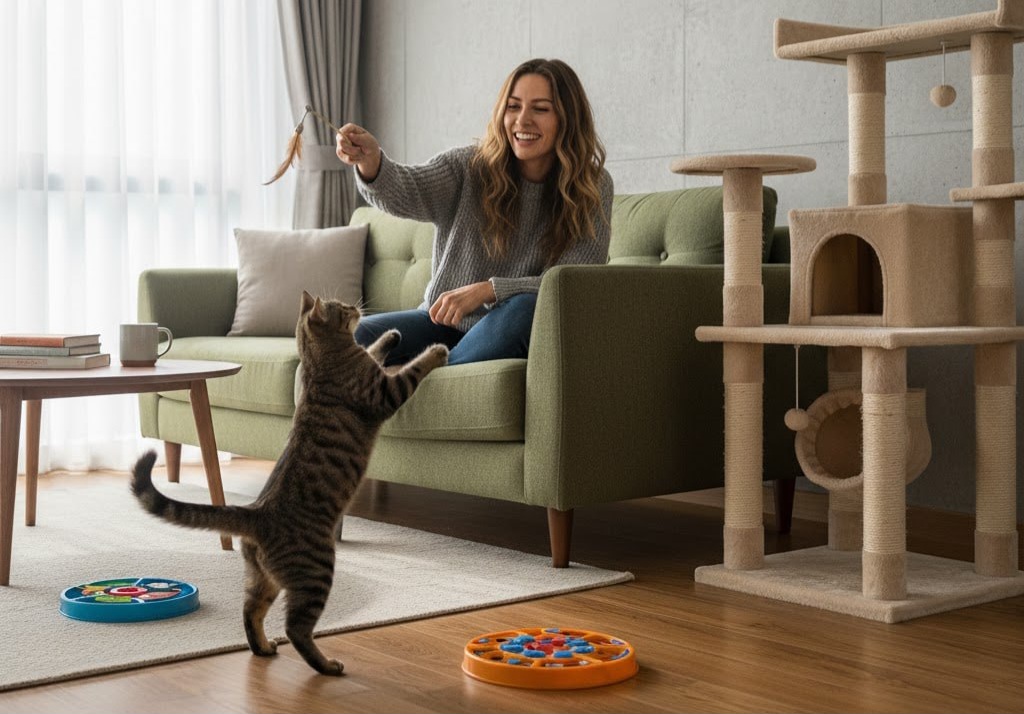
Keeping a cat fit isn’t about treadmills or long walks—it’s about short, focused bursts of hunting-style play, brain games, and gentle mobility work. In this guide, you’ll learn how to design a daily, vet-backed exercise routine for kittens, adults, and seniors, plus how FAMMO can personalize the plan for your cat’s age, weight, and behavior.
Table of Contents
- Why Exercise Matters for Cats
- Safety & Prep Checklist
- 10 Vet-Backed Exercises by Life Stage
- Weight, Metrics & Progress Tracking
- Behavior & Enrichment Essentials
- A 7-Day Sample Plan
- How FAMMO Personalizes Daily Play
- FAQ
- Key Takeaways
- Conclusion
Why Exercise Matters for Cats
Regular play protects joints, maintains lean muscle, supports heart health, and reduces stress. It also curbs common problem behaviors (night zoomies, furniture scratching) by satisfying natural hunting drives—stalk, chase, pounce, catch, eat, groom, sleep.
Authoritative groups consistently highlight play as essential feline care. See guidance from:
- American Association of Feline Practitioners (AAFP) on environmental needs
- International Cat Care’s practical play advice
- Cornell Feline Health Center’s safe toy recommendations
For nutrition-exercise synergy, explore FAMMO’s perspective on individual needs in How AI is Revolutionizing Pet Nutrition?.
Safety & Prep Checklist
- Clear the arena: Remove fragile items; close doors to limit escape routes.
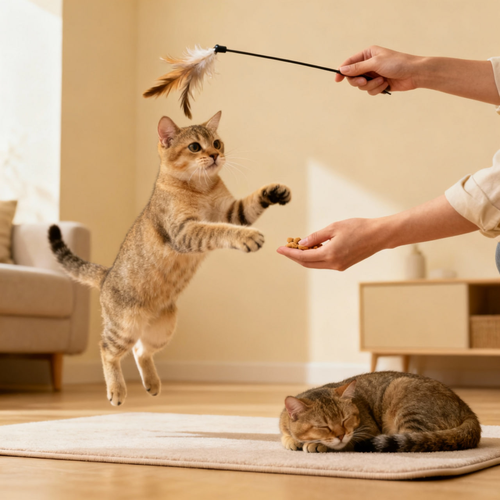
- Pick the right lure: Feather wands mimic birds; ribbon/cord toys mimic snakes. Rotate weekly.
- Mind the surface: Provide traction (rugs, mats) to protect joints.
- Laser pointers: If you use one, always finish by letting the cat “catch” a tangible toy or treat to avoid frustration.
- Warm-up & cool-down: Start with slow figure-eights; finish with gentle stretches or grooming.
- Health screen: Arthritic, overweight, or senior cats need lower jumps and softer arcs. Consult your vet if you see limping, labored breathing, or reluctance to move.
For toy safety principles, see Cornell’s safe toys guidance. For healthy environments, see the AAFP/ISFM environmental needs guidelines.
10 Vet-Backed Exercises by Life Stage
Aim for 2–3 sessions per day, 5–10 minutes each. Short and frequent beats long and rare. Increase or decrease intensity based on your cat’s breathing, interest, and recovery.
1–3. For Kittens (Under 12 Months)
1) Feather-Arc Sprints
Sweep a feather wand in low, smooth arcs to encourage short dashes and controlled jumps.
2) Tunnel Tag
Use a fabric tunnel + crinkle ball. Reward catches with a small portion of the daily ration.
3) Target-Touch
Teach a nose-touch to a target stick; add sidesteps and spins for body control.
4–7. For Adults (1–7 Years)
4) Figure-Eight Chases
Guide the lure around two cushions—great cardio with joint-friendly turns.
5) Perch & Pounce
Lure from perch to floor in short drops. Keep jumps under shoulder height to protect joints.
6) Puzzle-Feeder Hunt
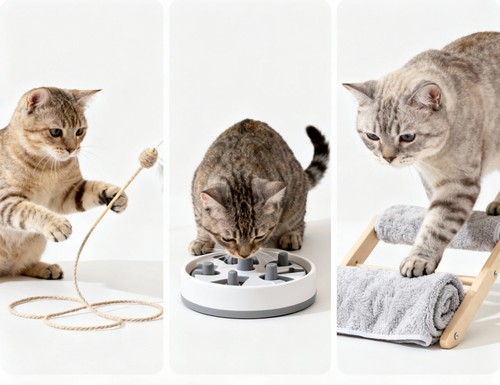
Split meals among 2–3 puzzle feeders placed apart to encourage movement.
7) Scent Trails
Hide a few kibble pieces along a safe “trail” (under a paper cup, behind a box) to trigger nose-led exploration.
8–10. For Seniors (7+ Years)
8) Gentle Ladder Walks
Lay a broomstick or rolled towels on the floor to create low “rungs”; slow step-overs improve proprioception.
9) Wall Stretch & Shoulder Mobility
Use a textured mat on a wall; let the cat reach up, then reward when both paws touch and hold briefly.
10) Slow Wand Tracking
Keep the lure near the ground; prioritize head turns, shoulder follow-through, and controlled steps over jumping.
For play frequency and variety, see International Cat Care’s practical tips.
Weight, Metrics & Progress Tracking
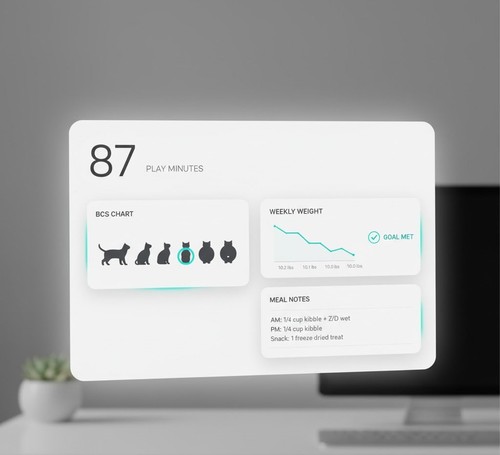
- Body Condition Score (BCS): Aim for a visible waist from above and a slight tummy tuck from the side. Ribs should be easy to feel under a thin fat layer.
- Resting Rate & Recovery: During play, breathing will rise; within 5 minutes post-play, it should settle.
- Weight Trend: Weigh weekly at the same time of day. A safe loss target is 1–2% of body weight per week for overweight cats—coordinate with your vet.
Smart tracking with FAMMO:
- Log play minutes alongside meal size/type.
- Tag mood (calm/alert/overexcited) and surface (carpet/wood) to learn which sessions produce the best engagement.
- Receive automatic adjustments to play length and puzzle-feeder difficulty based on trend data.
For deeper nutrition context, see What Your Pet’s Poop Says About Their Food (and Health).
Behavior & Enrichment Essentials
- Rotate Toys Weekly: Prevents boredom; store unused toys in a sealed bin with a pinch of catnip or silvervine (if your cat enjoys it).
- Predictable Routine: Cats thrive on patterns—aim for morning and evening play around feeding times.
- Hunt–Catch–Feed–Rest: Always finish play with a catch and a small meal or treat to complete the predation sequence.
- Multiple Cats: Play one-on-one to avoid competition. Provide separate resources (bowls, litter boxes, perches).
- Scratching Posts & Climb Space: Pair vertical options (tall, stable posts) with horizontal scratchers.
- Clicker Basics: Reward calm sits, target-touches, and step-overs; 3–5 reps, then break.
For a foundation on environmental needs and stress reduction, consult AAFP/ISFM environmental needs guidelines.

A 7-Day Sample Plan
Use this as a template. Adjust session length and jump height to your cat’s age and fitness.
| Day | AM Session (5–8 min) | PM Session (5–8 min) | Meal Integration |
|---|---|---|---|
| Mon | Feather-arc sprints | Puzzle-feeder hunt | 30–50% of meal via puzzle |
| Tue | Figure-eight chases | Target-touch + spins | Small treat after “catch” |
| Wed | Scent trail walk | Perch & pounce (low) | Split meal, two locations |
| Thu | Gentle ladder walks | Slow wand tracking | 30–50% of meal via puzzle |
| Fri | Tunnel tag | Figure-eight chases | Small wet-food topper |
| Sat | Wall stretch holds | Scent trail walk | 2–3 tiny “catches” |
| Sun | Free-choice play | Grooming + mobility | Light day; extra snuggles |
To align feeding with activity patterns (and breed differences), see British Shorthair vs Ragdoll Nutrition.
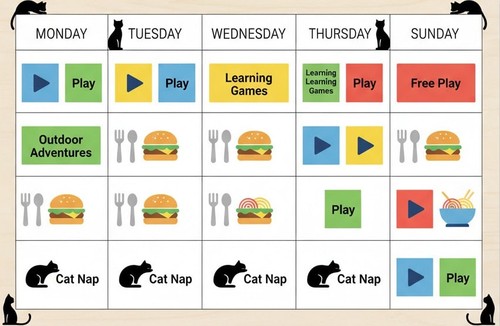
How FAMMO Personalizes Daily Play
What FAMMO does today: Personalized nutrition and preventive insights based on your cat’s profile and data.
What’s next (exercise module):
- Daily Play “Recipes”: Auto-generated sessions (toy type, lure path, surface) tied to feeding times.
- Adaptive Difficulty: If engagement dips, FAMMO switches toy type or lowers jump height.
- Health Flags: A sudden drop in play or reluctance to jump triggers a “mobility check” prompt.
- Owner Coaching: Bite-size tips (position your wand lower; end with a catch; swap to scent games on hot days).
Want to see how personalization works? Start with FAMMO’s AI nutrition explainer.
FAQ
How long should each play session be?
5–10 minutes is ideal, 2–3 times daily. For seniors, keep intensity low and focus on controlled movements.
Are laser pointers safe?
Yes, if used thoughtfully. Always switch to a tangible toy or treat at the end so your cat gets the satisfaction of a “catch.”
What if my cat won’t play?
Try new toy textures, add scent (catnip/silvervine), play at dawn/dusk, and shorten sessions. If withdrawal persists, consult your vet.
Can play help with weight loss?
Absolutely. Combine short, consistent play with measured meals, puzzle feeders, and weekly weigh-ins.
Is jumping bad for older cats?
High jumps are. Keep arcs low, focus on slow tracking, and add gentle step-over drills.
Key Takeaways
- Short, frequent, hunt-style play is the healthiest “workout” for cats.
- Finish every session with a tangible catch and a small bite.
- Track BCS and weekly weight; adjust intensity to age and mobility.
- Rotate toys and surfaces to keep brains and bodies engaged.
- Let FAMMO personalize your cat’s routine and nudge you with smart tips.
Conclusion
Exercise for cats is simple when you think like a hunter: stalk, chase, catch, eat, rest. With a few minutes a day—and the right structure—you’ll build fitness, prevent weight gain, and calm restless energy. Pair this routine with measured meals and enrichment, and your cat will thrive.
CTA: Create your cat’s profile in FAMMO, then enable daily play “recipes” to get a personalized, adaptive exercise plan synced to your feeding schedule.