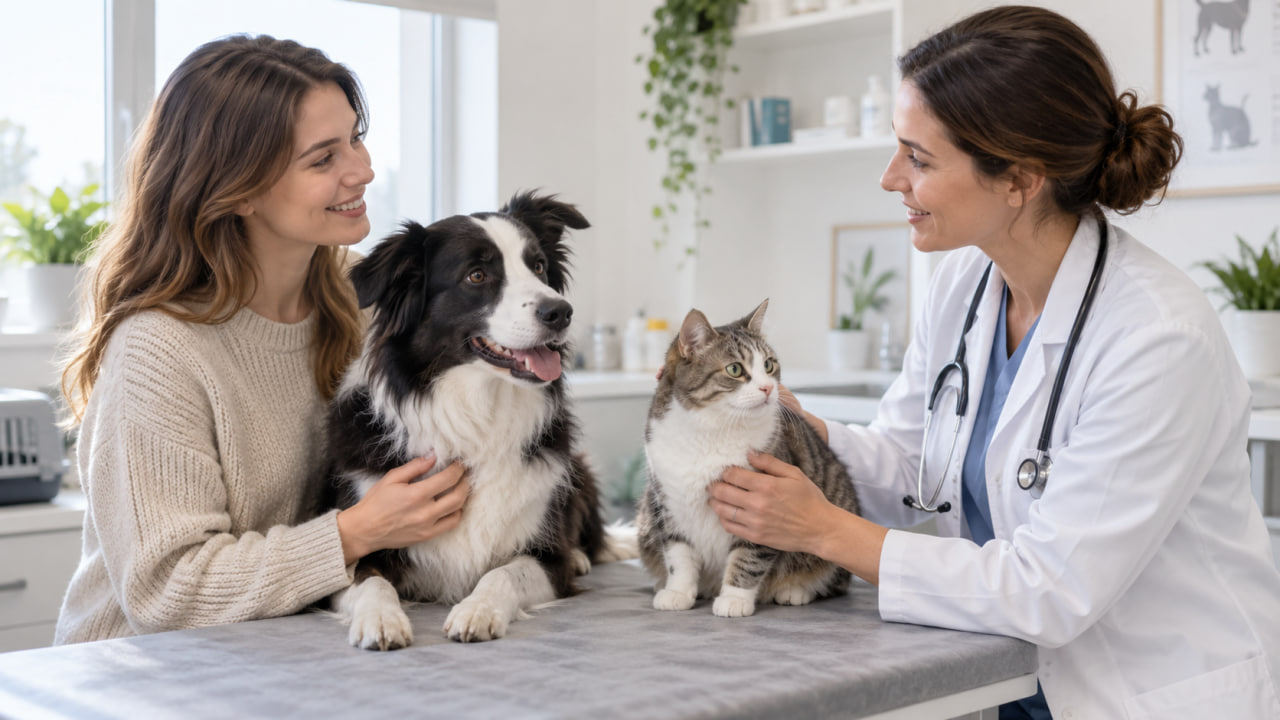
Spaying or neutering is a common decision for dog and cat owners, but the right choice, and especially the right timing, is not the same for every pet.
For cats, the decision is often more straightforward. For dogs, factors such as sex, breed, body size, physical maturity, health and lifestyle can all matter. This is why newer veterinary guidance has moved away from a one-age-fits-all approach.
Neutering can help prevent unwanted litters and may reduce the risk of some reproductive health problems. It can also affect energy needs and weight management, so feeding and body condition may need closer attention after the procedure.
This guide explains the benefits and possible risks of spaying and neutering, how timing differs between dogs and cats, what to expect before and after surgery, and how to support a safe recovery.
Quick Answer
There is no single best age to spay or neuter every dog or cat.
Cats are commonly neutered at around four months of age. For dogs, timing is more individual and should take into account sex, breed, expected adult size, physical maturity, health and lifestyle.
Rather than choosing an age from a general rule, discuss the likely benefits, possible trade-offs and timing with your veterinarian based on your individual pet.
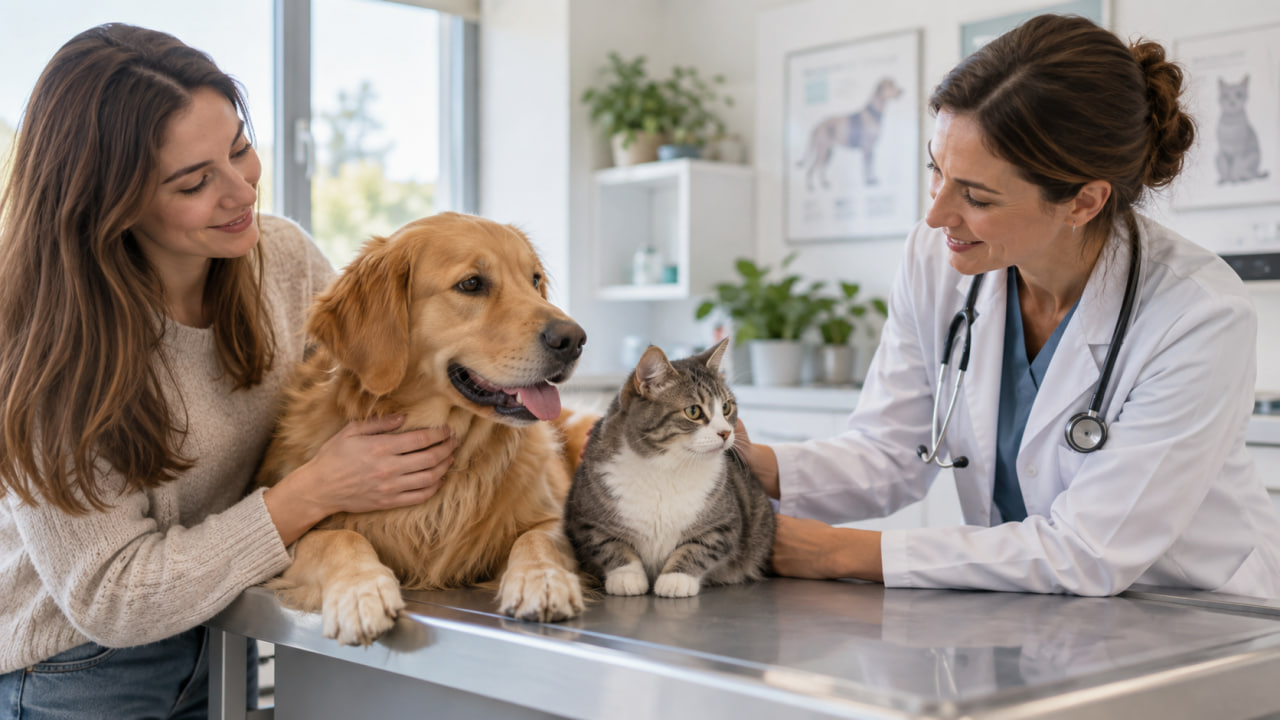
Spaying, Neutering and Castration: What Do They Mean?
These terms are often used together, but they do not always mean exactly the same thing.
Spaying usually refers to surgery in female dogs and cats. The ovaries are removed, and in some procedures the uterus is removed as well. This prevents pregnancy and stops future heat cycles.
Castration usually refers to surgery in male dogs and cats. The testicles are removed, which prevents breeding and greatly reduces testosterone production.
Neutering is the broader term for making a pet unable to reproduce. In everyday conversation, people often use “neutering” for males, but it can also refer to both male and female procedures.
All of these procedures require veterinary assessment, anaesthesia and appropriate pain relief. The exact surgical method can vary depending on the animal, clinic and individual health needs.
Should You Spay or Neuter Your Dog or Cat?
For many pets, spaying or neutering can offer important health, welfare and reproductive benefits. But the decision is not exactly the same for every dog and cat.
A useful way to think about it is to separate cats, female dogs and male dogs rather than treating all pets the same.
Cats
For most pet cats that are not intended for responsible breeding, neutering is generally recommended.
Cats can become sexually mature at a young age, so preventing accidental litters is an important reason. Neutering can also reduce reproductive health risks and some hormone-driven behaviours.
For cats, the bigger question is usually when to neuter, rather than whether neutering is appropriate at all.
Female Dogs
For most female dogs not intended for breeding, spaying is commonly recommended after considering the individual dog’s health and risk factors.
It prevents pregnancy and eliminates the risk of pyometra, a potentially life-threatening infection of the uterus. It also prevents future heat cycles and conditions linked to the ovaries and uterus.
The main question is often when to spay, because breed, size and physical maturity can affect the balance of benefits and risks.
Male Dogs
The decision can be less straightforward for male dogs.
Castration prevents breeding and removes the risk of testicular disease. It may also reduce some testosterone-driven behaviours, but it should not be treated as a guaranteed solution for behavioural problems.
Current BVA and BSAVA guidance recommends considering each dog individually, including their breed, health, lifestyle and the reason for neutering.
The key point: neutering is not simply a yes-or-no decision based on age. The likely benefits and trade-offs should be considered for the individual pet, particularly for dogs.
When Is the Best Time? Dogs and Cats Are Different
There is no single “best age” that works for every dog and cat.
For cats, veterinary guidance is relatively consistent. For dogs, timing should be more individual because sex, breed, expected adult size, physical maturity, health and lifestyle can all affect the decision.
Cats: Around Four Months Is Commonly Recommended
For most pet cats, neutering at around four months of age is commonly recommended, before they are likely to become sexually mature and reproduce.
This generally applies to both male and female cats unless there is a medical or individual reason to delay. Until your kitten is neutered, prevent access to unneutered cats and discuss timing with your veterinarian rather than waiting for obvious signs of puberty.
Female Dogs: Size and Physical Maturity Matter
For female dogs, routinely choosing the same age for every breed is no longer considered the best approach.
Current BVA and BSAVA guidance recommends considering skeletal maturity, which varies with breed and body size. Smaller dogs generally mature earlier, while large and giant breeds can take considerably longer.
As a broad guide, skeletal maturity may occur between approximately 12 and 23 months, depending on breed and size. This is not a universal spaying window.
Your veterinarian should also consider:
expected adult size
breed-related health risks
reproductive history
risk of accidental mating
current health
the reason for spaying
Timing can matter clinically. A large Royal Veterinary College study found that female dogs spayed between seven and 18 months had a lower risk of early-onset urinary incontinence than dogs spayed between three and six months. This does not establish one ideal age for every dog, but it supports an individual approach to timing.
Male Dogs: The Decision Is More Individual
For male dogs, the first question is often whether castration is likely to benefit that individual dog, followed by when to perform it.
If castration is chosen, physical maturity may be especially relevant in larger breeds. Behaviour alone should not determine the decision because castration may reduce some testosterone-related behaviours but is not a guaranteed treatment for fear, anxiety or aggression.
Your veterinarian may consider breed, adult size, reproductive risk, health, lifestyle and musculoskeletal development when discussing timing.
A Simple Way to Think About Timing
Pet | General approach |
|---|---|
Male or female cat | Often around 4 months |
Female dog | Consider breed, size and skeletal maturity before choosing timing |
Male dog | Decide case by case whether castration is beneficial, then consider timing |
Large or giant dog | Physical maturity may occur later, so early neutering deserves extra consideration |
These are starting points for a veterinary discussion, not fixed appointment ages. Medical conditions, risk of accidental mating or other individual circumstances may justify a different plan.

Benefits vs Risks: What the Evidence Actually Shows
Spaying or neutering can provide important health and welfare benefits, but it is not completely risk-free. The balance depends on the animal’s species, sex, breed, age and individual health.
That is why current BVA and BSAVA guidance recommends looking at the individual pet rather than assuming the same benefits and risks apply to every dog or cat.
Potential benefit | Possible trade-off | Who it matters most for |
|---|---|---|
Prevents unwanted litters | Surgery and anaesthesia always carry some risk | All dogs and cats |
Prevents pyometra in spayed females | Timing may influence some long-term health risks | Especially female dogs |
Removes the risk of testicular disease when the testicles are removed | Early neutering may affect musculoskeletal development in some dogs | Especially medium, large and giant breeds |
Can reduce roaming, mating behaviour and some hormone-driven behaviours | Behavioural changes are not guaranteed | Particularly male cats and some male dogs |
Removes future heat cycles in females | Energy needs and appetite may change after neutering | Dogs and cats prone to weight gain |
Can reduce some reproductive health problems | Urinary incontinence risk may be influenced by timing in female dogs | Some female dogs |
Health Benefits Are Real, but They Differ by Pet
For female dogs, one of the clearest benefits of spaying is preventing pyometra, a serious infection of the uterus that can require emergency surgery. Spaying also prevents pregnancy and removes the health risks associated with future heat cycles, pregnancy and birth.
For male dogs, castration removes the possibility of testicular disease and can reduce some prostate-related conditions. However, the overall health benefit is more dependent on the individual dog than it is for most female dogs.
For cats, preventing unwanted litters is one of the strongest reasons for neutering. Neutering can also reduce behaviours linked to reproduction, such as roaming, spraying, calling and fighting. Cats Protection provides a useful overview of these benefits for both male and female cats.
Weight Gain Is a Risk to Plan For, Not a Reason to Avoid Neutering
Neutering can increase the tendency to gain weight in both dogs and cats. Changes in appetite, activity and energy needs can mean that the same food portion that worked before surgery may become too much afterward.
The BSAVA position on neutering specifically recommends monitoring body weight and food intake after neutering.
The goal is not to automatically reduce food immediately after surgery. Instead, monitor your pet’s weight and body condition and adjust portions gradually if needed.
Early Neutering May Carry Different Risks for Some Dogs
This is one of the main reasons modern guidance has moved away from choosing the same age for every dog.
Research has linked earlier neutering in some dogs with a higher risk of certain orthopaedic conditions, and the effect appears to be more important in some larger breeds. There are also associations between neutering timing and conditions such as urinary incontinence and some cancers, but the strength of evidence varies by breed and condition.
This does not mean that neutering causes these problems in every dog.
It means that timing should be part of the decision, especially for medium, large and giant breeds.
Surgery and Anaesthesia Are Routine, but Not Risk-Free
Spaying and castration are common veterinary procedures, but they are still surgery.
Possible short-term complications can include:
bleeding
infection
swelling around the incision
reactions to anaesthesia or medication
wound opening if the pet licks, jumps or becomes too active
For a healthy pet receiving appropriate pre-operative assessment, anaesthesia monitoring and pain control, serious complications are uncommon. Your veterinarian can explain the individual risk based on age, health history and the procedure being planned.
The practical takeaway: the question is not simply whether neutering is “good” or “bad.” The better question is whether the likely benefits outweigh the possible trade-offs for your individual pet, and whether the timing is appropriate.
Will Neutering Change Your Pet’s Behaviour?
Neutering can change some behaviours, but it does not rewrite your pet’s personality.
The behaviours most likely to change are those strongly influenced by reproductive hormones.
Behaviours That May Decrease
In some dogs and cats, neutering may reduce:
roaming or trying to escape to find a mate
urine marking or spraying
mounting
persistent mating behaviour
calling or restlessness during heat in female cats
some competition or fighting linked to mating
The effect varies between individual animals. A behaviour that has already become a learned habit may continue even after hormone levels change.
What Neutering Usually Does Not Fix
Neutering should not be treated as a general solution for:
fear
anxiety
poor socialisation
resource guarding
boredom
separation-related problems
all forms of aggression
This distinction is especially important for male dogs.
Current BVA and BSAVA guidance on neutering dogs and cats notes that castration does not necessarily prevent aggression and may worsen fear-based aggression in some dogs. If behaviour is one of the main reasons you are considering castration, a veterinary or qualified behaviour assessment should come before surgery.
What About Cats?
For cats, the behavioural effects are often easier to understand because several common behaviours are closely connected to reproduction.
According to Cats Protection guidance on neutering cats, neutering can reduce behaviours such as roaming, mating-related fighting, calling and urine spraying.
However, a neutered cat can still spray or develop other behaviour problems because of stress, insecurity, changes in the home or other causes.
The practical takeaway: neutering can reduce some hormone-driven behaviour, but it is not a personality change or a guaranteed behaviour treatment. If the behaviour is complex, first identify what is causing it.
Are There Alternatives to Surgical Neutering?
Yes, in some cases there are alternatives to traditional spaying or castration, but they are not suitable for every pet.
Current WSAVA reproduction-control guidelines describe both surgical and non-surgical options. These can include hormone-preserving procedures such as vasectomy or ovary-sparing surgery, as well as temporary medical methods that suppress fertility or reproductive hormones.
These options may be considered when an owner wants to prevent reproduction while preserving some natural hormone function, or when a veterinarian believes traditional gonadectomy may not be the best choice for an individual dog.
However, alternatives have important limitations:
they may not remove hormone-driven behaviours
some are temporary rather than permanent
availability varies between countries and veterinary clinics
they may require follow-up treatment or specialist expertise
they may not provide the same protection against reproductive diseases as traditional spaying or castration
The updated BVA and BSAVA neutering guidance also encourages veterinarians to consider different surgical or medical approaches when appropriate, rather than assuming one method is best for every animal.
The practical takeaway: if you are unsure about traditional spaying or castration, ask your veterinarian whether another reproduction-control option is appropriate for your pet and what benefits or risks would remain.
How to Prepare for Spay or Neuter Surgery
A little preparation can make the day of surgery easier for both you and your pet.
Your veterinary clinic should give you specific instructions before the procedure. Follow those instructions even if they differ from general advice online, especially for food, water and regular medications.
1. Confirm the Pre-Surgery Health Check
Your veterinarian may perform a physical examination and, depending on your pet’s age, health history and individual risk, may recommend blood tests or other checks before anaesthesia.
Pre-anaesthetic assessment helps the veterinary team plan anaesthesia around the individual animal rather than using the same approach for every patient. AAHA anaesthesia guidance explains that additional testing may be appropriate when a pet has existing health concerns.
Tell the clinic if your pet has recently developed:
vomiting or diarrhoea
coughing or breathing changes
reduced appetite
unusual tiredness
any other new signs of illness
Elective surgery may need to be postponed if your pet is unwell.
2. Follow Your Clinic’s Fasting Instructions
Do not choose a fasting time yourself.
Fasting recommendations can vary with age, size, health status and the anaesthetic plan. Very young, very small or diabetic pets may need different instructions from healthy adult animals.
Current AAHA fasting guidance also shows that water does not always need to be withheld for long periods before anaesthesia.
The safest rule is simple: use the exact food and water instructions given by your veterinary clinic.
3. Check Medications and Supplements
Tell your veterinarian about everything your pet receives regularly, including:
prescription medication
supplements
flea, tick or parasite treatments
calming medication
pain medication
Do not stop or give regular medicines based on guesswork. Some medicines are continued on the day of anaesthesia, while others may need to be adjusted or temporarily stopped.
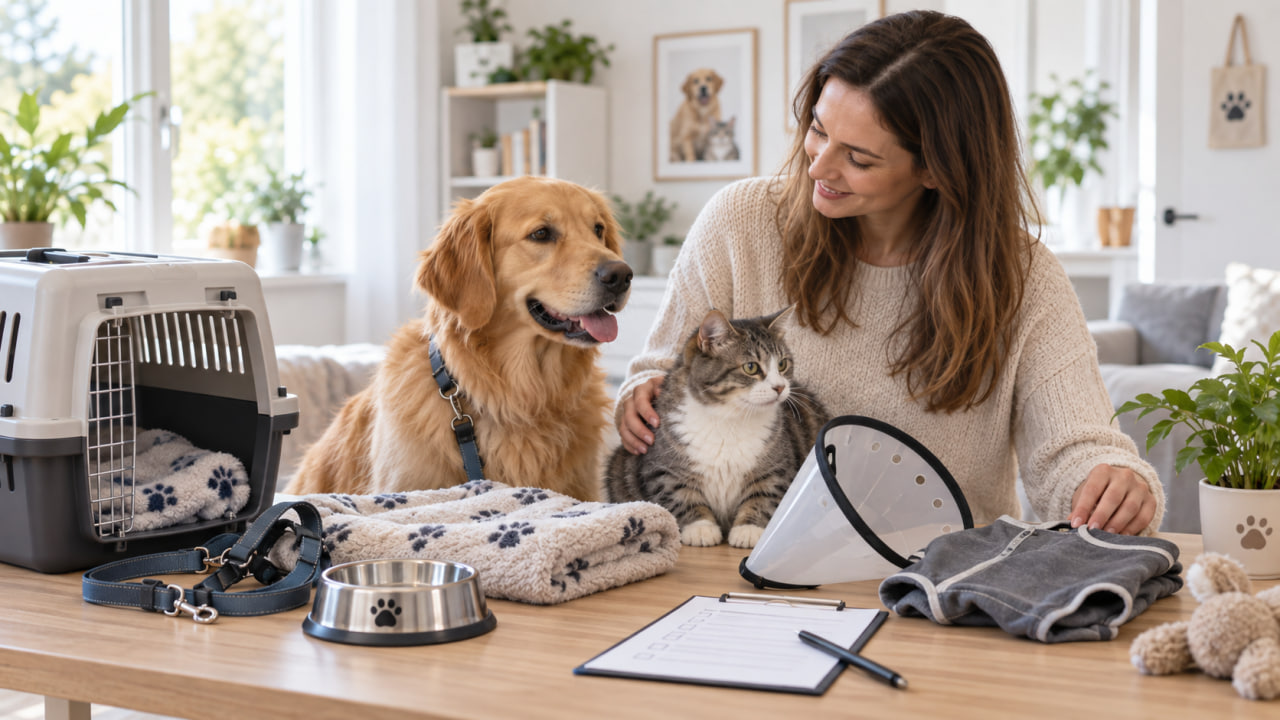
4. Prepare a Quiet Recovery Area Before You Leave Home
Set up your pet’s recovery space before the surgery so you do not have to organise it after bringing a sleepy animal home.
Useful items include:
a clean, comfortable bed
a quiet room away from other animals
an appropriately sized cone or recovery suit if your clinic recommends one
easy access to water
a litter tray nearby for cats
a secure lead for short toilet trips with dogs
Avoid setting up the recovery area somewhere your pet needs to climb stairs, jump onto furniture or compete with other animals for space.
5. Plan Transport Home
Cats should travel in a secure carrier. Dogs should be restrained safely with a lead, harness or appropriate travel restraint.
Your pet may be sleepy or less coordinated after anaesthesia, so do not allow them to jump into or out of the car without support.
Before You Leave the Clinic, Ask These Questions
Make sure you know:
when your pet can eat and drink
which medications to give and when
how long activity should be restricted
whether a cone or recovery suit is required
what the incision should normally look like
when the recheck is due
which signs mean you should call the clinic urgently
The practical takeaway: the most important preparation is not buying extra supplies. It is following your own clinic’s fasting and medication instructions and making sure you understand the recovery plan before your pet comes home.
What to Expect on the Day of Surgery
Knowing what usually happens on surgery day can make the process feel less uncertain. The exact routine varies between clinics and pets, but most procedures follow the same general stages.
Before Anaesthesia
When you arrive, the veterinary team will usually confirm your pet’s recent health, fasting instructions, medications and consent for the procedure. Your pet may also have another physical check before anaesthesia.
If anything has changed since the pre-surgery assessment, such as vomiting, diarrhoea, coughing, unusual tiredness or accidentally eating when they were meant to fast, tell the veterinary team before the procedure begins.
Anaesthesia and Monitoring
Spaying and surgical castration are performed under general anaesthesia.
The anaesthetic plan should be adapted to the individual animal. During the procedure, the veterinary team monitors important functions such as breathing, heart rate, blood pressure, oxygen levels and body temperature.
The AAHA anaesthesia and monitoring guidelines emphasise that anaesthesia should be treated as a continuous process, from pre-anaesthetic assessment through surgery, recovery and return home, rather than only the time a pet is unconscious.
Pain relief is also planned around the procedure so that discomfort can be managed before, during and after surgery.
What Happens During the Procedure?
For a female pet, the veterinarian removes the ovaries and, depending on the surgical technique, may also remove the uterus.
For a male undergoing traditional castration, the testicles are removed.
The length of the procedure and recovery period can vary with the animal’s species, sex, size, health, surgical technique and individual response to anaesthesia.
Recovery at the Clinic
The period immediately after anaesthesia is an important part of the procedure.
Your pet should continue to be monitored while waking up. According to AAHA guidance on recovery from anaesthesia, monitoring should continue until the patient is appropriately alert, warm and able to move safely for their individual condition.
It is normal for pets to seem sleepy or quieter than usual as anaesthetic and pain-relief medications wear off.
Before You Take Your Pet Home
The veterinary team should give you clear discharge instructions for the first hours and days at home.
Before leaving, make sure you understand:
when to offer food and water
which medications to give and when
how to protect the incision
whether a cone or recovery suit is required
how much activity is allowed
what changes are expected after anaesthesia
which signs require a call to the clinic
when a follow-up appointment is needed
The AAHA discharge guidance notes that temporary sleepiness and reduced appetite can occur after anaesthesia, but owners should receive clear instructions about what is expected and when to contact the veterinary team.
The practical takeaway: surgery day does not end when the procedure is finished. Safe recovery from anaesthesia, pain control and clear instructions for home care are all part of the same process.
What Recovery Looks Like After Spaying or Neutering
Most dogs and cats recover well after routine spaying or neutering, but recovery does not look exactly the same for every pet.
The first few hours are mainly about recovering from anaesthesia. After that, the focus shifts to keeping your pet comfortable, protecting the incision and limiting activity while the tissues heal.
The First 24–48 Hours
When your pet first comes home, they may be:
sleepier or quieter than usual
slightly unsteady on their feet
less interested in food
more interested in sleeping than playing
mildly unsettled or confused after anaesthesia
These changes should gradually improve as the anaesthetic drugs wear off.
For dogs, PDSA’s neutering guidance notes that sleepiness and disorientation can last for several hours, with most dogs becoming much more like themselves within about 24–48 hours.
A small temporary drop in appetite can also happen. If your dog continues refusing food or develops other symptoms, our guide on why a dog may stop eating explains what signs are worth paying closer attention to.

Male and Female Pets May Recover Differently
Recovery is often quicker after a straightforward male castration than after a female spay because the procedures are different.
For female dogs and cats, spaying involves abdominal surgery, so activity restriction and incision protection are especially important during healing.
Male cats often have very small surgical wounds and may appear active again surprisingly quickly. However, feeling energetic does not mean the wound is fully healed.
Cats Protection advises that cats may be tired or slightly wobbly when they first return home, while the surgical wound itself can take around 10 days to heal.
Feeling Better Is Not the Same as Being Fully Healed
One of the biggest challenges during recovery is that pets often start feeling better before their surgical site has finished healing.
A dog may want to run or jump again. A young cat may suddenly start climbing furniture. This is exactly when owners need to continue following the activity restrictions given by the clinic.
During recovery:
keep dogs on controlled, short toilet walks
keep cats indoors
prevent running, jumping and rough play
stop licking or chewing at the incision
give medication exactly as prescribed
check the surgical area at least once or twice each day
PDSA’s post-operative guidance also recommends keeping pets calm, checking the wound regularly and attending scheduled follow-up appointments even when the pet appears to be feeling well.
The practical takeaway: your pet may seem much better within a day or two, but recovery continues after their energy returns. Keep following the clinic’s restrictions until the incision has healed and your veterinarian says normal activity can resume.
The First 10–14 Days: A Practical Aftercare Timeline
Recovery is usually gradual. Your pet may feel much better before the incision has fully healed, so continue following your clinic’s instructions even when energy and appetite return.
Recovery stage | What you may notice | What to do |
|---|---|---|
Day 0–1 | Sleepiness, mild unsteadiness, lower appetite and more resting than usual can occur after anaesthesia. | Keep your pet somewhere quiet and warm. Offer food and water as instructed by your clinic. Give prescribed medication on schedule and prevent licking or chewing at the incision. |
Day 2–3 | Appetite, alertness and coordination should generally start improving. Some pets may already want to move around much more. | Continue activity restriction. Dogs should have short, controlled toilet walks; cats should remain indoors. Check the incision for increasing redness, swelling, discharge, bleeding or opening. |
Day 4–7 | Many pets appear almost back to normal, but the surgical site is still healing. | Avoid running, jumping and rough play, and limit stairs as advised by your veterinarian. Continue any recommended cone or recovery suit. Keep the incision clean and dry, and do not apply creams or disinfectants unless your veterinary team tells you to. |
Day 8–14 | Many pets have returned to their usual appetite and energy, while the incision should continue to look settled and well closed. | Continue restrictions until your veterinarian confirms that normal activity can resume. Attend any scheduled recheck or stitch-removal appointment. |
The PDSA post-operative care guidance recommends keeping pets calm, preventing interference with the wound and monitoring the surgical site throughout recovery.
For cats, Cats Protection notes that surgical wounds generally take around 10 days to heal, even when a cat appears to feel normal sooner.
Important: recovery can vary between pets and procedures. A male cat after routine castration may recover differently from a large female dog after abdominal surgery. Always follow the discharge instructions given by your own veterinary clinic if they differ from this general timeline.
If your pet seems to be getting worse rather than gradually improving, contact your veterinary clinic for advice.
What Is Normal, and When Should You Call the Vet?
Some changes are expected during the first day or two after spaying or neutering. The important thing is that your pet should gradually improve rather than become more unwell.
Usually expected during early recovery | Contact your veterinarian if you notice |
|---|---|
Sleepiness or extra resting after anaesthesia | Extreme tiredness, collapse or difficulty standing |
Mild unsteadiness for the first several hours | Unsteadiness that is severe, worsening or not improving |
Slightly reduced appetite on the first evening | Refusing food for more than 24 hours or repeated vomiting |
Mild swelling or pinkness close to the incision | Increasing redness, heat, swelling, bleeding or discharge |
Wanting to lick the surgical area | Persistent licking or chewing despite wound protection |
Lower activity while recovering | Severe pain, crying, shaking or inability to settle |
Gradual improvement over the next few days | Your pet becoming less active, less responsive or more uncomfortable instead of improving |
A closed, dry surgical wound | The wound opening, missing stitches or an unpleasant smell |
PDSA’s post-operative guidance recommends contacting your veterinarian if a surgical wound develops redness, swelling, bleeding or discharge, or if your pet shows persistent low energy, pain, vomiting, diarrhoea or prolonged loss of appetite.
For cats, Cats Protection similarly recommends checking the wound every day and contacting the veterinary clinic if you notice redness, swelling or discharge.
Do Not Wait if Something Feels Seriously Wrong
Contact your veterinarian or an emergency veterinary service promptly if your pet:
has difficulty breathing
collapses or cannot stand
has continuous or heavy bleeding
has a surgical wound that opens
appears to be in severe pain
repeatedly vomits or cannot keep water down
becomes suddenly much less responsive
You do not need to decide at home whether a complication is serious enough to treat. If recovery is clearly moving in the wrong direction, call the veterinary team that performed the procedure and describe what you are seeing.
The practical takeaway: mild sleepiness and reduced appetite can happen early in recovery, but the overall trend should be toward improvement. Worsening symptoms, significant wound changes or severe discomfort deserve veterinary advice.
Feeding and Weight After Neutering
Neutering does not automatically make a dog or cat overweight. But it can change the balance between appetite, activity and energy needs, which means a portion that maintained a healthy weight before surgery may become too much afterward.
The important response is not to immediately cut food by a fixed percentage or automatically switch to a food labelled “sterilised.” Instead, use your pet’s body weight, body condition and actual activity level to guide feeding decisions.
The BSAVA position on neutering identifies neutering as a risk factor for obesity in both dogs and cats and recommends monitoring body weight and controlling food intake after the procedure.
What Should You Actually Change?
Start by observing rather than guessing.
What to monitor | What to look for | What to do |
|---|---|---|
Body weight | A steady upward trend after recovery | Recheck portions and treats rather than waiting until excess weight is obvious |
Body condition | Ribs becoming harder to feel, loss of a visible waist or increasing abdominal fat | Use a body condition score and discuss changes with your veterinary team |
Appetite | Begging or food-seeking increasing despite normal meals | Avoid automatically responding with larger portions; check whether daily calories still match your pet’s needs |
Activity | Less movement during recovery or a longer-term drop in activity | Reassess portions as normal activity gradually returns |
Treats and extras | Treats, chews and table food quietly adding significant calories | Count them as part of the total daily intake |
Food portions | Portions estimated by eye becoming inconsistent | Measure food accurately, ideally by weight rather than relying only on a scoop or cup |
Do Not Automatically Feed Less on the First Day
The immediate recovery period and long-term weight management are two different issues.
During the first hours after surgery, follow your clinic’s instructions about when and how much to feed. Appetite can temporarily be lower after anaesthesia, so this is not the time to judge your pet’s future calorie needs.
Once your pet has recovered, returned to normal eating and gradually resumed normal activity, you can start looking at longer-term weight trends.
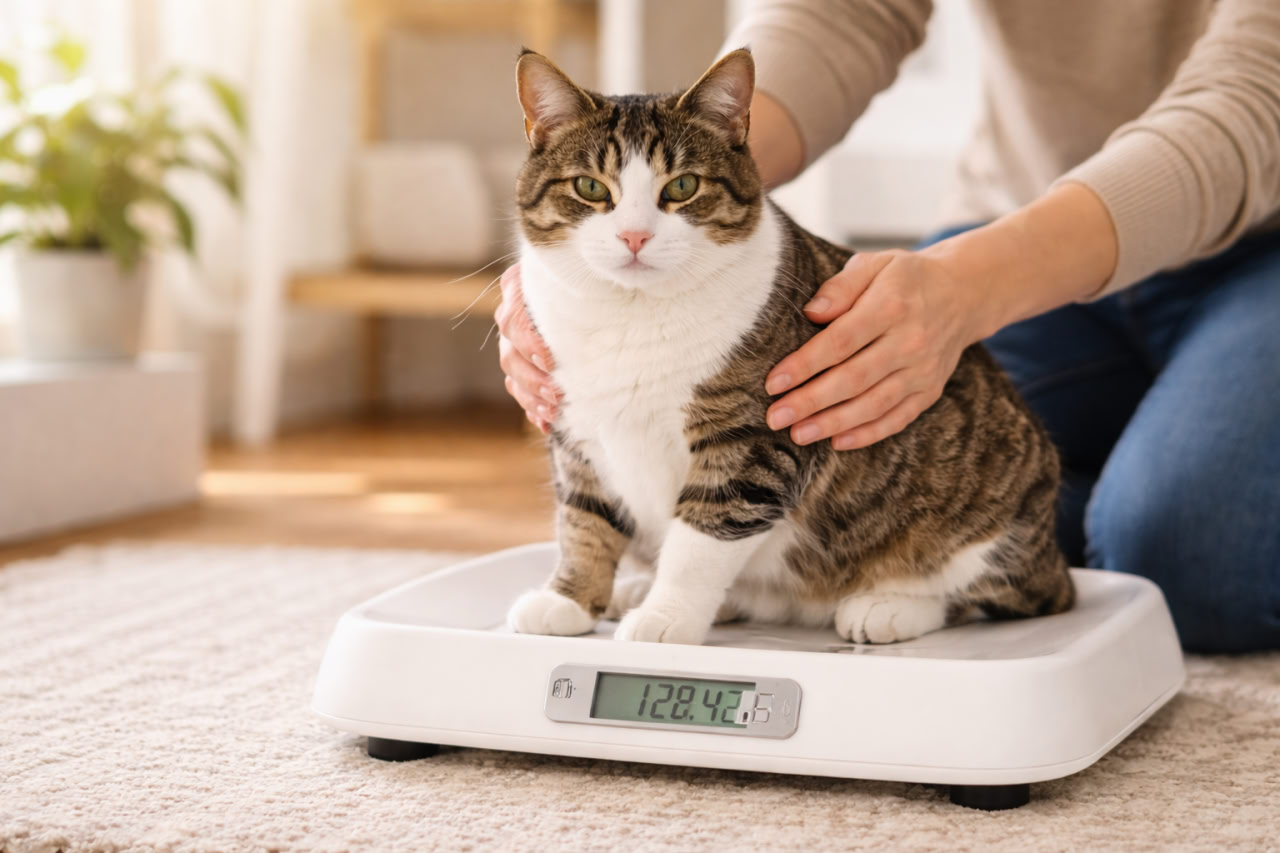
Use Body Condition, Not Just the Number on the Scale
Body weight alone does not tell you whether your pet is carrying too much body fat.
The WSAVA Body Condition Score system uses a 9-point scale to assess body fat by looking at features such as the ribs, waist and abdominal shape. For many healthy adult dogs and cats, a score around 4–5 out of 9 represents an ideal body condition.
This matters after neutering because a small increase in fat can be easier to correct when it is noticed early.
BSAVA also recommends more frequent weight and body-condition monitoring in animals at increased risk of obesity, including neutered pets. Around the time of neutering, more frequent checks can help identify an upward trend before it becomes a larger problem.
If you’re not sure whether your cat is already moving above a healthy body condition, our guide to signs your cat is overweight shows what to check at home, including the ribs, waist and overall body shape.
Does Your Pet Need a “Neutered” or “Sterilised” Food?
Not necessarily.
The label on the front of the bag is less important than whether the diet:
is complete and balanced for your pet’s life stage
provides an appropriate amount of energy
can be portioned accurately
helps your pet maintain a healthy body condition
fits their health, activity and individual needs
European FEDIAF nutritional guidelines provide the nutritional framework used for complete pet foods in Europe, but the amount an individual animal needs still varies.
A pet maintaining an ideal body condition on its current complete diet may not need an immediate food change simply because it has been neutered.
On the other hand, if portions need to become very small to prevent weight gain, or your pet is already overweight, ask your veterinarian whether a different diet with a more appropriate energy density would make feeding easier while still meeting nutritional needs.
A Simple Post-Neuter Feeding Routine
After your pet has recovered from surgery:
Record their current weight.
Check body condition, not just kilograms.
Measure meals consistently rather than estimating portions by eye.
Include treats and extras in the daily intake.
Watch the trend over the following weeks.
Adjust the amount gradually if weight or body condition starts moving away from the ideal range.
If you’re unsure where to start with portions after your dog has recovered, our dog feeding guide explains how weight, age, activity and neuter status can influence daily feeding amounts.

Avoid making large calorie cuts without veterinary guidance, especially for growing puppies and kittens or pets with medical conditions.
The practical takeaway: neutering changes the risk of weight gain, not your pet’s destiny. The most useful strategy is early monitoring, accurate portions and small adjustments based on what is actually happening to your individual dog or cat.

A Simple Decision Checklist Before You Book
By this point, the most useful question is not simply “What age should my pet be neutered?”
A better question is:
“Is this the right procedure, at the right time, for this individual pet?”
Use this checklist before booking the surgery.
1. Is Your Pet Intended for Breeding?
If not, preventing accidental mating is an important part of the decision.
For cats, this is especially relevant because sexual maturity can occur early. For dogs, the risk depends more on lifestyle, household management and access to other intact dogs.
2. Have You Discussed Timing, Not Just Age?
Ask your veterinarian whether your pet’s:
species
sex
breed
expected adult size
physical maturity
health history
lifestyle
change the recommended timing.
For dogs, particularly medium, large and giant breeds, a routine age should not automatically replace an individual discussion.
3. What Is the Main Reason for Neutering?
Be clear about what you hope the procedure will achieve.
Possible reasons include:
preventing pregnancy
preventing pyometra
avoiding testicular disease
reducing reproductive behaviours
reducing the risk of accidental breeding
managing a specific medical concern
If behaviour is the main reason, ask whether the behaviour is actually hormone-driven before assuming surgery will solve it.
4. Are There Reasons to Delay or Choose Another Approach?
Ask whether your pet’s growth, breed-related health risks or current medical condition affect the plan.
If you are uncertain about traditional spaying or castration, you can also ask whether an alternative surgical or temporary medical option is appropriate.
5. Do You Understand the Recovery Plan?
Before booking, make sure you know whether you can provide:
a quiet recovery area
controlled activity for the recommended period
wound protection
medication on schedule
daily incision checks
transport to a follow-up appointment if needed
A successful recovery depends partly on what happens after your pet leaves the clinic.
6. Have You Planned for Weight Monitoring After Recovery?
Neutering may change appetite and energy requirements.
You do not need to automatically change food immediately, but you should be ready to monitor:
body weight
body condition
meal portions
treats
activity
Early adjustment is easier than trying to correct substantial weight gain later.
Questions Worth Asking Your Veterinarian
Before confirming the procedure, ask:
Why is this timing appropriate for my pet?
Are there breed- or sex-specific risks we should consider?
Which procedure will be performed?
Are there alternatives worth discussing?
What pre-operative tests are recommended?
How will pain be managed?
How long should activity be restricted?
What should normal recovery look like?
Which symptoms mean I should call the clinic?
When should we recheck weight and body condition afterward?
The practical takeaway: a good neutering decision is not based on one number or one rule. It combines your pet’s individual health and development with reproductive risk, lifestyle, recovery planning and a clear discussion with your veterinarian.
Frequently Asked Questions
Can a dog be spayed while she is in heat?
It is sometimes possible, but it is usually preferable to avoid routine spaying while a dog is in heat.
During a season, the reproductive tissues and surrounding blood vessels receive an increased blood supply, which can make surgery more complicated. PDSA generally recommends waiting around two to three months after a season unless there is a medical or individual reason to operate sooner.
If your dog is currently in heat, contact your veterinarian rather than choosing a surgery date yourself.
Should a female dog or cat have one litter before being spayed?
No. There is no established health benefit to allowing a female dog or cat to have one litter before spaying.
BVA and BSAVA guidance states that there is no known benefit to breeding a female dog before neutering.
Cats Protection also advises that there is no benefit to allowing a female cat to have a litter first. Cats can become pregnant while they are still growing themselves, which can place additional demands on the body.
Is it too late to neuter an older dog or cat?
Not necessarily.
Age alone does not automatically make a pet unsuitable for neutering. Older animals may still benefit from the procedure, but the decision should be based more carefully on their current health, medical history and anaesthetic risk.
PDSA notes that older dogs can still be neutered in many cases. Cats Protection also explains that cats can be neutered at different ages, although older animals may need more careful pre-operative assessment.
Your veterinarian may recommend blood tests or other checks before surgery in an older pet.
Can a pregnant dog still be spayed?
In some cases, yes.
PDSA notes that it may be possible to spay a pregnant dog, but this is a decision that should be discussed with a veterinarian as soon as pregnancy is suspected.
The stage of pregnancy, the dog’s health and the individual circumstances all matter.
If an accidental mating has occurred, contact your veterinarian promptly rather than waiting for the pregnancy to progress.
What is a laparoscopic spay?
A laparoscopic spay, sometimes called a keyhole spay, uses small surgical openings and a camera-assisted technique rather than a larger traditional abdominal incision.
PDSA explains that laparoscopic spays generally involve smaller wounds and are less invasive, but they require specialist equipment and are not available at every veterinary clinic.
They are not automatically the best option for every dog. Ask your veterinarian which surgical technique is appropriate for your pet.
What happens if my dog has an undescended testicle?
A dog with one or both testicles that have not descended into the scrotum has a condition called cryptorchidism.
The retained testicle may be located in the groin or abdomen, so castration can require a different surgical approach and sometimes an additional incision.
PDSA explains that the surgical plan depends on where the retained testicle is located.
If you cannot feel both testicles in your dog’s scrotum, mention this to your veterinarian before planning neutering.
Can I leave my dog or cat alone after spay or neuter surgery?
It is best to keep a close eye on your pet during the early recovery period, particularly on the first day after they return home.
They may still be sleepy, unsteady or affected by anaesthetic and pain-relief medication. You also need to make sure they are not licking the incision, jumping, vomiting or becoming increasingly uncomfortable.
PDSA recommends avoiding leaving a pet alone for a day or so after surgery where possible so their recovery can be monitored.
Once your pet is alert, comfortable and recovering normally, short periods alone may be reasonable depending on your veterinarian’s instructions and whether the wound is securely protected.
Final Takeaway: Make the Decision Around Your Pet
Spaying or neutering is not simply a decision about reaching a certain age.
For cats, the path is often relatively straightforward. For dogs, particularly larger breeds and male dogs, the best decision may depend on sex, breed, physical maturity, health, lifestyle and the reason for neutering.
The same individual approach should continue after surgery.
Recovery, activity, appetite and weight can all change, and what works for one pet may not be right for another. The most useful plan is one that combines veterinary guidance with regular monitoring of your pet’s real-world response.
Keep Nutrition Part of the Conversation
After recovery, pay attention to more than just whether your pet is eating.
Watch for changes in:
body weight
body condition
appetite
activity level
meal portions
treats and extras
Small changes are easier to manage when they are noticed early.
FAMMO helps dog and cat owners bring these factors together by considering details such as age, breed, weight, activity and neuter status when thinking about everyday nutrition and preventive care.
Your veterinarian should guide medical decisions such as whether and when to spay or neuter. FAMMO can help you stay more aware of the everyday nutrition and health factors that matter before and after that decision.
Ready to understand your pet’s needs more clearly?
Create your pet profile with FAMMO and start building a more personalised view of their nutrition and preventive care.