Introduction
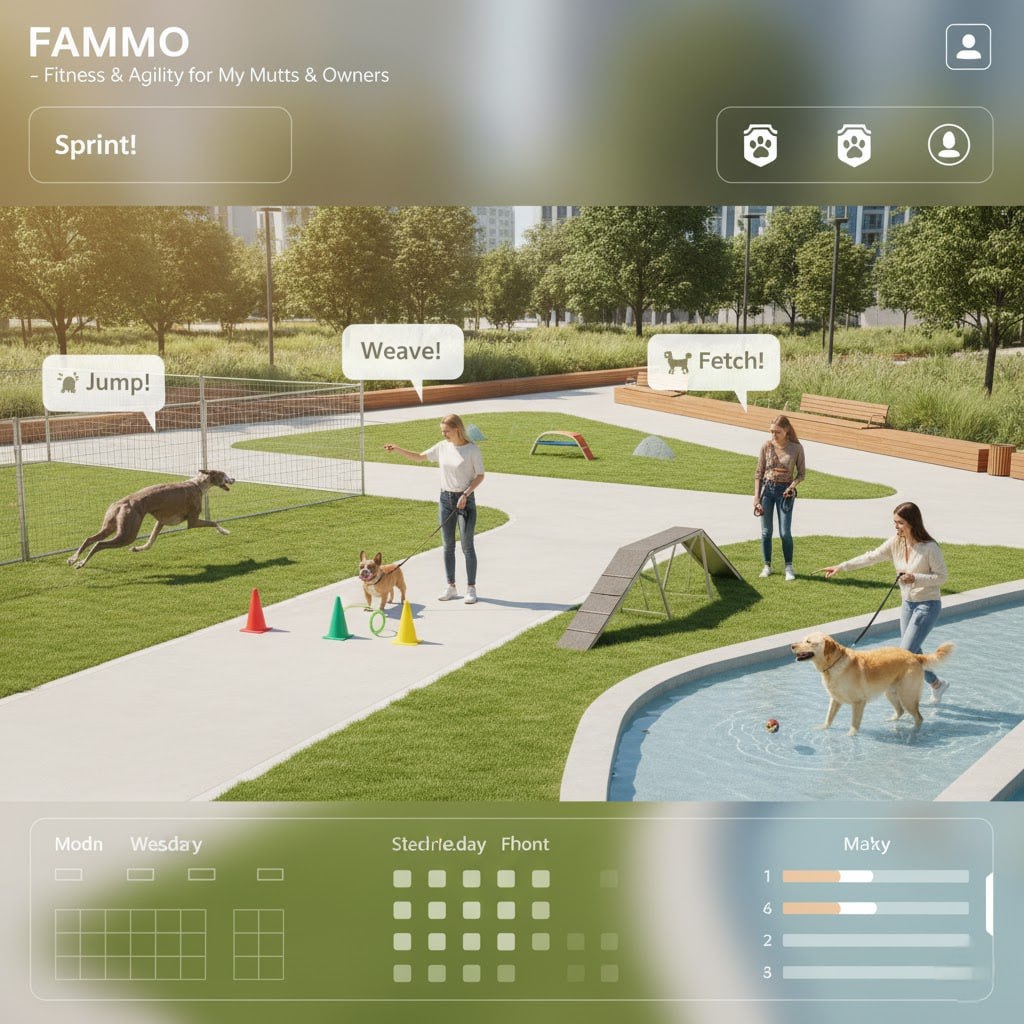
Not all dogs need the same workout. Body type, temperament, and inherited risks shape how your dog should move. This guide turns “go for a walk” into breed-aware, vet-backed exercise recipes, a 7-day rotating plan, and progress tracking you can plug into FAMMO for smart personalization.
Table of Contents
- How to Use This Guide
- Universal Safety & Life-Stage Rules
- Breed-Aware Exercise Playbooks
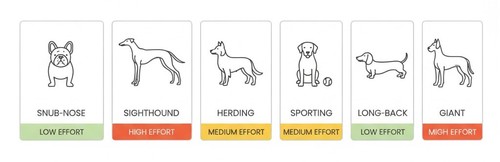
- Brachycephalic (Flat-Faced): Bulldog, Pug, French Bulldog
- Sighthounds: Greyhound, Whippet, Saluki
- Herding & Working Brains: Border Collie, Aussie, GSD
- Sporting All-Rounders: Labrador, Golden, GSP
- Chondrodystrophic Backs: Dachshund, Corgi
- Giant & Heavy Breeds: Great Dane, Mastiff, Newfie
- Toy & Small Companions: Chihuahua, Pomeranian, Maltese
- 7-Day Rotating Plan (By Group)
- Weight, Metrics & Progress Tracking
- How FAMMO Personalizes Workouts
- FAQ
- Key Takeaways
- Conclusion & CTA
How to Use This Guide
1) Find your dog’s group and start with the daily “exercise recipe.”
2) Adjust intensity to breathing/recovery (return to calm within ~5 minutes).
3) Log in FAMMO—sessions, surfaces, toy types, appetite, and mood—so the plan adapts.
To pair fitness with smarter feeding, see FAMMO’s guides:
- How AI is Revolutionizing Pet Nutrition?
- What Your Pet’s Poop Says About Their Food (and Health)
Universal Safety & Life-Stage Rules
- Short & consistent beats rare marathons: Aim for 2–3 sessions/day, 10–20 minutes each for adults; puppies and seniors go shorter. General ranges vary by age, health, and breed.
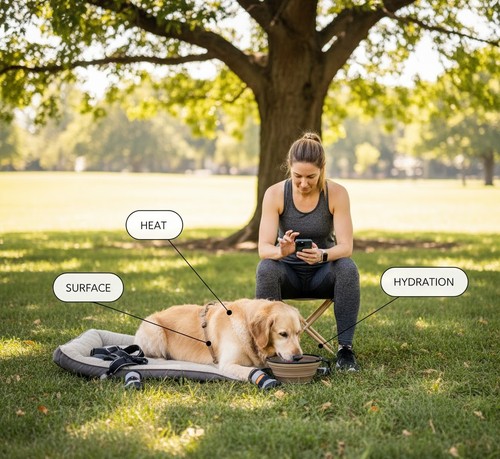
- Heat & humidity caution: Avoid midday heat; watch for heavy panting, wobbling, or collapse. Flat-faced breeds overheat faster.
- Surfaces & traction: Prefer grass, rubber, or textured paths; avoid repeated high-impact jumps.
- Puppies: Protect open growth plates—skip repetitive jumping and forced endurance until mature (later for giant breeds).
- Warm-up & cool-down: 3–5 minutes of sniff-walks and slow figure-eights; end with decompression sniffing or gentle massage.
- Stop & see your vet if: limping, reluctance to move, open-mouth breathing at rest, or sudden fatigue.
Breed-Aware Exercise Playbooks
Brachycephalic (Flat-Faced): Bulldog, Pug, French Bulldog
Profile: Short skulls reduce airflow; panting cools poorly.
Watch-outs: Heat, humidity, and long chases can trigger breathing distress.
Daily Recipe (2×/day, 8–12 min):
- Shaded Sniff Walks: 5–8 minutes at a relaxed pace; frequent water breaks.
- Ground-Level Puzzles: Treat-ball or snuffle mat to engage brain without overheating.
- Short Retrieve Sets: 3–4 tosses on grass; stop before heavy panting.
Do: Walk at cooler hours; choose harness over collar.
Don’t: Hill sprints, mid-day sun, or forced jogging.
Sighthounds: Greyhound, Whippet, Saluki
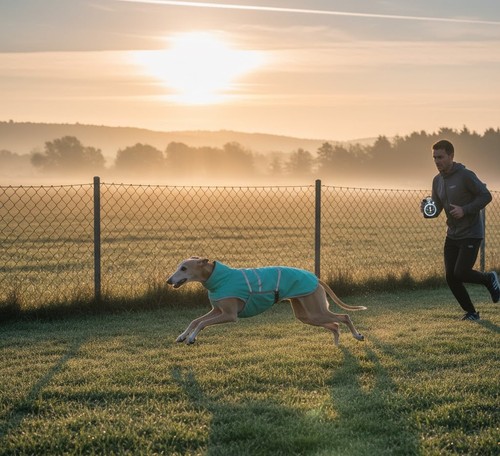
Profile: Lean frames, low fat; sprinters, not plodders.
Watch-outs: Cold sensitivity; prefer short, fast bursts with good warm-ups.
Daily Recipe (2×/day, 12–15 min):
- Structured Sprint Sets: 2–3 short off-lead dashes in a safe, fenced area after warm-up.
- Straight-Line Fetch: 2–3 rounds, long rest intervals.
- Core & Flexibility: Figure-eights on lead; gentle hill walk (short).
Do: Coat in cold weather; thorough warm-up/cool-down.
Don’t: Endless distance runs on hard surfaces.
Herding & Working Brains: Border Collie, Aussie, GSD
Profile: High drive, high brains. They crave jobs, not just miles.
Watch-outs: Under-stimulated dogs invent their own “work” (herding kids, chewing).
Daily Recipe (2–3×/day, 12–15 min):
- Intervals on Lead: 1–2 blocks brisk, 1 block easy ×3.
- Nosework/Hide-and-Seek: 5–7 scent finds around the yard/home.
- Impulse Control Drills: Sit-stay → recall → tug; 3 micro-sets.
Do: Rotate brain games; add platform training.
Don’t: Only run—mix mental with physical to prevent burnout. (General activity planning guidance varies by breed and life stage.)
Sporting All-Rounders: Labrador, Golden, GSP
Profile: Endurance-friendly, love retrieve & swim; strong appetite—watch weight.
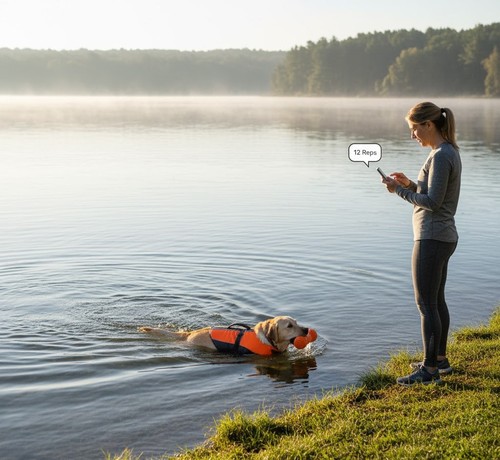
Daily Recipe (2×/day, 15–20 min):
- Retrieve Ladder: 5 tosses short → 5 medium → 3 long; soft field.
- Swim Sets (if safe): 2×3 minutes with rests (life vest for new swimmers).
- Mobility Circuit: Step-overs (poles/towels) + lateral sidesteps on grass.
Do: Mix water work with land mobility; track weight weekly.
Don’t: Asphalt fetch marathons.
Note: “How much” varies by individual and age; adjust using recovery and Body Condition Score.
Chondrodystrophic Backs: Dachshund, Corgi
Profile: Long backs with higher IVDD risk—protect the spine.
Watch-outs: Repeated jumping, stairs sprints, rough play with larger dogs.
Daily Recipe (2×/day, 8–10 min):
- Core & Balance: Slow step-overs (rolled towels), cookie-stretches (nose to hip), 2 passes.
- Controlled Walks: 5–8 min on flat, harness + short lead.
- Water-Based Work (if available): 2×2-min shallow water walk or hydro treadmill sessions under pro supervision.
Do: Ramps to sofa/bed; keep Body Condition Score ideal.
Don’t: Frisbee catches, couch leaps, or stairs races.
Giant & Heavy Breeds: Great Dane, Mastiff, Newfie
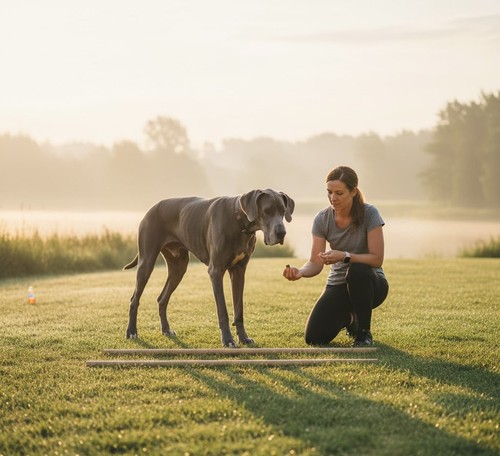
Profile: Big mass = big joint load; keep jumps low and pace steady.
Watch-outs: Hip/elbow dysplasia risk; puppies mature slowly.
Daily Recipe (2×/day, 12–15 min):
- Long-Line Walks: Even tempo on grass; gentle hills only.
- Weight-Shift Drills: Stand-to-sit-to-stand ×5 with treats low to ground.
- Short Swim or Land Cart Pull (trained): Low resistance, steady pace.
Do: Build gradually; track stiffness next morning.
Don’t: Repetitive high-impact running or jumping—especially in adolescents.
Toy & Small Companions: Chihuahua, Pomeranian, Maltese
Profile: Small stride, big heart. Short sessions; watch for fatigue or tracheal irritation (use a harness).
Daily Recipe (2×/day, 8–12 min):
- Sniff-ari: 8–10 minutes of meandering nose-led walking.
- Indoor Fetch: 6–8 soft-toy tosses on carpet.
- Puzzle Break: Snuffle mat or slow-treat maze.
Do: Multiple micro-bouts; warm layers in winter.
Don’t: Long forced marches.
7-Day Rotating Plan (By Group)
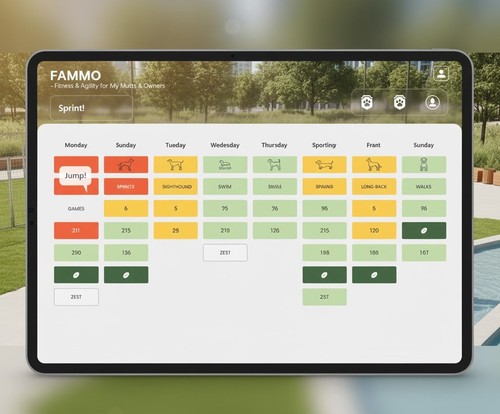
| Day | Brachy (Bulldog/Pug) | Sighthounds | Herding/Working | Sporting | Long-Back | Giant |
|---|---|---|---|---|---|---|
| Mon | Shaded sniff-walk + puzzle | Warm-up + 2 sprints | Intervals + nosework | Retrieve ladder | Core/balance + flat walk | Long-line grass walk |
| Tue | Short retrieve sets | Straight-line fetch + rest | Hide-and-seek + recall | Swim sets (cool water) | Ramps practice + walk | Weight-shift + hill (gentle) |
| Wed | Indoor puzzle circuit | Flex drills + easy trot | Obedience games | Mobility circuit | Hydro walk (pro) | Swim or cart pull (low) |
| Thu | Sniff-walk + mat settle | 2 sprints + cool-down | Intervals + tug rules | Field retrieves | Step-overs + stretch | Long-line grass walk |
| Fri | Short nosework trail | Fetch + core | Nosework course | Swim sets | Controlled walk | Mobility + scent games |
| Sat | Park meander (cool) | Fenced free run (brief) | Agility-lite (cavaletti) | Trail walk (soft) | Core + scent | Long-line woods (soft) |
| Sun | Easy rest day | Easy rest day | Brain games only | Gentle fetch | Ramps review + cuddle | Massage + sniff-ari |
Weight, Metrics & Progress Tracking
- Body Condition Score (BCS): Aim for ribs easily palpable under a thin fat layer; visible waist from above; abdominal tuck from side (BCS ~4–5/9). Use the WSAVA chart for guidance.
- Weekly weight: Same scale, same time, once a week.
- Recovery time: Back to normal breathing within ~5 minutes after sets.
- Joint flags: Stiffness on rising, reluctance to jump, or skipping steps → reduce intensity and consult your vet.
Hip-prone breeds: Controlled, gradual exercise progression is recommended; scale back if lameness returns.
For nutrition–exercise synergy, read FAMMO’s pieces on AI-powered personalization and stool quality signals.
How FAMMO Personalizes Workouts
What FAMMO can deliver:
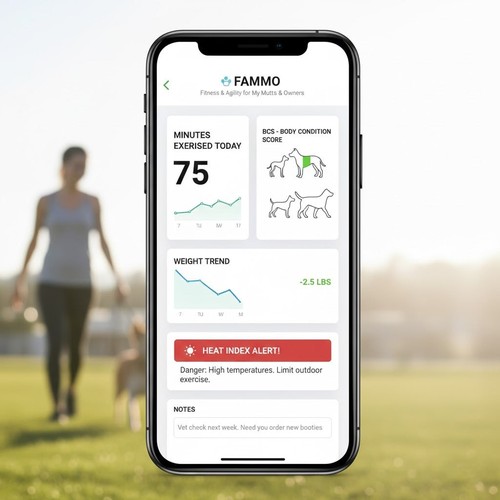
- Breed-aware defaults: Sighthounds get sprint intervals; brachys get cool, low-intensity blocks; long-backs get core + ramps.
- Adaptive difficulty: If engagement drops or recovery slows, FAMMO suggests surface swaps, interval changes, or puzzle upgrades.
- Heat-safe nudges: Local weather + breed risk → automatic “cool hours only” reminders.
- Health flags: Sudden activity dips or gait changes trigger “mobility check” prompts (hip/IVDD aware).
- Meal pairing: Links your exercise log with feeding to manage weight and GI comfort (see FAMMO nutrition articles above).
FAQ
How much exercise does my dog need daily?
It depends on age, health, and breed—from short, gentle walks for brachycephalics and seniors to longer sessions for sporting or herding dogs. Start modest, build gradually, and watch recovery.
Are summer workouts safe?
Yes—if you avoid heat/humidity, keep sessions short, shade often, and hydrate. Flat-faced dogs are at higher risk of heat illness.
What about puppies?
Play is great, but avoid repetitive, high-impact jumping and forced endurance until growth plates close (later for giant breeds).
My dog has hip dysplasia. Can we still exercise?
Controlled, low-impact work (leash walks, swimming) is typically recommended; progress gradually and scale back if signs recur. Ask your vet for a plan.
Dachshund or Corgi—special considerations?
Yes. Protect the back: ramps, core work, flat walks, and professional rehab if IVDD signs appear.
Key Takeaways
- Match the workout to the breed—structure sprints for sighthounds, low-heat routines for brachys, brain games for herders, low-impact for giants/hip-prone, and back-safe drills for long-backs.
- Consistency wins: 2–3 short sessions most days beat weekly marathons.
- Track BCS and recovery: Adjust intensity to what your dog shows you.
- Let FAMMO personalize: Daily tips, heat alerts, and mobility flags keep your plan safe and effective.
Conclusion & CTA
A smarter routine starts with breed-aware planning—then gets better with data. Keep sessions short, varied, and purposeful; pair them with measured meals and weekly check-ins.
CTA: Create your dog’s profile in FAMMO and enable Breed-Aware Exercise Recipes to get daily, adaptive plans synced with feeding and weather.