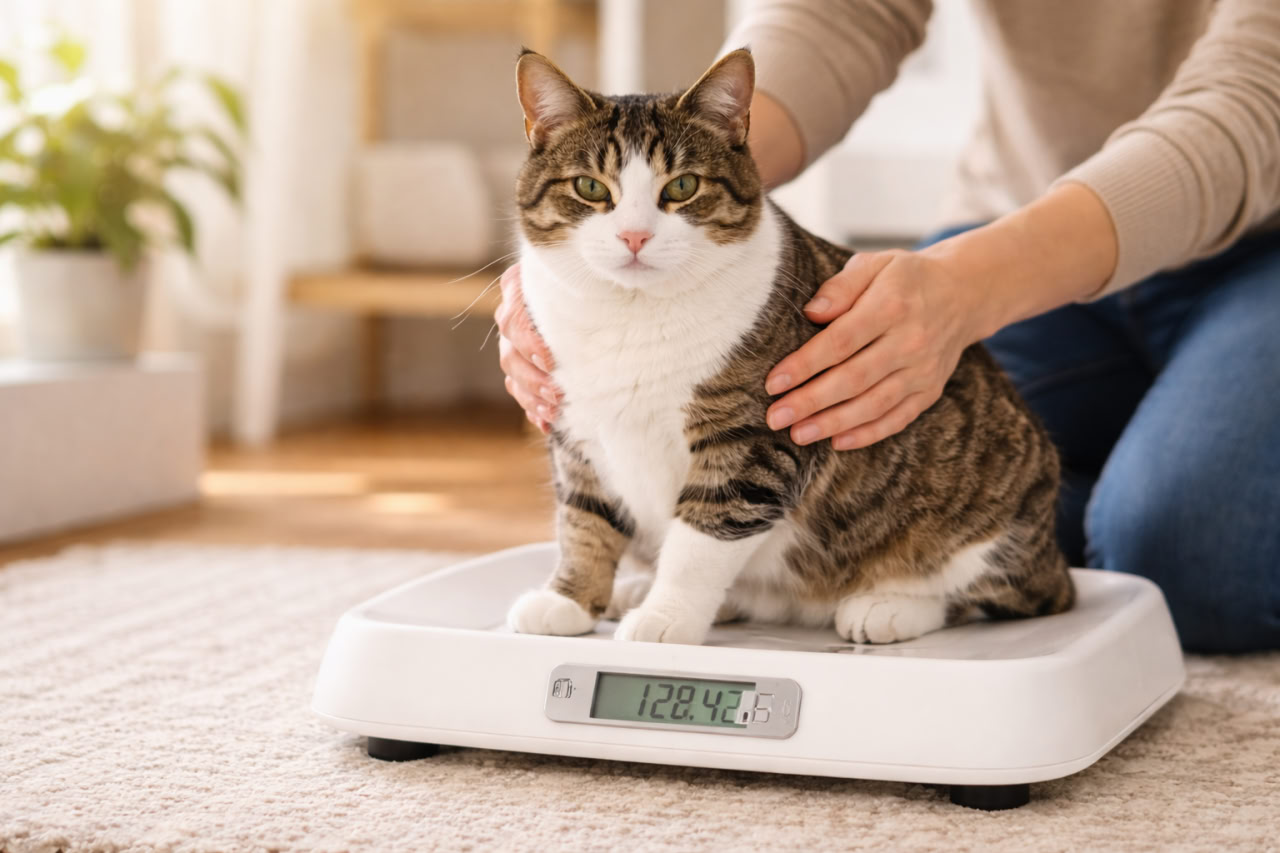
Signs Your Cat Is Overweight (and What to Do Next)
Your cat can look perfectly “normal” while quietly carrying extra weight—especially if they have fluffy fur or a naturally round build. The tricky part is that feline weight gain often happens slowly, so it’s easy to miss until your cat starts acting different: less playful, more tired, or suddenly struggling to groom.
Because extra weight increases the risk of diabetes, arthritis, urinary issues, and breathing problems, spotting the signs early is one of the best things you can do for your cat’s long-term health.
Below are the most reliable signs your cat is overweight, how to check at home (in minutes), and what to do next safely.
What “overweight” means for cats (and why the scale isn’t enough)
Many pet parents assume weight is the whole story. But cats vary widely by breed, frame size, muscle mass, and coat type. Two cats can weigh the same and have very different health risks.
The best quick tool: Body Condition Score (BCS)
Veterinarians often use a Body Condition Score—commonly a 1–9 scale where 4–5 is ideal, 6–7 is overweight, and 8–9 is obese.
A trusted overview is available from the World Small Animal Veterinary Association (WSAVA), including visual BCS charts you can reference at home.
10 clear signs your cat is overweight
Some signs are physical, others are behavioral. The strongest clues are usually the ones you can feel rather than see.
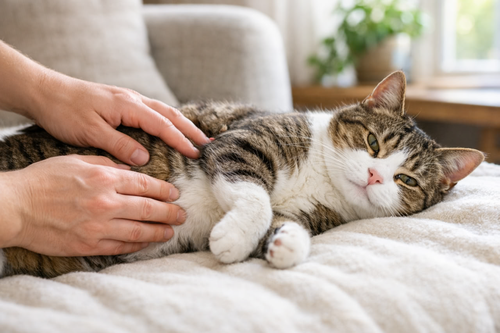
1) You can’t easily feel your cat’s ribs
Gently run your fingers along your cat’s ribcage.
Healthy cats: you can feel ribs with light pressure (like feeling the knuckles on the back of your hand).
Overweight cats: ribs are hard to feel without pressing.
If you’re unsure, compare both sides—fat pads can be uneven.
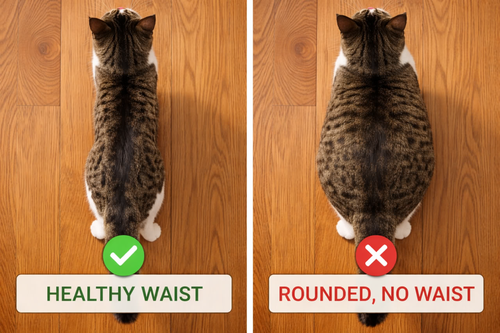
2) No visible waist when viewed from above
Look down at your cat when they’re standing.
Healthy: a slight “hourglass” shape behind the ribs.
Overweight: sides look straight or bulging outward.
Long-haired cats can hide this, so the hands test (feeling ribs and waist) is more reliable.
3) A round belly that swings when walking
A small belly pouch (the primordial pouch) can be normal. What’s not normal is a large rounded belly that appears heavy or sways when your cat walks.
Primordial pouch vs fat
Primordial pouch
• soft flap low on abdomen
• ribs still easy to feel
• waist often still visible
Excess fat
• thick fat layer across ribs
• waist disappears
• abdomen feels heavy and padded
4) Trouble grooming (especially the back and belly)
Overweight cats may:
- develop dandruff or greasy fur
- get mats along the back
- smell stronger than usual
- stop cleaning the base of the tail or belly
This isn’t laziness. Extra weight makes twisting and bending difficult, especially if arthritis is developing.
5) Less interest in play
If your cat used to chase toys but now stops quickly, weight may be part of the problem.
Look for subtle changes:
- fewer zoomies
- shorter play sessions
- more resting after small activity
Extra weight makes movement more tiring and uncomfortable.
6) Hesitation or difficulty jumping
Cats are natural jumpers.
Warning signs include:
- using furniture as steps to climb
- pulling up with front legs first
- avoiding high places completely
Extra weight increases joint stress and can lead to a cycle:
less movement → more weight gain → more discomfort.
7) Heavy breathing after mild activity
A little faster breathing after play is normal.
But warning signs include:
- panting
- open-mouth breathing
- looking winded after minimal activity
If your cat struggles to breathe while resting, seek veterinary help immediately.
8) Weight gain despite “not eating much”
Many cats gain weight because of calorie creep:
- free feeding (food always available)
- extra treats
- calorie-dense food
- multiple people feeding the cat
Even 20–30 extra calories per day can cause gradual weight gain in cats.
For diet comparison you can read:
Wet vs Dry Cat Food
9) Noticeable fat pad on the lower abdomen
Some overweight cats develop a thick fat pad that extends beyond the normal pouch.
You may notice this when your cat lies on their side or sits.
10) Your vet has mentioned weight creep
If your veterinarian has noted that your cat’s weight is trending upward, take it seriously.
The key number is not today’s weight — it is the direction over time.
Quick at-home overweight cat check (2 minutes)
Use this simple routine once a month.
Step 1 — Feel the ribs
Light pressure should reveal ribs.
If you must press firmly, your cat may be overweight.
Step 2 — Find the waist
From above: look for a slight inward tuck behind the ribs.
From the side: the belly should slope slightly upward toward the back legs.
Step 3 — Check spine and hips
You should feel bone structure with a thin fat layer.
If everything feels padded and smooth, it may indicate excess fat.
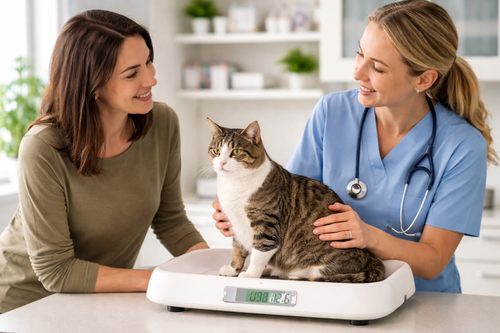
Step 4 — Track weight
Weigh your cat regularly:
- same time of day
- same scale
- record results monthly
Tip: weigh yourself holding your cat and subtract your weight.
Health risks linked to feline obesity
Excess fat affects hormones, metabolism, and inflammation.
Common risks include:
- diabetes mellitus
- osteoarthritis
- urinary tract disease
- grooming problems
- anesthesia complications
- reduced lifespan
A technology-focused look at weight monitoring:
Prevent Pet Obesity with AI
What to do if your cat is overweight
The goal is slow, safe weight reduction.
Rapid weight loss in cats can cause hepatic lipidosis, a dangerous liver condition.
1) Avoid crash dieting
Never drastically cut calories without veterinary guidance.
Call your vet if your cat:
- stops eating
- eats much less for more than 24 hours
- appears lethargic or nauseous
2) Get a veterinary assessment
Your vet can:
- assign a Body Condition Score
- suggest target weight
- estimate calorie needs
- check for medical causes
3) Measure food accurately
Use a kitchen scale if possible.
Helpful habits:
- set a daily calorie allowance
- split food into multiple meals
- avoid topping up bowls automatically
- use puzzle feeders
Learn more:
Understanding Pet Nutrition: Balancing Your Pet’s Diet for a Healthier Life
4) Reduce treat calories
Treats should be less than 10% of daily calories.
Better alternatives:
- small pieces of regular kibble
- tiny bits of cooked lean meat
- playtime instead of food rewards
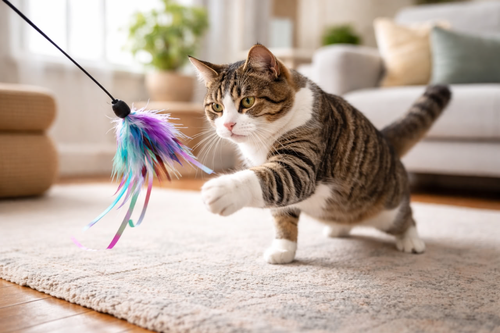
5) Increase activity gradually
Cats prefer short bursts of activity.
Try:
- 2–3 play sessions daily
- wand toys
- puzzle feeders
- climbing shelves or cat highways
Common mistakes that prevent weight loss
Switching to diet food but ignoring portions
Even weight-control food can cause gain if portions are too large.
Assuming begging equals hunger
Begging is often learned behavior.
Solutions:
- smaller meals more often
- timed feeders
- play before meals
Multiple people feeding the cat
Use:
- shared feeding chart
- pre-portioned containers
Feeling guilty about reducing food
Cats adapt best to gradual routine changes combined with enrichment.
When weight gain might be something else
See a vet if you notice:
- sudden abdominal swelling
- rapid weight change
- vomiting or diarrhea
- increased thirst or urination
- extreme lethargy
Helpful article:
Cat Vomiting After Eating: Causes, Solutions, and When to Worry
A simple 30-day action plan
Week 1 — Baseline
- record weight
- photograph top and side views
- measure current food intake
Week 2 — Structure
- divide meals into 2–4 servings
- add one daily play session
- start puzzle feeding
Week 3 — Optimize
- reduce treats
- add second play session
- reassess waist and ribs
Week 4 — Review
- weigh your cat again
- compare photos
- adjust diet with vet guidance if needed
Healthy weight loss in cats is slow and steady.
FAQ
How do I check weight under fluffy fur?
Use touch instead of sight. Feel ribs and waist with your hands.
Is a hanging belly always obesity?
No. A small primordial pouch can be normal.
Why is my overweight cat always hungry?
Often behavioral. Measure food, use puzzle feeders, and create feeding routines.
Key takeaway
The clearest signs your cat is overweight include:
- ribs hard to feel
- missing waistline
- reduced grooming
- difficulty jumping
- lower activity
Recognizing these signs early allows you to correct weight gradually and protect your cat’s long-term health.
For long-term diet guidance you may also read:
Best Diet for Indoor Cats: Complete Nutrition Guide for Healthy Indoor Cats