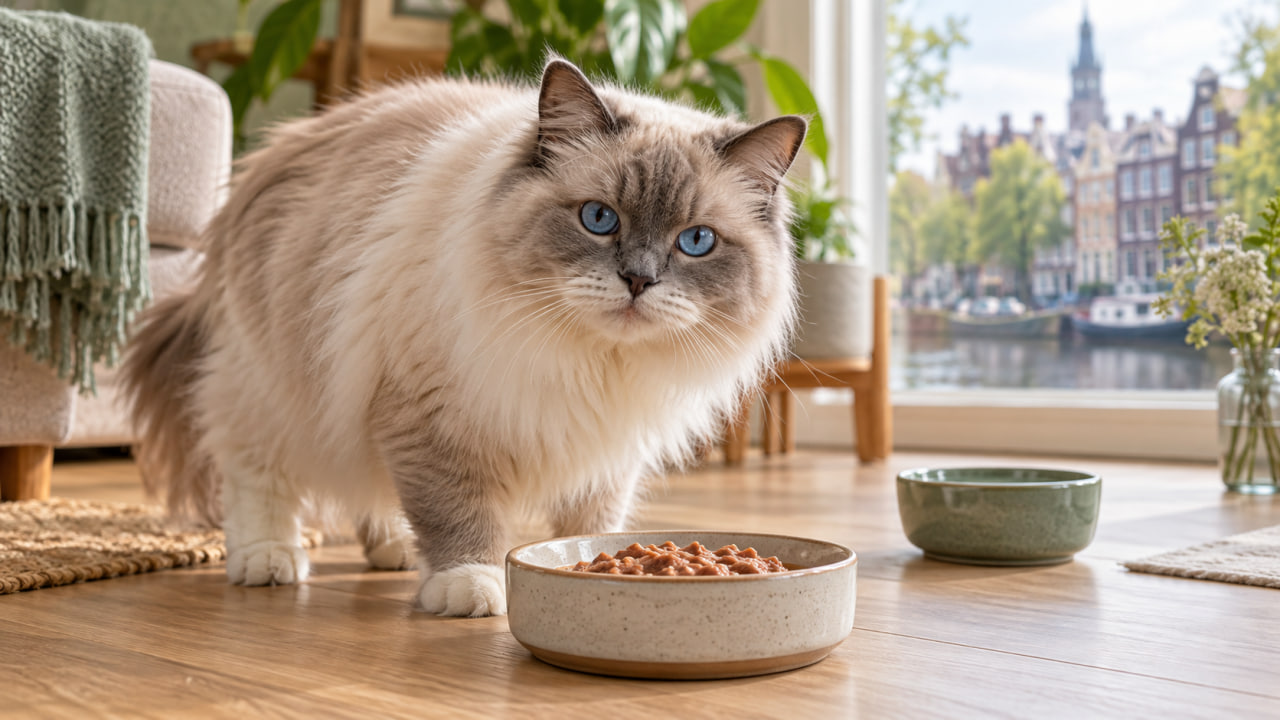
Choosing food for an older cat can feel confusing. Should you switch to a senior recipe, offer softer meals, or change the portions? The starting point is your cat’s current health, appetite and body condition, not just the age printed on the pack.
This guide explains what to check before changing food, how to compare recipes, and when to ask your vet for advice. If you are also comparing brands available in Europe, the guide below can help you build a shortlist.
Quick Answer: What Should You Feed an Older Cat?
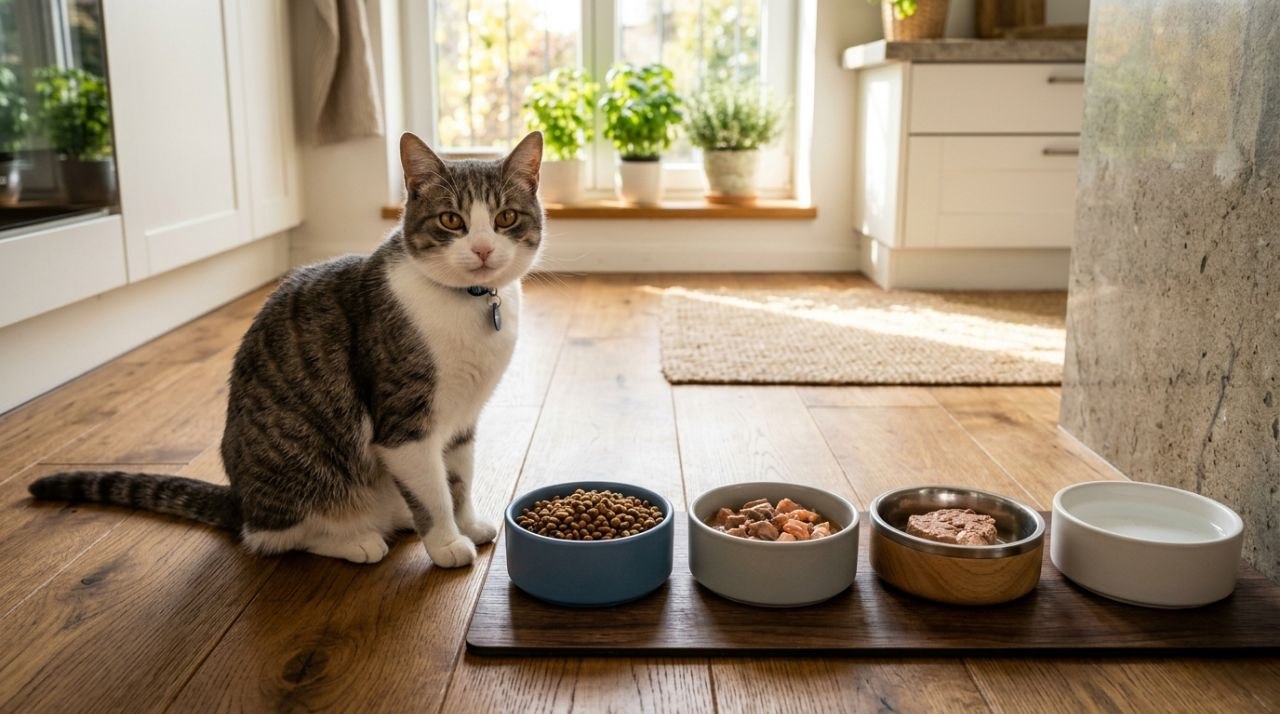
Choose a complete cat food that fits your older cat’s health, body condition and eating habits. A “senior” label can help you find options, but it does not replace checking the individual recipe.
Do not automatically reduce portions because your cat is older. Some older cats need fewer calories, while others struggle to maintain weight and muscle.
If your cat is losing weight, eating less, or finding meals difficult, speak to your vet rather than relying on a food change alone.
Does Your Cat Need to Switch to Senior Cat Food?
Getting older is a reason to review your cat’s feeding plan, not an automatic reason to replace their food.
The AAHA/AAFP feline life-stage guidelines classify cats aged 7–10 as mature adults and cats older than 10 as seniors. These categories help guide care, but they do not set an automatic date for changing food.
A healthy older cat maintaining a suitable weight may need a different approach from one that is gaining weight, losing muscle, or eating less. As AAHA’s senior nutrition guidelines explain, assessing both body fat and muscle helps identify when feeding changes may be needed.
Before buying a different food, use these observations to prepare for a feeding review:
What you notice | What to check | A useful next step |
|---|---|---|
Your cat eats comfortably and maintains a suitable weight | Whether the current food is complete and still appropriate for their health | Review the feeding plan at their routine vet visit; age alone does not settle the decision |
Your cat is gradually gaining weight | Measured portions, treats, activity and the food’s calorie content | Ask your vet to help assess body condition and decide whether portions or food need adjusting |
Your cat is losing weight or looks less muscular | Changes in food intake, weight and body shape | Arrange a veterinary assessment rather than simply buying a different senior recipe |
Your cat approaches food but struggles to eat it | Dropped food, unusual chewing or a new preference for soft textures | Have their mouth and teeth checked; softer food alone does not address a possible underlying problem |
Treat this table as a way to organise observations, not diagnose the cause.
What to Check Before Changing Your Older Cat’s Food
Before comparing new foods, make a short record of your cat’s current feeding routine. You do not need a complicated diary. The following details are enough to make a feeding review more useful.
1. Identify the Exact Food
Record the brand, recipe and whether it is wet or dry. Different recipes from the same brand can have different calorie levels and feeding instructions.
Photograph the label, including the complete or complementary food declaration, calorie information if provided, and feeding guide. Keep the details of any prescribed diet too.
2. Measure What Your Cat Actually Eats
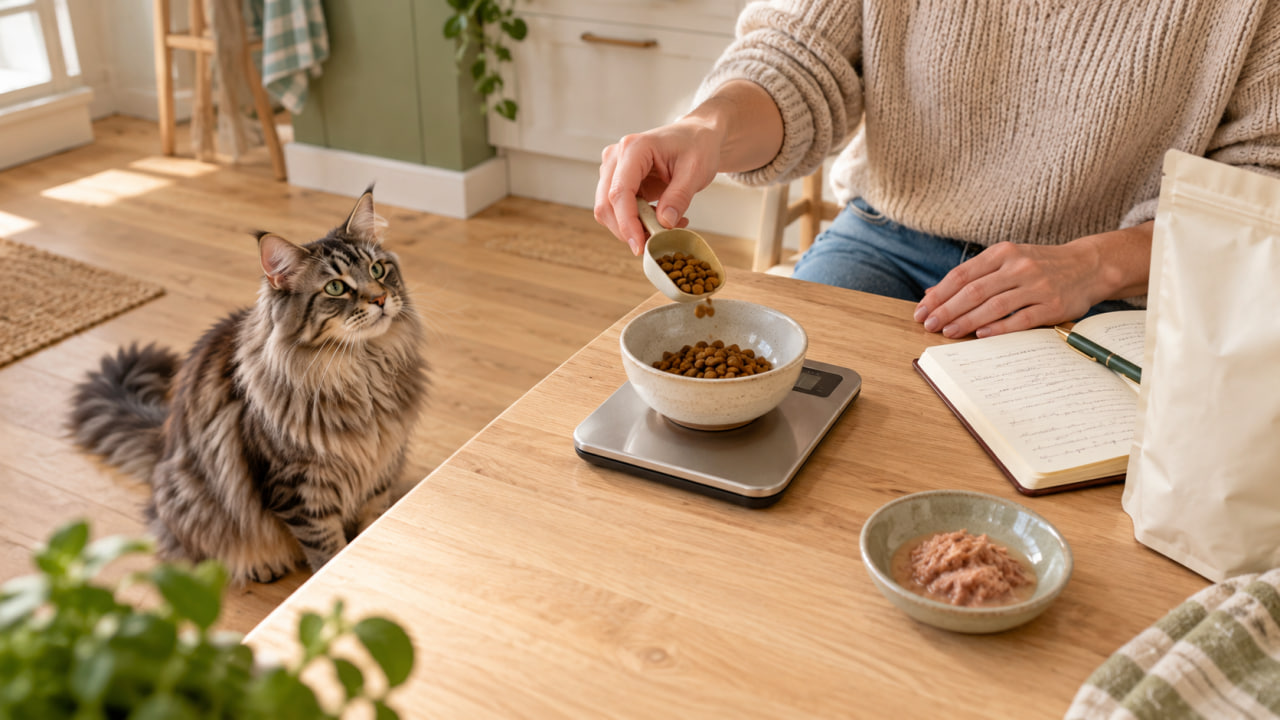
Write down the amount offered and what remains. For dry food, use kitchen scales rather than estimating a handful. For wet food, record the pouch or tin size and how much your cat finishes.
If several cats share bowls, you may not know how much your older cat eats. Where practical, offer supervised, separate meals to make this clearer.
3. Include Treats and Extras
List treats, food used to give medication, toppers and anything offered by other household members. These are part of the feeding routine, even when they seem like small additions.
4. Define What You Want to Improve
Be specific: are you looking for a texture your cat accepts, clearer portion guidance, or a food that is easier to buy consistently?
Take this record to your vet if the change involves a health concern or prescribed diet. A clear starting point makes it easier to judge whether a new feeding plan is helping.
How to Compare Foods for an Older Cat
Once you know what your cat currently eats, shortlist foods that address the reason for the change. Start with a complete food for cats, then compare the specific recipes, not just the brands or age labels.
For an older cat, three checks are particularly useful:
What to compare | Why it matters | What to do |
|---|---|---|
Calories per gram, pouch or tin | Two foods can provide different amounts of energy in the same-sized serving | Check the calorie information or ask the manufacturer. Do not assume the old portion size suits the new food |
Protein and the overall formulation | Maintaining muscle matters as cats age, but the food must suit the cat’s health | Do not choose a low-protein food simply because your cat is older. Discuss any medical dietary restrictions with your vet |
Evidence behind “senior” claims | The word alone does not explain how the recipe differs from adult food | Ask what has changed in the formulation and which cats the food is intended for |
The AAHA senior nutrition guidelines explain that some healthy older cats may benefit from more calorie-dense, digestible food to help maintain weight and muscle. This is why automatically choosing a “light” recipe can miss an individual cat’s needs.
Ask for Missing Information
If the label leaves an important question unanswered, contact the manufacturer. Useful questions include:
How many calories does this exact recipe provide?
Who formulates the food, and what nutritional qualifications do they have?
What quality checks are carried out on the finished product?
These questions follow the approach in WSAVA’s guide to selecting pet foods.
Practical example: If your cat now prefers smaller meals, a food providing more energy in a smaller portion may be worth discussing with your vet. If your cat is gaining weight, that same feature may be less useful. Choose for the problem you are trying to solve.
Making Meals Easier for Your Older Cat
Sometimes the feeding setup needs attention alongside the food itself. Small changes to access, serving temperature and texture can make meals more comfortable.
Keep Food Easy to Reach
Place the bowl somewhere familiar and quiet that your cat can reach without jumping or climbing stairs. Use a stable, non-slip surface so the bowl stays in place while they eat.
In a multi-pet home, give your older cat space to finish without another animal approaching or taking the food.
Gently Warm Wet Food
Some older cats have a reduced sense of smell, which can make food less appealing. The Dutch pet-information organisation LICG recommends gently warming wet food to strengthen its aroma.
Warm only the portion you are about to serve. Stir thoroughly and check that it is lukewarm throughout, with no hot spots. You can also try mixing in a little warm water if your cat accepts the resulting texture.
Offer a Texture Your Cat Accepts
Pâté, mousse and chunks in gravy feel different in the mouth. Offer a small amount of a suitable alternative rather than buying a large supply immediately. Keep the familiar food available while you assess acceptance; do not withhold it to force a switch.
If your cat has a prescribed diet, ask your veterinary team which textures or serving changes are suitable.
These adjustments support comfortable feeding. A new difficulty eating or a drop in appetite still needs veterinary attention, even if warming or softening the food seems to help.
When Feeding Changes Need Veterinary Advice
A feeding review can reveal changes that need more than a different recipe. Use the urgency of the symptoms to decide your next step.
Contact Your Vet Promptly
Arrange an assessment if your cat:
Loses weight despite eating their usual amount or more.
Gradually eats less, drops food, or changes how they chew.
Starts drinking or urinating noticeably more.
Has recurring vomiting or changes in stool.
Tell the practice when the change started and whether several signs appeared together. Your feeding notes can help, but do not delay contacting the vet while you complete them.
If your older cat stops eating, contact your vet the same day. Cornell’s Feline Health Center warns that loss of appetite can seriously affect an adult cat’s health in as little as 24 hours. This is not a safe waiting period.
Seek Urgent Help for Severe Symptoms
Collapse, difficulty breathing, or frequent vomiting with marked weakness needs immediate veterinary advice. Do not keep trying different foods while waiting for improvement.
If you are in the Netherlands, save the contact details for your regular practice and its recommended out-of-hours service, or spoeddierenarts, before you need them.
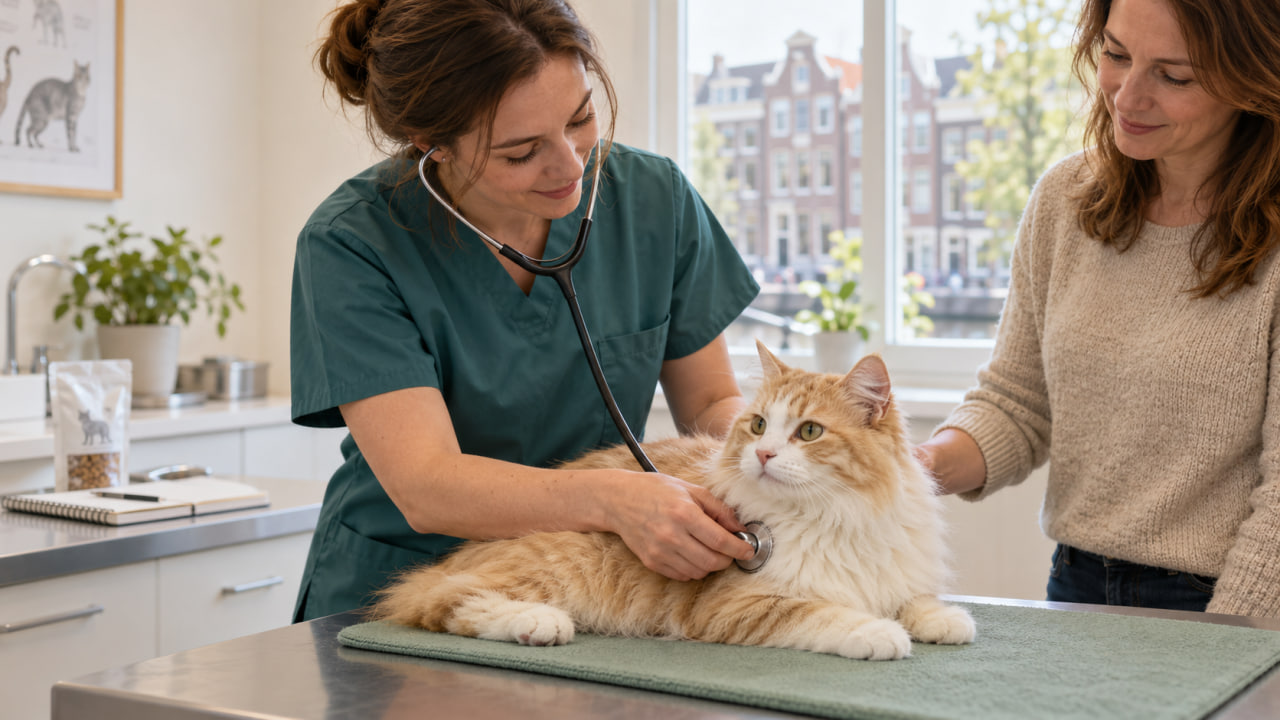
Based in Amsterdam and looking for a regular vet for your older cat? The guide below explains what to check when comparing clinics. For urgent symptoms, contact a veterinary practice or emergency service directly.

How to Introduce a New Food to Your Older Cat
Once you have chosen a suitable food, introduce it gradually unless your vet gives you different instructions. A sudden switch can upset your cat’s stomach or lead them to refuse the new food.
PDSA’s feeding guidance recommends a gradual introduction, allowing extra time for cats that need it.
Start with a small amount in a separate dish. Keep the familiar food available so your cat can investigate the new recipe without losing their usual meal.
Increase the new food as acceptance becomes consistent. Gradually reduce the old food, using the calorie information or your vet’s feeding plan to guide quantities. Equal weights of different foods may provide different calories.
Watch acceptance and tolerance. Note whether your cat eats enough and whether vomiting or stool changes appear. Avoid introducing new treats and supplements at the same time, so changes are easier to interpret.
Do not rush to finish a bag or follow a fixed deadline. If your cat refuses the new food, ask your vet how to proceed rather than withholding familiar food to force acceptance.
For a prescribed diet, follow your veterinary team’s transition plan. If your cat stops eating or becomes unwell, seek advice promptly.
Frequently Asked Questions
Can an Older Cat Keep Eating Adult Cat Food?
Yes, some healthy older cats can continue eating an appropriate complete adult food. The decision depends on their health, ability to maintain weight and muscle, and how well they eat the food. Review the recipe with your vet rather than switching solely because your cat reaches a particular birthday.
Is Senior Cat Food the Same as a Kidney Diet?
No. A general senior recipe is not interchangeable with a veterinary kidney diet. Kidney diets have specific nutritional adjustments, including controlled phosphorus. If your cat has kidney disease, ask your vet which diet is appropriate; do not substitute a food simply because its packaging mentions senior or kidney support.
Does My Older Cat Need Vitamins or Supplements?
Not automatically. A complete, balanced diet usually supplies the vitamins and minerals a healthy cat needs. Supplements may be appropriate for specific reasons, but age alone does not establish a need. Cornell’s feeding guidance advises getting veterinary approval before giving supplements.
How Can I Choose Affordable Food for an Older Cat in the Netherlands?
Shortlist complete foods that suit your cat’s needs, then compare the cost of the amount they actually need each day—not just the price per bag or pouch. Choose a recipe you can buy consistently. If a therapeutic diet has been prescribed, discuss affordable suitable options with your vet before replacing it.
Make Your Older Cat’s Feeding Plan More Personal
Use what you have recorded, your cat’s food, portions and eating habits, to identify the next decision you need help with. That might be comparing recipes, reviewing serving sizes, or preparing questions for your vet.
For everyday nutrition guidance, create your cat’s FAMMO profile with details such as age, weight, activity level and known dietary needs. Keep those details updated as your cat’s circumstances change.
Use FAMMO alongside your veterinarian’s advice, especially when managing a diagnosed condition or a prescribed diet.