
Dental care is easy to overlook because dogs and cats rarely show tooth pain in obvious ways. Bad breath, visible tartar, or a change in eating may be the first sign an owner notices, even though problems around the teeth and gums may have been developing for some time.
The useful question is not simply whether dental care matters, but what actually works. Should you brush every day? Are dental chews worth using? Can water additives replace brushing? When does tartar need professional treatment? And how do you know when your dog or cat’s mouth needs veterinary attention?
This guide brings those questions together in one practical place. You’ll learn how to build an effective home dental-care routine, choose products with meaningful evidence behind them, recognise warning signs, understand what happens during professional dental care, and know when home care is no longer enough.
Quick Answer
Good dental care for dogs and cats starts with regular tooth brushing using pet-safe toothpaste. Daily brushing provides the most consistent home plaque control, while dental chews, dental diets, wipes, gels, and water additives can provide additional support when there is evidence behind the specific product, such as a VOHC Seal of Acceptance.
These products should support dental care, not replace brushing or veterinary treatment. Brushing helps control plaque but cannot remove established tartar or treat dental disease below the gumline.
Contact a veterinarian if you notice persistent bad breath with red or bleeding gums, loose or broken teeth, facial swelling, difficulty eating, or obvious mouth pain.
The goal is simple: reduce daily plaque at home, use evidence-backed products as support, and know when the problem needs veterinary care.
Why Pet Dental Care Matters
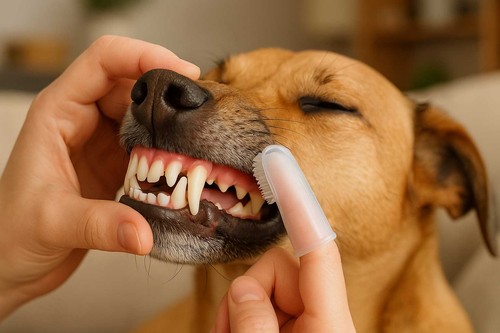
Dental problems often start quietly. A thin layer of plaque forms on the teeth every day, and if it is not regularly removed, it can contribute to inflammation along the gumline. Over time, gingivitis can progress to periodontal disease, which affects the tissues that support the teeth and can lead to pain, infection, loose teeth, and tooth loss.
This is more common than many pet owners realise. According to the AAHA Dental Care Guidelines most dogs and cats have some level of periodontal disease by the age of three, and the early stages may go unnoticed at home.
Pets are also good at hiding mouth pain. A dog may still eat despite an uncomfortable tooth, and a cat may simply chew differently, become less interested in hard food, or seem quieter than usual. This is why waiting for an obvious dental problem is not the best strategy.
Prevention matters: regular plaque control at home, watching for changes, and veterinary dental checks when needed can help identify problems before they become more advanced.
Remember: A clean-looking tooth does not always mean the whole mouth is healthy. Some dental problems develop below the gumline, where they cannot be fully assessed just by looking at the visible part of the tooth.
What Actually Works for Pet Dental Care at Home?
If you do only one thing for your pet’s teeth at home, make it regular tooth brushing. For most healthy dogs and cats that tolerate it, brushing provides more consistent plaque control than chews, wipes, gels, or water additives.
Other dental products can still be useful, especially when they have evidence behind their claims. The key is knowing which methods do the main work, which are supportive, and what they cannot fix at home.
Tooth Brushing: The Most Important Home Habit
For most dogs and cats, daily tooth brushing is the most effective home method for controlling plaque. Plaque is the soft bacterial film that builds up on teeth, and regular brushing helps remove it before it contributes to gum inflammation.
The AAHA Dental Care Guidelines recommend daily brushing and make an important distinction: brushing removes plaque, but it does not remove established tartar (calculus).
Use a toothbrush and toothpaste made specifically for pets. We’ll cover the technique step by step in the next section, including a gradual 3-week routine for pets that are not used to brushing.
If your pet already has painful, swollen, or bleeding gums, arrange a veterinary dental check before starting an aggressive brushing routine.
VOHC-Accepted Products: A Useful Evidence Check
Pet stores and websites are full of products promising “cleaner teeth” or “fresh breath,” but those claims do not all mean the same thing.
A useful starting point is the Veterinary Oral Health Council (VOHC). Products that carry the VOHC Seal of Acceptance have met defined standards for helping control plaque, tartar, or both.
Think of the VOHC seal as an evidence check, not a guarantee that the product can replace brushing or veterinary dental care.
You can check the current VOHC list of accepted products for dogs and cats before buying a dental product.
Always check the specific claim. One product may have evidence for tartar control, while another may have evidence for both plaque and tartar.
Dental Chews: Helpful, but Not a Replacement for Brushing
Dental chews can be useful because chewing creates mechanical contact with the tooth surface. Some products also contain ingredients designed to help reduce plaque or tartar buildup.
But a dental chew should be treated as support, not as a toothbrush replacement.
Before buying a dental chew, check three things:
Size: choose the version made for your pet’s size.
Evidence: check what the product’s VOHC claim actually covers, plaque, tartar, or both.
Calories: count edible chews as part of your pet’s daily food intake.
Very hard chews or toys are not automatically better and can increase the risk of tooth damage or fracture.
For cats, chew-style options are more limited, but some dental treats and other oral-care products have VOHC acceptance.
Dental Diets: Different From Ordinary Dry Food
Ordinary dry food does not automatically clean a pet’s teeth simply because it is crunchy.
Dental diets are specifically formulated for oral care, using features such as kibble size, texture, structure, or formulation to help reduce plaque or tartar. Choose one because it has evidence behind its dental claim, not simply because the food is dry.
A dental diet also still needs to meet your pet’s overall nutritional needs. Before changing your dog’s or cat’s main diet, check whether the food is appropriate for their species, life stage, calorie needs, and health status.
If you are comparing foods, our guide to how to read a pet food label can help you understand what the package is actually telling you beyond the marketing claims.

What About Dental Wipes, Gels and Water Additives?
Dental wipes, gels, sprays, powders, and water additives can be useful when brushing is difficult or as an extra layer of home care.
Their effectiveness varies by product. Some have VOHC acceptance for plaque or tartar control, while others may have little evidence behind their dental claims.
Use them as support, not an automatic substitute for brushing. Choose a product with evidence behind its claim and one your pet will tolerate consistently.
If your pet currently refuses a toothbrush, a suitable wipe or other dental product may also serve as a temporary step while you gradually introduce brushing.
Which Option Should You Use?
There is no need to buy every dental product at once.
Method | Best role | Best for | Important limitation |
|---|---|---|---|
Daily brushing | Main home method for plaque control | Most pets that tolerate mouth handling | Does not remove established tartar |
VOHC-accepted dental chew | Adds mechanical plaque/tartar control | Dogs that enjoy chewing | Adds calories and does not replace brushing |
Dental diet | Ongoing dietary support for oral care | Pets for whom a dental diet is nutritionally appropriate | Not every dry food is a dental diet |
Dental wipes | Useful when brushing is difficult | Pets that resist a toothbrush | Only clean the surfaces they reach |
Gel or water additive | Convenient supportive care | Owners needing an easy add-on | Effect depends on the individual product |
Professional dental care | Examines and treats disease beyond home care | Pets with disease, pain, heavy tartar, or abnormal findings | Requires veterinary assessment |
A Simple Place to Start
For many healthy pets, keep the routine simple:
1. Aim for regular brushing when your pet can tolerate it.
2. Add one evidence-backed dental product that fits your pet and your routine.
3. Watch for pain, bleeding, swelling, eating changes, or heavy tartar that may need veterinary attention.
You do not need several dental products at once. Start with a routine your pet tolerates, aim for consistent plaque control, and gradually work toward brushing when possible. The next section shows you how to introduce it step by step.
How to Brush Your Dog’s or Cat’s Teeth
The hardest part of brushing is often not the brushing itself—it is helping your dog or cat become comfortable with having their mouth handled.
Do not aim for a perfect full-mouth clean on the first attempt. Short, calm sessions are much easier to build into a routine.
What You Need Before You Start
Keep the setup simple:
A soft pet toothbrush: Choose a small, soft-bristled brush or finger brush that fits comfortably in your pet’s mouth.
Pet-safe toothpaste: Use toothpaste made specifically for dogs or cats.
A calm setting: Start when your pet is relaxed rather than excited or trying to play.
A reward: Praise, play, or a small treat can help make the experience positive.
Do not use human toothpaste. Pets swallow toothpaste rather than rinsing and spitting it out, so human products are not suitable for routine pet dental care.
The AAHA guidance on home dental care recommends daily brushing with pet-specific toothpaste as the most effective form of plaque control at home.
If your pet already has significant redness, bleeding, swelling, a broken tooth, or obvious mouth pain, arrange a veterinary dental examination before starting a brushing routine.
How to Brush Your Pet’s Teeth
Start when your pet is calm and sit beside them rather than leaning directly over them.
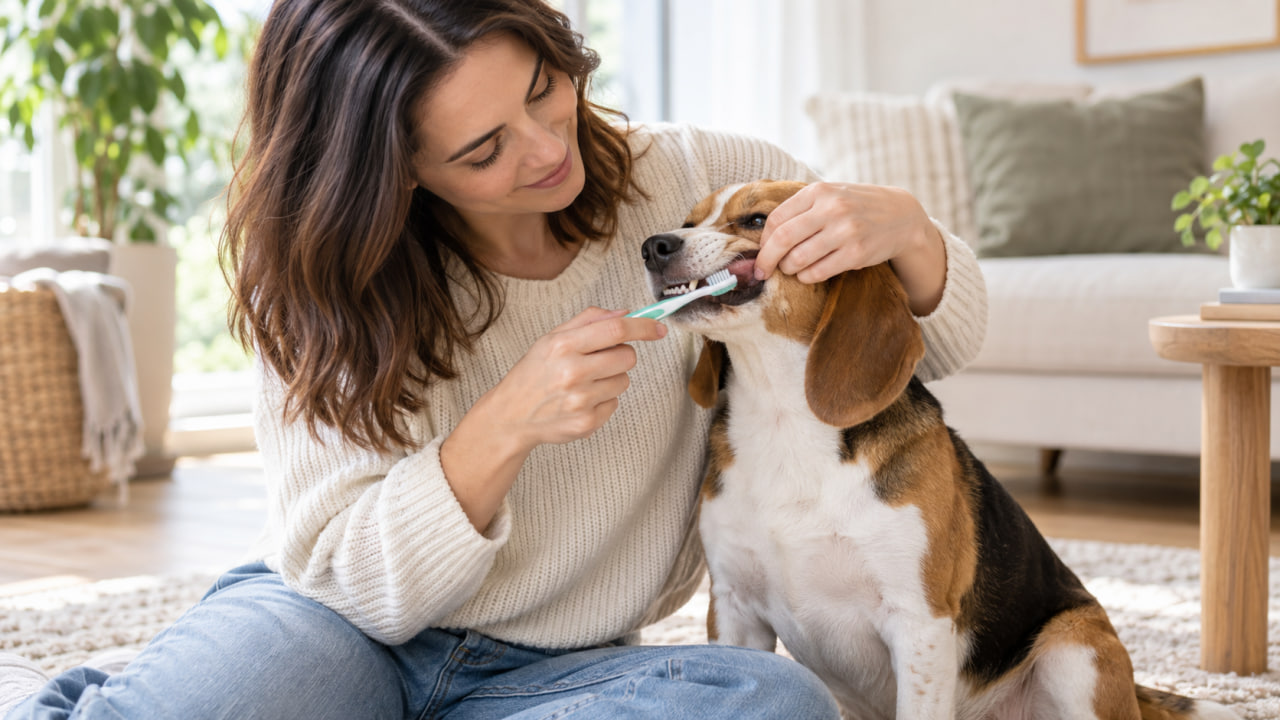
Gently lift the lip. You do not need to force the mouth open. Focus on the outer surfaces of the teeth near the gumline, using light pressure and gentle movements.
Begin with only a few teeth if necessary. A short 10- or 20-second session that your pet tolerates well is better than forcing a longer session.
As your pet becomes more comfortable, gradually brush more of the mouth and work toward the back teeth.
Finish positively with praise, play, affection, or a small reward.
FAMMO’s 3-Week Tooth-Brushing Routine
If your pet has never had their teeth brushed, introduce the routine gradually rather than going straight to a full brushing session.
Week 1: Get Comfortable With Mouth Handling
Spend short sessions gently touching your pet’s cheek, lifting the lip, and briefly touching the outside of the teeth and gums.
Reward calm behaviour. At this stage, you are building tolerance rather than trying to clean the teeth.
Week 2: Introduce Pet Toothpaste
Let your pet smell or taste a small amount of pet-safe toothpaste.
Once they are comfortable, gently rub the outside of a few teeth with your finger, gauze, or a finger brush. Keep the session short and stop before your pet becomes stressed.
Week 3: Introduce the Toothbrush
Begin with a soft toothbrush and gently clean the outer surfaces near the gumline.
Start with the easiest teeth to reach and gradually extend the session as your pet becomes more comfortable.
The goal after three weeks is not necessarily a perfect full-mouth brushing. It is a routine your pet accepts and you can continue consistently.
Important: This three-week plan is a gradual training framework, not a deadline. Some pets may progress faster, while others—especially cats or pets with previous negative experiences, may need longer.
What If Your Dog or Cat Will Not Let You Brush?
Do not force the process.
If your pet becomes frightened, pulls away, growls, hides, or repeatedly refuses the toothbrush, return to the last step they tolerated comfortably.
For example, move back from the toothbrush to lip handling, or from mouth handling to simply rewarding calm face touching. Build from the point where your pet still feels comfortable.
An evidence-backed dental product can provide additional support while you work toward brushing.
A sudden refusal is different. If a pet that previously tolerated mouth handling suddenly pulls away, stops chewing normally, or appears painful, arrange a veterinary examination rather than assuming it is only a behaviour problem.
Common Tooth-Brushing Mistakes to Avoid
Forcing the process
Holding your pet down to finish brushing can make future dental care harder.
Brushing too hard
Plaque does not require aggressive scrubbing. Use gentle pressure near the gumline.
Trying to scrape off tartar at home
Do not use metal tools or sharp objects to remove hardened tartar. Established tartar and painful dental disease require veterinary assessment.
Signs of Dental Problems You Should Not Ignore
Dental problems are not always obvious. Dogs and cats may continue eating, playing, and behaving almost normally even when their mouth is uncomfortable.
That is why it helps to notice small changes rather than waiting for severe pain or a missing tooth.
Sign | What it may tell you | What to do |
|---|---|---|
Persistent bad breath | Can be an early sign of dental or gum disease | Mention it at your pet’s next dental check, especially if it is new or worsening |
Red, swollen, or bleeding gums | May indicate inflammation around the teeth | Arrange a veterinary dental examination |
Yellow or brown tartar | Hardened buildup is already present on the teeth | Do not try to scrape it off at home |
Drooling or pawing at the mouth | May indicate discomfort or oral pain | Watch for other changes and contact your veterinarian |
Dropping food or chewing on one side | Eating may have become uncomfortable | Book a dental assessment |
Preferring softer food | Can be a subtle sign of mouth discomfort, particularly in cats | Have the mouth checked if the change persists |
Loose or broken teeth | May involve pain, trauma, or advanced dental disease | Veterinary examination is needed |
Facial swelling | Can be associated with a dental infection or another oral problem | Contact a veterinarian promptly |
The AAHA guidance on pet dental disease includes persistent bad breath, red or swollen gums, drooling, changes in chewing, and facial swelling among signs that can appear with dental disease.
Dogs and Cats May Show Dental Pain Differently
Dogs may continue eating despite mouth pain but chew differently, drop food, avoid hard toys, or resist having their face touched.
Cats can be more subtle. They may eat more slowly, turn their head while chewing, prefer softer food, drool, become irritable, or simply eat less. Cornell’s Feline Health Center notes that cats may show few obvious signs even when oral disease is painful.
The key is to notice changes from your pet’s normal behaviour, not just dramatic symptoms.
When to Seek Prompt Veterinary Care
Contact a veterinarian promptly if your pet develops facial or jaw swelling, significant bleeding from the mouth, obvious severe pain, a broken tooth after trauma, or sudden difficulty eating or drinking.
Do not scrape tartar, pull a loose tooth, or try to treat a painful mouth yourself.
Can You Remove Tartar From Your Pet’s Teeth at Home?
Once plaque hardens into tartar (calculus), normal brushing will not remove it.
Do not try to scrape tartar from your pet’s teeth with metal tools or other sharp objects. You can damage the tooth surface or gums, and visible tartar may not show what is happening below the gumline.
If your dog or cat has heavy yellow or brown tartar, red or bleeding gums, bad breath with other dental changes, or signs of mouth pain, arrange a veterinary dental examination rather than trying more aggressive cleaning at home.
Professional dental care can remove deposits above and below the gumline and assess teeth for problems that cannot be safely evaluated at home.
Simple rule: Brushing helps control plaque before it hardens. Established tartar or painful dental disease needs veterinary assessment.
When Home Dental Care Is Not Enough
Home dental care is mainly preventive. Once a pet has significant tartar, painful gums, a damaged tooth, or disease below the gumline, brushing and dental products cannot properly diagnose or treat the problem.
That is when a veterinary dental examination becomes important. The goal is not simply to make the visible teeth look cleaner, but to find and treat problems that may be hidden or painful.
What Happens During Professional Dental Care?
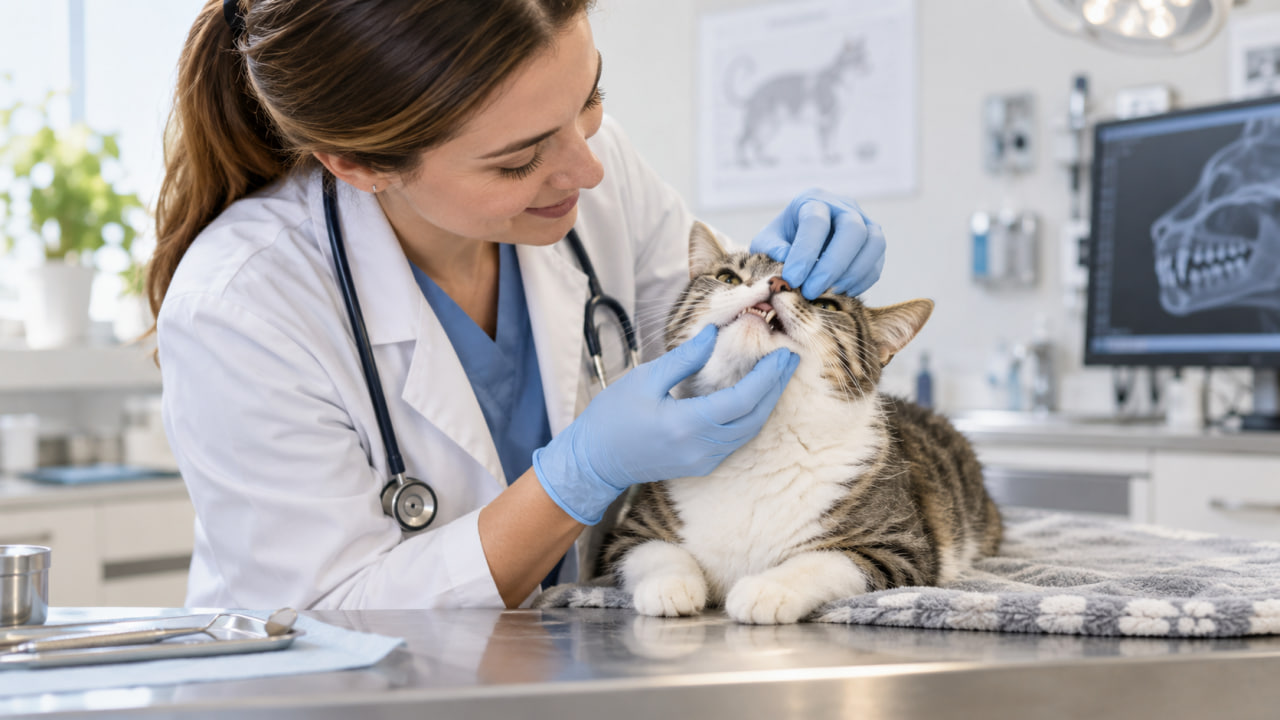
A veterinarian can first examine the visible mouth while your pet is awake. A complete dental procedure may then include a detailed examination of the teeth and gums, dental X-rays, cleaning above and below the gumline, polishing, and treatment of damaged or painful teeth when needed.
The exact procedure depends on what is found. The AAHA Dental Care Guidelines describe professional dental care as more than simply removing visible tartar.
Why Anesthesia and Dental X-Rays Matter
General anesthesia allows the veterinary team to examine and treat the mouth safely while the pet remains still. It also makes dental X-rays, periodontal assessment, and cleaning below the gumline possible while protecting the airway during the procedure.
Anesthesia is not risk-free, so the veterinarian should assess each pet individually before the procedure.
Dental X-rays are important because much of each tooth lies below the gumline. They can reveal problems involving roots, surrounding bone, hidden fractures, or other abnormalities that may not be visible during an awake examination.
What About Anesthesia-Free Dental Cleaning?
Anesthesia-free cleaning may remove some visible buildup, but it is not equivalent to a complete veterinary dental procedure.
Without anesthesia, a full examination, complete dental X-rays, and thorough assessment and cleaning below the gumline cannot be performed safely.
The practical takeaway: Home care helps prevent problems. Professional dental care is for diagnosing and treating problems that home care cannot safely reach.
Dental Care Is Different for Dogs and Cats
Dogs and cats share many of the same dental-care needs, but size, mouth shape, tooth crowding, and species-specific conditions can change their risk.
Small and Short-Nosed Dogs May Need Closer Attention
Small dogs often have many teeth packed into a relatively small mouth. Crowded or rotated teeth can create areas where plaque collects and brushing becomes more difficult.
Short-nosed, or brachycephalic, dogs may also have crowded or unusually positioned teeth because of their jaw shape.
The AAHA Dental Care Guidelines note that small and brachycephalic dogs may need closer dental prevention and monitoring.
This does not mean every small dog will develop serious dental disease, but it is a good reason to pay closer attention to regular home care and dental checks.
Cats Have Their Own Dental Problems
Cats can develop periodontal disease like dogs, but they are also affected by conditions such as tooth resorption, where parts of the tooth gradually break down.
The condition can be painful and may not be obvious from the visible surface of the tooth. A cat may still eat but chew differently, prefer softer food, or show only subtle signs of discomfort.
Cornell’s Feline Health Center explains that dental X-rays can be important for identifying the extent of these problems.
The practical difference: Dogs may need extra attention because of tooth crowding and mouth shape, while cats can develop species-specific problems such as tooth resorption. In both cases, the individual pet matters more than a one-size-fits-all routine.
Frequently Asked Questions About Pet Dental Care
How often should I brush my dog’s or cat’s teeth?
Daily brushing provides the most consistent plaque control when your pet tolerates it. If daily brushing is not realistic yet, start gradually and build a routine you can maintain rather than forcing long or stressful sessions.
Do cats really need their teeth brushed?
Yes. Cats can develop plaque, periodontal disease, and painful dental conditions just like dogs. Because cats often hide mouth pain, regular home care and veterinary dental checks can be especially useful.
Can dental chews replace tooth brushing?
No. Dental chews can support oral care, especially when they have evidence for plaque or tartar control, but they should not be treated as a complete replacement for brushing.
Look for the specific claim behind the product, such as a VOHC Seal of Acceptance, rather than relying only on words like “dental” or “oral care” on the packaging.
Can I use human toothpaste to brush my pet’s teeth?
No. Use toothpaste made specifically for dogs or cats.
Pets swallow toothpaste rather than rinsing and spitting it out, so human toothpaste is not appropriate for routine pet dental care.
How often does my pet need a professional dental cleaning?
There is no single schedule that is right for every dog or cat.
The need for professional dental care depends on your pet’s age, mouth shape, dental history, home-care routine, and what the veterinarian finds during examination. Some pets may need dental treatment more often than others, so the timing should be based on individual assessment rather than a fixed interval.
Final Takeaway: Protect the Mouth, Know the Limits of Home Care
Good dental care does not need to be complicated.
Start with regular tooth brushing when your dog or cat tolerates it, use evidence-backed dental products as support, and pay attention to changes in breath, gums, eating, or behaviour.
The most important thing is knowing where home care ends. Brushing and dental products can help control daily plaque, but they cannot diagnose hidden disease, remove established tartar safely, or treat a painful tooth.
A simple routine you can maintain is more useful than an elaborate one you rarely follow.
If something in your pet’s mouth looks painful, swollen, damaged, or suddenly different, have it checked by a veterinarian.
Make Preventive Care Part of Your Pet’s Routine
FAMMO helps you make more informed everyday decisions about your pet’s nutrition and preventive care based on their individual profile.