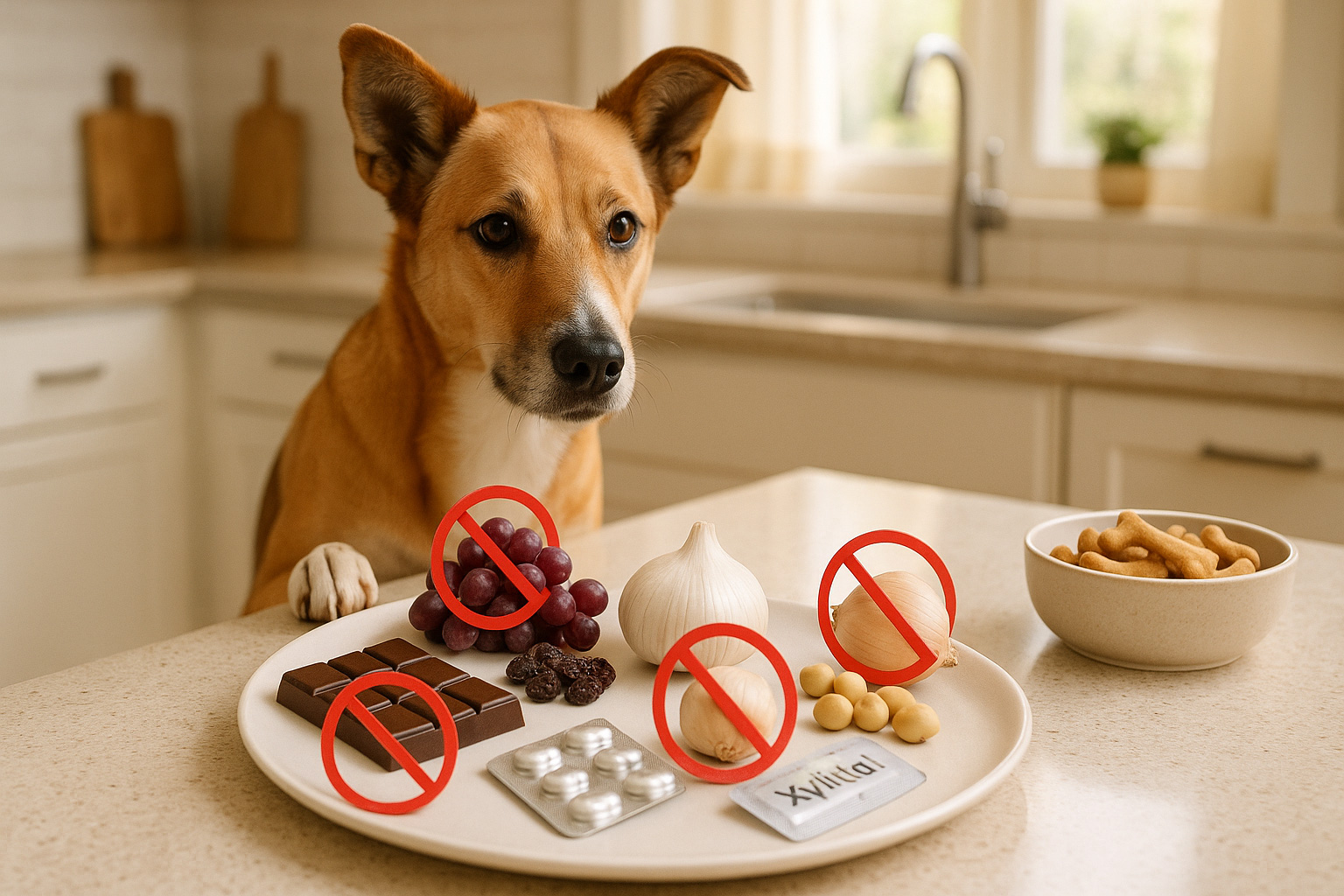
Everyday foods, from a dropped biscuit to leftover gravy or a slice of raisin bread, can hide ingredients that are dangerous for dogs. The risk is not always obvious: a sauce may contain onion, and a sugar-free snack may contain xylitol.
This guide explains which foods dogs should not eat, where harmful ingredients can hide, and what to do after an accidental ingestion. For everyday meals, our guide to dog food brands in Europe can help you compare complete foods for your dog’s life stage.
Has your dog eaten something potentially toxic? Call your veterinarian or an emergency veterinary clinic immediately, even if your dog seems well. Do not try to make your dog vomit unless a veterinarian instructs you, and never use salt.
Quick Answer: Which Foods Are Toxic to Dogs?
Chocolate, grapes and raisins, xylitol, onions and garlic, macadamia nuts, alcohol, and caffeine can poison dogs of any breed. Raw yeast dough is also dangerous because it can expand in the stomach and produce alcohol.
Bones and very fatty leftovers pose different risks, including injury, blockage, or digestive illness. The seriousness of an exposure depends on what was eaten, how much, and your dog’s weight and health.
Toxic Foods for Dogs: What to Keep Out of Reach
The foods below can poison dogs of any breed. The risk depends on the substance, the amount eaten, and your dog’s weight and health. A larger dog is not automatically safe, and a dog that looks well may still need urgent veterinary assessment.
Use this table to identify common hazards, not to calculate a safe amount or decide whether treatment is needed.
Food or ingredient | Where it may be hidden | Main concern |
|---|---|---|
Chocolate and cocoa | Chocolate bars, brownies, cocoa powder, and chocolate-coated snacks | Theobromine and caffeine can affect the heart and nervous system. Dark chocolate, baking chocolate, and cocoa powder are particularly concentrated. |
Xylitol | Some sugar-free gum, sweets, baked goods, and nut butters; also some medicines and human toothpaste | Can cause a dangerous drop in blood sugar and, in some cases, liver injury. Check the ingredient list rather than relying on the product name. |
Grapes, raisins, and sultanas | Fruit mixes, raisin bread, cakes, and other baked goods | Can cause kidney damage. Do not assume a small amount is safe. |
Onions, garlic, leeks, and chives | Soups, sauces, gravy, stock, seasoning powders, and leftovers | Can damage red blood cells and cause anaemia. Cooking does not make these ingredients safe. |
Macadamia nuts | Biscuits, nut mixes, and desserts | Can cause weakness, poor coordination, tremors, and an increased body temperature. |
Alcohol | Alcoholic drinks and foods containing alcohol | Can cause poisoning, affecting coordination, breathing, and consciousness. |
Raw yeast dough | Unbaked bread or pizza dough containing yeast | Can expand in the stomach and produce alcohol as it ferments. |
Caffeine | Coffee, tea, energy drinks, caffeine tablets, and some supplements | Can cause agitation, abnormal heart rhythms, tremors, and seizures. |
If your dog may have eaten one of these, contact your veterinarian promptly. Do not wait for symptoms before asking for advice. Keep the packaging or ingredient list available.
For more detail, see the ASPCA guide to foods to avoid feeding pets and the FDA’s guidance on xylitol poisoning in dogs.
Check Ingredients, Not Just the Food’s Name
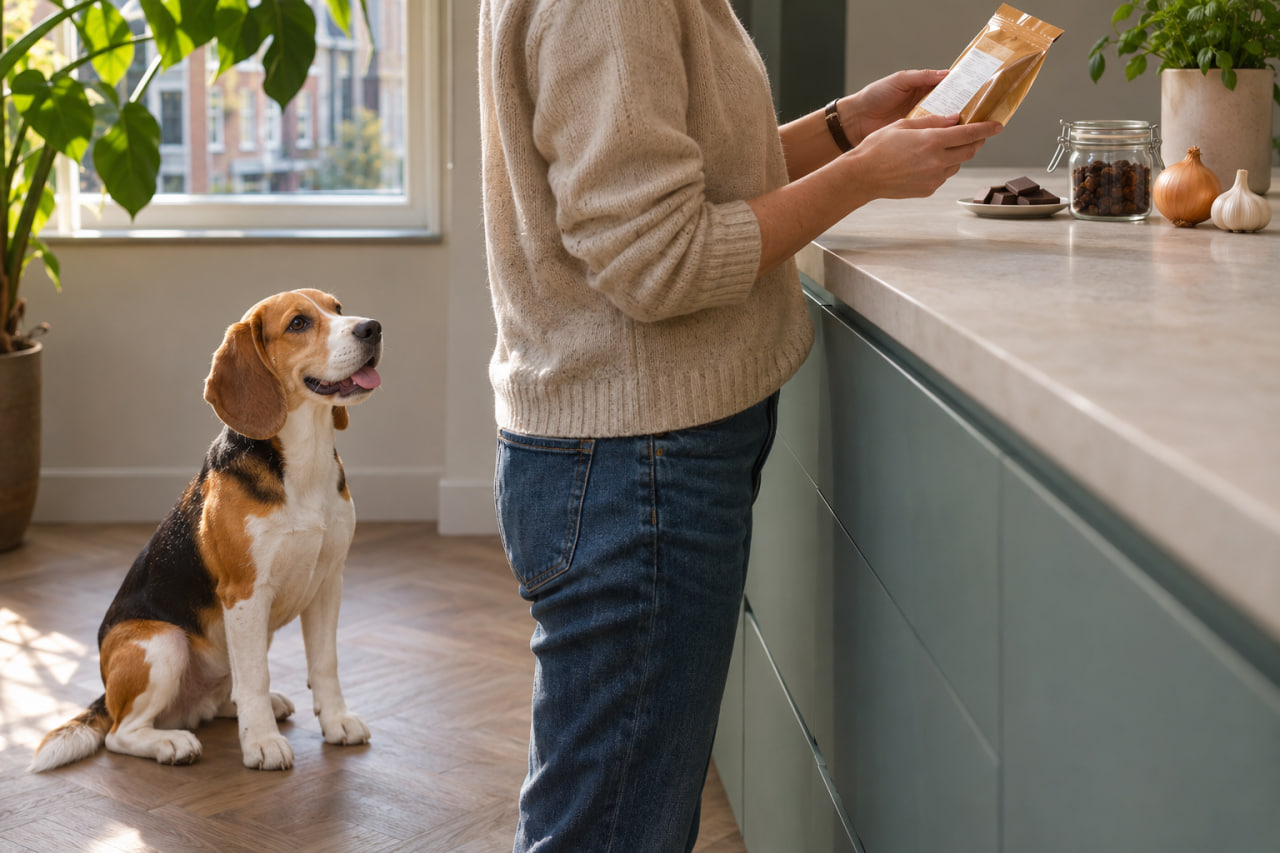
A food that sounds harmless may contain a dangerous ingredient. Bread may contain raisins, a sauce may contain onion or garlic, and a nut butter may contain xylitol.
“Sugar-free” does not always mean a product contains xylitol, but it is a reason to check carefully. Xylitol may also be described as birch sugar or wood sugar. If the ingredients are unclear after an accidental ingestion, keep the product and contact your vet rather than guessing.
This is a practical list of common hazards, not a complete catalogue of everything that can harm a dog.
Other Food Hazards: Bones, Fatty Leftovers and Mouldy Food
Food can harm your dog in several ways: by causing poisoning, becoming stuck in the digestive tract, or triggering digestive illness. These everyday hazards deserve attention alongside the toxic foods listed above.
Bones, Corn Cobs and Fruit Stones
Cooked bones can splinter, while both raw and cooked bones can cause choking, injury, or a blockage. Raw bones can also damage teeth and carry harmful bacteria.
Corn cobs and large fruit stones, such as avocado pits, can become lodged in the digestive tract even when the surrounding food is not the main concern.
Clear plates and secure food waste promptly. If your dog swallows a bone, corn cob, or fruit stone, contact your vet for advice rather than waiting to see whether it passes.
Fatty Scraps and Rich Leftovers
Fat trimmings, poultry skin, pan drippings, and rich sauces can cause vomiting or diarrhoea and may trigger pancreatitis, a painful inflammation of the pancreas.
Extra caution is needed if your dog has previously had pancreatitis or follows a prescribed diet. A food being unseasoned does not make it suitable: plain fatty meat or skin can still be a poor choice.
Keep these leftovers out of your dog’s bowl. Ask your vet which treats fit your dog’s needs if there is a history of digestive illness.
Mouldy Food, Food Bins and Compost
Some moulds produce toxins that can cause tremors, poor coordination, seizures, and overheating. Dogs may encounter them in discarded bread, dairy products, other spoiled food, or compost.
Keep kitchen bins, food-waste containers, and garden compost secure. Do not offer spoiled food or assume that cutting away the visible mould makes it safe.
If your dog has eaten mouldy food or compost, contact your veterinarian promptly. Tremors, seizures, or collapse require emergency veterinary care.
For more information, see the Merck Veterinary Manual’s guidance on mould-related poisoning in dogs.
Do Breed, Size and Health Change What Your Dog Can Eat?
Breed does not make a toxic food safe. The foods in the table above can poison any dog. However, your dog’s size and medical history can mean extra care is needed with other foods and feeding habits.
Small Dogs: Small Amounts Can Still Matter
For many toxins, the amount eaten relative to body weight affects the risk. The same piece of chocolate represents a larger dose per kilogram for a small dog than for a large dog.
If you call your vet after an accidental ingestion, have your dog’s approximate weight ready, along with the product, amount eaten, and time of exposure. Do not use size alone to decide that your dog is safe.
Dogs With Pancreatitis or High Blood Fat Levels
If your dog has previously had pancreatitis or has high blood triglycerides, ask your vet which meals and treats are suitable. Triglycerides are a type of fat in the blood; elevated levels are a recognised concern in Miniature Schnauzers.
Practical step: Ask for a short list of approved treats and share it with everyone who feeds your dog. Include training rewards, chews, and table scraps when discussing the diet with your vet.
Do not choose a restrictive diet solely because of your dog’s breed. The right approach depends on the individual dog’s health.
Dalmatians and Dogs With Urate Stones
Some dogs, including many Dalmatians, have an inherited tendency that increases their risk of urate urinary stones. These dogs may need a vet-directed diet that limits purines, substances found in foods such as liver and other organ meats.
Practical step: If your dog has this risk or has previously had urate stones, check with your vet before adding organ-meat treats or changing food. Keep fresh water available, and ask which treats fit the feeding plan.
A urinary diet should be chosen for the individual dog and stone type, rather than selected from a breed label alone.
Large, Deep-Chested Dogs: Discuss Meal Size
Deep-chested dogs, such as Great Danes, have a higher risk of gastric dilatation-volvulus (GDV), a life-threatening condition in which the stomach expands and twists.
Practical step: Discuss dividing the daily food allowance into smaller meals instead of giving one large meal. Do not raise the food bowl specifically to prevent bloat unless your vet recommends it for your dog.
Repeated attempts to vomit without bringing anything up, a swollen abdomen, or sudden distress require immediate emergency veterinary attention.
For more information, see the American College of Veterinary Surgeons’ guide to GDV.
What to Do If Your Dog Eats a Toxic Food
Call your vet or an emergency veterinary clinic immediately if your dog may have eaten something toxic—even if they seem well. Some effects take time to appear.
1. Stop Your Dog From Eating More
Move your dog away from the food and secure any leftovers. Keep other pets away too.
2. Call First, Then Gather the Details
Tell the veterinary team what happened. Have the following information ready if possible:
What was eaten: the food, brand, and ingredients.
How much: an estimate is useful if the exact amount is unknown.
When: the time it happened, or when you discovered it.
Your dog’s weight, any medical conditions, and any symptoms.
Keep the packaging or take clear photos of the label. Do not delay calling while trying to collect every detail. If you do not know an answer, tell the vet.
3. Avoid Home Remedies
Do not try to make your dog vomit unless a veterinarian specifically instructs you. Never use salt or salt water.
Do not give medicines, activated charcoal, or other home treatments unless the vet tells you to. The right action depends on what your dog swallowed and their condition.
4. Follow the Vet’s Instructions
The veterinary team will advise whether your dog needs to attend immediately and what to do on the way. Bring the packaging or label photos.
If your usual clinic is closed, contact an emergency veterinary clinic rather than waiting for it to reopen.
For further guidance, see PDSA’s first-aid advice for poisons and toxins.
Safer Treat Choices and Simple Label Checks
For a healthy dog, a treat can be a small, simple reward. It does not need to come from your plate, and it should not replace a complete meal.
What Can You Offer Instead?
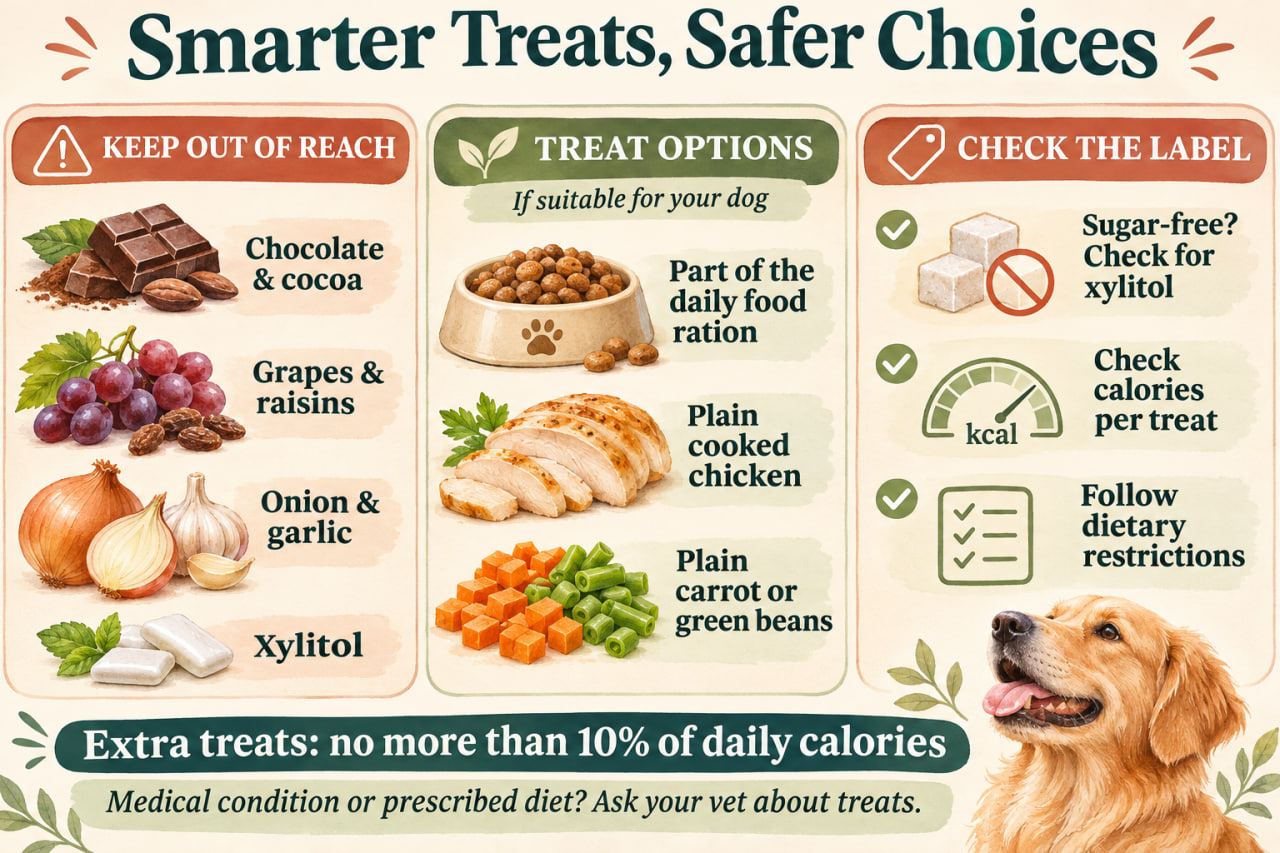
Depending on your dog’s needs and tolerance, options include:
Part of their usual food: Set aside some of the measured daily ration for training rewards instead of adding extra food.
Plain cooked chicken or turkey: Offer small pieces of lean, boneless, skinless meat without seasoning, sauce, or added fat.
Plain vegetables: Small pieces of carrot or cooked green beans may suit some dogs. Serve without butter, salt, or seasoning.
Choose a size and texture your dog can manage comfortably, and supervise them while eating. Start with a small amount when offering something new.
If your dog has a food allergy, a medical condition, or a prescribed diet, check suitable treats with your vet first. Even a plain ingredient may not fit their feeding plan.
Count All the Extras
Treats and other extra foods should provide no more than 10% of your dog’s daily calories. This is a maximum, not a target; your dog does not need to use the full allowance.
Count training treats, dental chews, toppers, and food used to hide tablets together. A simple habit is to prepare the day’s treat allowance in one container so everyone in the household uses the same supply.
If calorie information is missing from a commercial treat’s packaging, ask the manufacturer. Your veterinary team can help you work out an appropriate allowance.
See WSAVA’s guide to feeding treats to your dog for further advice.
Check More Than the Front of the Pack
Before buying a dog treat, check:
Ingredients: Does it contain anything your dog must avoid?
Calories: Are they given per piece or per weight?
Size and feeding instructions: Is the product suitable for your dog?
Diet compatibility: Does it fit any restrictions your vet has recommended?
For everyday meals, check that the food is labelled complete and appropriate for your dog’s life stage. Treats and complementary foods should not replace the main diet.
Frequently Asked Questions
My dog ate a small piece of chocolate. Should I call the vet?
Yes. The risk depends on the type of chocolate, the amount eaten, and your dog’s weight. Dark chocolate, baking chocolate, and cocoa powder are particularly concentrated. Keep the packaging and call your vet rather than assuming a small piece is harmless.
Does “sugar-free” always mean a food contains xylitol?
No. Check the ingredient list for xylitol, which may also be called birch sugar or wood sugar. If your dog has eaten a product containing it, contact your vet immediately. If the ingredients are unclear, keep the packaging and ask for advice.
Can I give my dog peanut butter?
Some peanut butters contain xylitol, so always check the ingredients first. Even without xylitol, peanut butter is calorie-dense and may not suit dogs with dietary restrictions. If your vet considers it suitable, offer only a small amount within your dog’s treat allowance.
Are raw bones safer than cooked bones?
Raw bones are not a risk-free alternative. Both raw and cooked bones can cause choking, injury, or digestive blockage. Raw bones can also damage teeth and carry harmful bacteria. Choose a suitable alternative with advice from your veterinary team.
Can I wait for symptoms if my dog seems normal?
No. If your dog may have eaten something toxic, call your vet immediately. Some effects are delayed, so normal behaviour does not rule out danger. The veterinary team can assess the exposure and tell you whether monitoring or urgent treatment is needed.
Make Safer Feeding an Everyday Habit
Keep potentially harmful foods out of reach, secure food waste, and agree on suitable treats with everyone who feeds your dog. Check ingredients before sharing human food, and count treats alongside the main meals.
Your dog’s breed, size, and medical history may call for extra care, but they do not make toxic foods safe. If an accidental ingestion happens, contact your vet promptly rather than waiting for symptoms.
For everyday feeding support, create your dog’s FAMMO profile to explore personalised nutrition guidance based on their age, weight, activity, and dietary needs.
FAMMO supports everyday feeding decisions. Suspected poisoning requires immediate veterinary advice.
References & Further Reading
ASPCA — People Foods to Avoid Feeding Your Pets: Common toxic foods and ingredients, including chocolate, grapes, onions, alcohol, and raw yeast dough.
FDA — Paws Off Xylitol; It’s Dangerous for Dogs: Products that may contain xylitol, alternative names, and advice after suspected ingestion.
Merck Veterinary Manual — Tremorgenic Neuromycotoxicosis in Dogs: Poisoning associated with mouldy food and compost.
Merck Veterinary Manual — Pancreatitis in Dogs and Cats: Pancreatitis risk factors and the need for individual veterinary assessment.
Merck Veterinary Manual — Urolithiasis in Dogs: Urinary stone types and dietary management of urate stones.
American College of Veterinary Surgeons — Gastric Dilatation-Volvulus: GDV risk factors, warning signs, and veterinary care.
PDSA — First Aid for Poisons and Toxins: Immediate steps after suspected poisoning and why home-induced vomiting can be dangerous.
WSAVA — Feeding Treats to Your Dog: Treat allowances, suitable choices, and risks from bones and unsuitable chews.