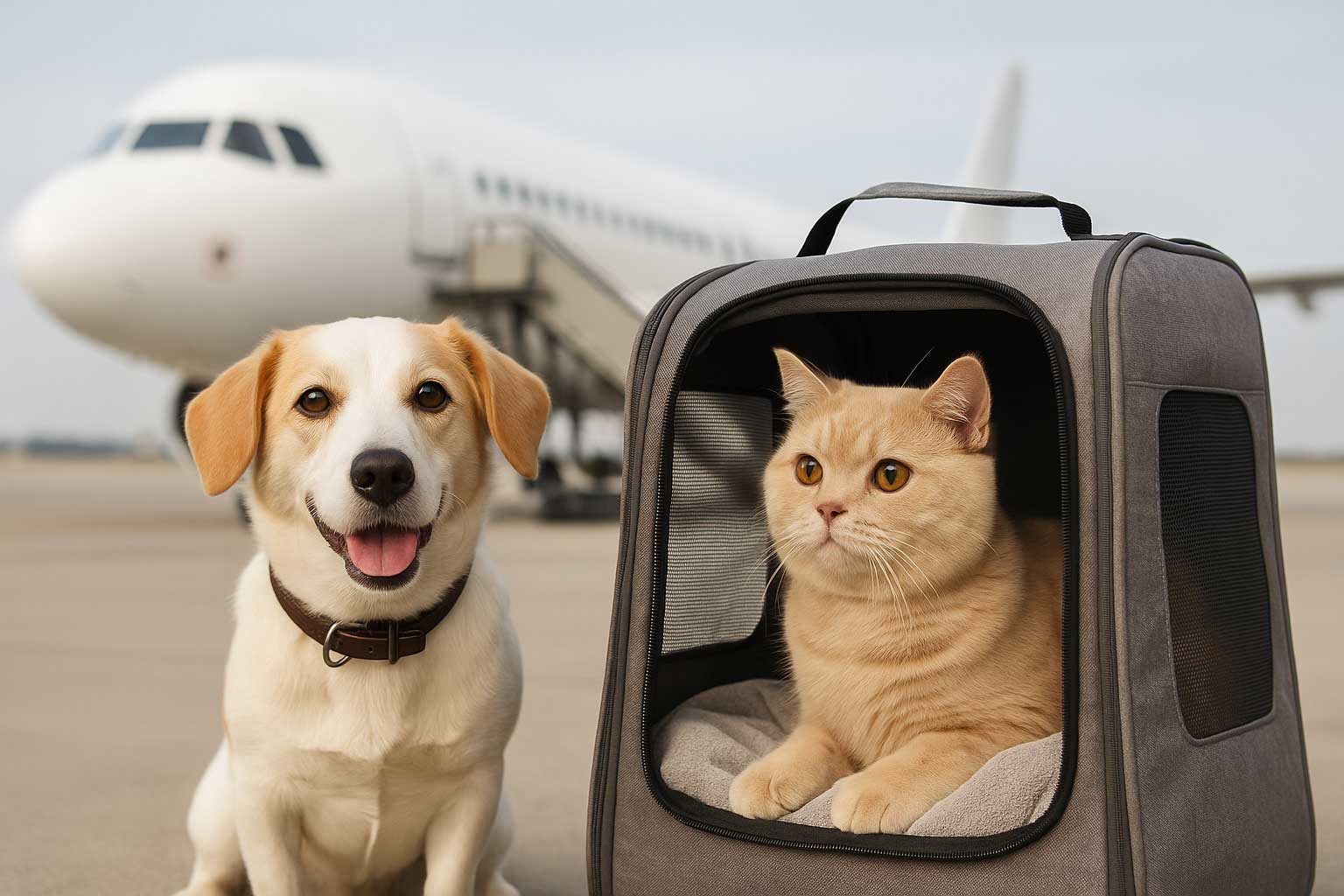
Stress-Free Flying: Preparing Dogs & Cats for In-Cabin Air Travel
Table of Contents
- Introduction
- 1. Health Check & Vet Preparation
- 2. Choosing the Right In-Cabin Carrier
- 3. Crate Training & Desensitization
- 4. Reducing Stress and Anxiety Naturally
- 5. Feeding, Hydration & Pre-Flight Routine
- 6. What to Pack for Your Pet’s Cabin Flight
- 7. At the Airport & Security Check
- 8. Inside the Plane: Comfort & Safety
- 9. After Landing: Recovery & Care
- FAQ
- Key Takeaways
- Call to Action
Introduction
Flying with your dog or cat can be exciting yet nerve-wracking. The noise, crowds, and pressure changes can make animals anxious, but with proper preparation and a calm approach, your pet can travel safely and comfortably inside the cabin.
This guide explains how to prepare your furry companion physically and emotionally for air travel — from health checks to carrier training, feeding schedules, and managing stress in the cabin.
1. Health Check & Vet Preparation
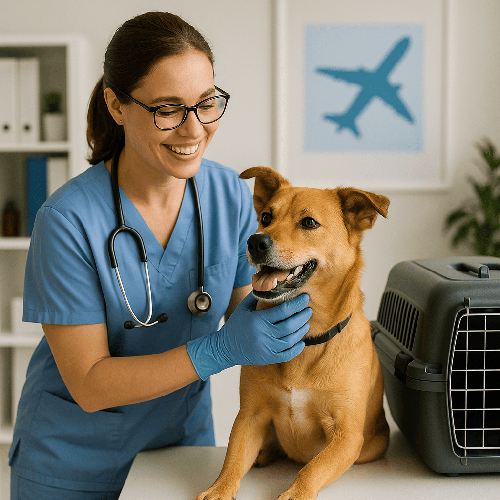
Before booking your ticket, schedule a vet visit at least 2–3 weeks before travel.
Your veterinarian should:
- Conduct a general health exam (heart, lungs, temperature, joints).
- Verify vaccinations and parasite prevention are up to date.
- Provide a “fit to fly” health certificate, usually required within 10 days of departure.
- Discuss motion sickness or anxiety remedies (never use sedatives without vet approval).
- Microchip your pet and update ID information.
Tip:* Bring your pet’s medical records and a photo copy in your hand luggage.
2. Choosing the Right In-Cabin Carrier
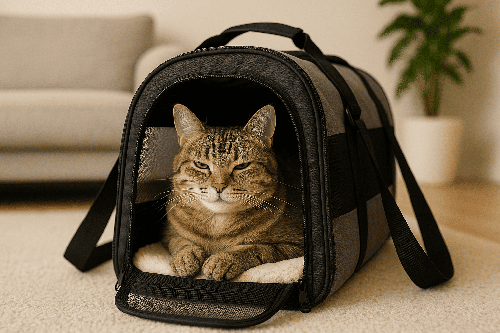
Your pet’s carrier is their personal space — it must feel safe and cozy.
Requirements for an in-cabin carrier:
- Airline-approved (fits under the seat, breathable, leak-proof bottom).
- Soft-sided for flexibility and comfort.
- Proper ventilation on at least three sides.
- Secure zipper or latch that won’t open accidentally.
- Padded interior or a small blanket with familiar scent.
- Label with your name, phone number, and flight details.
Bonus tip:
Let your pet nap in the carrier days before the trip to build a sense of familiarity.
3. Crate Training & Desensitization
The most common mistake travelers make? Introducing the carrier at the last minute.
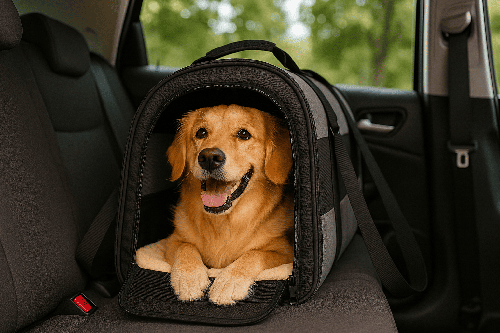
Start crate training 2–3 weeks before travel:
- Place the carrier open at home with a blanket and toys inside.
- Feed your pet inside to create positive association.
- Take short car rides with the carrier to mimic movement.
- Play airport and airplane sounds at low volume to desensitize them.
- Reward calm behavior with treats and affection.
This reduces anxiety dramatically and makes the carrier a “safe zone.”
4. Reducing Stress and Anxiety Naturally
Pets are extremely sensitive to your emotions. The calmer you are, the calmer they’ll be.
Use these natural techniques:
- Lavender or chamomile sprays (pet-safe) for the bedding.
- Comfort toys or a small worn T-shirt that smells like you.
- Thundershirt or calming vest for dogs prone to anxiety.
- Classical or white noise to mask airport sounds.
- Positive reinforcement at every step.
If your pet shows signs of panic (panting, drooling, shaking), use gentle reassurance instead of forcing interaction.
5. Feeding, Hydration & Pre-Flight Routine
Managing meals and water before travel is crucial:
- Feed a light meal 3–4 hours before the flight.
- Allow bathroom breaks right before heading to the airport.
- Offer small sips of water — don’t overhydrate.
- Avoid new or rich foods the day before travel.
- Line the carrier with absorbent pads just in case.
Pro tip: Freeze a small dish of water overnight — it melts slowly during flight, preventing spills.
6. What to Pack for Your Pet’s Cabin Flight
Prepare a small pet travel kit that fits in your personal item:
- Health certificate & vaccination records
- Collapsible water bowl
- Small treat pouch
- Waste bags & wipes
- Comfort toy or chew item
- Absorbent pads
- Spare leash & ID tags
- Travel blanket or towel
This helps you stay organized and ready for any situation.
7. At the Airport & Security Check
Once at the airport:
- Arrive earlier than usual (2 hours for domestic, 3 for international).
- Keep your pet calm and avoid crowded areas.
- During security screening, you’ll carry your pet while the carrier passes through X-ray.
- Find a quiet corner or pet relief area after check-in.
Speak softly and offer gentle strokes; your calm tone reassures them.
8. Inside the Plane: Comfort & Safety
During the flight:
- Keep the carrier under the seat in front of you (never in the overhead bin).
- Use a light cover or scarf over the carrier to reduce visual stress.
- Avoid opening the carrier mid-flight.
- Offer tiny treats or a chew to ease ear pressure during takeoff.
- Use calm body language; pets feel your tension.
- If turbulence occurs, reassure your pet with your voice.
9. After Landing: Recovery & Care
After landing:
- Go straight to the pet relief area for bathroom and hydration.
- Offer water and let your pet stretch and walk.
- Avoid feeding heavy meals right away.
- Observe your pet for signs of fatigue, nausea, or dehydration.
- Give them quiet time to rest after reaching your destination.
Useful Sources:
- American Veterinary Medical Association (AVMA): Traveling with Pets
- USDA APHIS Pet Travel Guidelines
- AKC: Flying with Your Dog Tips
FAQ
Q1: How early should I start training my pet for flight?
Ideally 2–4 weeks before departure for dogs; for cats, even longer if they are nervous travelers.
Q2: Should I sedate my pet for air travel?
No, unless prescribed by a vet. Sedation may affect breathing and adaptation to altitude.
Q3: What if my pet cries during the flight?
Stay calm, speak softly, and avoid opening the carrier. Covering it partially can help.
Q4: Can I take my cat or dog out during the flight?
No. Pets must stay inside the carrier at all times.
Q5: What is the best seat for traveling with a pet?
A window or middle seat (not aisle) gives more stability and less disturbance.
Key Takeaways
- Schedule a vet visit and bring necessary documents.
- Choose a soft, airline-approved carrier.
- Train and desensitize your pet early.
- Use natural calming tools and avoid sedatives.
- Plan meals and hydration carefully.
- Stay calm — your pet senses your energy.
Call to Action
Ready to fly with confidence?
Visit Fammo Blog for more expert travel tips and product recommendations to make your next flight with your furry friend stress-free.