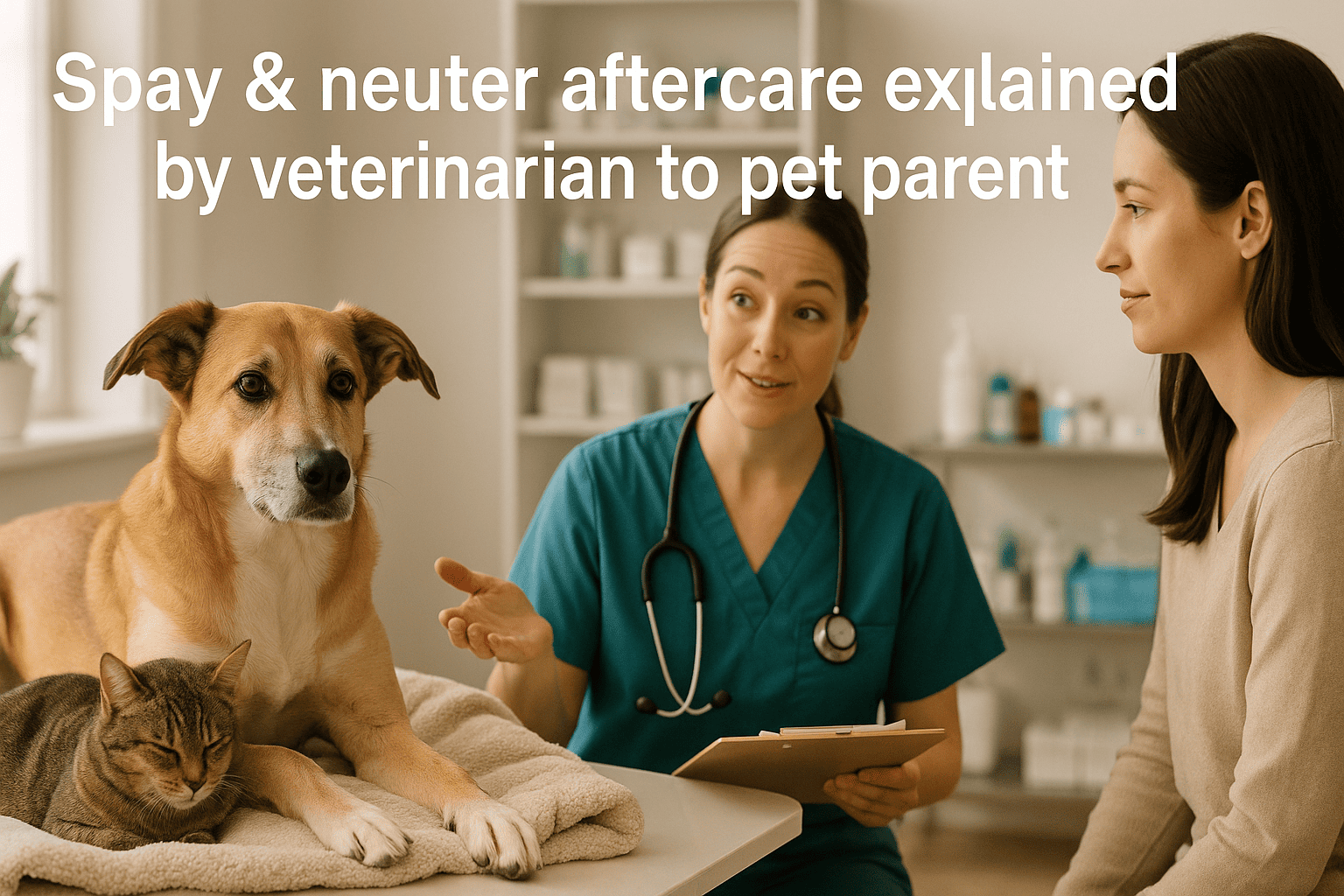
Spay & Neuter: Benefits, Risks & Aftercare Guide
Table of Contents
- What Spay & Neuter Actually Mean
- Key Benefits
- Potential Risks & Trade-Offs
- Ideal Timing: Age, Breed & Lifestyle
- Pre-Op Checklist
- The Day of Surgery
- Pain Control & Activity Restriction
- Post-Op Care Timeline (Day 0–14)
- Complications: Red Flags
- Cost, Access & Low-Cost Options
- Myths vs Facts
- A Practical Decision Framework
- Conclusion & Next Steps
- FAQ (People Also Ask)
- References
- Key Takeaways
What Spay & Neuter Actually Mean
- Spay (ovariohysterectomy or ovariectomy): surgical removal of a female pet’s reproductive organs to prevent heat cycles and pregnancy.
- Neuter (castration): surgical removal of a male pet’s testicles to prevent breeding and reduce testosterone-driven behaviors.
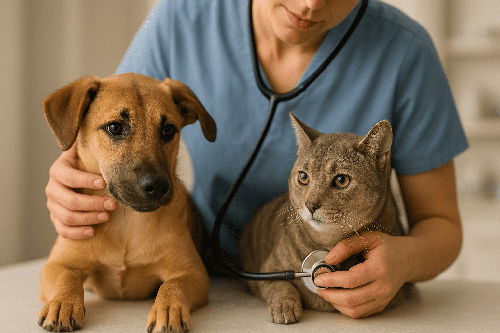
Both are routine veterinary procedures performed under general anesthesia with modern monitoring and pain control standards. For many families, it’s part of responsible pet care—but it’s still a medical decision that deserves an informed discussion with your vet.
Key Benefits
1) Prevents unplanned litters and helps reduce pet overpopulation.
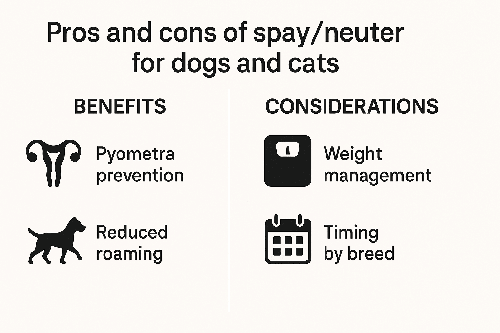
2) Health protection (females): prevents pyometra (a life-threatening uterine infection) and lowers mammary tumor risk when done before the first heat.
3) Health protection (males): eliminates testicular cancer risk and may reduce some prostate issues.
4) Behavioral benefits: can reduce roaming, urine marking (esp. males), and hormone-driven mounting; overall temperament remains the same pet you know and love.
Related reading on FAMMO:
- How AI is Revolutionizing Pet Nutrition?
- What Your Pet’s Poop Says About Their Food (and Health)
Potential Risks & Trade-Offs
No surgery is risk-free. The key is to weigh population-level benefits against individual-level factors like breed, age, and health.
- Surgical/anesthetic risks: modern anesthesia and monitoring make complications uncommon, but not zero. Your vet will assess individual risk.
- Weight gain tendency: some pets may gain weight after sterilization; proactive diet and activity adjustments prevent this.
- Urinary incontinence (some spayed females): usually manageable with medication if it appears.
- Orthopedic or cancer risks in certain breeds/ages: timing can influence joint health and some cancer risks; individualized planning is important.
Ideal Timing: Age, Breed & Lifestyle
There is no single right age for every pet. General trends often used in practice:
- Cats: commonly spayed/neutered around 4–6 months; pediatric protocols are well-documented when appropriate.
- Small/medium dogs: many vets recommend ~6–9 months, adjusting for behavior or household needs.
- Large/giant-breed dogs: timing may be delayed to support orthopedic development; discuss with your vet based on growth, breed predispositions, and home environment.
Nutrition can support recovery and healthy weight management:
- British Shorthair vs Ragdoll: What Cat Owners Should Know
- Pet Food Manufacturer Report 2023: Key Insights
Pre-Op Checklist
- Health check & bloodwork: baseline screening as advised by your vet, especially for adults/seniors.
- Fasting instructions: follow your vet’s exact guidance for food/water before anesthesia (varies by age/health).
- Med list: confirm any home meds/supplements to continue or pause.
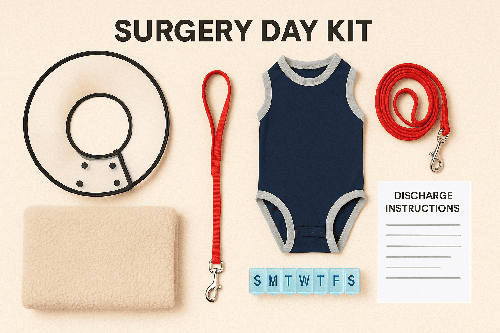
- Comfort prep: cone or recovery suit ready, crate or quiet room, pee pads/litter refresh, bland treats, and a soft bed.
- Logistics: plan drop-off/pick-up, carry-case for cats, secure leash/harness for dogs.
The Day of Surgery
- Admission & consent: you’ll review anesthesia and pain-control plans.
- Anesthesia & monitoring: teams use protocols, continuous monitoring, and warming to maintain safety.
- Pain management: multimodal analgesia before, during, and after surgery is standard of care.
- Same-day discharge: most pets go home the same day (cats and most dog neuters); dog spays may need longer observation depending on clinic policy.
Pain Control & Activity Restriction
- Meds exactly as prescribed: never skip doses early because the pet “seems fine.”
- Cone or recovery suit 24/7: prevents licking/chewing that can open the incision.
- Leash-only outings for dogs; indoor-only for cats: avoid running, stairs, jumping, and rough play for 10–14 days.
- Nutrition & hydration: offer small portions the first evening; resume normal diet as tolerated. Monitor stool/urine output.
Post-Op Care Timeline (Day 0–14)
Day 0–1:
- Quiet room, dim lights. Expect mild grogginess. A small meal and water. Light vomiting can occur once; call the clinic if repeated.
- Check incision twice daily for mild redness/swelling only.
Day 2–3:
- Appetite and energy should improve. Short, leashed potty breaks; cats get a clean, low-dust litter.
- Keep meds on schedule; continue cone/suit.
Day 4–7:
- Gradual return to routine indoors. No zoomies, fetch, or stairs. Incision edges should stay closed and dry.
Day 8–14:
- Stitches or skin glue remain protected until your vet clears normal activity. Schedule re-check if advised.

Complications: Red Flags
Contact your veterinarian or an emergency clinic immediately if you see:
- Continuous bleeding, incision opening, foul discharge, or increasing swelling/warmth
- Lethargy that worsens after 24 hours, repeated vomiting/diarrhea, refusal to eat/drink
- Fever, pale gums, difficulty breathing, collapse
- Persistent licking despite cone/suit
Cost, Access & Low-Cost Options
- Pricing varies by species, size, clinic, and pre-op testing.
- Many communities offer low-cost spay/neuter programs through shelters or nonprofits—ask your local vet or humane society.
Myths vs Facts
- “My pet will get fat.” Weight gain is preventable with the right calories and exercise. Plan a post-op diet.
- “It will change their personality.” Your pet’s core temperament doesn’t flip; hormone-driven behaviors may decline.
- “Females should have one litter first.” There’s no health requirement for a first litter; early spay reduces certain risks.
A Practical Decision Framework
1) Your pet’s profile: species, breed/size, age, lifestyle, health history.
2) Household realities: intact pets nearby, risk of escape/mating, children/other animals.
3) Health priorities: cancer/pyometra prevention vs. breed-specific orthopedic considerations.
4) Timing plan: choose a target window with your vet; align nutrition and training to support recovery.
5) Aftercare readiness: cone/suit, quiet space, time for leash walks and incision checks.
Conclusion & Next Steps
Spay/neuter remains one of the most impactful health and welfare decisions most pet parents make. With thoughtful timing, modern anesthesia, and a structured two-week aftercare plan, most dogs and cats recover quickly and comfortably.
- Have questions about nutrition during recovery? See our explainer: How AI is Revolutionizing Pet Nutrition?
- Want help tracking stool quality post-op? Try: What Your Pet’s Poop Says About Their Food (and Health)
- Prefer human help? Contact the FAMMO team and we’ll point you to vet-authored resources.

FAQ (People Also Ask)
1) What’s the best age to spay/neuter my pet?
Cats are commonly sterilized around 4–6 months; dog timing varies by size/breed and can range from ~6–9 months (small/medium) to later for some large breeds—decide with your veterinarian.
2) How long is recovery?
Most pets feel notably better in 24–72 hours; full activity usually resumes after 10–14 days when your vet confirms incision healing.
3) Can I bathe my pet after surgery?
Avoid bathing and swimming until your veterinarian says the incision is fully sealed—often after the 10–14 day re-check.
4) What should my pet eat post-op?
Offer a small meal the first evening, then resume normal diet if tolerated; adjust calories to prevent weight gain during restricted activity.
5) Do they need a cone?
Yes—use a cone or recovery suit 24/7 until cleared. Licking/chewing can reopen the incision and cause infection.
References
- American Veterinary Medical Association (AVMA): Spaying & Neutering and gonadectomy resources.
- American Animal Hospital Association (AAHA): 2020 Anesthesia & Monitoring Guidelines and fasting recommendations.
- AVMA Client Brochure: Spaying & Neutering (risks/benefits, weight, incontinence).
Key Takeaways
- High-impact health choice: prevents pyometra and unplanned litters; reduces certain cancer risks.
- Individualized timing matters: especially for large-breed dogs—decide with your vet.
- Modern anesthesia is safe: when guidelines and monitoring are followed.
- Recovery is manageable: a two-week plan with cone/suit, meds, and leash-only activity works.
- Nutrition counts: adjust calories to prevent post-op weight gain and support healing.