Innovation & the Future of Pet Care (2025)
Table of Contents
- Introduction
- 1) AI-Powered Nutrition & Diagnostics
- 2) Tele-Veterinary & Connected Care
- 3) Pet Wearables, Sensors & the Smart Home
- 4) Preventive, Personalized & Proactive Care
- 5) One Health: Pets, People & Planet
- 6) Data Ethics, Safety & Trust
- How Clinics & Pet Brands Can Prepare
- A Roadmap for Pet Parents
- Where FAMMO Fits In (Special Section)
- Future Scenarios: 2025–2030
- Key Takeaways
- FAQ
- Conclusion & Next Steps
Introduction
Pet care is evolving at startup speed. AI is turning messy data—diet logs, activity patterns, vet records—into precise nutrition and earlier detection. Tele-veterinary is expanding access. Smart collars are moving from “steps & GPS” to health insights. And a One Health mindset connects animal well-being with public health and sustainability.
This guide distills what matters now, what’s coming next, and how to act—whether you run a clinic, lead a pet brand, or care for a single furry friend at home.
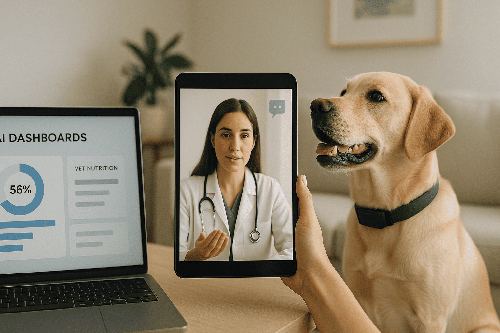
1) AI-Powered Nutrition & Diagnostics
From guesses to guidance. Traditional, “average-pet” diets rarely fit an individual animal’s breed, age, activity level, and sensitivities. AI can analyze those variables alongside history and feedback to optimize macronutrients and functional ingredients. In diagnostics, models assist with image interpretation (e.g., radiographs), triage risk, and anomaly detection.
Why this matters now
- Precision: Meal plans that adapt over time to weight, stool quality, energy, and biomarkers.
- Speed: Faster pattern recognition across vet imaging and records.
- Equity: Decision support for generalists and pet parents outside big metro hubs.
Practical moves
- Standardize intake data (weight, BCS, activity minutes, allergies) to “feed” better recommendations.
- Pair AI suggestions with human oversight—your vet’s clinical context is irreplaceable.
- Measure outcomes (weight trend, skin/coat scores, stool consistency) to close the loop.
Related reads on FAMMO:
- How AI is Revolutionizing Pet Nutrition?
- The Benefits of Personalized Pet Nutrition
- What Makes an AI Pet Nutritionist Smarter Than Google?
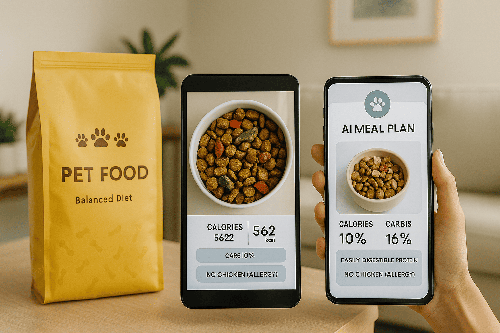
2) Tele-Veterinary & Connected Care
Tele-vet tools—chat, asynchronous case reviews, follow-up calls—extend care between in-person visits. Used appropriately (within a veterinarian-client-patient relationship and local regulations), they improve adherence, reduce stress for anxious pets, and triage efficiently.
Best practices
- Define which cases are suitable for tele-advice vs. in-clinic exams.
- Integrate tele-vet notes into the medical record.
- Use structured symptom checklists and photo/video guidance for pet parents.
Win-wins
- Clinics: Higher continuity and rechecks without room bottlenecks.
- Pet parents: Faster answers for routine issues and medication follow-ups.
- Pets: Less transport stress; improved monitoring for chronic conditions.
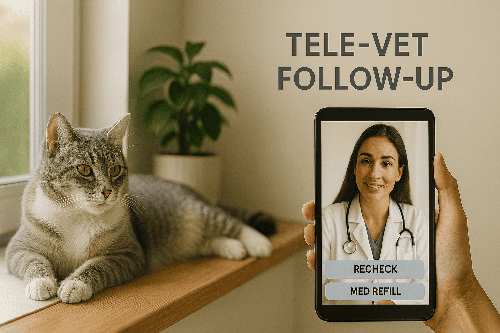
3) Pet Wearables, Sensors & the Smart Home
Smart collars and tags now track activity, sleep, location, and behavior signals (scratching, licking, barking). Combined with smart feeders, litter sensors, and cameras, they create a 24/7 view of wellness.
Emerging capabilities
- Behavior analytics: Detect patterns linked to pain, pruritus, or anxiety.
- Early alerts: Deviations in sleep or drinking can flag urinary or endocrine issues.
- Seamless UX: Watch and home-hub integrations reduce “app fatigue.”
Buyer checklist
- Comfort and fit (size, weight).
- Battery life and waterproof rating.
- Clear privacy policy and exportable data.
Explore broader trends: Top Pet Care Trends in 2025
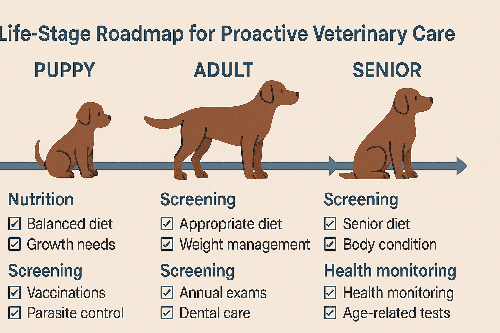
4) Preventive, Personalized & Proactive Care
Innovation shifts care from reactive to proactive:
- Risk scoring: Breed-age-weight profiles predict obesity, orthopedic, or cardiac risk.
- Dynamic nutrition: Diet adjusts with life stage, season, and activity.
- Continuous monitoring: Wearables inform earlier workups or diet tweaks.
- Home diagnostics: Emerging at-home tests (urinalysis, microbiome) can triage and trend.
Clinic playbook
- Offer preventive bundles (annual labs, weight checks, dental screenings).
- Use reminder automation for vaccines, parasite control, and nutrition re-evals.
- Track KPIs: time-to-recheck, adherence to weight plans, dental compliance rate.
5) One Health: Pets, People & Planet
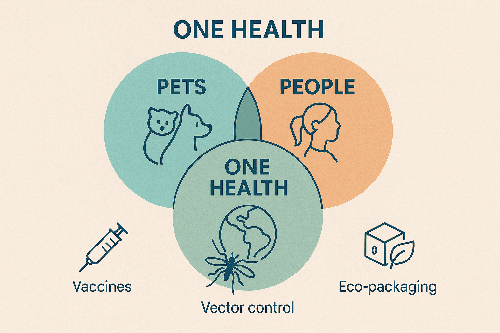
The One Health approach recognizes the links between animal, human, and environmental health. In practice, that means: better parasite control (reducing zoonotic risk), smarter antimicrobial stewardship, responsible waste and packaging, and resilient supply chains.
What to watch
- Growth in pet-friendly sustainability standards and reporting.
- Increased collaboration between veterinary, public health, and environmental groups.
- More education for pet parents on hygiene, vaccination, and travel protocols.
6) Data Ethics, Safety & Trust
Pets don’t read privacy policies—but their humans do. As data flows from collars, apps, clinics, and insurers, trust is the product.
Guardrails to implement
- Consent & transparency: Clear purpose, retention, and sharing disclosures.
- Security-by-design: Encryption at rest/in transit; role-based access; breach response plans.
- Human oversight: AI suggestions remain recommendations, not prescriptions.
- Fairness: Monitor models for bias (breed, size, age) and retrain with diverse data.
Pro tip for brands/clinics: Publish a plain-language data charter and model update log. It’s good ethics—and good marketing.
How Clinics & Pet Brands Can Prepare
1) Standardize data. Use structured forms for intake and diet logs (weight, BCS, activity, stool score, allergies, meds).
2) Integrate systems. Connect tele-vet, EMR, wearable data, and customer support into a single workflow.
3) Pilot, then scale. Start with a narrow use case (weight loss program + smart collar) and measure outcomes.
4) Train the team. Short modules on AI literacy, remote triage, and data privacy boost confidence.
5) Communicate value. Show before/after trends, cost savings from prevention, and pet quality-of-life wins.
A Roadmap for Pet Parents
- Build a baseline: Weight, BCS photos, activity minutes, usual hydration, stool “normal.”
- Choose one wearable you’ll actually use. Simpler beats feature-overload.
- Personalize the bowl: Use an AI-guided plan and review monthly.
- Plan preventive care: Annual labs, dental, parasite control, weight checks.
- Mind the data: Review app permissions; export and back up key records.
Helpful FAMMO reads:
- How AI is Revolutionizing Pet Nutrition?
- Top Pet Care Trends in 2025
- What Makes an AI Pet Nutritionist Smarter Than Google?
Where FAMMO Fits In (Special Section)
FAMMO brings the threads together:
- Personalized nutrition that updates with your pet’s data and feedback.
- Education woven into the app—from reading labels to understanding stool changes.
- Integrations that play nicely with your routine (reminders, progress dashboards).
- Human + AI support so guidance is both smart and compassionate.
Start with a goal—weight, skin/coat, energy—and let FAMMO help you track it.
- From “checkups” to “continuous care.” Most clinics offer hybrid plans with remote monitoring and periodic in-person visits.
- Smarter collars as early-warning systems. Behavioral signals prompt earlier dermatology or pain workups.
- Home labs go mainstream. Simple, reliable at-home tests feed into vet dashboards.
- Greener pet care. Packaging, sourcing, and waste protocols become table stakes.
- Interoperability matters. Data follows the pet across apps, clinics, and borders—with consent.
Key Takeaways
Pet care is becoming personal, proactive, and connected.
- AI makes nutrition and diagnostics more precise.
- Tele-vet enhances access and follow-ups.
- Wearables turn daily life into early insights.
- One Health links pet wellness to public and environmental health.
- Ethical data practices build trust—and adoption.
FAQ
1) Is AI replacing my vet?
No. AI supports pattern recognition and recommendations, while licensed veterinarians diagnose, prescribe, and provide clinical judgment.
2) Are smart collars worth it?
If you’ll use them. The value comes from spotting changes over time—sleep, activity, or behavior shifts that prompt earlier care.
3) Can tele-vet handle emergencies?
No. Tele-vet works best for follow-ups, minor issues, triage, and education. Emergencies need in-person care.
4) How do I protect my pet’s data?
Choose products with clear privacy policies, encryption, and data export. Review app permissions regularly.
5) What’s the easiest first step?
Start with a personalized nutrition plan and monthly weigh-ins; add a wearable once you’re consistent.
Conclusion & Next Steps
Innovation isn’t about gadgets—it’s about better outcomes: healthier weights, calmer skin, earlier detection, and fewer stressful visits. Start small, measure progress, and build habits your pet enjoys.
Try a personalized plan with FAMMO today—and make the future of pet care your everyday.