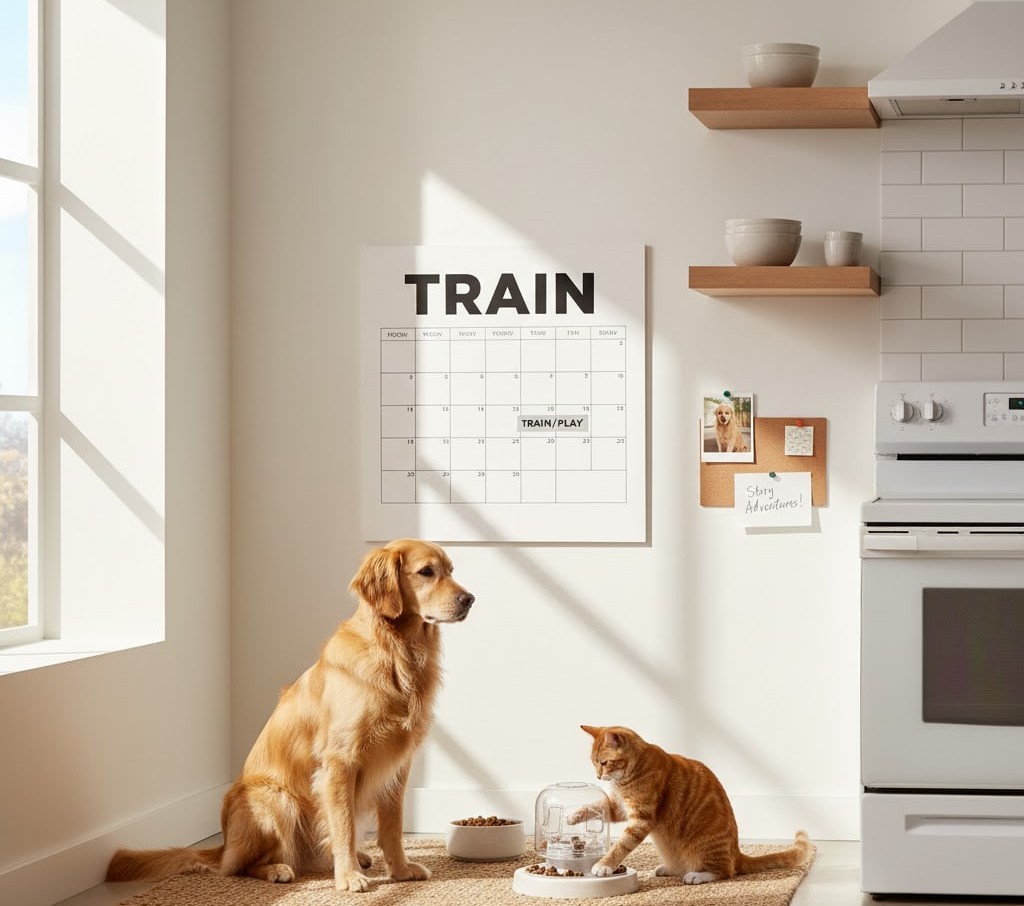
Daily Routines & Training for Pet Parents
Great days with pets don’t happen by accident—they’re designed. Whether you live with a dog, a cat, or both, the right mix of short training bursts, enrichment games, and simple health habits turns ordinary days into calmer, healthier ones. This guide gives you a plug-and-play routine, weekly templates, and metrics you can track in FAMMO to personalize everything to your pet’s age, weight, and behavior.
Table of Contents
- Why Daily Structure Works
- Safety & Setup Checklist
- The 5-Part Daily Routine
- Micro-Training That Actually Sticks
- Enrichment Menus (Dogs & Cats)
- Health Maintenance & Life-Stage Tweaks
- A Sample Day (Weekday & Weekend)
- A 7-Day Challenge You Can Repeat
- Track It with FAMMO
- FAQ
- Key Takeaways
- Conclusion
Why Daily Structure Works
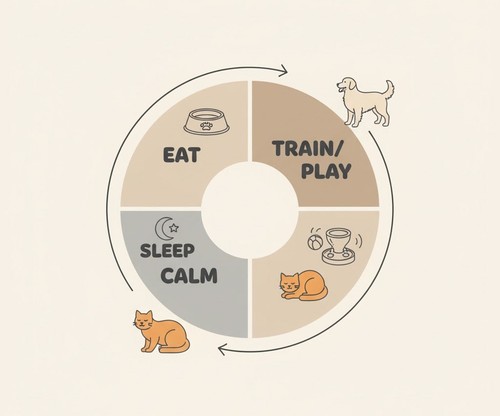
Pets thrive on patterns. Predictable eat–play–rest cycles reduce stress, channel energy into good behaviors, and support a healthy weight. Short, frequent sessions beat long, exhausting ones. Pair activity with meals and you’ll see better focus, calmer evenings, and fewer household “oops” moments.
For a deeper look at tailoring food to behavior and energy, start with How AI is Revolutionizing Pet Nutrition?.
Safety & Setup Checklist
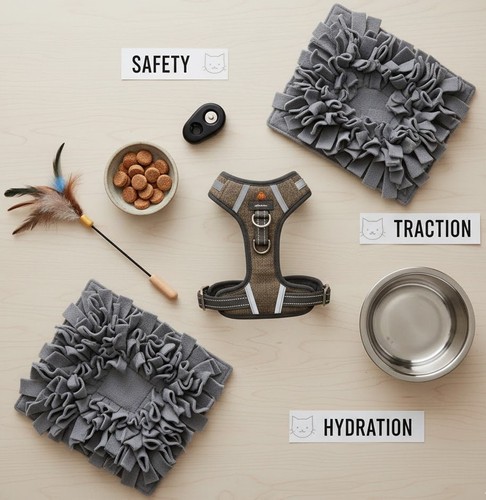
- Space: Clear clutter; use rugs/mats for traction.
- Gear: Flat collar or well-fitted harness (dogs); safe wand toys/scratchers (cats); puzzle feeders; treat pouch.
- Heat & hydration: Prefer cool hours outdoors; fresh water at all times.
- Rules: End play with a tangible “catch” (toy or treat), especially after laser play for cats to avoid frustration.
- Signals to stop: Limping, reluctance to move, heavy open-mouth breathing at rest, sudden fatigue—pause and contact your vet.
Want to connect activity and digestion? See What Your Pet’s Poop Says About Their Food (and Health).
The 5-Part Daily Routine
1) Morning (10–20 min total)
- Dogs: Sniff-walk or potty break (5–10 min), then 3 cues: sit–down–stay (2–3 min), end with 3 tosses of fetch or tug rules.
- Cats: 5-minute wand play with low arcs → 2-minute puzzle feeder → calm petting/grooming.
2) Midday Micro-Training (5–8 min)
- Dogs: One skill (recall, leash loose walking, “place”)—3 tiny sets with rest.
- Cats: Target-touch to a stick; 4–6 reps. Treat with part of the daily ration.
3) Evening Enrichment (10–15 min)
- Dogs: Scent game at home (hide 6 treats in easy spots), finish with “settle” on a mat.
- Cats: Scent trail (kibble under paper cups), end with a small meal.
4) Health & Housekeeping (3–5 min)
- Quick body scan (eyes, ears, coat, paws), brush teeth or dental chew, refresh water, tidy litter box.
5) Wind-Down (5 min)
- Calming touch or chew; lights low; predictable bedtime.
Explore breed-aware feeding to pair with this routine: British Shorthair vs Ragdoll Nutrition and Should You Feed Your Cat Grain-Free?.

Micro-Training That Actually Sticks
- 3-Minute Rule: Train in short bursts—one skill, 2–3 sets, then stop while your pet still wants more.
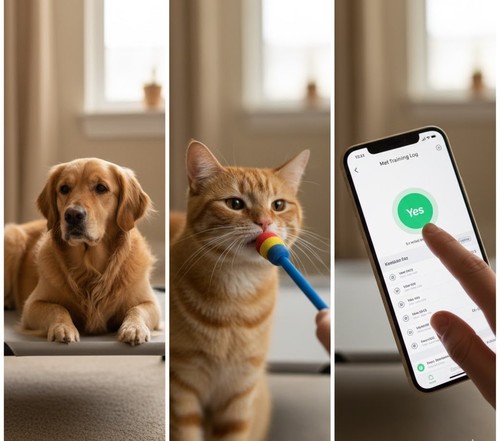
- Mark & Reward: A clicker or crisp “Yes!” marks success; reward with part of the meal.
- Build “Calm on Cue”: Teach place (dogs) or mat (cats) to park energy when guests arrive.
- Proofing Ladder: Change only one variable at a time (distance, duration, or distraction).
- Log It: Record reps, success rate, and recovery in FAMMO to auto-adjust difficulty.
Enrichment Menus (Dogs & Cats)
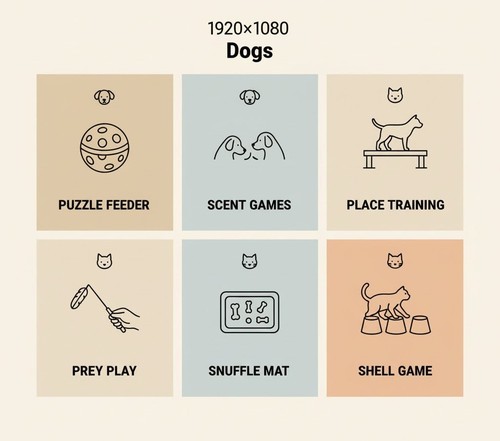
Dogs: Pick 2 per day
- Sniff-ari: Slow leash walk that lets the nose lead.
- Puzzle Feeder/Slow Bowl: Split dinner between two puzzles.
- Fetch Ladder: 3 short → 3 medium throws; soft surface.
- Tug with Rules: Start/stop on cue; 30-second rounds.
- Cavaletti Line: Step over broomsticks or pool noodles for body awareness.
- Hide-and-Seek: Family members take turns calling from room to room.
Cats: Pick 2 per day
- Wand Play: Low arcs to protect joints; finish with a “catch.”
- Target-Touch + Spin: 4–6 reps for control and confidence.
- Scent Trail: Kibble under 5 cups; space them out.
- Perch & Pounce (Low): From a low perch to a mat, 4–6 reps.
- Puzzle Hunt: Two small puzzle feeders placed apart.
Health Maintenance & Life-Stage Tweaks
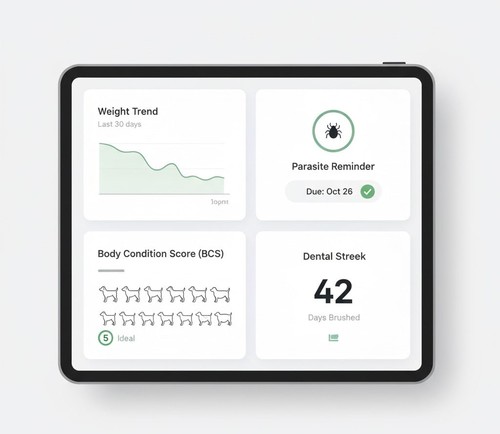
- Weight & Body Condition: Feel ribs under a thin fat layer; visible waist from above; note weekly weight.
- Dental: Daily brushing if possible; otherwise approved chews plus routine vet checks.
- Parasites: Year-round preventives where recommended; routine fecal checks.
- Life Stage: Puppies/kittens go very short and frequent; seniors focus on low-impact moves and joint comfort.
- Vet Visits: At least annually; more often for seniors or pets with chronic issues. Bring your training/enrichment log—it helps your vet tailor advice.
A Sample Day (Weekday & Weekend)
Weekday
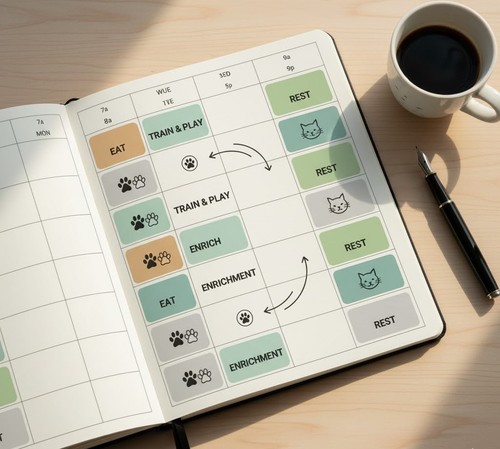
- 07:30 Eat + 5-min training: sit–down–stay (dog) or target-touch (cat).
- 08:00 Short walk / wand play: 8–10 min.
- 12:30 Micro-training: recall (dog) or puzzle snack (cat).
- 18:30 Enrichment: hide-and-seek (dog) or scent trail (cat).
- 21:30 Wind-down: chew/groom; lights low.
Weekend
- 09:00 Longer sniff-walk (dog) or window-perch birdwatch + wand play (cat).
- 15:00 Brain game: homemade puzzle (muffin tin + tennis balls; or cups & treats).
- 19:00 Family fun: fetch ladder (dog) or perch-and-pounce (cat), then cuddle time.
A 7-Day Challenge You Can Repeat
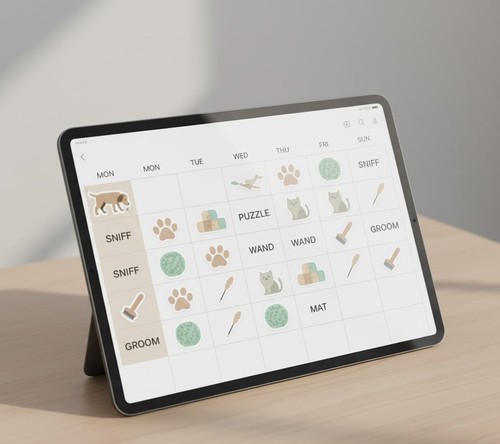
| Day | Morning (5–10 min) | Midday (5–8 min) | Evening (10–15 min) |
|---|---|---|---|
| Mon | Sniff-walk / wand play | Recall or target-touch | Puzzle feeders + settle/mat |
| Tue | Cue review (3 skills) | Scent game (3–5 hides) | Fetch ladder / perch-pounce |
| Wed | Loose-leash / slow tracking | Trick of the week | Grooming + dental |
| Thu | Sniff-walk / scent trail | Place/mat practice | Nosework course at home |
| Fri | Cue review + calm | Scatter feed | Family hide-and-seek |
| Sat | Longer outing / window perch | DIY puzzle build | Enrichment combo |
| Sun | Easy walk + stretch | Massage/brush | Free play + early lights out |
Repeat, rotating toys weekly to prevent boredom.
Track It with FAMMO
What to log: minutes active, toy/surface, mood/engagement (calm/alert/hyper), appetite, stool quality, and weight.
How FAMMO helps:
- Adaptive routines: If engagement dips, FAMMO suggests different toy types, lower jump heights (cats), or more scent work (dogs).
- Life-stage nudges: Puppies/seniors get shorter sessions and extra recovery.
- Health flags: Sudden activity drop or reluctance to jump triggers a mobility check reminder.
- Food pairing: Connect sessions to meal sizes to support weight targets.
For nutrition-exercise synergy, revisit How AI is Revolutionizing Pet Nutrition? and stool-tracking basics in What Your Pet’s Poop Says….
FAQ
How long should sessions be?
Short and frequent. Aim for 2–3 activity blocks daily; keep training bursts to 3–5 minutes.
Is laser play OK for cats?
Yes, if you always finish with a catchable toy or a treat so the predation sequence completes.
What should I do on very hot days?
Shift outside time to dawn/dusk, do indoor scent games and puzzles, and keep water available. Use shaded routes for dogs.
How do I prevent weight gain?
Measure meals, use part of the ration as training rewards, and track weekly weight/BCS.
Key Takeaways
- Daily structure calms behavior and supports healthy weight.
- Use micro-training and enrichment instead of long, exhausting workouts.
- Rotate toys weekly; end every play with a tangible catch.
- Track minutes, mood, and weight in FAMMO for automatic adjustments.
- Keep vet-backed basics: dental, parasite control, life-stage tweaks.
Conclusion
Healthy routines are simple: eat, train/play, rest—repeat. With a few planned minutes in the morning, midday, and evening, you’ll build better manners, sharper minds, and fitter bodies. Let FAMMO connect the dots—turning your logs into personalized daily recipes that grow with your pet.
CTA: Create your pet’s profile in FAMMO and enable Daily Play & Training Recipes to get adaptive plans synced to meals, age, and energy.