
Yes, cats and dogs can live together, but a safe match is not guaranteed. Their previous experiences, behaviour and response to each other matter. Aim for comfortable coexistence; they do not need to cuddle or play together.
Start with separate spaces and introduce them gradually. This guide explains how to prepare, when to move forward and which warning signs mean you should stop.

Before They Meet: Check the Match and Prepare Your Home
Ask the rescue centre or previous owner whether the new pet has lived with the other species and how those encounters went. If your dog has attacked cats or repeatedly tries to chase them, seek advice from a qualified behaviour professional before arranging contact.
Before the newcomer arrives, prepare:
A dog-free room for your cat, with a bed, hiding place, scratching surface and litter tray.
Separate feeding areas, with your cat’s food and water away from the litter tray.
Accessible high resting places, plus a clear route back to the cat’s room.
A quiet resting area for your dog, away from the cat’s resources.
Secure doors or barriers that neither animal can squeeze through or jump over.
Keep familiar feeding, play and walking routines where possible. Let the new pet settle into their own space before arranging the first meeting.

How to Introduce a Cat and Dog
Move forward according to both pets’ behaviour, not a fixed timetable. If either becomes frightened or overexcited, return to an easier stage.
Step 1: Start with Scent
While the pets remain in separate rooms, exchange blankets or cloths carrying their scent. Leave each item where the other animal can investigate voluntarily; do not hold it against their face.
Repeat until both can sniff the item and move on without distress. The RSPCA recommends scent swapping before unfamiliar pets meet.
Step 2: Introduce Visual Contact Through a Barrier
Let them see each other through a secure barrier, such as a closed glass door. Keep your dog on a lead at a distance and allow your cat to approach or leave freely.
Reward your dog for looking away from the cat and responding to you. Keep sessions short, increasing exposure only when both remain relaxed.
Step 3: Arrange a Supervised Meeting
After repeated comfortable barrier sessions, try a brief meeting in the same room. Keep the dog on a lead and leave your cat’s escape route open.
Never carry the cat towards the dog or restrain them for a greeting. Reward calm behaviour and finish while the encounter is going well.
Cats Protection’s introduction guide explains the importance of letting cats retreat, hide or reach a high perch.
Step 4: Extend Time Together Gradually
Build up the length of supervised meetings without rushing closer contact. Both animals should be able to move away and settle.
Prevent chasing rather than allowing them to “work it out”. Keep them securely separated whenever you cannot supervise.
When to Pause or Get Help
Watch both animals throughout each meeting. Silence alone does not mean they are comfortable; freezing or staying hidden can also signal distress.
What you notice | What to do |
|---|---|
Both can look away, move freely and settle | Repeat this stage before extending the next meeting |
Hissing, growling, crouching or repeated attempts to hide | End the session and return to greater distance or a barrier |
Fixed staring, stalking, lunging or chasing | Stop direct contact and seek advice from a qualified behaviour professional |
Changes in appetite, toileting or usual activity | Contact your veterinarian rather than assuming stress is the only cause |
Do not punish warning signals or force another encounter. If conflict starts, avoid reaching between the animals; use a solid barrier to separate them only if you can do so safely.
Seek veterinary care promptly for any injury. Repeated fear or pursuit needs professional assessment before further introductions.
Manage Feeding and Shared Spaces
Once supervised meetings are going well, pay attention to everyday access: can each pet eat, rest and move around without being followed or blocked?
Feed separately. Use different rooms or a secure barrier so neither animal can steal food or interrupt the other’s meal. Different feeding times alone may not prevent this.
Protect access to the litter tray. Your cat should be able to reach it without passing the dog’s bed or squeezing through a narrow shared space.
Offer individual activities. Give your dog walks and suitable enrichment, and let your cat enjoy play without the dog joining in.
Respect separate resting choices. Do not move beds closer together to encourage friendship.
Comfortable coexistence may look uneventful: both pets follow their routines and choose when to interact. Sleeping apart is perfectly acceptable.
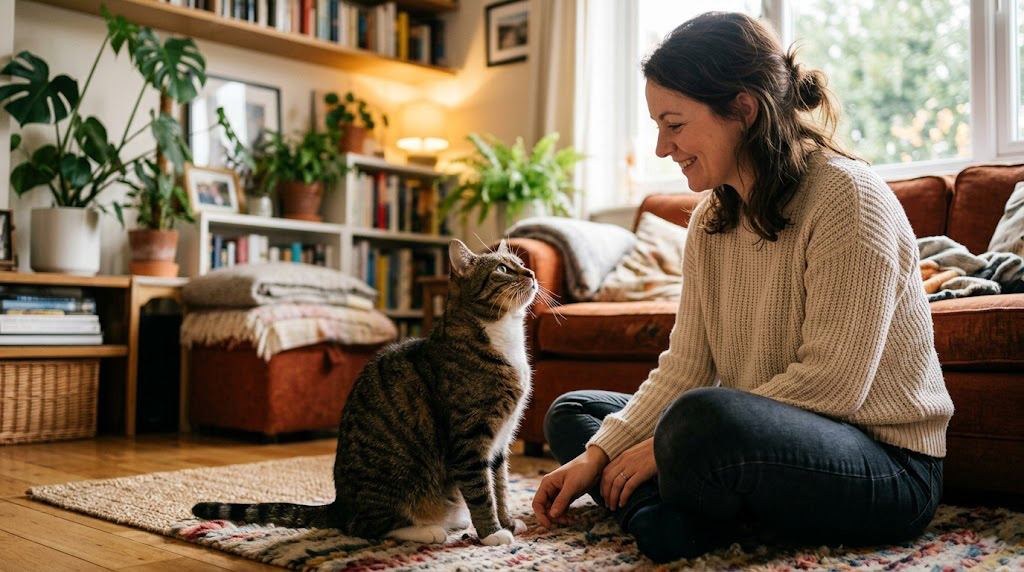
Shared time after gradual introductions; each pet should remain free to move away.

FAQs About Cats and Dogs Living Together
How long does it take for a cat and dog to get used to each other?
There is no fixed deadline. Repeat each introduction stage until both animals are comfortable. If progress stalls or fear continues, ask a qualified behaviour professional for help rather than increasing contact.
Can an adult dog learn to live with a cat?
Some adult dogs can adjust, but age alone does not determine compatibility. Previous experience with cats and the dog’s response to their movement matter. A history of chasing or attacking cats needs professional assessment before introductions.
Is a baby gate enough when introducing a kitten to a dog?
Not necessarily. Kittens can squeeze through gaps or climb over gates. Use a secure setup that prevents physical contact, and supervise every introduction.
Should I get a puppy and kitten together so they become friends?
Growing up together does not guarantee friendship. Both need separate care, training and safe resting spaces. Consider whether you can meet each animal’s needs before bringing them home.
Support Each Pet’s Individual Needs
Sharing a home does not mean sharing every routine. Keep feeding and care suited to each animal, even when they are comfortable together.
For the nutrition side, create a FAMMO profile for each pet to explore personalised guidance based on age, breed, weight and sterilisation status. Use it alongside your veterinarian’s advice when making feeding decisions.