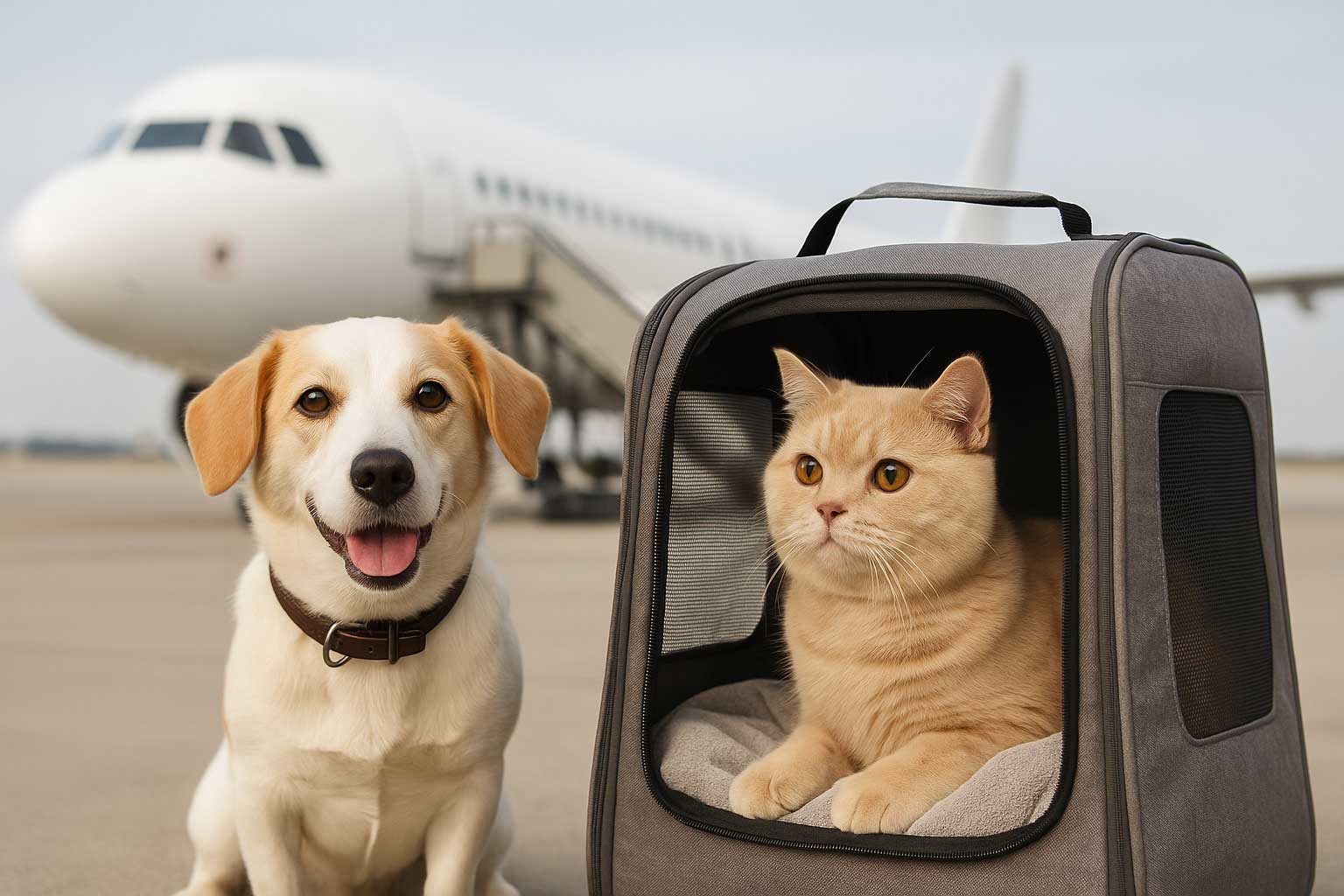
Pet Travel Checklist Europe: Dog & Cat Guide
Stress-Free Pet Travel with Dogs and Cats
Traveling with your dog or cat sounds exciting, until the real questions begin.
Can your pet handle the noise of an airport?
Will the carrier feel safe or frightening?
Do you need an EU pet passport, a health certificate, or extra paperwork?
And for some pets, is flying even the best option at all?
This guide is a practical pet travel checklist for Europe, created to help dog and cat owners prepare more calmly before a flight or long-distance journey. You’ll learn how to plan documents, choose the right carrier, reduce travel stress, manage food and hydration, and understand when ground transport may be a better choice than flying.
Quick Answer: How do you make pet travel less stressful?
The safest way to reduce travel stress is to prepare early. Start carrier training weeks before the trip, check airline and destination rules before booking, keep your pet’s routine as familiar as possible, and avoid last-minute changes in food, bedding, or handling.
For some dogs and cats, especially anxious pets, senior animals, flat-faced breeds, or cats that panic in loud environments, professional ground transport within Europe may be less stressful than flying.
The goal is not just to “get your pet there.”
The goal is to help them travel with less fear, more comfort, and fewer surprises.
Before You Book: What Makes Pet Travel Stressful for Dogs and Cats?
Most pet travel problems do not start at the airport.
They start days or weeks earlier, when the carrier is still unfamiliar, the paperwork is unclear, the feeding routine changes suddenly, or the owner realizes too late that the airline has specific pet rules.
For dogs and cats, travel stress usually comes from a mix of three things: a new environment, loss of routine, and lack of preparation. Airports can be loud and crowded, flights can feel confusing, and even calm pets may become anxious when they are suddenly placed in a carrier for several hours.
That is why stress-free pet travel is not just about buying an airline-approved carrier. It is about preparing your pet’s body, routine, documents, and emotional comfort before the journey begins.
For travel within Europe, pet owners should check the official EU pet travel rules before booking, especially when travelling across borders with a dog or cat. Airline rules also vary, so it is important to review your airline’s pet travel requirements, such as KLM’s pet travel preparation guide, before choosing a route.
A vet check is also a smart first step, especially for senior pets, anxious animals, flat-faced breeds, or pets with digestion, breathing, or heart concerns. If you are based in Amsterdam and need an English-speaking clinic before travel, FAMMO’s guide to the best vets in Amsterdam for expats can help you start in the right place.
In the next sections, we’ll turn this into a practical pet travel checklist for Europe, covering health checks, documents, carrier training, food and hydration, airport preparation, and when ground transport may be a better option than flying.
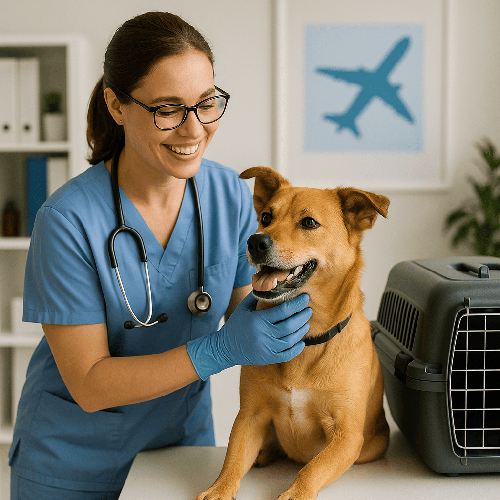
Step 1: Check Your Pet’s Health Before Travel
Before you book a flight, train, ferry, or professional ground transport, start with one simple question:
Is your dog or cat healthy enough to travel comfortably?
A pet that seems fine at home may still struggle with a long journey. Airport noise, carrier confinement, temperature changes, motion, unfamiliar smells, and changes in feeding routine can all create stress, especially for senior pets, anxious animals, flat-faced breeds, pets with breathing issues, or cats that panic when handled outside the home.
Schedule a vet visit at least 2–3 weeks before travel. For international or cross-border trips, start even earlier, because paperwork, vaccines, parasite treatments, and travel documents may have strict timing rules.
During the appointment, ask your veterinarian to check:
-
General health, including heart, lungs, temperature, joints, and breathing
-
Vaccination status, especially rabies requirements for cross-border travel
-
Parasite prevention and whether any destination-specific treatment is needed
-
Microchip details and whether the ID number matches your travel documents
-
Motion sickness, anxiety, or stress-management options
-
Whether your pet is fit for air travel, ground transport, or a longer journey
For travel in or from Europe, always check official pet travel rules before booking. The Government of the Netherlands explains that dogs and cats travelling abroad usually need a microchip, pet passport, and rabies vaccination. You can review the official guidance here: Taking your cat or dog with you on holiday.
If you are travelling from the UK or entering the EU from outside the EU, you may also need an animal health certificate within a specific timeframe. GOV.UK explains when an animal health certificate is required and when it must be issued: Getting an animal health certificate.
One important rule: do not give sedatives, calming medication, or new supplements before travel unless your veterinarian recommends them. What helps one pet may be unsafe or stressful for another, especially during flights.
Also prepare a simple travel health folder with:
- Pet passport or animal health certificate
- Vaccination records
- Microchip number
- Medication details
- Recent vet notes if your pet has a health condition
- A clear photo of your pet
- Your contact details and destination address
This step may feel boring compared to choosing a carrier or planning the trip, but it is one of the most important parts of stress-free pet travel. The earlier you confirm your pet’s health and documents, the fewer surprises you will face on travel day.
Step 2: Choose the Right Carrier for Your Dog or Cat
Your pet’s carrier is not just travel equipment.
For your dog or cat, it becomes their temporary safe space during the journey.
A good carrier should do two things at the same time: meet travel requirements and help your pet feel secure. If it only fits the airline rules but feels uncomfortable, unstable, or unfamiliar, your pet may become stressed before the trip even begins.
For in-cabin flights, always check your airline’s exact carrier size and weight rules before booking. Most airlines require the carrier to fit under the seat in front of you, stay closed during the flight, and provide enough ventilation for your pet.
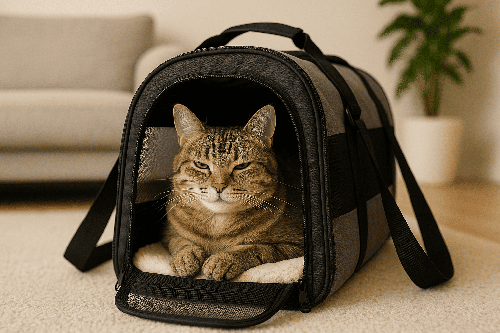
A good in-cabin pet carrier should be:
- Soft-sided, so it can fit more easily under the seat
- Well-ventilated on multiple sides
- Leak-resistant on the bottom
- Securely closed with strong zippers or latches
- Large enough for your pet to sit, turn, and lie down comfortably
- Easy to carry without swinging too much
- Lined with an absorbent pad or soft bedding
- Clearly labelled with your name, phone number, and flight details
For cats, choose a carrier with both front and top openings if possible. This makes it easier to place your cat inside calmly and can reduce stressful handling during travel.
For dogs, make sure the carrier does not collapse onto their body when placed under the seat. Small dogs may still feel stressed if the space is too tight, too hot, or unstable.
Avoid choosing a carrier only because it looks stylish. The safest carrier is the one your pet can actually tolerate for several hours.
Before travel day, place the carrier at home with the door open. Add a familiar blanket, a favorite toy, or a piece of bedding that smells like home. Let your pet explore it without pressure. The goal is to make the carrier feel normal, not like a trap that only appears before stressful events.
If you are using professional ground transport instead of flying, ask the transport company what type of carrier or kennel setup is best for your pet. A carrier that works for an airplane cabin may not always be the best choice for a long-distance ground journey.
The right carrier does not remove all travel stress, but it gives your pet one thing they desperately need during the journey: a small space that feels familiar, stable, and safe.
Step 3: Start Carrier Training Before Travel Day
One of the biggest mistakes pet owners make is waiting until travel day to introduce the carrier.
To your dog or cat, a carrier should not suddenly appear five minutes before leaving home. If the first real experience with the carrier is stressful, rushed, or forced, your pet may connect it with fear, and that fear can follow them all the way to the airport, car, ferry, or transport vehicle.
Start carrier training at least 2–3 weeks before travel. Nervous cats, rescue pets, senior animals, or pets with past travel stress may need even more time.
Begin with small, calm steps:
- Leave the carrier open at home in a quiet, familiar space.
- Add a blanket, towel, or soft bedding that smells like home.
- Place treats, toys, or part of a meal near the carrier entrance.
- Let your pet explore without forcing them inside.
- Once they enter calmly, reward them and keep the door open.
- Slowly practice closing the door for a few seconds, then longer.
- Carry the carrier around the room before trying short car rides.
- Play airport, traffic, or airplane sounds quietly in the background.
- Reward calm behavior with treats, praise, or gentle attention.
For cats, patience matters more than speed. Do not chase your cat through the house and push them into the carrier at the last minute. This can make the journey much more stressful before it even begins.
For dogs, practice short calm sessions where they enter the carrier, settle, and come out again without drama. The goal is not to “trap” them. The goal is to teach them that the carrier is a safe, predictable space.
You can also read AAHA’s guidance on helping cats feel comfortable in a travel crate here: Helping Your Cat Get Comfortable in a Travel Crate.
Carrier training does not remove every travel challenge, but it gives your pet a powerful advantage: familiarity. And familiarity is one of the best ways to reduce fear during pet travel.
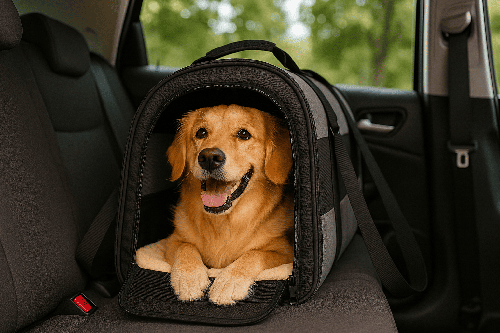
Step 4: Reduce Travel Stress Without Unsafe Shortcuts
Travel stress is real, but it should not be handled with random sprays, sedatives, or last-minute calming products.
Your dog or cat needs calm, familiar signals, not sudden changes. A new smell, a new supplement, or a medication used for the first time on travel day can make things worse, especially for cats, senior pets, flat-faced breeds, or pets with breathing or heart concerns.
The safest stress-reduction plan starts before the trip.
Use simple, low-risk comfort tools first:
- Keep your own voice and body language calm
- Use a familiar blanket, towel, or bedding that smells like home
- Add a favorite toy or comfort item if it is safe inside the carrier
- Keep the carrier covered lightly if visual stimulation causes stress
- Avoid crowded areas when waiting at the airport or transport pickup point
- Reward calm behavior with small treats or gentle praise
- Keep handling slow and predictable
- Avoid changing food, treats, supplements, or routines right before travel
Be careful with “natural” calming products. Essential oils and strong scented sprays are not automatically safe for pets. The ASPCA explains that concentrated essential oils can be dangerous for dogs and cats, especially if they are inhaled, licked from the coat, or applied directly to the skin. You can read their guidance here: The Essentials of Essential Oils Around Pets.
For dogs that already tolerate them, a pressure vest or calming wrap may help, but test it at home first. Do not use it for the first time on travel day.
For cats, avoid forcing interaction when they are scared. A quiet carrier, familiar scent, and minimal handling usually work better than trying to comfort them too much in a noisy place.
If your pet has serious travel anxiety, talk to your veterinarian before the trip. Some pets may benefit from vet-approved calming aids or prescription anxiety support, but these should be tested before travel day and only used under professional guidance.
Do not give sedatives or medication without veterinary advice. The FDA warns that sedatives can reduce a pet’s ability to react to their environment and may be dangerous during travel. You can read more here: Travel Training for You and Your Pets.
Watch for signs of stress during the journey:
- Heavy panting
- Drooling
- Shaking
- Hiding or freezing
- Excessive vocalizing
- Restlessness
- Vomiting
- Attempts to escape the carrier
- Aggression or panic when handled
If your pet panics, do not force interaction or open the carrier in a crowded area. Move to a quieter place if possible, speak calmly, and reduce stimulation. For pets that become extremely distressed during travel, flying may not be the best option. In those cases, professional ground transport may be safer and less stressful.
Step 5: Plan Food, Water and Bathroom Breaks Before Travel
Travel stress does not only affect your pet’s mood.
It can also affect their stomach.
A dog or cat that eats too much, drinks too fast, tries a new food, or misses their usual bathroom routine may become uncomfortable during the journey. That discomfort can quickly turn into whining, panting, vomiting, accidents, or panic inside the carrier.
The goal is simple: keep the routine familiar, reduce nausea risk, and avoid last-minute surprises.
Before Travel Day
Do not change your pet’s food right before a trip. Avoid new brands, rich treats, unfamiliar supplements, or “calming snacks” your pet has never tried before.
If you are planning to change your pet’s diet, do it weeks before travel, not the night before. For longer-term feeding decisions, you can use FAMMO’s guides to the best dog food brands in Europe and the best cat food brands in Europe to compare options before making changes.
For Dogs
For most healthy adult dogs, a light familiar meal several hours before travel may be easier than a heavy meal right before leaving. Give your dog time to digest, then take them for a proper walk and bathroom break before heading to the airport, train station, ferry terminal, or transport pickup point.
Pack enough of your dog’s regular food for the full journey, plus a little extra in case of delays. If your dog has a sensitive stomach, allergies, or a strict diet, write clear feeding instructions and keep the food in labelled portions.
For Cats
Cats are often more sensitive to travel stress and may become nauseous if fed too close to departure. Some cats do better when they are not given a full meal right before travel, but the best timing depends on your cat’s health, age, routine, and journey length.
For cats, keep the carrier lined with an absorbent pad and avoid overhandling them during the journey. A familiar blanket or towel can help, but make sure it does not block ventilation.
Water and Hydration
Do not remove water for too long. Your pet should have access to water before travel and again after arrival. During the journey, offer small amounts when it is safe and allowed, especially on longer trips.
For in-cabin flights, avoid messy water setups that can spill inside the carrier. A collapsible bowl, small travel bottle, or airline-approved setup is usually more practical than filling the carrier with water before departure.
Bathroom Breaks
Before leaving home, give your dog a calm bathroom break without rushing. For cats, prepare the carrier with an absorbent liner and avoid stressful last-minute chasing or handling.
For long-distance ground transport, pack your pet’s regular food, favorite safe snacks, feeding instructions, and any bathroom-related notes. A professional carrier can care for your pet better when they know your dog or cat’s normal routine.
When to Ask Your Vet
Ask your veterinarian for a specific feeding and hydration plan if your pet is:
- A puppy or kitten
- Senior
- Diabetic
- On medication
- Prone to vomiting or motion sickness
- Diagnosed with kidney, heart, or digestive issues
- Travelling on a very long route
Food and water planning may seem like a small detail, but it can make the difference between a stressful journey and a calmer one. A familiar routine helps your pet feel safer, and helps you avoid problems when you are already far from home.
Step 6: Pack a Pet Travel Bag Before You Leave
A calm journey is much easier when you are not searching for documents, wipes, food, or medication at the last minute.
Before travel day, prepare one small pet travel bag that stays with you. For in-cabin flights, this should fit with your personal items and follow your airline’s cabin rules. For ground transport, it should include everything the carrier may need to keep your dog or cat comfortable during the route.
Think of this bag as your pet’s travel safety kit.
Documents and Identification
Keep your pet’s important documents together in one folder:
- Pet passport or animal health certificate
- Rabies vaccination records
- Microchip number
- Airline pet booking confirmation, if flying
- Any required health certificate or vet note
- Medication instructions
- A clear photo of your pet
- Your contact details and destination address
- Emergency contact information
Paperwork may not feel exciting, but it can decide whether your pet is allowed to travel. Keep both printed and digital copies when possible.
Comfort Items
Pack items that smell and feel familiar:
- A small blanket or towel from home
- A favorite safe toy
- A comfort item that fits inside or near the carrier
- A light cover for the carrier if your pet gets stressed by movement or crowds
Do not wash your pet’s bedding right before travel. Familiar scent can help your dog or cat feel safer in an unfamiliar environment.
Food, Water and Hygiene
Pack practical items for delays, accidents, and longer waiting times:
- Regular food in labelled portions
- A small treat pouch
- Collapsible water bowl
- Travel water bottle
- Absorbent pads
- Waste bags
- Pet-safe wipes
- A spare towel
- Any medication your pet needs during the journey
Avoid packing new treats or rich snacks that your pet has never eaten before. Travel day is not the right time to test a new food or supplement.
Safety Items
Bring simple backup items that can prevent panic if something goes wrong:
- Spare leash
- Secure harness
- ID tag with phone number
- Extra collar or clip
- Small roll of tape or labels for the carrier
- Zip bag for used pads or waste items
For cats, a secure harness can be useful if you are asked to remove your cat from the carrier during security checks. Never open a cat carrier in a crowded or unsecured area unless you are instructed to do so and your cat is safely controlled.
For dogs, keep the leash and harness easy to reach, especially before airport security, bathroom breaks, or ground transport pickup.
Packing well does not mean carrying too much. It means having the right items ready before your pet becomes stressed, hungry, thirsty, or uncomfortable.
A simple travel bag can turn a chaotic moment into a manageable one.
Step 7: Know What to Expect at the Airport
The airport is often the most stressful part of pet travel, not because of the flight itself, but because everything happens quickly.
There are people everywhere. Announcements are loud. Security lines move fast. Your hands are full. Your pet can smell, hear, and feel that something unusual is happening.
That is why your goal at the airport is not to do more.
Your goal is to do less, but more calmly.
Arrive with extra time so you do not need to rush. If you are flying with your dog or cat, check your airline’s pet check-in rules before travel day. Some airlines require you to confirm pet documents at the check-in desk, even if you already booked your own ticket online.
If you are travelling through Amsterdam Airport Schiphol, the airport recommends allowing extra time for pet check-in and arranging vaccinations and travel documents far in advance. You can review Schiphol’s official guidance here: Pets at Schiphol and on-board.
At the airport, try to:
- Keep your pet inside the carrier unless staff instruct you otherwise
- Avoid crowded waiting areas when possible
- Speak calmly and move slowly
- Keep documents easy to reach
- Keep a leash or harness ready, especially for dogs and nervous cats
- Ask airport staff where the nearest pet relief area is
- Avoid opening the carrier in busy or unsecured spaces
- Stay away from other pets if your dog or cat is already stressed
Security procedures can vary by airport and country. In some places, staff may inspect the carrier while your pet stays with you. In others, you may be asked to hold your pet while the carrier is checked separately. Do not guess and do not rush this moment, ask security staff what they want you to do before placing the carrier anywhere.
For cats, this is one of the highest-risk moments for escape. A secure harness can help, but it should be tested at home before travel day. Never try a new harness for the first time at the airport.
For dogs, keep the leash short and secure during check-in, security, and bathroom breaks. Even calm dogs may react differently in a loud airport.
If your pet starts panting, shaking, vocalizing, or trying to hide, do not force interaction. Move to a quieter corner if possible, reduce visual stimulation, and keep your voice soft. Sometimes the most comforting thing you can do is simply stay calm beside them.
The airport is not the place to train your pet.
It is the place to protect the calm you already built before travel day.
Step 8: Keep Your Pet Safe and Comfortable During the Flight
Once you are on the plane, your job becomes simple: keep your pet safe, contained, calm, and well-ventilated.
This is not the time to train, play, feed too much, or open the carrier for reassurance. Even if your dog or cat seems uncomfortable, opening the carrier during the flight can create a serious escape risk and may break airline rules.
For in-cabin flights, your pet should stay inside the closed carrier and remain under the seat in front of you, unless airline staff instruct you otherwise. Never place a pet carrier in the overhead bin, on your lap during takeoff or landing, or in the aisle.
The FAA explains that an in-cabin pet container must fit under the seat and remain properly stowed while the aircraft is moving, including during takeoff and landing. You can read their cabin safety guidance here: FAA Cabin Safety Pets FAQ.
During the flight:
- Keep the carrier closed and secured under the seat
- Make sure ventilation is not blocked
- Use a light cover only if it does not reduce airflow
- Avoid opening the carrier mid-flight
- Speak softly if your pet becomes restless
- Keep your feet and bags from pressing against the carrier
- Do not give medication or calming products unless your vet approved them before travel
- Ask cabin crew for help if your pet appears seriously distressed
A light cover or scarf can help reduce visual stimulation for some pets, but never fully cover the carrier. Dogs and cats can overheat or become more anxious if airflow is reduced.
For dogs, a tiny familiar treat may help if they are calm and the flight is stable, but do not force food. For cats, less stimulation is often better. Many cats feel safer when the carrier stays quiet, covered lightly, and untouched.
If turbulence happens, keep the carrier secure and do not try to open it. Your calm voice can help, but your pet’s physical safety comes first.
Watch for signs that your pet may be struggling:
- Heavy panting
- Excessive drooling
- Repeated attempts to escape
- Vomiting
- Weakness or collapse
- Extreme agitation
- Breathing difficulty
If you notice serious signs of distress, speak to the cabin crew. Do not try to solve the problem by opening the carrier in the cabin unless you are specifically instructed to do so.
The best in-flight comfort is not constant attention.
It is a safe carrier, steady airflow, minimal handling, and a calm owner sitting nearby.
Step 9: Help Your Pet Recover After Arrival
Landing does not mean the journey is over for your dog or cat.
For your pet, the airport, transport vehicle, new smells, new rooms, and unfamiliar routine can still feel overwhelming. Some pets relax as soon as they leave the plane. Others need hours, or even a full day, to feel normal again.
After arrival, keep the first few hours simple.
If you are travelling with a dog, find a safe pet relief area or quiet outdoor space as soon as possible. Let them stretch, sniff, drink water, and have a calm bathroom break before moving on to the next part of the journey.
If you are travelling with a cat, do not rush them out of the carrier in a busy place. Wait until you are in a secure room, close doors and windows, and let your cat come out slowly. Some cats may hide at first, and that is normal.
Offer fresh water, but avoid a heavy meal immediately after landing. Start with a small amount of familiar food once your pet is calm and settled. Keep the same food routine as much as possible to avoid stomach upset.
In the first 24 hours after travel, watch for signs such as:
- Heavy panting that does not settle
- Repeated vomiting
- Diarrhea
- Refusing water
- Extreme tiredness or weakness
- Breathing difficulty
- Limping or pain
- Hiding for an unusually long time
- Panic, shaking, or unusual aggression
Mild tiredness after travel can be normal. But if your pet seems seriously unwell, has breathing problems, cannot keep water down, or does not recover after rest, contact a veterinarian.
The best recovery plan is not complicated. Give your dog or cat water, quiet, familiar food, a safe space, and time.
After a stressful journey, routine is comfort.
Flying Isn’t the Only Option: Ground Transport for Pets in Europe
Flying can be convenient, especially for long distances. But it is not always the calmest option for every dog or cat.
For travel within Europe, ground transport may be a better choice for some pets, especially anxious animals, senior pets, flat-faced breeds, large dogs that cannot travel in cabin, or cats that become extremely stressed in airports.
A flight may be short on paper, but the full experience includes check-in, security, boarding, cabin pressure changes, airport noise, waiting time, and arrival handling. For some pets, that combination can be overwhelming.
Ground transport can sometimes offer a more controlled journey: fewer crowds, no airport security, regular breaks, human supervision, and a more flexible routine.
When Ground Transport May Be Better Than Flying
Ground transport may be worth considering if your pet:
- Is very anxious in airports or crowded spaces
- Is elderly or easily exhausted
- Is a flat-faced breed with breathing concerns
- Is too large for in-cabin travel
- Gets stressed by loud noise or pressure changes
- Needs regular bathroom or stretch breaks
- Has a sensitive stomach or strict feeding routine
- Is travelling within Europe rather than intercontinentally
Flying may still be necessary for long intercontinental routes, but for many European journeys, professional pet transport can be a calmer alternative to flying.
Expert Tips from 5 Star Pet Transport
To make this guide more practical, we asked 5 Star Pet Transport, a European pet transport company based in the Netherlands, to share advice from their experience with long-distance ground transport across Europe.
Their biggest warning for pet owners is simple: do not leave cross-border paperwork until the last minute.
Documents such as the EU Pet Passport, animal health certificates, rabies vaccination records, and country-specific requirements can have strict timing rules. For dogs travelling to countries such as the UK or Ireland, tapeworm treatment rules may also apply. GOV.UK explains that dogs entering Great Britain usually need tapeworm treatment between 24 hours and 120 hours before arrival: Tapeworm treatment for dogs.
Missing a document deadline by even one day can delay or prevent travel.
How to Prepare Cats for Ground Transport
For cats, preparation should start weeks before the journey. 5 Star Pet Transport recommends making the carrier feel familiar before pickup day.
For long-distance ground transport, they recommend avoiding bulky hard carriers when they reduce the usable space inside the transport setup. Instead, a small soft-sided carrier with both top and front openings can make handling calmer and leave more room for essentials such as a litter box, food, and water.
For cats, this means:
- Start carrier training several weeks before travel
- Let your cat enter the carrier voluntarily with treats or toys
- Use a familiar-smelling blanket or object inside the carrier
- Consider a pet-safe calming pheromone spray only if your cat already tolerates it
- Keep the home environment quiet before pickup
- Avoid chasing your cat into the carrier at the last minute
That last point matters. A stressful pickup can make the whole journey harder. Cats often need quiet, predictability, and minimal handling.
How to Prepare Dogs for Ground Transport
For dogs, the goal is to reduce physical energy and keep the routine familiar.
Before a long-distance journey, 5 Star Pet Transport recommends:
- Take your dog for a long, tiring walk before departure
- Pack familiar bedding and toys
- Do not wash bedding right before travel, because familiar scent can be comforting
- Pack enough of your dog’s regular food for the full journey
- Include favorite safe snacks
- Share your dog’s personality, fears, habits, and special needs with the transport team
That last point matters. A professional carrier may know how to handle many temperaments, but no one knows your dog better than you do. Sharing details about your dog’s routine can help the transport team build trust faster and reduce stress during the trip.
What to Look for in a Professional Pet Transport Company
If you choose ground transport, do not only compare prices. Compare safety, supervision, and comfort.
According to 5 Star Pet Transport, important signs of a professional pet transport service include:
- Climate-controlled transport
- A stable vehicle temperature of around 24°C when appropriate
- Stops for short walks at least every 4 hours
- Pets not being left alone during overnight stops
- Longer evening and morning walks on overnight journeys
- Clear communication with owners
- Experience with anxious, senior, flat-faced, or special-needs pets
- A careful approach to feeding, hydration, and routine
A good pet transport company is not just moving an animal from one address to another. It is managing stress, safety, temperature, routine, and comfort across the full journey.
Ground transport is not the right option for every trip. But for the right pet, on the right route, it can be a calmer alternative to flying.
Flying vs Ground Transport: Which Is Better for Your Pet?
There is no single best travel method for every dog or cat.
Some pets handle short flights very well. Others become overwhelmed by airports, cabin noise, pressure changes, security checks, or staying inside a carrier for too long. The right choice depends on your pet’s health, size, age, temperament, route, and travel documents.
Use this comparison as a starting point:
| Situation | Flying may be better | Ground transport may be better |
|---|---|---|
| Long intercontinental travel | Usually necessary | Often not realistic |
| Travel within Europe | Sometimes faster | Often calmer for anxious pets |
| Small dog or cat that fits in cabin | Possible if airline rules allow | Also possible, especially for nervous pets |
| Large dog | May require hold or cargo | Often more comfortable |
| Flat-faced breeds | Can be risky depending on airline and conditions | Often worth considering |
| Senior pets | Depends on health and flight length | May allow more breaks and supervision |
| Very anxious cats | Airport handling may be stressful | A quieter route may help |
| Dogs needing bathroom breaks | Limited during flights | Regular stops may be possible |
| Pets with strict feeding routines | More difficult during flights | Easier to manage with instructions |
| Owners worried about paperwork timing | Still required | Still required |
Before choosing between flying and ground transport, ask yourself:
- Can my pet stay calm in a carrier for several hours?
- Is my pet small enough for in-cabin travel?
- Does my pet have breathing, heart, mobility, or anxiety concerns?
- Is the route within Europe or intercontinental?
- Are all documents, vaccines, and treatments ready on time?
- Would regular breaks make the journey safer and calmer?
Flying is not automatically bad, and ground transport is not automatically better. The best option is the one that fits your pet’s body, temperament, and route.
If your pet is healthy, calm, small enough for in-cabin travel, and the flight is short, flying may be practical. But if your dog or cat is anxious, elderly, flat-faced, large, or sensitive to routine changes, professional ground transport may be worth considering for European routes.
Pet Travel Checklist for Europe
Pet travel becomes much less stressful when you do not leave everything until the final week.
Use this checklist before flying with your dog or cat, booking ground transport, or travelling across borders in Europe.
3–6 Weeks Before Travel
- Check the pet travel rules for your destination country
- Confirm whether your pet needs an EU Pet Passport or animal health certificate
- Make sure your pet’s microchip details are correct
- Check rabies vaccination requirements
- Book a vet appointment if your pet needs a health check or paperwork
- Ask your airline or transport company about pet rules before booking
- Start carrier training at home
- Avoid changing your pet’s food unless there is enough time for a slow transition
- If your pet is anxious, ask your vet about safe travel support options
1–2 Weeks Before Travel
- Confirm your flight, train, ferry, or ground transport booking
- Check carrier size and weight rules again
- Prepare your pet’s travel documents
- Save digital copies of important paperwork
- Pack your pet’s regular food in labelled portions
- Prepare familiar bedding or a towel that smells like home
- Practice short carrier sessions or short car rides
- Write down your pet’s feeding routine, medication schedule, and personality notes
A Few Days Before Travel
- Check if your destination has parasite treatment requirements
- For dogs travelling to the UK, review tapeworm treatment timing carefully
- Avoid new treats, supplements, or foods
- Keep your pet’s routine as normal as possible
- Prepare a travel bag with documents, food, water bowl, wipes, waste bags, pads, leash, harness, and medication
- Confirm pickup time or airport arrival time
- Make sure your contact details are attached to the carrier
On Travel Day
- Stay calm and avoid rushing
- Give your dog a proper walk and bathroom break before leaving
- Keep cats in a quiet room before placing them in the carrier
- Avoid chasing or forcing your pet into the carrier
- Offer water before travel, but avoid messy water setups inside the carrier
- Keep documents easy to reach
- Do not give sedatives or calming products unless your vet approved them
- Keep the carrier closed and secure
- Speak softly and reduce stimulation whenever possible
After Arrival
- Offer fresh water
- Give your dog a safe bathroom break
- Let your cat come out of the carrier in a secure room
- Avoid heavy meals immediately after arrival
- Return to your pet’s normal food and routine
- Watch for vomiting, diarrhea, heavy panting, weakness, or breathing difficulty
- Contact a veterinarian if your pet does not recover normally after rest
A good pet travel checklist is not about packing more. It is about preparing earlier, reducing uncertainty, and helping your dog or cat feel safer from the first step to the final destination.
FAQ
What documents do I need to travel with a dog or cat in Europe?
For travel within Europe, dogs and cats usually need a microchip, valid rabies vaccination, and an EU Pet Passport. Depending on where you are travelling from or to, you may also need an animal health certificate or additional parasite treatments. Always check the official EU pet travel rules and your destination country’s requirements before booking.
What is the difference between an EU Pet Passport and an animal health certificate?
An EU Pet Passport is usually used for pets travelling within the EU or returning to the EU when the passport remains valid. An animal health certificate is often required when entering the EU from outside the EU or when an EU Pet Passport is not valid for the route. The rules depend on your country of departure and destination, so check official guidance before travel.
How early should I prepare my dog or cat for travel?
Start at least 3–6 weeks before travel if possible. This gives you time to check documents, schedule a vet visit, confirm airline or transport rules, start carrier training, and avoid last-minute stress. Nervous cats, senior pets, rescue animals, or pets with health concerns may need even more preparation time.
How do I prepare a dog for a flight?
Start with a vet check, confirm airline rules, choose an airline-approved carrier, and help your dog get used to the carrier before travel day. Keep food familiar, avoid heavy meals right before departure, and give your dog a calm walk and bathroom break before leaving for the airport.
How do I prepare a cat for a flight?
For cats, carrier training is one of the most important steps. Leave the carrier open at home, add familiar bedding, use treats or toys to create a positive association, and avoid forcing your cat inside at the last minute. On travel day, keep your cat in a quiet space before leaving and only open the carrier in secure areas.
Should I feed my dog or cat before travelling?
Avoid heavy meals right before travel. For many healthy adult dogs, a light familiar meal several hours before departure may be easier than a full meal. Cats may become nauseous if fed too close to travel, so ask your veterinarian what timing is best for your cat. Puppies, kittens, diabetic pets, senior animals, and pets on medication need a vet-specific feeding plan.
Can dogs and cats fly in the cabin in Europe?
Many airlines allow small dogs and cats to travel in the cabin, but rules vary by airline, aircraft, route, carrier size, and combined pet-and-carrier weight. Always check the airline’s official pet policy before booking. Your pet usually needs to stay inside a closed carrier under the seat in front of you during the flight.
Is flying stressful for dogs and cats?
Flying can be stressful for some pets because of noise, crowds, handling, pressure changes, unfamiliar smells, and time spent inside a carrier. Some pets handle flights well with preparation, while others may become very anxious. Carrier training, familiar bedding, calm handling, and a vet check can reduce risk, but flying is not the best option for every pet.
Is ground transport better than flying for pets?
Ground transport may be better for some pets, especially anxious animals, senior pets, flat-faced breeds, large dogs, or cats that panic in airports. For travel within Europe, professional ground transport can offer regular breaks, climate-controlled travel, human supervision, and a more flexible routine. Flying may still be necessary for long intercontinental routes.
Are flat-faced dogs and cats safe to fly?
Flat-faced breeds can have higher breathing risks during travel, especially in stressful, hot, or poorly ventilated conditions. If your pet is brachycephalic, speak with your veterinarian before booking any flight. Some airlines may restrict certain breeds or require extra conditions for travel.
What should I pack for pet travel?
Pack your pet’s documents, microchip details, vaccination records, food, water bowl, absorbent pads, waste bags, wipes, leash, harness, medication, familiar bedding, and a clear photo of your pet. For longer journeys, pack extra food and written feeding instructions in case of delays.
When should I contact a vet after travel?
Contact a veterinarian if your pet has breathing difficulty, repeated vomiting, diarrhea, extreme weakness, collapse, heavy panting that does not settle, refusal to drink, signs of pain, or unusual behavior that does not improve after rest. Mild tiredness after travel can be normal, but serious or lasting symptoms should not be ignored.
Key Takeaways
- Start your pet travel checklist early, especially for cross-border trips in Europe.
- Check your dog or cat’s health before booking, not after.
- Confirm documents such as microchip details, rabies vaccination, EU Pet Passport, or animal health certificate.
- Choose a carrier that is safe, well-ventilated, comfortable, and accepted by your airline or transport company.
- Begin carrier training weeks before travel day, especially for cats and anxious pets.
- Keep food, bedding, treats, and routines familiar before and during the journey.
- Avoid sedatives, essential oils, or new calming products unless your veterinarian approves them.
- Pack a simple travel bag with documents, food, water bowl, pads, wipes, leash, harness, medication, and familiar bedding.
- At the airport, reduce stimulation, avoid opening the carrier in crowded places, and follow staff instructions calmly.
- For anxious, senior, flat-faced, or large pets, ground transport within Europe may sometimes be a calmer alternative to flying.
- After arrival, give your pet water, quiet, familiar food, and time to recover.
Before You Travel, Understand Your Pet Better
Pet travel is not only about booking a ticket, buying a carrier, or packing documents.
It is about understanding your dog or cat before the journey begins.
What food keeps their stomach calm?
How do they react to routine changes?
Are they anxious in new environments?
Do they need a slower feeding schedule before travel?
Would flying be realistic, or would ground transport be calmer?
These questions are easier to answer when you know your pet’s profile clearly.
FAMMO helps dog and cat owners understand their pet’s nutrition, routine, digestion, lifestyle, and care needs in a more personalized way. By creating a pet profile, you can make better everyday decisions before travel, from feeding routines to comfort planning and preventive care conversations with your vet.
Before your next trip, do not rely on guesswork.
👉 Create your pet profile in FAMMO and prepare your dog or cat with more confidence.
FAMMO does not replace your veterinarian, airline rules, or official travel requirements. But it can help you understand your pet’s daily needs more clearly before you travel.