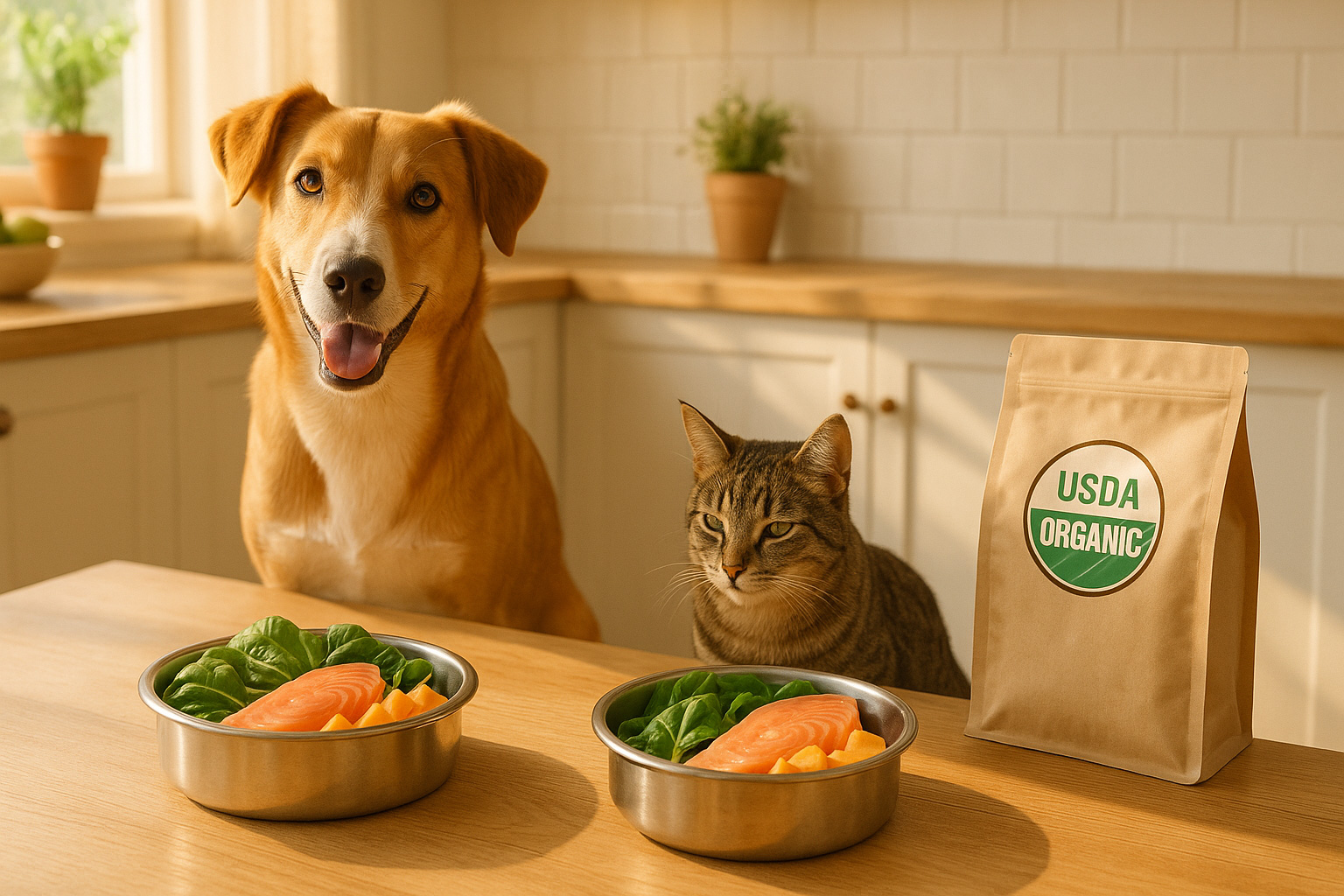
Natural & Organic Pet Nutrition: Health & Planet
This guide explains how “natural” diets and certified organic products can support pet health while reducing environmental impact—plus how to shop, transition, and avoid common pitfalls. Educational only; not veterinary advice.
Table of Contents
- Natural vs. Organic: What the Labels Really Mean
- Health Benefits: From Digestibility to Skin & Gut
- Planet Benefits: How Organic & Low-Impact Choices Help
- Complete & Balanced: Meeting AAFCO/FEDIAF Standards
- Myths & Facts: Grain-Free, Raw, and Preservatives
- How to Shop & Transition Safely
- Beyond the Bowl: Eco-Friendly Pet Products
- Mini Case Studies
- Checklist & Action Plan
- Key Takeaways
- FAQ
- References & Further Reading
Natural vs. Organic: What the Labels Really Mean
Natural and organic are not the same:
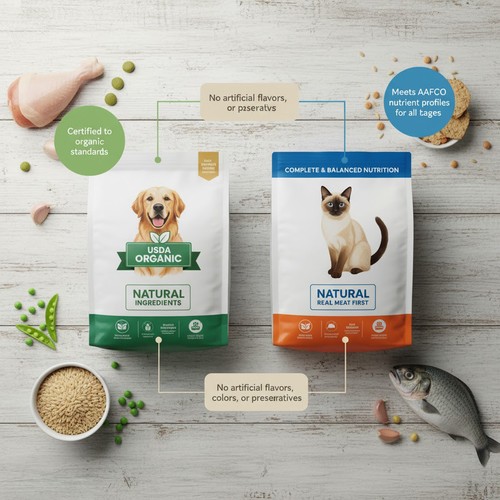
- Natural (AAFCO): Ingredients derived from plant, animal, or mined sources with minimal processing and without chemical synthesis. It speaks to how ingredients are made, not whether a diet is nutritionally complete.
- Organic (USDA/EU): Farming and processing standards that limit synthetic pesticides and fertilizers, prohibit certain GMOs, and require audited supply chains. Organic pet foods can use the USDA Organic seal (USA) or the EU organic leaf logo when certified.
Key point: A product can be “natural” yet not organic; a product can be organic yet not nutritionally complete. Always verify “Complete & Balanced” for your pet’s life stage.
Health Benefits: From Digestibility to Skin & Gut
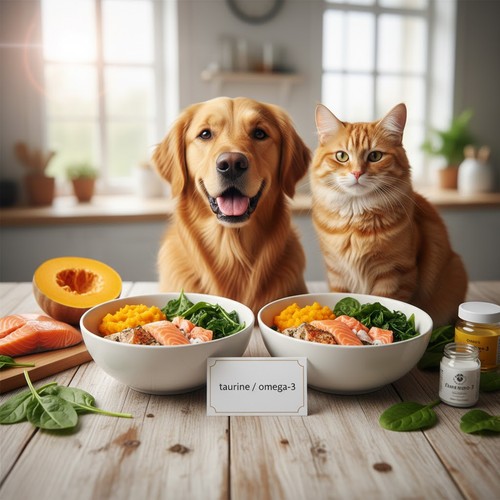
Natural nutrition emphasizes recognizable ingredients (e.g., salmon, turkey, sweet potato, pumpkin, oats) and shorter additive lists. When well formulated, benefits may include:
- Digestive comfort: Whole-food fibers (pumpkin, oats, beet pulp) and prebiotics can support regularity.
- Skin & coat: Omega-3s (EPA/DHA from fish oil or algae) and quality proteins help reduce dryness and dullness.
- Stable energy & weight: Complex carbs and appropriate protein/fat ratios avoid sugar spikes and promote lean muscle.
- Fewer unnecessary fillers: Thoughtful recipes prioritize nutrient density over empty calories.
But remember:
- “Natural” ≠ “balanced.” Without meeting AAFCO/FEDIAF nutrient profiles, even beautiful ingredient lists can miss critical micronutrients.
- Cats are obligate carnivores: They need taurine, arachidonic acid, and certain B vitamins from animal sources. Natural toppers shouldn’t displace a complete base diet.
- Allergies vs. intolerances: Single-protein formulas, novel proteins, and limited-ingredient diets can help—under a vet’s guidance.
Planet Benefits: How Organic & Low-Impact Choices Help
Organic and low-impact sourcing can reduce pesticide runoff, improve soil health, and support biodiversity. For the pet-food chain, consider:
- Certified organic animal proteins and crops: lower synthetic inputs and stricter welfare guidelines.
- Regenerative agriculture partnerships: pasture rotation and cover crops that enhance soil carbon.
- By-product utilization (e.g., organ meats): nutritionally valuable and reduces waste compared to human-grade cuts alone.
- Responsible fisheries: look for certifications (e.g., MSC) and species with healthier stocks.
- Packaging matters: recyclable cans, paper sacks with minimal plastic, and bulk formats that cut transport emissions.
Reality check: Animal proteins carry higher footprint than plant ingredients. Many brands blend animal + plant nutrients (e.g., ocean fish + legumes + oils) to balance amino acids while moderating impact—without compromising essential nutrients.
Complete & Balanced: Meeting AAFCO/FEDIAF Standards
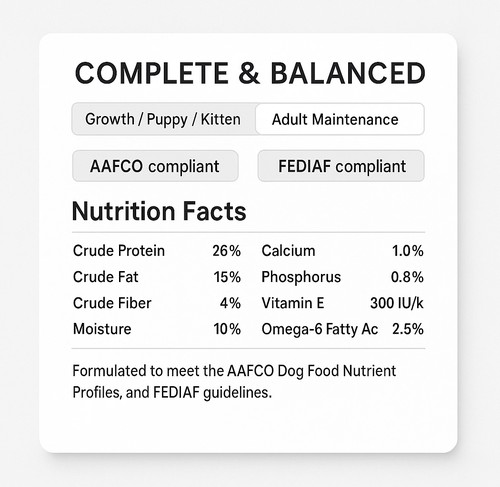
Whatever you choose—kibble, wet, fresh, organic, or gently cooked—completeness is non-negotiable.
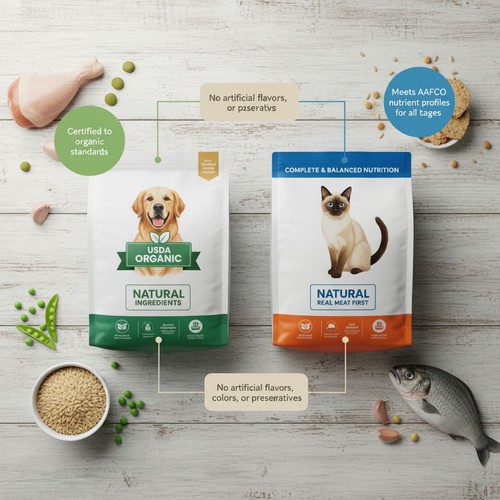
- Check the panel: Look for “Complete & Balanced” and the life stage (growth, adult maintenance, all life stages).
- Nutrient profiles: In the U.S., formulas typically follow AAFCO nutrient profiles; in Europe, FEDIAF guidelines. These outline minimums/maximums for protein, fats, vitamins, and minerals.
- Bioavailability matters: Natural chelated minerals, quality protein sources, and proper calcium-phosphorus ratios improve absorption.
- Rotation done right: Rotating complete formulas can broaden nutrient exposure and palatability. Avoid frequent, dramatic switches in sensitive pets.
Myths & Facts: Grain-Free, Raw, and Preservatives
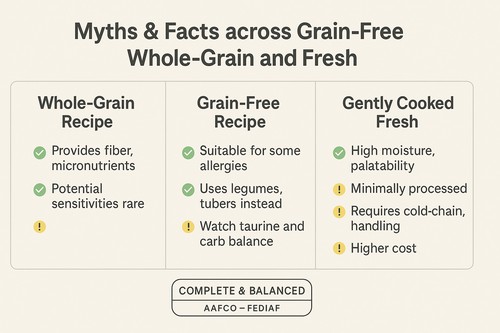
Grain-free ≠ carb-free and isn’t automatically better. Many pets do well on whole grains (oats, barley, brown rice) that deliver fiber and micronutrients.
Raw diets: While some guardians favor raw for “naturalness,” be aware of pathogen risks (Salmonella, Listeria) to pets and households. If you explore raw or lightly cooked diets, use tested, balanced formulations and practice rigorous hygiene—or consider gently cooked options that maintain nutrient integrity with lower risk.
Preservatives: Natural preservatives (mixed tocopherols, rosemary extract) can protect fats without BHA/BHT. Shelf stability must not compromise safety; buy from reputable brands with documented testing.
Additive minimalism: Fewer additives can be good—but only if the core nutrients are fully covered. “Clean label” should never mean “nutrient gaps.”
How to Shop & Transition Safely
Smart shopping checklist
- Scan for Complete & Balanced + life stage.
- Prefer certified organic ingredients where budget allows; verify seals (USDA Organic, EU organic leaf).
- Review protein source transparency and look for named meats (e.g., “turkey,” not “poultry” generically).
- Favor brands that publish digestibility data, third-party testing, and sourcing policies.
- Consider recyclable/low-plastic packaging.
Transition plan (7–10 days)
1. Days 1–3: 25% new / 75% old
2. Days 4–6: 50% new / 50% old
3. Days 7–10: 75% new / 25% old
4. Day 11+: 100% new
Watch stool quality, energy, skin/coat, and appetite; slow down if signs of GI upset appear.
Budget tips
- Use whole-food toppers (sardines in water, pumpkin purée, kefir, egg) on a balanced base to stretch costs.
- Buy in bulk (within freshness windows) and store properly; rotate proteins seasonally.
Beyond the Bowl: Eco-Friendly Pet Products
Your pet’s footprint extends beyond food:
- Treats: Choose organic treats with short ingredient lists and no artificial colors.
- Grooming: Organic shampoos/conditioners made with plant-based surfactants reduce aquatic toxicity.
- Cleaning: Enzyme-based, biodegradable cleaners protect indoor air and waterways.
- Waste & litter: Consider compostable bags (where facilities allow) and plant-based litters; never compost pet waste for edible gardens.
- Gear: Durable beds, collars, and toys made from recycled or natural fibers last longer and reduce microplastic shedding.
Mini Case Studies
- Sensitive skin (dog): Switch from heavily processed treats to a gently cooked, omega-3–rich diet with organic veggies and a single animal protein. After 6–8 weeks, reduced dandruff and scratching, plus better coat shine.
- Weight management (cat): Transition to high-moisture wet food with controlled calories, organic fiber add-ins (pumpkin), and scheduled play. Gradual weight loss and improved energy over 12 weeks.
- Lower footprint (both): Move to certified organic + responsibly sourced fish recipes in recyclable packaging; combine with refillable cleaning concentrates and compostable (facility-accepted) waste bags.
Checklist & Action Plan
- Define your goal (skin/coat, weight, digestion, sustainability).
- Pick 2–3 candidate foods that are complete & balanced; favor organic where feasible.
- Verify life-stage fit and read the ingredient panel for named proteins and fibers.
- Plan a 7–10 day transition and track stool, energy, and skin.
- Add whole-food toppers (2–3x/week) without displacing the balanced base.
- Swap in eco-friendly treats, cleaners, and grooming products.
- Reassess in 6–8 weeks; adjust based on outcomes and vet feedback.
Key Takeaways
- Labels matter: “Natural” describes processing; “Organic” describes farming and certification.
- Health first: Prioritize complete & balanced formulas that meet AAFCO/FEDIAF.
- Planet smart: Organic and low-impact sourcing, plus better packaging, shrink the pawprint.
- Practical wins: Transition slowly, use whole-food toppers, and audit non-food products too.
FAQ
Is organic pet food always healthier?
Not automatically. Organic limits certain inputs, but you still need Complete & Balanced nutrition and proven digestibility.
Can I make my own “natural” diet at home?
Only with a veterinary nutritionist or a formulation tool verified to meet AAFCO/FEDIAF. DIY without a recipe risks nutrient gaps (e.g., taurine in cats).
Are whole grains bad for dogs?
No. Many dogs do well on whole grains that add fiber and micronutrients. Choose what fits your pet, health history, and goals.
What’s a simple low-impact switch?
Try recyclable packaging, organic treats with short ingredient lists, and responsibly sourced fish or poultry proteins.
How long until I see benefits?
For digestion and energy, often 2–4 weeks; for skin/coat, 6–8 weeks as hair cycles catch up.
References & Further Reading
- AAFCO Pet Food Labeling & Nutrient Profiles: https://www.aafco.org/
- FEDIAF Nutritional Guidelines for Cats & Dogs: https://fediaf.org/
- FAO on Livestock & Environment (context on footprints): https://www.fao.org/
- Fammo blog hub: https://fammo.ai/en/blog/