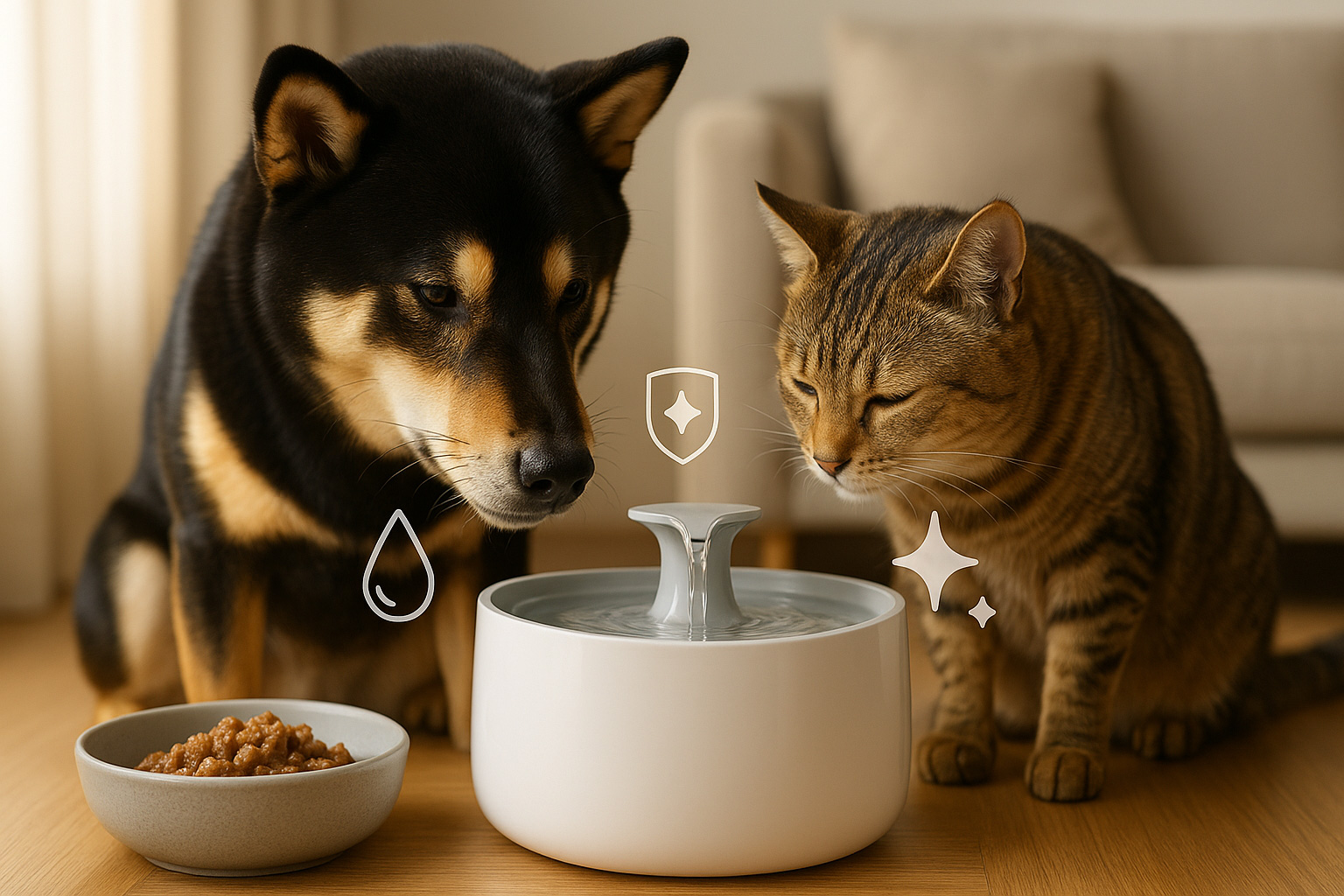
Hydration for Healthy Skin & Coat
Clear water, moist diets, and smart routines do more than quench thirst—they build a stronger skin barrier, calmer itch, and a naturally shiny coat. Educational only; not veterinary advice.
Table of Contents
- Why Water Matters for Skin & Coat
- How Pets Get Moisture: Beyond the Bowl
- Daily Hydration Routines (Home Checklist)
- Special Cases: Cats, Seniors, Brachycephalics & Hairless Breeds
- Food Strategies: Wet, Broths & Omega-3s
- Grooming & Environment: Locking Moisture In
- Early Warning Signs & When to Call the Vet
- 7-Day Hydration Upgrade Plan
- Key Takeaways
- FAQ
- References & Further Reading
- Conclusion & Next Steps
Why Water Matters for Skin & Coat
Skin is your pet’s largest organ. It needs water to:
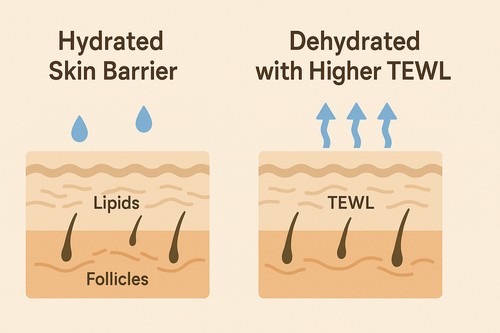
- Maintain the lipid barrier that reduces transepidermal water loss (TEWL).
- Support follicle health for a glossy, resilient coat.
- Move nutrients to the dermis and carry away waste products.
- Buffer against itch triggers by keeping the surface less dry and flaky.
Hydration doesn’t cure every skin problem, but it raises resilience. Well-hydrated pets often show less dandruff, better shedding cycles, and calmer scratching, especially when hydration is paired with balanced nutrition and routine care.
How Pets Get Moisture: Beyond the Bowl
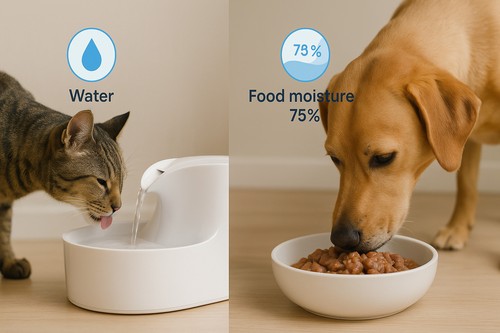
Pets hydrate through three channels:
- Free water — the bowl or fountain.
- Food moisture — wet food, gently cooked diets, or moisture-rich toppers.
- Metabolic water — tiny amounts made during energy metabolism.
Most indoor pets rely on free water + food moisture. Cats naturally have a low thirst drive, so a bowl alone may not meet needs hence the power of fountains and wet diets.
Daily Hydration Routines (Home Checklist)
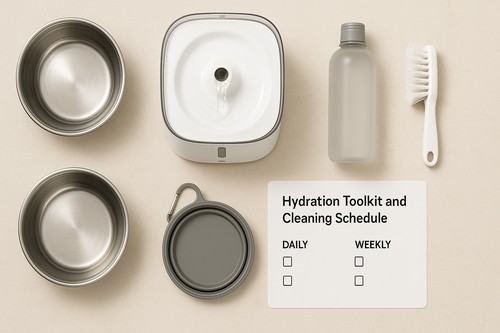
- Multiple stations: One water point per pet plus one extra. Place away from litter boxes and busy doors.
- Fountains for cats: Flowing water boosts interest; clean filters per label.
- Bowl hygiene: Wash bowls daily; avoid micro-scratched plastic. use stainless steel or ceramic.
- Time the sips: Offer water after play walks and before bed.
- Track intake: Once a month, measure 24-hour consumption to spot trends.
- Moist meals: Include wet food or a moisture topper for at least one meal.
- Travel & heat: Pack a collapsible bowl; schedule shade breaks.
Special Cases: Cats, Seniors, Brachycephalics & Hairless Breeds
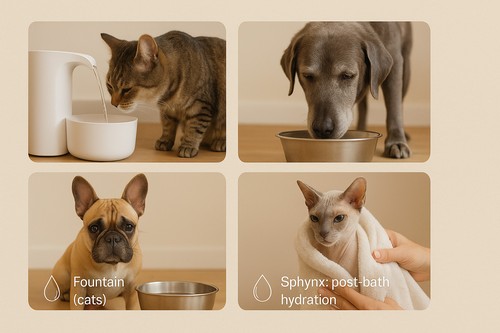
Cats: A desert-adapted past means many cats don’t drink enough. Fountains, tall bowls, and high-moisture diets help. Add vertical play; activity prompts thirst.
Seniors: Kidneys concentrate urine less efficiently; aim for more frequent small sips and wet meals. Monitor litter output and weight.
Brachycephalics (Pug, Persian, Frenchie): Heat and panting raise water needs. Keep bowls wide and shallow; avoid hot rooms; hydrate before/after short play sessions.
Hairless breeds (Sphynx, Xolo): Skin is more exposed to air and soaps. Gentle bathing + rinse well; moisturize with pet-safe products if your vet approves; consistent hydration supports barrier recovery.
Food Strategies: Wet, Broths & Omega-3s
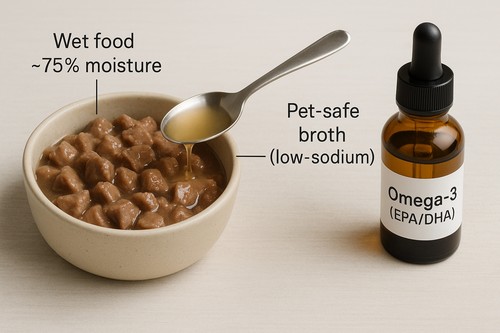
- Wet food baseline: One wet meal a day can lift total moisture intake with no effort.
- Low-sodium, pet-safe broths: Onion/garlic-free, formulated for pets. Use as a splash over meals, not a salt bomb.
- Water fountains + meal timing: Offer water 15–20 minutes after play and again with evening wind-down.
- Omega-3s (EPA/DHA): Hydration + omega-3s support barrier lipids and shine. Choose fish or algae oils made for pets.
- Treat math: Dehydrated treats are low in water; balance with moist meals so treats don’t crowd out hydration.
Grooming & Environment: Locking Moisture In
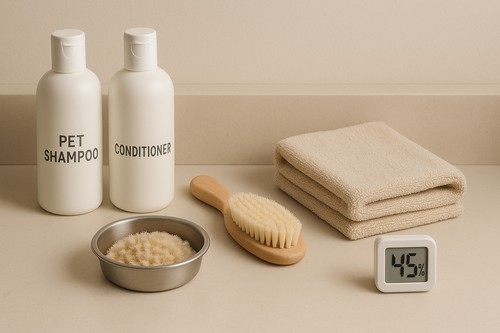
- Brush to distribute oils: Short daily brushes lift dander and spread sebum down the hair shaft.
- Bathing rhythm: Over-bathing strips oils; under-bathing leaves irritants. Use pet-specific shampoos with gentle surfactants and, when advised, ceramide/pyoderm formulas.
- Rinse, rinse, rinse: Residue triggers itch.
- Indoor humidity: Very dry rooms raise TEWL. A 40–50% indoor humidity target is comfortable for most households.
- Allergen control: Wash bedding weekly; vacuum with a HEPA filter. Less allergen load = calmer skin.
Early Warning Signs & When to Call the Vet
- Dull coat, flaky skin, excessive shedding not tied to season
- Thickened or greasy patches, hot spots, or odor
- Reduced drinking or excess thirst with weight change
- Dehydration signs: tacky gums, sunken eyes, lethargy
Call your vet if signs persist >48 hours, if there’s itch with sores, or if your pet has conditions that affect hydration (kidney, endocrine, GI disease). Avoid flavored waters with xylitol or high sodium.
7-Day Hydration Upgrade Plan
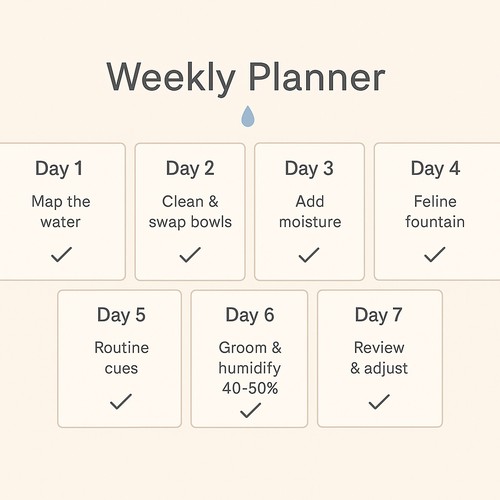
Day 1 — Map the water: Place 2–3 stations (multi-pet: one per pet +1).
Day 2 — Clean & swap bowls: Switch to stainless/ceramic; daily wash, weekly deep clean.
Day 3 — Add moisture: Make one meal high-moisture (wet or gently cooked).
Day 4 — Feline fountain: For cats, set a fountain; trial location away from food.
Day 5 — Routine cues: Water after play and with evening wind-down; note sips.
Day 6 — Groom & humidify: Light brush; target 40–50% room humidity.
Day 7 — Review & adjust: Track stool/coat/itch; keep what worked and schedule a monthly check-in.
Key Takeaways
- Hydration strengthens the skin barrier, reduces flakes, and supports a glossy coat.
- Use both: clean water access and moisture-rich meals.
- Match tactics to life stage and breed type.
- Grooming, humidity, and omega-3s help lock moisture in.
- Track small changes; call your vet if skin or thirst shifts quickly.
FAQ
Does a fountain really help cats drink more?
Often yes, moving water is more enticing and can raise daily intake.
Is broth safe for hydration?
Yes, if pet-formulated, low-sodium, and free of onion/garlic. Use as a light topper.
Can overhydration be a problem?
Rare in healthy pets, but sudden excess thirst can signal illness. Call your vet.
What if my dog hates wet food?
Try warming it slightly, mixing brands slowly, or adding a spoon of safe broth.
References & Further Reading
- AVMA — Recognizing dehydration and household water safety for pets.
- WSAVA Global Nutrition Committee — practical hydration and nutrition toolkits.
- FEDIAF Nutritional Guidelines — feeding and water guidance for dogs and cats.
Conclusion & Next Steps
Hydration is the quiet engine behind healthy skin and a brilliant coat. Pair clean water access with moisture-forward meals, simple grooming, and a weekly check-in. Start with one fountain or wet meal today—then keep what your pet loves and build from there.
Explore more hydration-friendly nutrition guides on the Fammo blog and create a simple 7-day plan for your pet now.