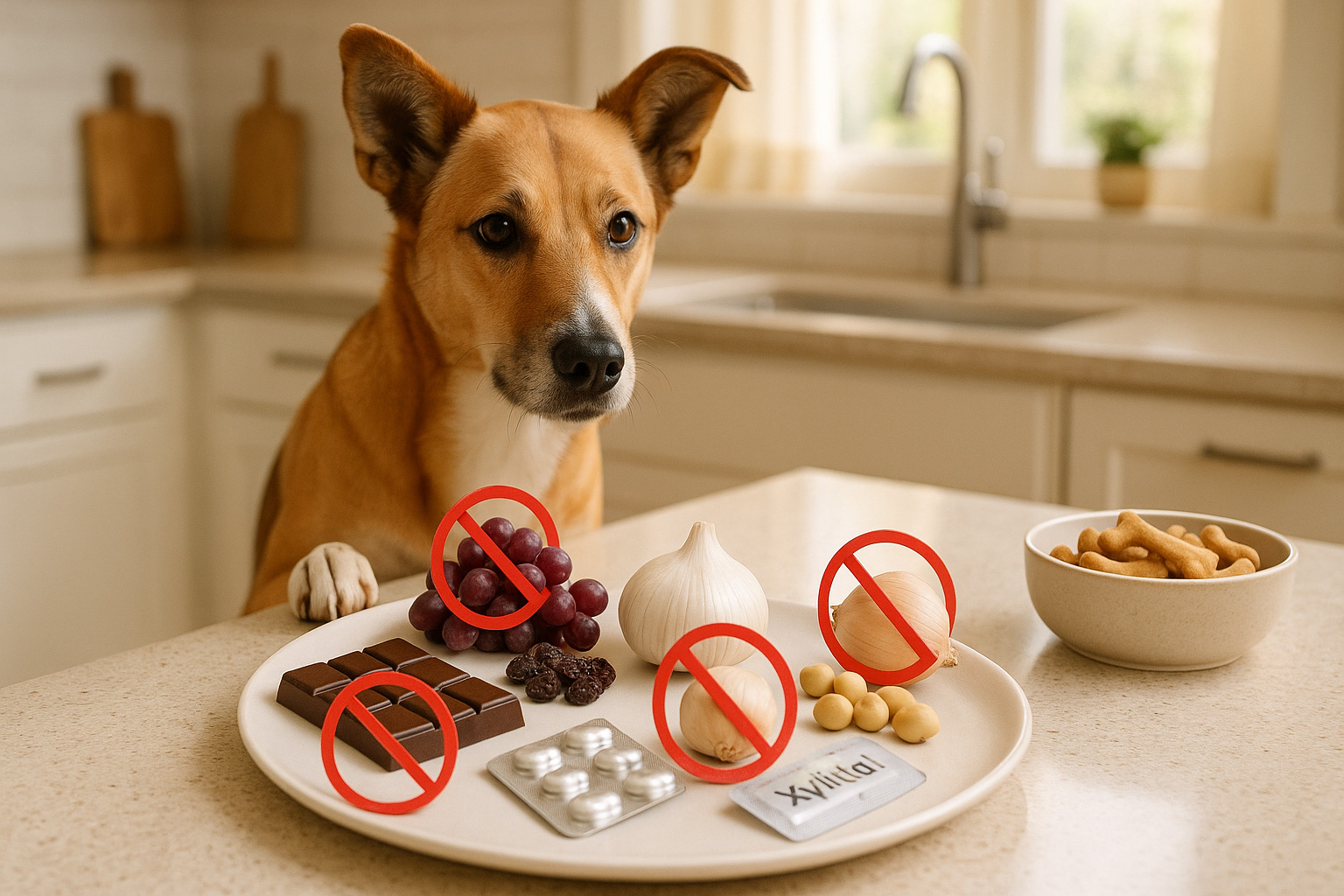
Forbidden Foods for Dogs: Breed-Smart Guide
This guide explains which foods are universally unsafe for dogs (any breed) and where breed-linked predispositions mean you should be extra cautious. Educational only; not a substitute for veterinary care.
Table of Contents
- Why Most “Forbidden Foods” Are Universal
- The No-Go List for Every Dog
- Breed-by-Breed Cautions (Not Toxins, but Higher Risk)
- Miniature Schnauzer & Yorkie (Pancreatitis-prone)
- Dachshund, Cocker, Poodle & Small Breeds
- Dalmatian (Urate Stones)
- Labrador, Beagle, Cavalier & “Food-Motivated” Breeds
- Great Dane, Doberman, Irish Wolfhound & Other Deep-Chested Breeds
- If Your Dog Eats a Toxic Food: Do This First
- Safer Treat Ideas & Label Tips
- FAQs
- Key Takeaways
- References & Further Reading
Why Most “Forbidden Foods” Are Universal
When we’re talking toxins, breed genetics doesn’t rewrite basic biochemistry. Chocolate still contains methylxanthines (theobromine/caffeine), xylitol still causes dangerous hypoglycemia (and possible liver failure), and grapes/raisins are still linked to acute kidney injury—regardless of whether your dog is a Chihuahua or a Great Dane. Breed differences become important mainly for predispositions (e.g., pancreatitis, urinary stones, or bloat), which change the level of caution, not the toxin list.
The No-Go List for Every Dog
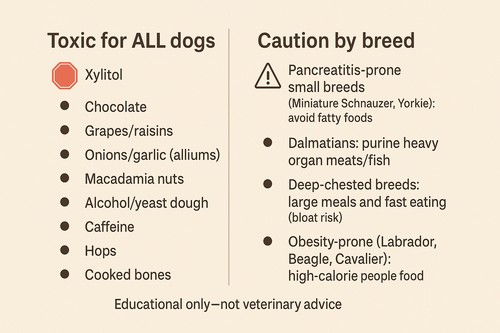
Keep these completely off the menu for all breeds:
- Xylitol (sugar-free gum, some peanut butters, mints, baked goods): causes rapid insulin release → hypoglycemia, and can lead to liver failure. Even tiny amounts can be life-threatening.
- Chocolate & cocoa: methylxanthine toxicity; dark/baking chocolate are worst.
- Grapes & raisins (and currants/sultanas): associated with acute kidney failure; no reliable “safe dose.” Avoid entirely.
- Onions, garlic, chives, leeks (Allium family): oxidative damage to red blood cells → hemolytic anemia.
- Macadamia nuts: cause weakness, tremors, depression, hyperthermia; mechanism unknown.
- Alcohol & raw yeast dough: stomach expansion/bloat and alcohol poisoning as the dough ferments.
- Caffeine sources (coffee/tea/energy drinks, caffeine pills): stimulant toxicity (restlessness, tremors, arrhythmias).
- Hops (used in home-brewing): can trigger malignant-hyperthermia–like crises in dogs; keep all hop material away.
- Cooked bones: splintering and obstruction; raw bones can also injure teeth/GI—avoid unless your vet provides a tailored plan.
- High-fat trimmings/pan drippings: GI upset and pancreatitis risk.
- Large quantities of salt, nutmeg, or moldy foods: sodium ion toxicosis/neurologic signs; mycotoxins—avoid exposure.
Breed-by-Breed Cautions (Not Toxins, but Higher Risk)
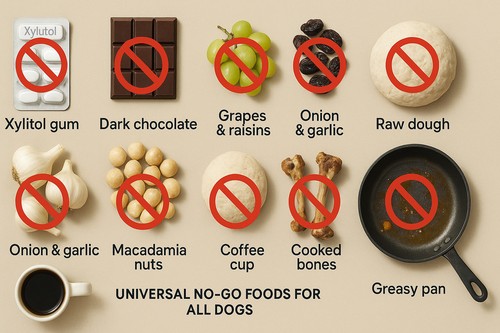
The items below do not override the universal list. They highlight foods or feeding patterns to limit or avoid because of breed-linked tendencies.
Miniature Schnauzer & Yorkie (Pancreatitis-prone)
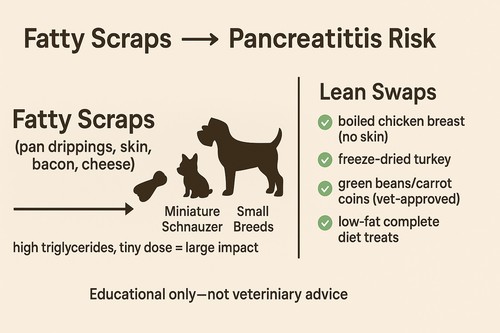
- Why extra caution: Miniature Schnauzers are over-represented for pancreatitis and often have hypertriglyceridemia; Yorkshire Terriers also show higher prevalence. High-fat foods can precipitate episodes.
- Avoid/limit: Fatty table scraps, skin/drippings, deep-fried foods; “rich” holiday leftovers.
- Safer swaps: Lean, single-ingredient treats (freeze-dried chicken/turkey) and measured, complete & balanced meals.
Dachshund, Cocker, Poodle & Small Breeds
- Why extra caution: Small breeds are frequently listed among those over-represented for pancreatitis, and portion errors deliver a higher dose per kilogram of any risky food.
- Avoid/limit: High-fat human foods; sudden diet changes; excessive treats.
- Safer swaps: Vet-approved low-fat treats; use a scale for small-dog portions.
Dalmatian (Urate Stones)
- Why extra caution: Dalmatians are predisposed to urate uroliths; diets high in purines (e.g., organ meats, certain fish) can increase risk. Hydration is critical.
- Avoid/limit: Organ meats (liver/kidney), anchovies/sardines as regular treats.
- Safer swaps: Lower-purine, complete diets; encourage water intake (wet food, fountains).
Labrador, Beagle, Cavalier & “Food-Motivated” Breeds
- Why extra caution: These breeds are prone to obesity in population studies; high-calorie “people foods” accelerate weight gain and can worsen joint and metabolic disease.
- Avoid/limit: Cheese cubes, processed meats, bread/pastries, peanut-butter blobs (especially if sweetened with xylitol—double danger!).
- Safer swaps: Pre-weighed training treats; veggie nibbles that your vet okays; puzzle feeders to slow intake.
Great Dane, Doberman, Irish Wolfhound & Other Deep-Chested Breeds
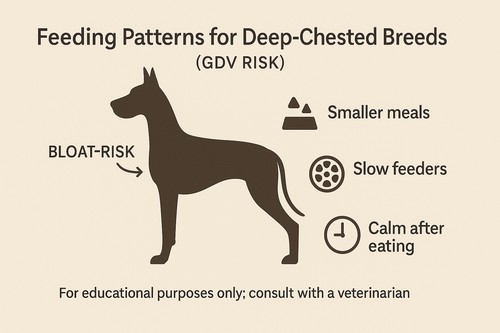
- Why extra caution: Large/giant, deep-chested breeds face higher risk of gastric dilatation-volvulus (GDV/bloat). Feeding management matters (meal size/frequency; diet composition).
- Avoid/limit: One giant meal per day; very rapid eating; certain high-fat/citric-acid dry diets (per research associations). Discuss raised bowls and prophylactic gastropexy with your vet for high-risk breeds.
- Safer swaps: 2–3 smaller meals; slow-feeder bowls; calm pre/post-meal routines.
If Your Dog Eats a Toxic Food: Do This First
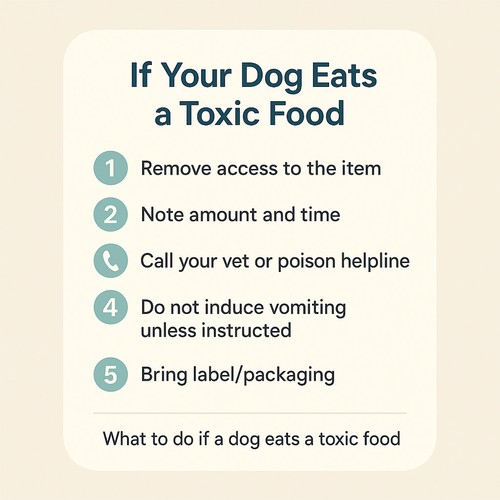
- Remove access to the item and estimate how much and when it was eaten.
- Call your veterinarian or an emergency clinic immediately. If available in your country, contact a poison helpline (fees may apply).
- Do not induce vomiting unless a veterinarian instructs you—some items cause more harm coming back up.
- Bring packaging/labels to the clinic; they help the team act faster.
- For xylitol or grape/raisin exposures, seek care urgently—speed matters.
Safer Treat Ideas & Label Tips
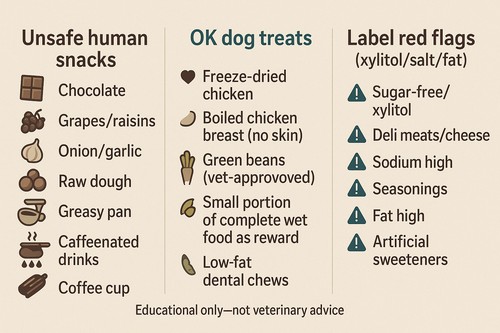
- Single-ingredient meats: freeze-dried chicken, turkey, or beef; check no seasoning (and no xylitol in coatings).eans in very small amounts.
- Hydration-forward: small portions of your dog’s complete wet food used as high-value rewards.
- Label watch-outs: sugar-free = xylitol risk; deli/cured meats = sodium/fat; “human desserts” = fat + sugar.
- Keep treats to ≤10% of daily calories; the base diet should remain complete & balanced.
FAQs
Is a tiny piece of chocolate really a big deal?
It depends on the type and dose (baking/dark worst), but any exposure merits a call to your vet or a poison line.
Why are grapes and raisins so dangerous?
Mechanism isn’t fully understood; because there’s no known safe dose, all exposures are treated seriously.
My dog is small—does that change toxicity?
Yes: dose is per kilogram, so tiny amounts deliver larger effective doses in small dogs (e.g., toy breeds). Xylitol is especially urgent.
Are bones ever OK?
Cooked bones splinter—avoid. “Raw meaty bones” carry other risks (broken teeth, GI injury, pathogens). Talk to your vet before attempting raw feeding.
What about avocado?
Avocado flesh mostly causes GI upset in dogs, but pits are a choking/obstruction hazard and some products may be seasoned with onion/garlic or salt—skip it.
Key Takeaways
- Toxins are universal: xylitol, chocolate/cocoa, grapes/raisins, alliums, macadamias, alcohol/yeast dough, caffeine, hops, cooked bones, and very fatty scraps are off-limits.
- Breeds change risk, not the toxin list: pancreatitis-prone small breeds (e.g., Mini Schnauzer/Yorkie) → avoid fatty foods; Dalmatians → limit purines; deep-chested giants → manage meal size/frequency to reduce bloat risk.
- When in doubt, call your vet fast—especially for xylitol and grape/raisin exposures.
References & Further Reading
- ASPCA: People Foods to Avoid Feeding Your Pets; ethanol/yeast dough advisory. }
- FDA: Xylitol is toxic to dogs (consumer & veterinary updates).
- Merck Veterinary Manual: Macadamia nut toxicosis; Pancreatitis in dogs.
- ASPCA Pro / case summaries: Grape & raisin toxicity overview.
- AVMA (JAVMA) & UMN: Hops ingestion → malignant-hyperthermia–like episodes in dogs; 2023 data review.
- Dalmatian Club of America & UMN Urolith Center: Low-purine guidance for Dalmatians with urate risk.
- Purdue/AVMA: GDV risk factors in large/giant breeds (diet & non-diet).