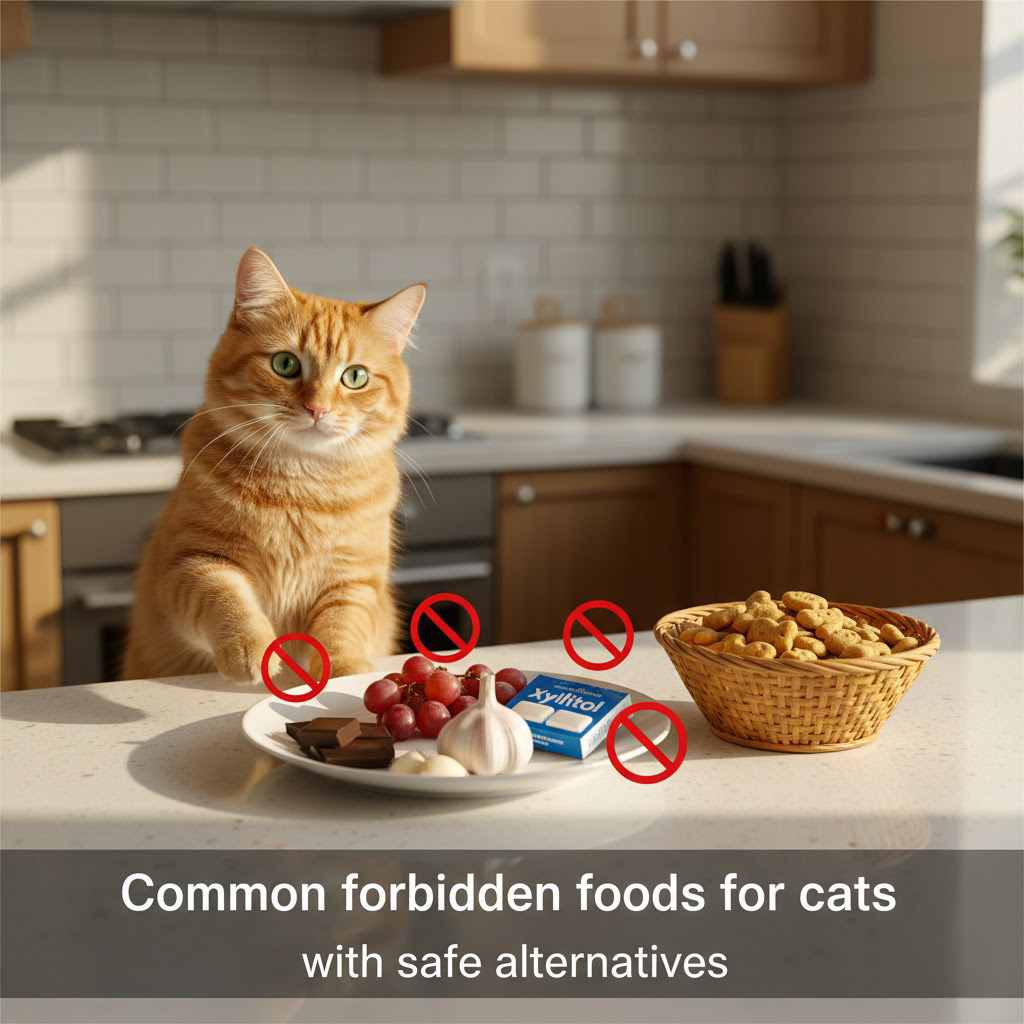
Forbidden Foods for Cats: Breed-Specific Guide
This guide outlines foods that are universally unsafe for all cats and adds breed-by-breed cautions based on common predispositions (e.g., obesity, urinary, cardiac, or digestive sensitivities). Educational only; not medical advice.
Table of Contents
- Why “Forbidden Foods” Are Largely Universal
- The No-Go List (All Breeds)
- Breed-By-Breed Cautions & Nuances
- Persian & Exotic Shorthair
- Maine Coon
- Siamese
- British Shorthair
- Bengal
- Ragdoll
- Sphynx
- Burmese
- Abyssinian & Somali
- Domestic Shorthair/Longhair (Mixed Breeds)
- If Your Cat Ate a Forbidden Food
- Safe Treat Ideas & Label-Reading Tips
- FAQs
- Key Takeaways
- References & Further Reading
- Conclusion & Next Steps
Why “Forbidden Foods” Are Largely Universal
When it comes to toxins, cats are cats—breed doesn’t change biochemistry. Onions still damage red blood cells. Chocolate still delivers theobromine and caffeine. Xylitol still triggers insulin release (and is considered dangerous even though cats may be less inclined to ingest it). Some foods are unsafe for all cats, full stop.
Where breeds differ is usually in predispositions—weight gain, urinary crystals, digestive sensitivity, cardiac or kidney risks. These don’t make a food “toxic,” but they shift risk and change what should be limited or avoided.
The No-Go List (All Breeds)
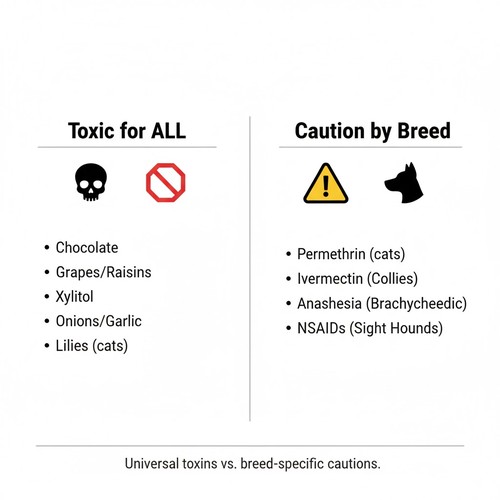
Avoid these for every cat, regardless of breed:
- Onions, garlic, chives, leeks (allium family) – cause oxidative damage → hemolytic anemia.
- Chocolate & cocoa – theobromine/caffeine toxicity; dark chocolate is worst.
- Xylitol (sugar-free gum, some peanut butters, baked goods) – rapid insulin release, hypoglycemia; potential liver injury.
- Alcohol & unbaked yeast dough – alcohol poisoning; gas/expansion.
- Caffeine sources – coffee, tea, energy drinks, caffeine pills.
- Grapes & raisins – renal injury reported in dogs; avoid in cats by precaution.
- Raw fish (thiaminase) & fish-only diets – thiamine deficiency risk; also mercury with certain species.
- Excess liver – vitamin A toxicity.
- Bones (cooked) – splintering, obstruction.
- High-fat trimmings & pan drippings – GI upset, pancreatitis risk.
- Dairy (for many cats) – lactose intolerance → diarrhea.
- Essential oils & concentrated extracts (as “flavor enhancers”) – some are hepatotoxic to cats.
Also keep human medications, dog flea/tick products, and plant toxicants (e.g., lilies) far away—these aren’t “foods,” but are common ingestion hazards.
Breed-By-Breed Cautions & Nuances
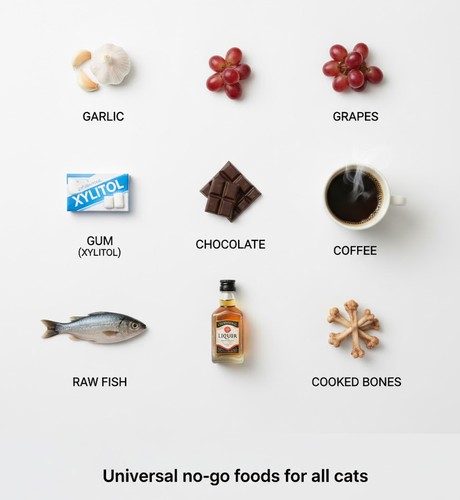
The items below do not override universal toxins. They highlight which otherwise “okay” foods to limit/avoid because of breed-linked tendencies. Always feed complete & balanced cat diets as your base.
Persian & Exotic Shorthair
- Why caution: Higher risk of polycystic kidney disease (PKD); some have brachycephalic features that reduce activity → weight gain.
- Avoid/limit: High-sodium toppers (salty broths, cured meats), magnesium/phosphorus-dense fish treats (can aggravate urinary mineral load), calorie-dense fats.
- Safer swaps: Moisture-rich, balanced wet foods; low-sodium bone broths made for pets; controlled-mineral treats.
- Watch for: Dehydration; keep water fountains and wet meals frequent.
Maine Coon
- Why caution: Predisposition to hypertrophic cardiomyopathy (HCM) in the breed population.
- Avoid/limit: High-sodium snacks (jerky, deli meats), heart-stressing stimulants (caffeine by accident), overly fatty table scraps.
- Safer swaps: Balanced diets with adequate taurine; routine wet food for hydration; low-salt treats.
- Watch for: Weight creep in large frames—keep treats <10% of daily calories.
Siamese
- Why caution: Often GI-sensitive; higher incidence of food sensitivities reported.
- Avoid/limit: Frequent protein switching, spicy/seasoned human foods, rich dairy toppers.
- Safer swaps: Limited-ingredient complete diets; single-protein treats (freeze-dried turkey/chicken); gradual changes only.
- Watch for: Loose stool after sudden diet changes.
British Shorthair
- Why caution: Strong tendency to gain weight; some lines prone to joint stress.
- Avoid/limit: High-fat “people food,” creamy sauces, ad-lib snacking.
- Safer swaps: High-protein, portion-controlled meals; crunchy dental treats approved for cats; play-based feeding.
- Watch for: Hidden calories (licking plates, kid snacks dropped on floor).
Bengal
- Why caution: Athletic but sensitive stomach is common anecdotally.
- Avoid/limit: Raw, high-bacterial-load meats without proper sourcing; spicy/seasoned leftovers.
- Safer swaps: Gently cooked or freeze-dried treats from named single proteins; stick with one balanced base.
- Watch for: Over-treating fish; rotate with poultry/red meat to balance micronutrients.
Ragdoll
- Why caution: Large, calm cats; obesity and hairball issues can sneak up.
- Avoid/limit: High-fat trimmings; oily fish treats that worsen hairball nausea if overused.
- Safer swaps: Moisture-rich wet food; fiber-smart hairball diets; lean single-protein treats.
- Watch for: Portion drift—use a scale for accuracy.
Sphynx
- Why caution: Higher caloric needs for thermoregulation; some skin sensitivity.
- Avoid/limit: Extremely lean crash diets; dairy toppers that trigger diarrhea.
- Safer swaps: Energy-appropriate complete diets with balanced EFAs; omega-3 (EPA/DHA) from fish or algae sources.
- Watch for: Overfeeding fatty treats; maintain lean mass without excess fat.
Burmese
- Why caution: Breed population has higher risk of diabetes mellitus in some regions.
- Avoid/limit: Sugary sauces, syrupy human foods, bread/dough; free-choice grazing of calorie-dense kibble.
- Safer swaps: Scheduled high-protein meals; low-carb, balanced wet food; treat calories tracked.
- Watch for: Sudden weight gain or excessive thirst/urination → call your vet.
Abyssinian & Somali
- Why caution: Active, lean cats; rare but notable renal issues reported in lines.
- Avoid/limit: High-mineral fish treats; salty cured meats.
- Safer swaps: Hydration-forward diets; rotating poultry and rabbit proteins; pet-safe broths (low sodium).
- Watch for: Early hydration habits—encourage fountains.
Domestic Shorthair/Longhair (Mixed Breeds)
- Why caution: Most common house cats; obesity & urinary issues are the big two.
- Avoid/limit: High-fat table scraps, salty meats, fish-only treats, and dry-only feeding in cats prone to crystals.
- Safer swaps: Wet food baseline or mixed feeding; measured portions; interactive feeders.
- Watch for: Litter box changes, straining, or blood—urgent vet visit if seen.
If Your Cat Ate a Forbidden Food
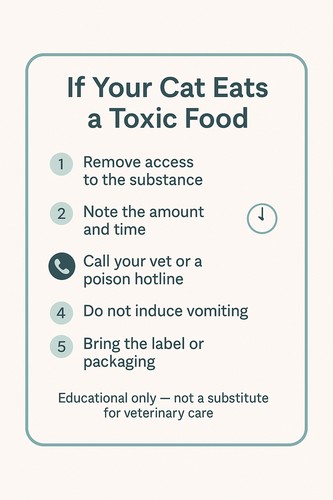
- Remove access to the substance and note the amount/time.
- Call your vet or an emergency clinic immediately.
- If you’re in North America, contact a poison hotline:
- ASPCA Animal Poison Control Center (24/7): consultation fee may apply
- Pet Poison Helpline (24/7): consultation fee may apply - Do not induce vomiting unless a veterinarian specifically instructs you to.
- Keep labels/packaging and bring them to the clinic.
Safe Treat Ideas & Label-Reading Tips
- Single-ingredient treats: freeze-dried chicken, turkey, rabbit, or salmon (no seasonings).
- Cat-specific broths: low-sodium, onion/garlic-free; check that they’re made for pets.
- Tiny tastes of safe produce: a sliver of plain cooked pumpkin or carrot for some cats (many won’t care!).
- Avoid human seasonings (salt, garlic, onion, chives), sweeteners (xylitol), and milk chocolate coatings.
- Read labels: prefer named proteins, short ingredient lists, and clear “cat treat” labeling.
- Keep treats ≤10% of daily calories to preserve a balanced diet.
FAQs
Are any human foods always safe for cats?
Only a few in tiny amounts—plain cooked meats without seasoning are usually fine as treats. Most human foods add risk or calories without benefit.
Is lactose-free milk OK?
Some cats tolerate small amounts, but it’s extra calories with little nutritional value. Water and balanced wet food are better for hydration.
Can I give tuna?
As an occasional treat, very small amounts of low-sodium tuna may be fine. Avoid tuna-only habits due to mercury and thiamine concerns.
What about raw diets?
Raw foods carry pathogen risk for pets and humans. If feeding raw, work with your vet and use rigorously tested, balanced products; handle with strict hygiene.
Key Takeaways
- Toxins are universal: onions/garlic, chocolate, xylitol, alcohol, caffeine, grapes/raisins, raw fish thiaminase risk, excess liver, cooked bones, fatty scraps, many dairy products.
- Breeds differ by predisposition, not by toxin lists. Adjust sodium, minerals, fat, and calories with breed risks in mind.
- Hydration and portion control prevent many problems—especially urinary and weight issues.
- When in doubt, ask a vet and keep poison hotline numbers handy.
References & Further Reading
- ASPCA Animal Poison Control Center: Common Cat Toxins (overview).
- Pet Poison Helpline: Food hazards in cats.
- Merck Veterinary Manual: Chocolate toxicity; onion/garlic hemolytic anemia; xylitol toxicity.
- AVMA: Raw pet foods and food safety.
- FEDIAF & AAFCO: Nutritional guidelines for complete & balanced diets.
Conclusion & Next Steps
Forbidden foods for cats are mostly the same across every breed. What changes is how much caution you apply based on your cat’s risks—kidney, heart, GI, urinary, weight, or skin. Keep a complete & balanced cat diet as the foundation, use treats sparingly and safely, and tailor choices to your cat’s breed tendencies and individual history.
Bookmark this guide, share it with other cat parents, and talk to your vet about a breed-smart, safe-treat plan for your cat.