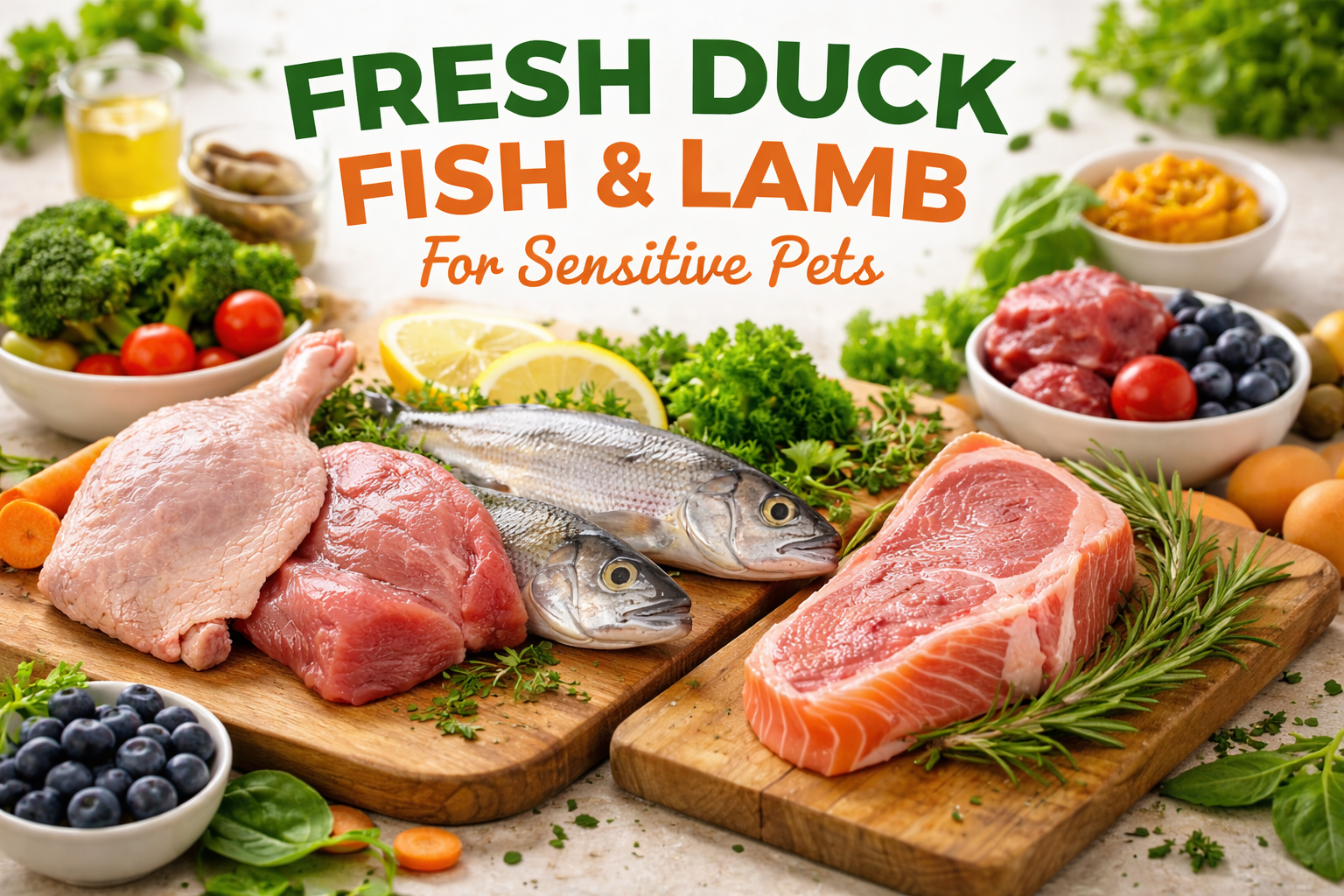
The Best Proteins for Sensitive Pets: Duck, Fish, and Lamb
Introduction
Have you ever noticed your pet scratching more than usual or having an upset stomach after meals? If so, you might be dealing with a sensitive pet. Choosing the right protein source is crucial for their health and comfort. In this guide, we’ll explore the best proteins for sensitive pets, including duck, fish, and lamb, and why they could be the perfect solution for your furry friend.

Understanding the Basics of Protein for Sensitive Pets
What It Is
Protein is an essential nutrient for pets, providing the building blocks for muscles, skin, and hair. For sensitive pets, selecting the right type of protein is even more critical.
Why It Matters
- Supports muscle growth and repair
- Enhances skin and coat health
- Boosts immune system
Choosing the right protein can help alleviate symptoms like itching and digestive issues, making your pet happier and healthier.
Key Factors & Considerations
Important Factors
- Allergies: Some pets have allergies to common proteins like chicken or beef.
- Digestibility: Proteins like duck, fish, and lamb are often easier to digest.
- Nutritional Needs: Every pet has unique nutritional requirements.
How It Affects Your Pet
Sensitive pets may show improvement in skin condition and digestion when switched to a suitable protein source. Research from the American Veterinary Medical Association supports the benefits of tailored diets for sensitive pets.

Practical Options for Sensitive Pets
Duck
- Pros: Highly digestible, novel protein source
- Cons: May not be available in all areas
Fish
- Pros: Rich in omega-3 fatty acids, supports skin health
- Cons: Some pets may not enjoy the taste
Lamb
- Pros: Mild flavor, easy on sensitive stomachs
- Cons: Higher in fat compared to other proteins
Step-by-Step Guide to Switching Proteins
- Consult Your Vet: Always start with professional advice.
- Introduce Slowly: Mix new protein with current food gradually over a week.
- Monitor Reactions: Watch for any signs of discomfort or allergic reactions.

What to Watch For
Warning Signs
- Persistent itching
- Digestive upset
- Changes in behavior
When to See a Vet
If symptoms persist after switching proteins, consult your vet for further guidance. It’s always better to address concerns earlier rather than later.
Conclusion
- Choosing the right protein can greatly enhance your pet’s well-being.
- Duck, fish, and lamb are excellent options for sensitive pets.
- Always consult your vet before making dietary changes.
Remember, a happy pet is a healthy pet. Visit FAMMO for more insights and connect with a vet today!