AI in Pet Health: Reporting, Prevention & Care
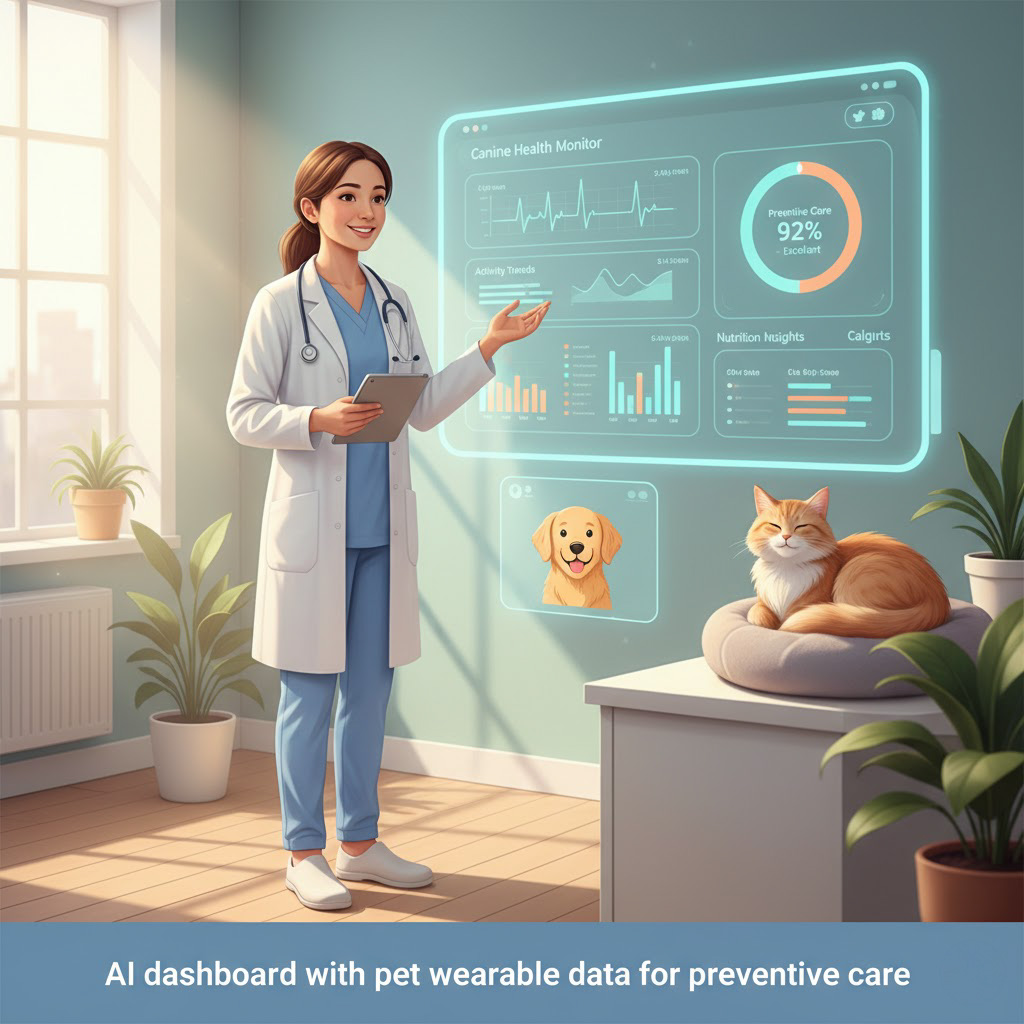
This guide explains how AI turns scattered pet data into early warnings and smarter decisions—so you and your vet can prevent problems before they start. Educational only; not medical advice.
Table of Contents
- What “AI Health Reporting” Means for Pets
- The New Data Layer: Wearables, Apps, and Vets
- Early Detection with AI Wearables
- Smarter Imaging & Diagnostics
- Predictive Prevention: From Risk Scores to Action
- Tele-Vet & AI Assistants
- Electronic Health Records (EHR), Privacy & Interoperability
- Real-World Use Cases
- How to Get Started: A Pet-Parent Checklist
- Risks, Bias & Responsible AI
- What’s Next: Trends to Watch
- Key Takeaways
- FAQ
- Conclusion & Next Steps
- References & Further Reading
What “AI Health Reporting” Means for Pets
AI health reporting is the process of turning raw pet data—like activity, sleep, heart rate, appetite, litter box patterns, or clinic results—into simple, timely insights. Instead of reactive, one-off vet visits, AI helps create a continuous picture of your pet’s baseline and flags meaningful changes early. The result: fewer surprises, faster answers, and more preventive care.
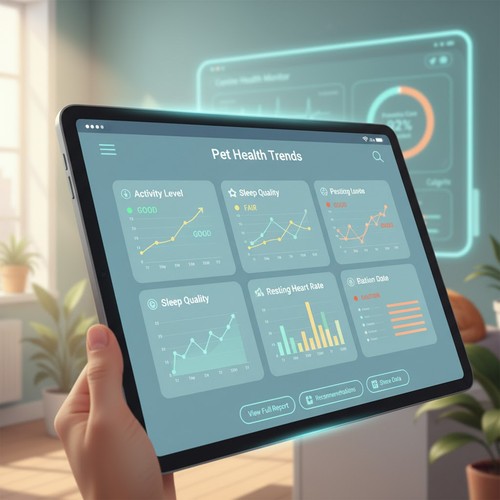
Well-designed systems pull data from multiple sources (wearables, smart feeders, exam notes, lab results) and summarize it in daily or weekly reports. These reports can include trend lines, risk scores, and plain-language explanations. They guide next steps: “observe,” “adjust diet,” “book a vet visit,” or “seek urgent care.”
The New Data Layer: Wearables, Apps, and Vets
Our pets can’t talk, but their bodies do—constantly. Smart collars, tags, and litter box sensors capture behavior and physiology at home, while clinics add imaging, labs, and exam notes. AI brings all of this together.
- Home data: steps, play intensity, scratching, shaking, barking/meowing patterns, resting HR, HRV, temperature.
- Nutrition & hydration: smart bowls and fountains quantify intake; AI flags unusual drops or spikes.
(See also: How AI is Revolutionizing Pet Nutrition)
- Bathroom signals: cat litter sensors reveal frequency, volume, and potential urinary issues.
- Clinical data: bloodwork, X-rays, ultrasound, notes, prescriptions.
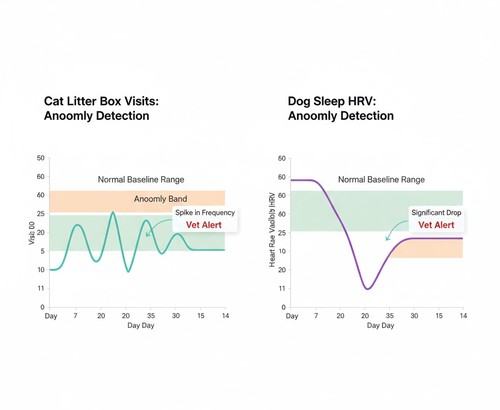
AI models learn each pet’s personal baseline—what’s normal for your dog or cat—then compare new data against that pattern to spot subtle drifts.
Early Detection with AI Wearables
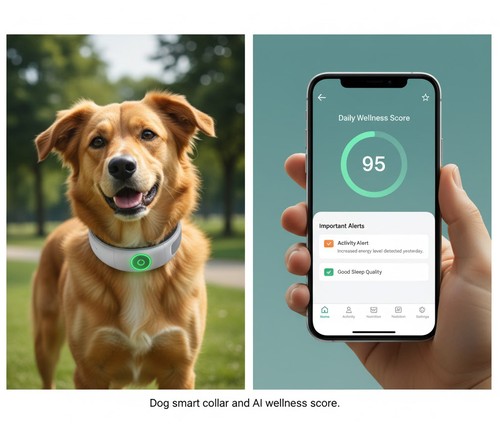
For many conditions, risk grows quietly—long before we notice obvious signs. AI spotlights those early patterns:
- Orthopedic pain: activity variability, hesitation to jump, reduced sprint bursts.
- Skin/allergy flare-ups: increases in scratching or licking detected by motion signatures.
- Cardiorespiratory issues: shifts in resting HR/HRV during sleep.
- Anxiety: pacing, nighttime restlessness, or excessive vocalization patterns.
These signals can prompt a simple check-in: Is the yard muddy (slipping)? Has food changed? Is there new stress? If behavior persists, AI-driven alerts help you book a targeted vet visit with data in hand, improving accuracy and saving time.
For cats, litter box analytics can surface early urinary concerns; for senior pets, sleep fragmentation can flag pain or cognitive decline earlier than human observation.
Smarter Imaging & Diagnostics
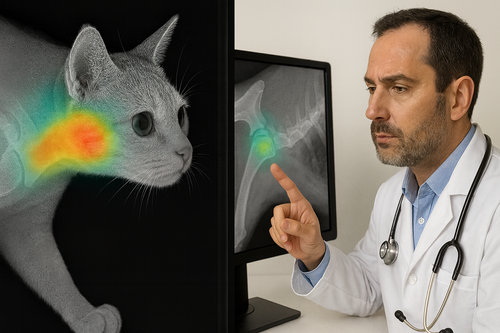
AI doesn’t replace vets; it enhances them. In imaging, algorithms can help with:
- Radiograph triage: highlighting suspicious regions for fractures, masses, or pneumonia.
- Ultrasound assistance: guiding probe placement and offering real-time quality feedback.
- Pathology & cytology: recognizing cell patterns and suggesting differentials.
- Dermatology photos: tracking lesions over time.
The benefit is speed (faster triage), consistency (second look), and access (supporting clinics without specialist staff). Combined with home data, imaging AI adds context—for example, cough patterns plus thoracic radiographs can converge on a diagnosis faster.
Predictive Prevention: From Risk Scores to Action
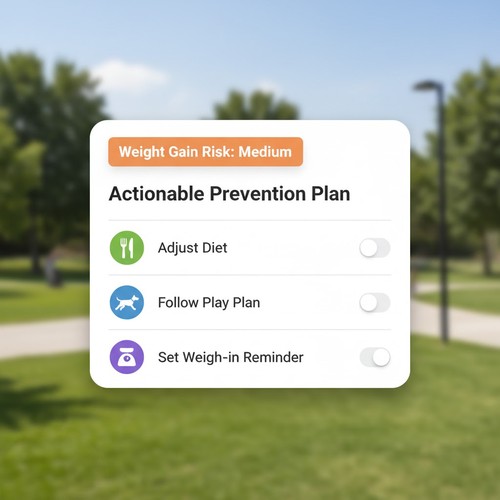
Predictive models estimate short-term and long-term risk for conditions like obesity, dental disease, arthritis, CKD (cats), or anxiety. Good systems translate “risk” into low-friction actions:
- Nutrition nudges: portion adjustments or higher-fiber options.
- Activity goals: gentle step targets for seniors; interval play for high-energy breeds.
- Environment: puzzle feeders, scent games, or vertical spaces for cats.
- Checkpoints: lab tests or imaging at evidence-based intervals.
The goal is not to predict the future perfectly, but to steer it—small, early changes that compound into healthier years.
Tele-Vet & AI Assistants
Tele-vet platforms now include AI tools that summarize symptoms, structure histories, and suggest urgency levels. Chat-based assistants can:
- Capture the “first draft” of a history from owners’ free text.
- Translate everyday language into clinical descriptors.
- Offer self-care guidance for minor issues and red-flag advice for emergencies.
- Generate visit summaries you can share with your in-person vet.
This tight loop—home monitoring → quick triage → targeted appointment—reduces stress for pets and humans.
Electronic Health Records (EHR), Privacy & Interoperability
To work well, AI needs access to the right data at the right time. That means:
- Interoperability: clinic EHRs, imaging archives, and home devices should exchange data securely.
- Consent & transparency: clear owner consent for how data is used, stored, and shared.
- Security: encryption at rest and in transit; audit trails; role-based access.
- Explainability: owners and vets should understand what a model looked at and why it flagged something.
Tip: Prefer systems that export your pet’s data and provide readable summaries you can carry between clinics.
Real-World Use Cases
- Senior dog with hidden pain: A dip in HRV and shorter play bursts triggered an alert. A targeted exam found early arthritis; joint diet + low-impact exercise improved comfort.
- Cat urinary issue: Litter sensor flagged frequent attempts with low volume. Vet visit confirmed early cystitis; hydration and stress management prevented escalation.
- Post-op recovery: Wearable tracked rest and gradual activity increase; AI flagged overactivity spikes, allowing collar time extension and wound protection.
- Weight management: Consistent caloric logging + step targets led to steady loss; AI kept motivation high with weekly progress streaks.
How to Get Started: A Pet-Parent Checklist
- Pick a wearable that fits your pet and lifestyle (battery, waterproofing, comfort).
- Connect your data: enable integrations with your vet’s EHR or share summaries.
- Set baselines: collect at least 2–4 weeks of normal data.
- Customize alerts: choose thresholds that won’t spam you.
- Make a plan: agree on check-in rules with your vet (what triggers a visit).
- Review monthly: scan trends and celebrate wins (weight, stamina, sleep).
- Update goals: adjust activity and nutrition as your pet ages.
Risks, Bias & Responsible AI
- False alarms or misses: No model is perfect; always pair AI with clinical judgment.
- Bias: Datasets may overrepresent certain breeds or sizes. Look for diverse training sources.
- Over-tracking: Too many alerts can cause stress. Tune sensitivity.
- Privacy: Treat pet data like family data—protect it.
A responsible vendor will share validation methods, known limitations, and a plan for continuous monitoring and improvement.
What’s Next: Trends to Watch
- Multimodal models: combine audio (cough, bark), motion, images, and labs.
- Edge AI: more processing on-device for faster alerts and better privacy.
- Personalized nutrition: dynamic diets based on microbiome + activity.
- Population health: shelter and rescue networks using AI to reduce outbreaks.
- Clinical decision support: better triage and follow-up planning in primary care.
Key Takeaways
- AI turns pet data into early warnings you can act on.
- Prevention beats reaction: small, early adjustments matter most.
- Your vet stays central: AI supports, not replaces, clinical expertise.
- Privacy and interoperability are essential for trustworthy systems.
FAQ
Is AI safe for pet health decisions?
AI is a decision support tool. It highlights patterns and risks, but a licensed veterinarian should confirm diagnoses and treatments.
Do I need a wearable?
Not strictly. You can still benefit from symptom trackers, smart feeders, and sharing clinic data. Wearables enhance trend visibility.
What about cats who hide pain?
That’s where AI can shine—sleep changes, litter patterns, and subtle activity shifts may reveal issues earlier.
Will AI replace my vet?
No. AI speeds triage and adds consistency, but your vet provides physical exams, context, and care plans.
How do I protect my pet’s data?
Choose vendors with clear consent, encryption, and export options. Share data intentionally with your care team.
Conclusion & Next Steps
AI health reporting gives pets a voice. By unifying data from home and clinic, it surfaces the small changes that matter—so you can act sooner and keep your pet thriving longer. Start simple: pick one device, set a baseline, and share a monthly summary with your vet. Prevention is a journey; AI is your co-pilot.
Call to action: Explore more practical guides and case studies on the Fammo blog and build a prevention plan that fits your pet’s life.
References & Further Reading
- American Veterinary Medical Association (AVMA): https://www.avma.org/
- FDA Center for Veterinary Medicine (CVM): https://www.fda.gov/animal-veterinary
- Frontiers in Veterinary Science (open research): https://www.frontiersin.org/journals/veterinary-science
- Fammo Blog hub: https://fammo.ai/en/blog/